Talview VS HyrinG
Talview vs Hyring:
A Detailed Comparison
Written on: 01 Feb 2026
Last updated: 09 Mar 2026

Written by
Rakesh Kumar

Fact Checked by
Surya N
Table of Contents
- An Overview
- Why Hiring Teams Migrate From Talview To Hyring
- Talview vs Hyring - Metrics Comparison
- Ecosystem: Products & Hiring Workflow
- Talview vs Hyring: Feature Comparison At A Glance
- Talview vs Hyring: Detailed Feature Comparison
- Conversational AI Interviewing
- Candidate Authenticity & Proctoring
- Scoring, Fairness & Bias Reduction
- Assessment Types & Role Coverage
- Scheduling & Automation
- Reporting & Hiring Analytics
- Global Hiring & Accessibility
- The Human Touch: Talview vs Hyring
- UI UX Experience
- Security & Compliance
- Cost & Pricing Structure
- Conclusion: Which is the Best AI Interviewer – Talview or Hyring?
- Frequently Asked Questions
An Overview
Hyring has AI integration in order to assist the hiring process. It offers one-way and two-way conversational interviews with dynamic question follow-ups, which listen to what the candidate has to say and ask subsequent questions. Its core advantage lies in its specialized AI Twin technology, which is designed for high-speed, technical, and behavioral screening.
Talview assists the hiring process through its patented Agentic AI agents - Alvy for proctoring and Ivy for interviewing. While Hyring offers conversational AI Twin, Talview prioritizes an ecosystem built on candidate verification, reasoning, and advanced facial and voice recognition, with a secure browser to prevent unauthorised access. It is designed for large-scale operations, managing multi-section workflows.
Why Hiring Teams Migrate From Talview To Hyring
The challenge surfaces when a mid-sized recruiting team - or even a large one focused on speed - tries to use Talview's enterprise assessment infrastructure for everyday hiring. Two-way conversational interviews that adapt in real time? Limited. A dedicated coding assessment tool that captures a developer's thought process? Not the primary focus.
Proctoring flags that appear as discrete, readable signals in individual candidate reports? Not how the system is designed. ATS connectors across 40+ platforms with a REST API? The integration depth falls short.
These are not minor gaps for a team that measures success in time-to-shortlist. They are workflow blockers. And they explain why recruiting teams whose priority is screening efficiency and pipeline velocity gravitate toward Hyring as their recruitment automation software of choice.
Talview vs Hyring - Metrics Comparison


Ratings change over time. Review live pages for the latest updates.
Ecosystem: Products & Hiring Workflow
This section outlines how Hyring and Talview structure their product ecosystems and how candidates move through each platform's workflow, based on publicly available product information from their respective websites.
Hyring Review
Product Ecosystem
Hyring runs on a set of interconnected AI agents, each handling a different stage of the screening process. Together, they form a single pipeline that takes candidates from application to shortlist.
AI Video Interviewer
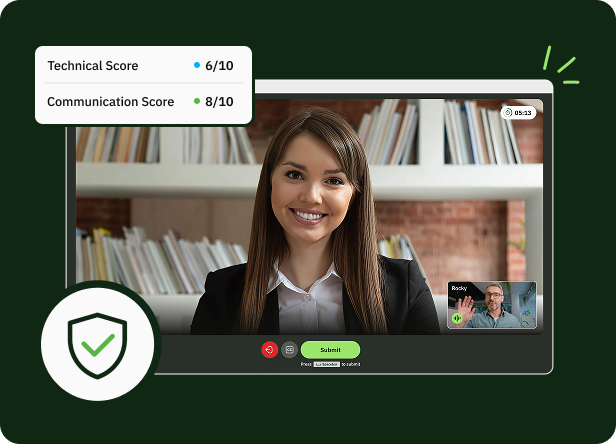
Supports asynchronous recordings and live two-way conversations. The two-way mode is where it gets interesting - questions shift based on the candidate's actual answers via the video interview software.
AI Phone Screener
AI Coding Interviewer
AI Resume Screener
English Proficiency Test

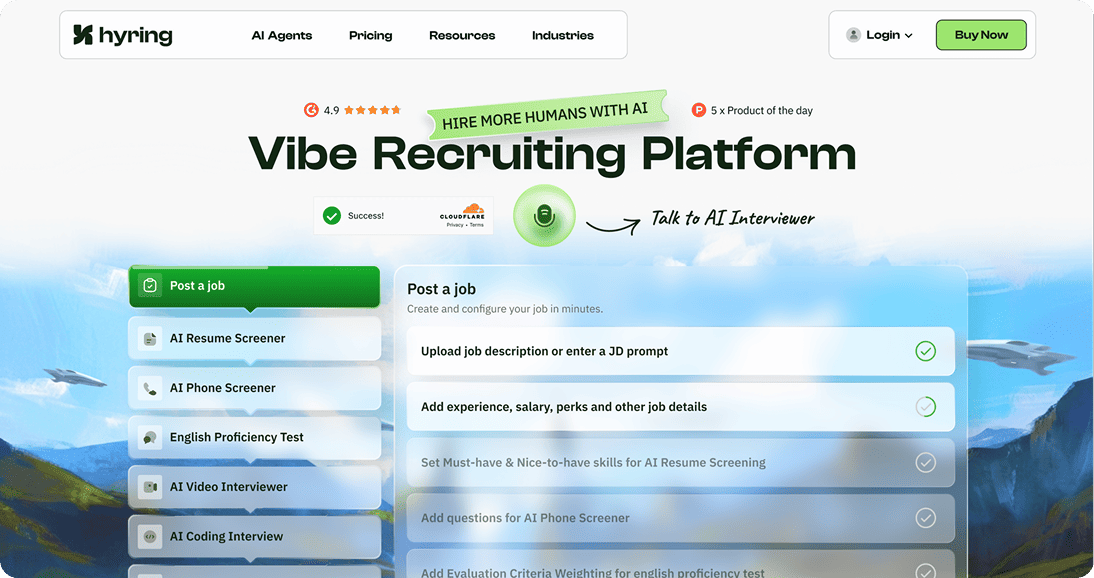
Every module feeds into the same reporting and shortlisting infrastructure. The result is an AI recruiter that covers the full width of screening without asking the recruiter to stitch different tools together.
Brief
Hyring is an AI recruitment software designed for recruiters who want fast, scalable, and auditable candidate screening. On platforms like G2 and Capterra, users regularly mention how Hyring reduces early-stage screening time and helps recruiters surface stronger candidates earlier in the funnel.
PROS
- Automates first-pass screening across video, phone, coding, and resume channels simultaneously
- Keeps every candidate on the same evaluation standard regardless of which recruiter reviews them
- Puts integrity flags front and center in reports instead of hiding them behind dashboards
- Gives hiring managers clean, actionable summaries rather than raw footage to sift through
- Onboarding is fast; recruiters can launch campaigns without a lengthy training period
CONS
- Teams that only hire a handful of people per year will not see the full value
- ROI sharpens at moderate to high interview volumes
- Complements your ATS rather than replacing it
TAKEAWAY
Hyring works well for organisations that treat hiring as an operational function, not an occasional project. It keeps the workflow tight, the data transparent, and the decision squarely in human hands.
Talview Review
Product Ecosystem
Talview's architecture is centred on controlled, proctored assessment delivery at enterprise scale. Here is what the platform brings together:
Ivy (AI Interviewer)
Talview's Agentic AI agent responsible for conducting candidate interviews within the assessment framework. Follows a structured format designed for enterprise assessment delivery.
Alvy (AI Proctor)
Secure Browser
Telephonic Screening
Online Coding Assessments & Multi-Section Workflows
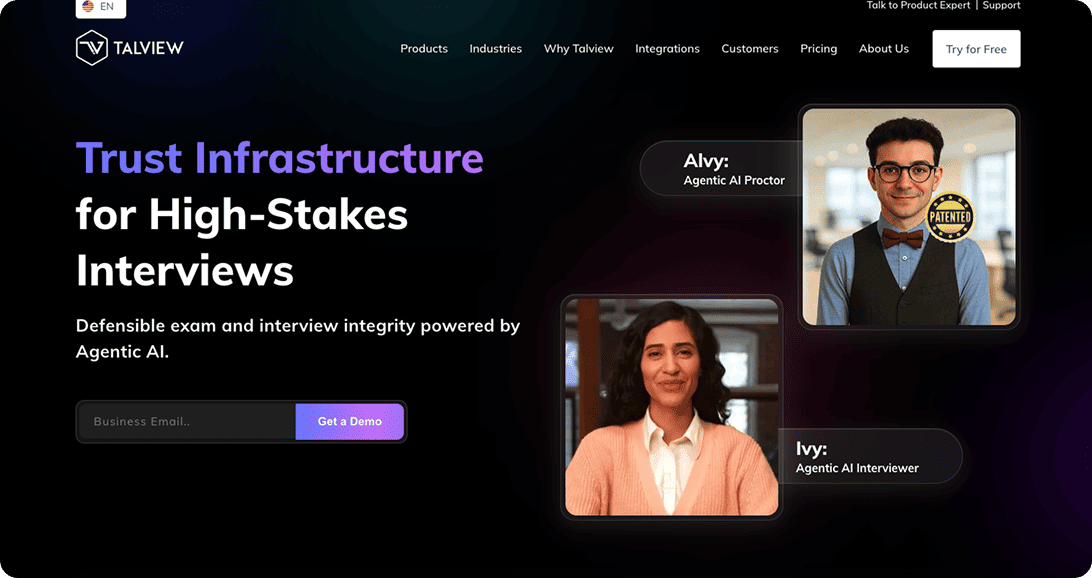
The product suite targets large enterprises that run structured, multi-stage evaluation programs across sizeable candidate pools.
Brief
Talview's architecture is centred on controlled, proctored assessment delivery at enterprise scale. Its headline features are Ivy (AI Interviewer) and Alvy (AI Proctor), patented agents designed for large enterprises running structured, multi-section evaluation programs.
PROS
- Patented proctoring technology using facial and voice recognition
- Secure browser creates a controlled, tamper-resistant assessment environment
- Built to handle enterprise-scale, multi-section evaluation programs
- Workflow orchestration for complex, sequential assessment stages
CONS
- Two-way conversational interviewing with adaptive follow-ups is limited
- Feature releases follow a quarterly cycle, which can feel slow for rapid iteration
- Live chat support has limited availability
- Reporting and hiring analytics lack the granularity that recruitment-focused platforms offer
TAKEAWAY
Talview is a strong choice for enterprises that need locked-down, proctored assessment programs at scale. For recruiting teams that prioritise speed, conversational depth, and per-interview transparency, the platform's enterprise-first orientation may feel heavier than the job requires.
Bottom Line
Hyring gives a recruiting team five AI agents (video, phone, coding, resume, and English proficiency), wires them into 40+ ATS platforms, and hands the recruiter a scored, proctored report for every candidate. The whole system is pointed at one outcome: getting the right shortlist to the hiring manager as quickly and transparently as possible.
Talview is structured around patented AI proctoring and interviewing agents, designed for large enterprises managing multi-section, security-conscious assessment workflows.

Hyring excels at: Recruiter-centric screening, adaptive two-way interviews, transparent proctoring in every report, and fast decisions across varied roles
Talview excels at: Enterprise-grade proctored assessments, secure browser environments, and complex multi-section workflow orchestration
For pipeline-focused recruiting teams, Hyring is the sharper fit as an alternative to Talview.
Talview vs Hyring: Feature Comparison At A Glance
Feature / Capability
Talview
Conversational AI interviewing (dynamic, two-way)
Limited
Dynamic follow-up questions
Limited
Candidate authenticity & remote proctoring
Liveness checks & proctoring
Coding & role-based assessments
Limited
Language & communication testing
Limited.
Automated scheduling / calendar sync
Hiring analytics & reports
Limited
ATS / HRIS integrations & public API
Limited
SOC2 & ISO 27001 enterprise security
No public information available
Custom branding & candidate experience
Accessibility & global support
Support & onboarding (SLA, Account Manager, training)
AI Resume Screener
No exclusive feature available
AI Phone Screener
AI Video Interviewer
AI Coding Interviewer
Proctoring
As audited on Feb 2026.
Talview vs Hyring: Detailed Feature Comparison
Recruitment teams care about a handful of things that directly affect their output: how deeply the platform screens, how trustworthy the integrity signals are, how much time it saves, and how smoothly it hands off to the ATS. Below is how Talview and Hyring measure up across each of these areas.
Conversational AI Interviewing

Hyring
What makes Hyring's AI interview software distinct in a Talview vs Hyring comparison is the two-way video format. The AI does not read from a script. It listens to each answer and shapes its next question around what the candidate just said. If someone gives a vague response, the AI digs in. If they demonstrate expertise, it pivots to a harder angle. The scoring reflects this depth - speech patterns, how thoroughly the candidate addresses the topic, and how their answers align with what the role demands. This is not keyword matching. It is a genuine exchange.
Talview
Ivy conducts interviews within Talview's assessment ecosystem. The interaction follows a more structured format. Conversational adaptability - the kind where questions genuinely change course based on each candidate's unique responses - is limited compared to what Hyring delivers. Talview's architecture was built for assessment delivery and candidate verification first. Open-ended, dialogue-driven screening came second.
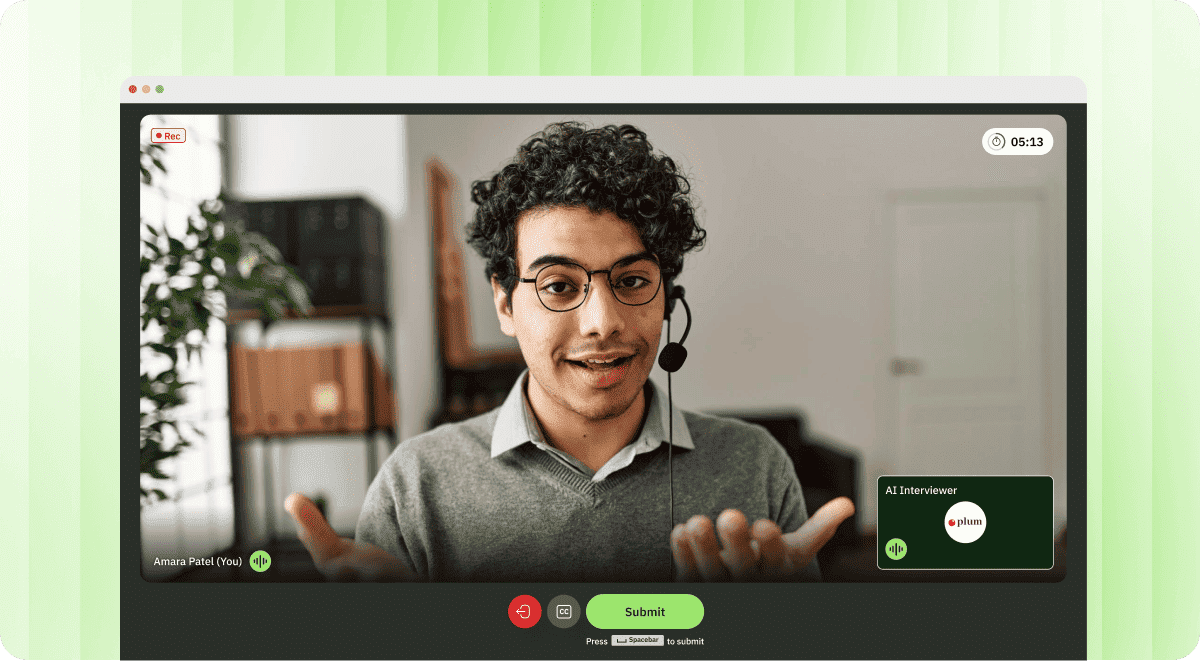
For teams that want their AI recruiting tool to have a genuine conversation with each candidate, adjust its line of questioning in real time, and produce layered insights for the recruiter, Hyring is the stronger platform.
Candidate Authenticity & Proctoring
Hyring
Hyring tracks individual proctoring events during every session: tab switches, external monitors detected, the candidate's face leaving the frame, additional faces or voices appearing, and plagiarism indicators. Each event appears as a clear, labeled flag inside the candidate's report. The recruiter sees exactly what happened and decides how much weight to give it.
There is no automatic rejection. The system presents evidence. The human interprets it. The proprietary desktop app adds intelligent detection for sophisticated cheating tools like Parakeet AI and Cluely.
Talview
Talview tackles proctoring through Alvy, which uses patented facial and voice recognition to monitor assessment sessions. The secure browser adds another layer by restricting what candidates can access during the session, creating a tight, controlled testing environment.
The difference is architectural. Talview's proctoring intelligence feeds into the assessment infrastructure. It does not surface as individual, recruiter-readable events inside each candidate's report the way Hyring's system does.
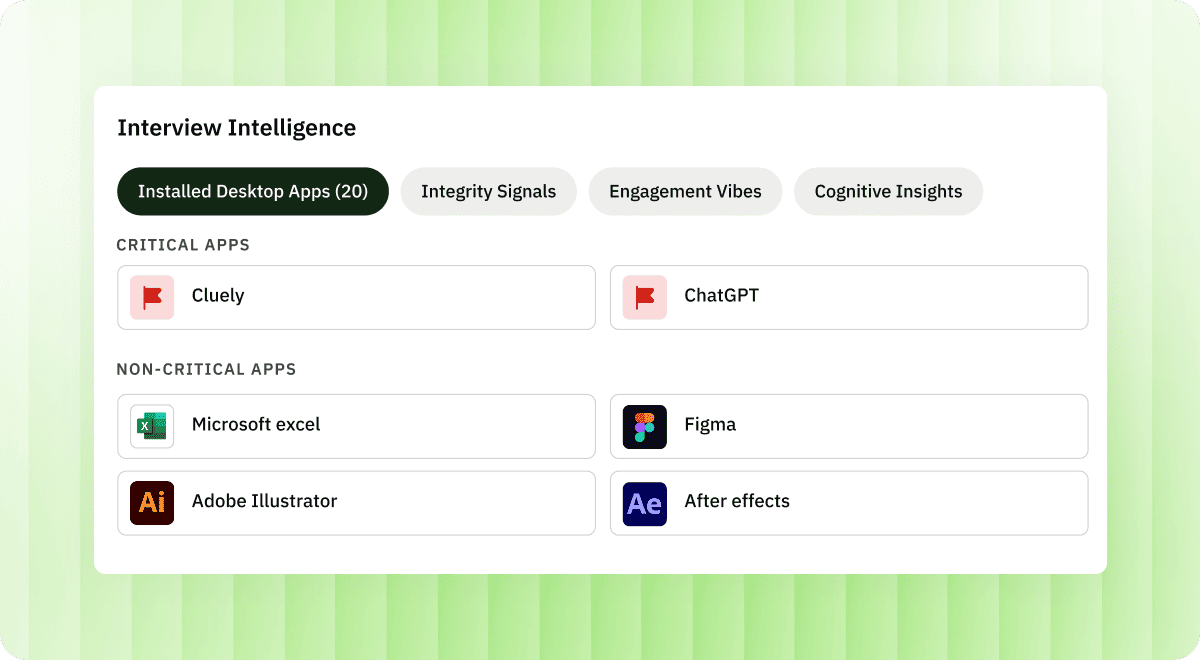
Both platforms take integrity seriously, but they present the data differently. For recruiting teams that want to see the proctoring story behind each candidate in plain terms inside the report, Hyring's model is more practical.
Scoring, Fairness & Bias Reduction
Hyring
Hyring wraps every score in context. Recruiters can pull up full transcripts, see breakdowns by competency, and trace the logic behind each rating. Weighted questions let hiring teams calibrate the evaluation to reduce bias.
Most importantly, every score the AI generates sits open for human review and override. The system treats its own output as a recommendation, not a verdict.
Talview
Talview scores within its enterprise assessment framework. The hiring analytics and reporting depth is limited compared to Hyring's layered approach.
Teams that need to explain a scoring decision to a compliance officer or justify a shortlist to a hiring manager may find fewer breadcrumbs to follow in Talview's reports.
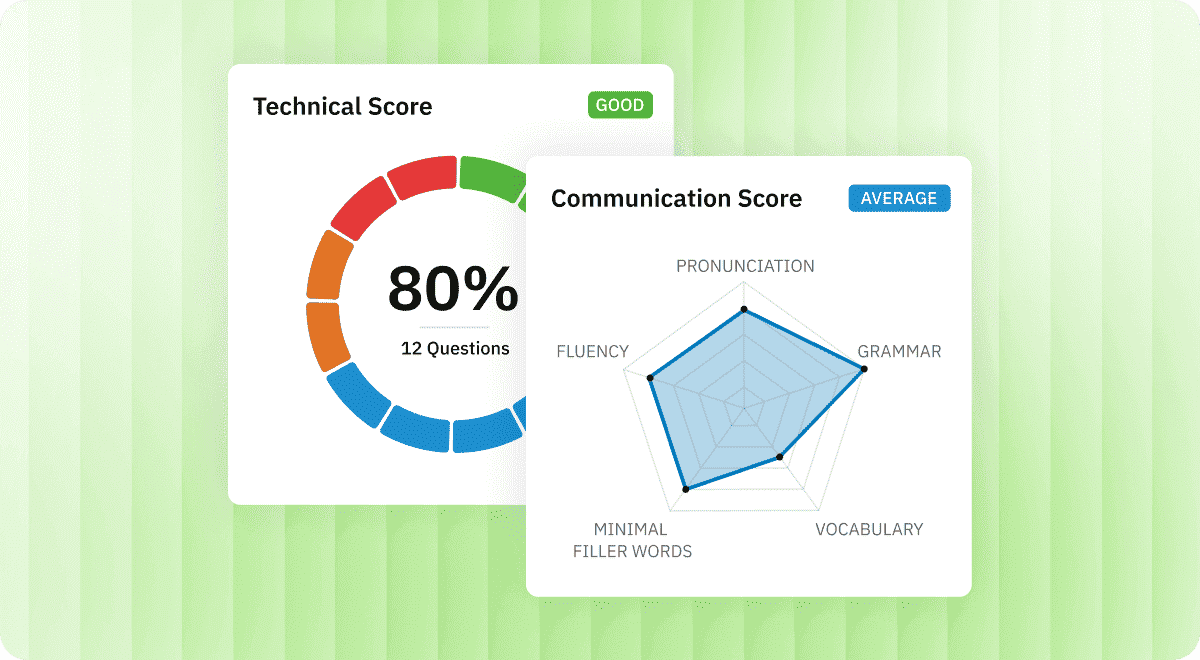
For recruiting teams accountable for defensible hiring decisions, Hyring's transparency framework makes a tangible difference.
Assessment Types & Role Coverage
Hyring
The Coding Interviewer is a dedicated agent for engineering and developer roles. It captures the full problem-solving process, not just the final output. For customer-facing positions, the English Proficiency Test evaluates communication through natural conversation. Sales, support, and operational roles are covered by the Video and Phone Interviewers, with customisable patterns that adjust to each role's requirements and seniority level.
Talview
Online coding assessments and telephonic screening are available. The role-specific assessment range is narrower though. Talview's design preference is structured, proctored evaluation over the kind of dynamic, department-spanning screening that a broad hiring team requires week to week.
For teams filling technical and commercial roles simultaneously, the cross-functional flexibility is more limited.
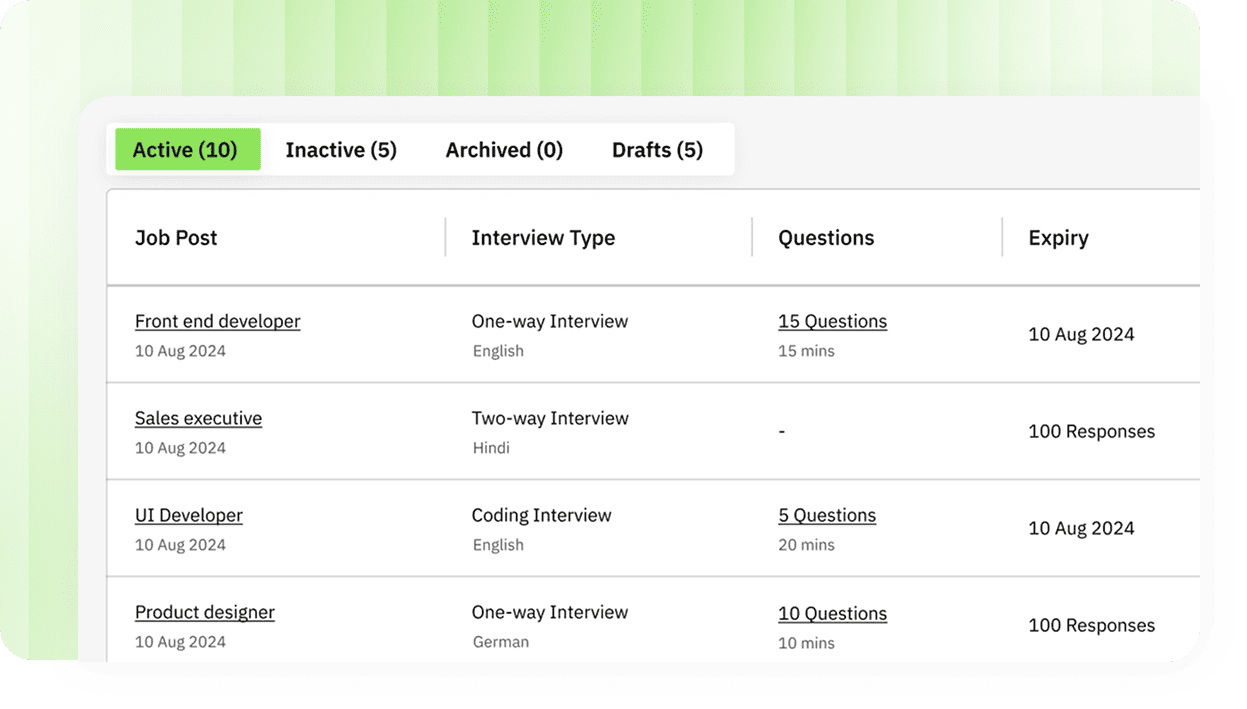
Hyring's modular agents cover the spread. Talview handles individual assessment types well, but does not offer the same cross-functional flexibility as an AI recruiting tool.
Scheduling & Automation
Hyring
Candidates get direct links to their interviews. No calendar coordination needed from the recruiter's side. Bulk invitations and automated reminders keep large campaigns moving. The REST API and 40+ ATS integrations push candidate data, results, and reports wherever the team needs them.
Talview
Scheduling automation is part of the platform. Where it falls short is integration breadth. Talview's ATS and HRIS connector library does not match the range that Hyring offers.
For teams managing 300 candidates across eight different roles, that gap in automation and integration depth becomes an operational constraint.
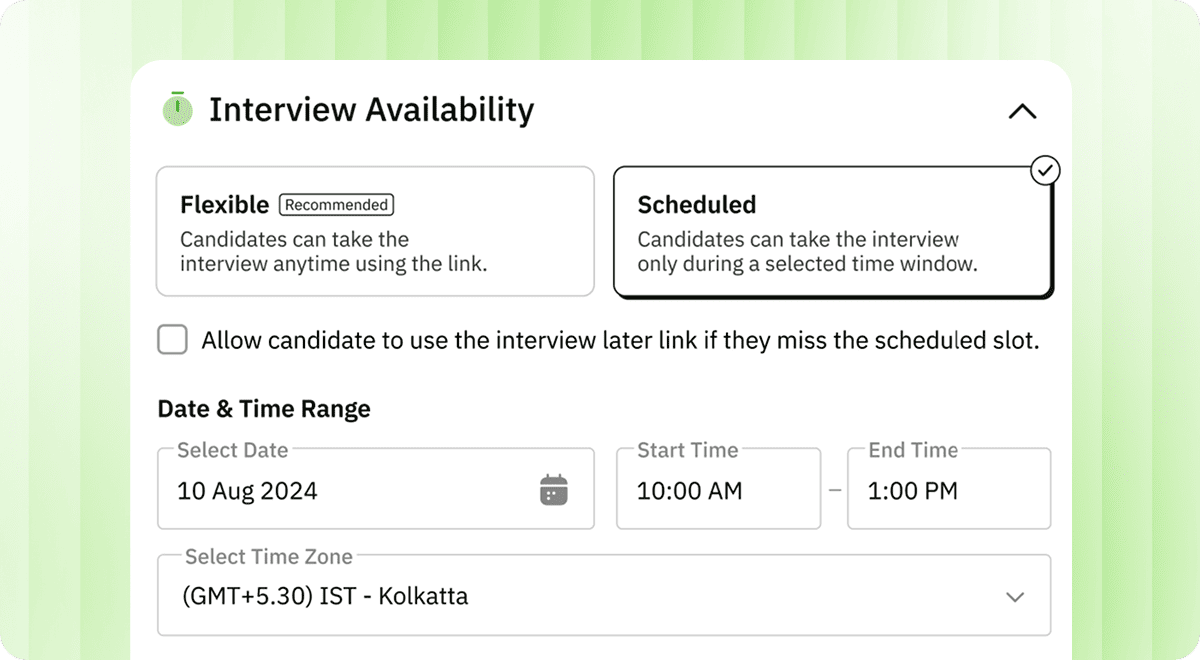
When a recruiter has hundreds of candidates to screen across multiple roles, automation and integration breadth stop being nice-to-haves. Hyring's infrastructure handles that complexity.
Reporting & Hiring Analytics
Hyring
Hyring's cognitive and skill reports pull together on-system activity data and behavioral patterns into a single document for each candidate. Structured scores, proctoring flags, and interview insights sit in one place. When a hiring manager opens a report, they get everything needed to compare, evaluate, and decide - without switching tabs or requesting additional context.
Talview
Talview's reporting capabilities are more limited by comparison. The emphasis falls on assessment-level outcomes rather than the kind of multi-layered, recruiter-optimised analytics that accelerate shortlisting.
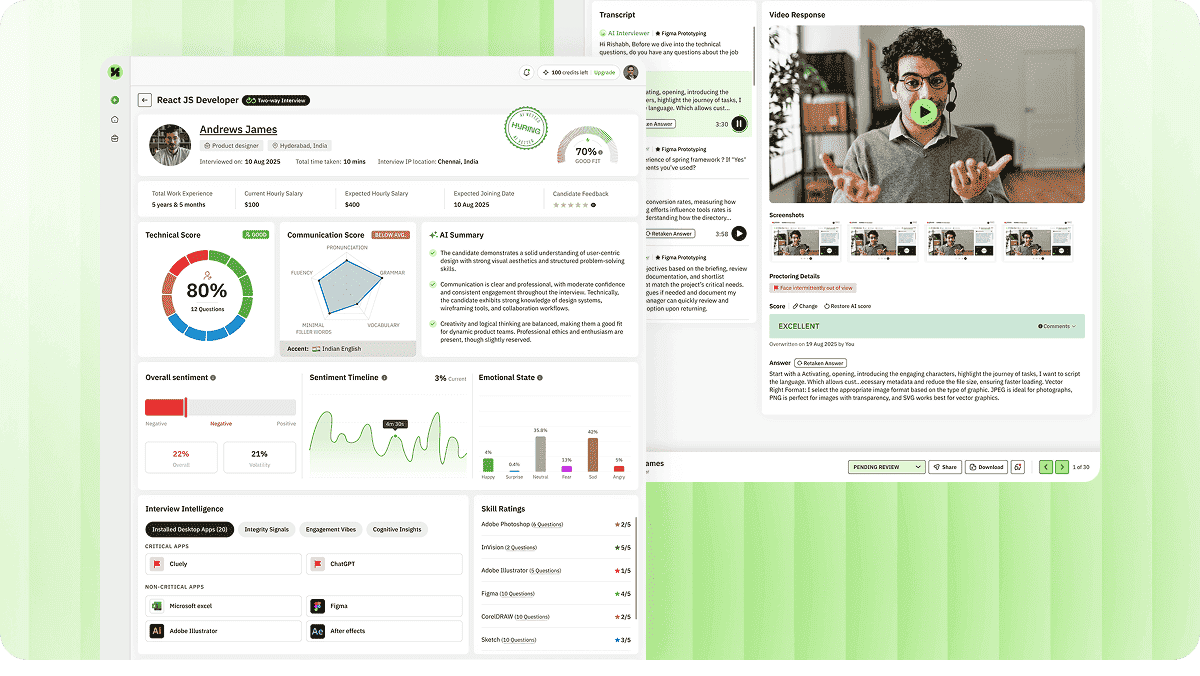
Reports matter most when a hiring manager has a stack of candidates to rank and limited time to do it. Hyring's analytics are built for that exact moment, making it sharper as an alternative to Talview.
Global Hiring & Accessibility
Hyring
Conducts interviews in 10+ languages. Its English Proficiency Test evaluates communication through actual conversation, not fill-in-the-blank exercises. Support runs 24/7 through live chat. For global recruiting teams, the combination of multilingual AI interviews and dedicated language assessment creates an advantage that matters at scale.
Talview
Talview operates globally and offers interface language options. Interview language depth, though, is limited based on what is publicly documented.
Communication testing is not positioned as a primary capability, which creates a gap for teams where language screening is a genuine part of the hiring criteria.

For organisations where language screening is a genuine part of the hiring criteria, Hyring's multilingual interviews and dedicated English assessment create an advantage Talview's current offering does not match.
The Human Touch: Talview vs Hyring
Hyring
Every proctoring flag in Hyring goes to a recruiter, not to an auto-reject queue. Every AI-generated score can be overridden by human recruiters. Every report is designed to inform a human decision, not make one. The platform carries the screening load. The recruiter carries the accountability. Recruiters can also create an AI Twin - a virtual counterpart that conducts interviews using their own criteria - extending their reach without removing their judgment.
Talview
Talview's Ivy and Alvy agents automate interviewing and proctoring across enterprise assessment programs. Human review is present in the evaluation stage.
But the platform's weight leans toward orchestrating automated assessment sequences rather than building in structured handoff points where a recruiter examines, questions, and decides at the individual candidate level.
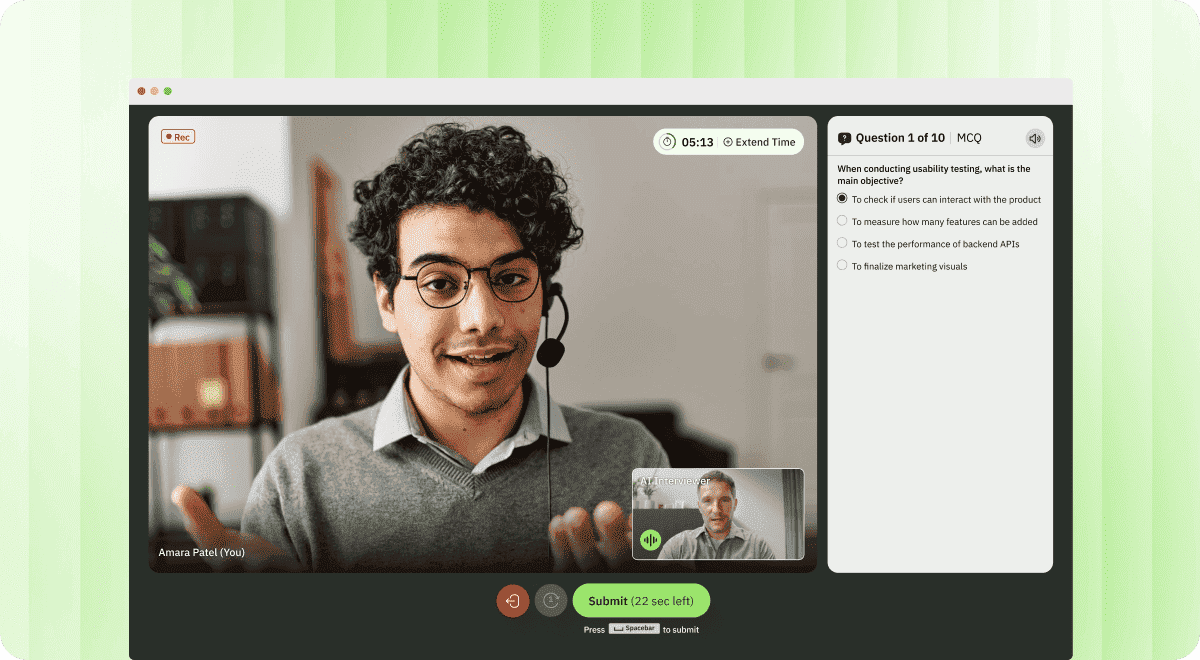
For organisations that want AI to handle volume while humans handle judgment, Hyring's philosophy is the closer match.
UI UX Experience
Recruiter Experience
Hyring
The dashboard is organised around how recruiters actually work, not around how the technology is structured. Interview builders, agent controls, candidate pipelines, and report views are all reachable in a couple of clicks. Live chat and the help center provide immediate backup when needed.
Talview
Assessment management dashboards and AI agent controls are available. Enterprise-level onboarding timelines tend to be longer. The experience is designed around managing large-scale assessment operations rather than getting a recruiter into a live campaign within the same afternoon.
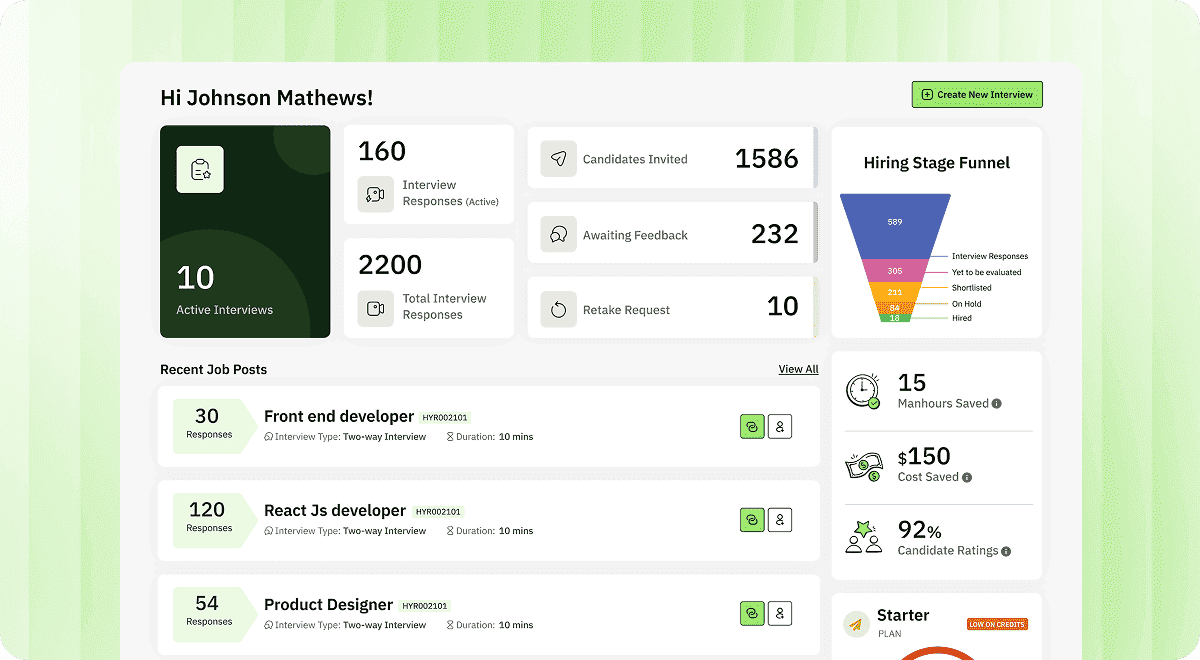
The learning curve is minimal with Hyring. The payoff is immediate. For teams that value time-to-productivity, Hyring is the more responsive AI recruitment software.
Candidate Experience
Hyring
Puts candidates into asynchronous or live two-way interviews. Proctoring runs in the background without making the experience feel like a surveillance exercise. The conversational format across video, phone, and language assessments lets candidates present themselves naturally. When people feel comfortable, they give better answers. When they give better answers, recruiters get better data.
Talview
Talview offers video interviews with AI integration and custom branding that keep the experience visually professional. The secure browser and proctored environment create a controlled assessment setting which may feel more rigorous compared to Hyring's conversational approach. Some contexts suit this formality; others do not.
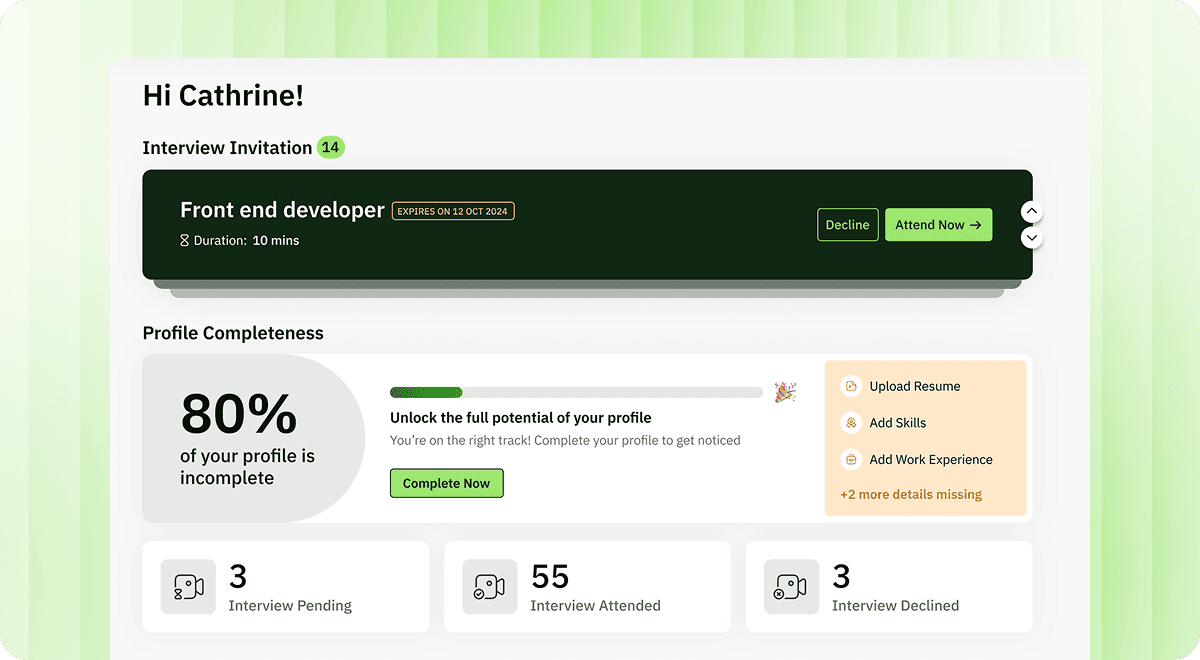
Candidate experience shapes candidate behavior, and candidate behavior shapes the data recruiters use to make decisions. Hyring's conversational approach produces more natural, authentic interactions - which translates directly into higher quality screening signal.
Security & Compliance
Data Protection
Both platforms operate at enterprise compliance standards. Hyring documents how candidate data is handled through its help center and enterprise collateral. Talview serves enterprise clients and maintains data protection practices, though the specifics are less readily documented in public-facing materials.
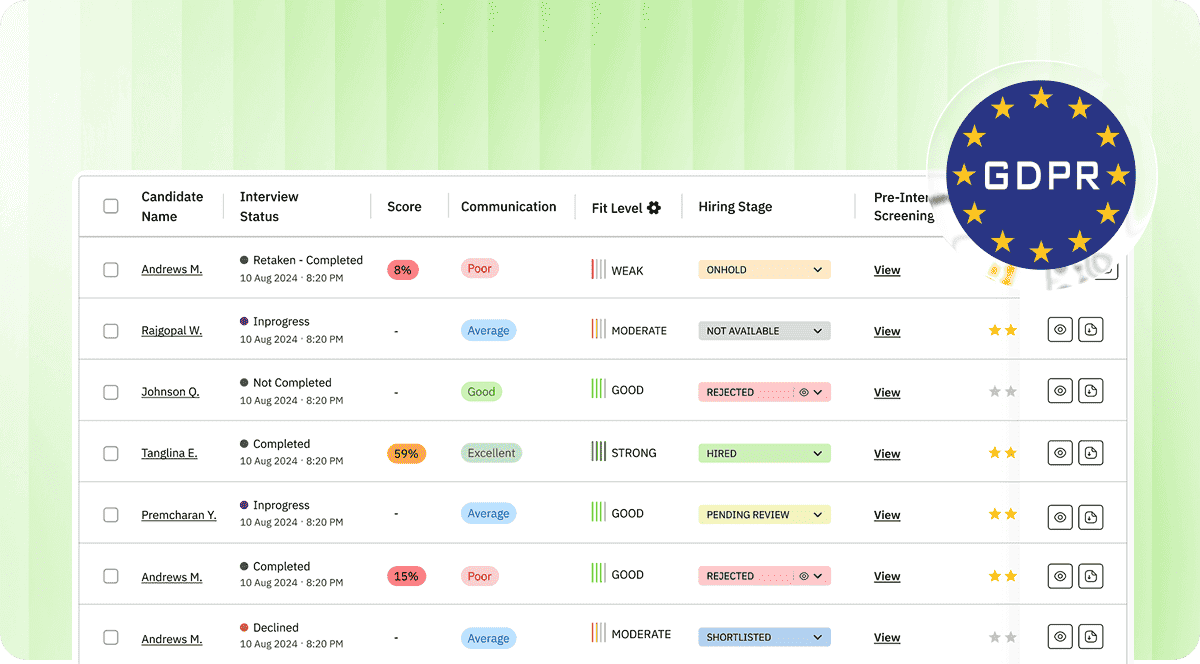
Compliance & Certifications
Hyring
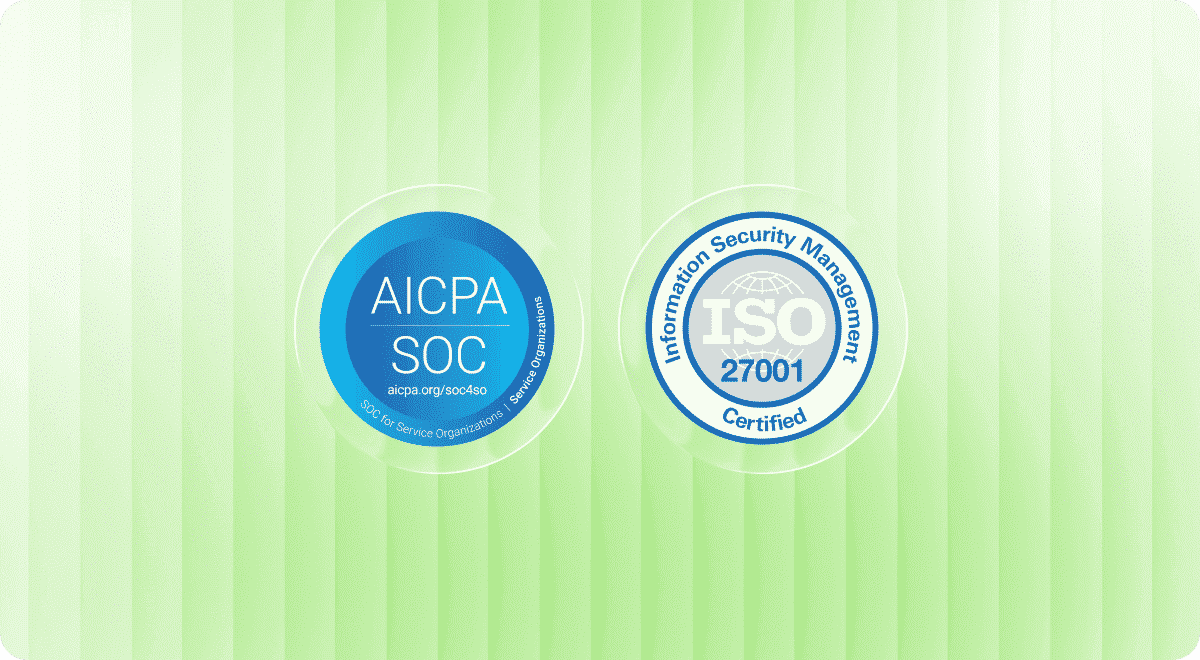
Hyring holds both SOC2 and ISO 27001 certifications, displayed publicly on its trust page and enterprise materials. Dual certification provides a strong compliance baseline for organisations in regulated industries.
Talview
Talview does not have public information readily available about SOC2 or ISO 27001 certifications based on currently accessible data. For sectors with elevated requirements such as healthcare or financial services, formal compliance evidence should form part of any vendor evaluation.
Candidate Privacy
Hyring's help articles cover data retention timelines, reporting transparency, and candidate data handling. Talview's privacy policies are available through their website and enterprise contracts.
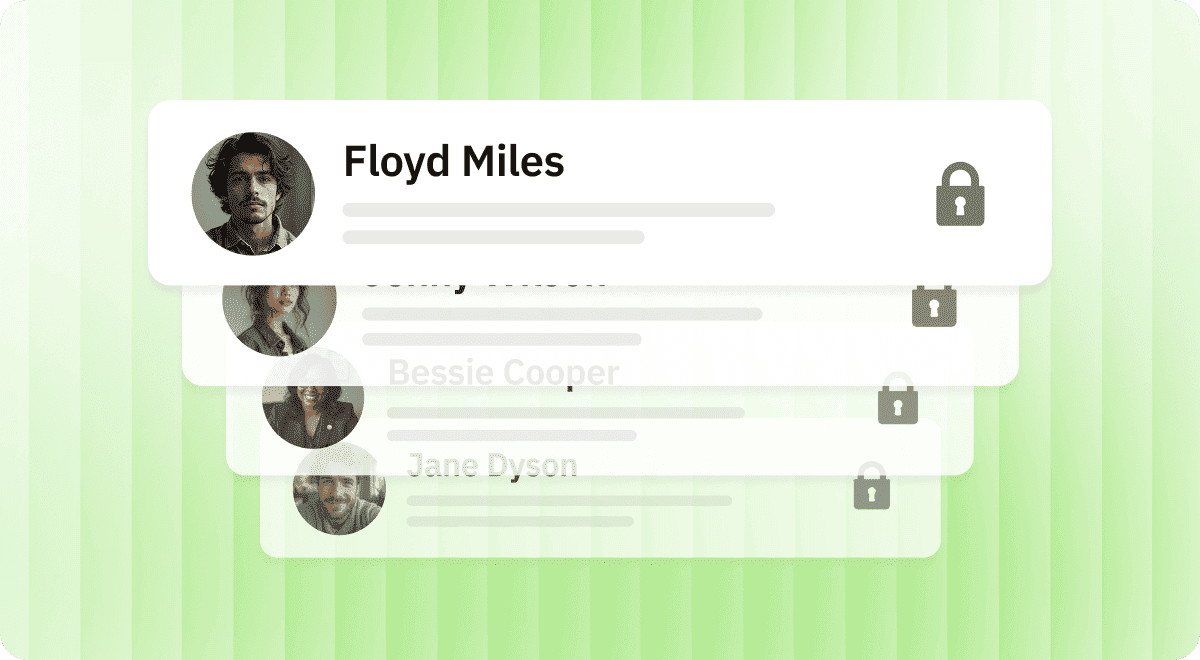
Hyring's publicly verifiable dual certification and documented data handling practices - built specifically around interviews and hiring data - create a more transparent compliance profile. For teams evaluating security through a recruitment lens, Hyring offers clearer assurance.
Cost & Pricing Structure
Pricing model
Hyring ties its pricing directly to interview volume. Teams pay for what they use: interviews conducted, credits consumed, candidates processed. At scale, costs land between $1 and $5 per interview - giving recruiters and budget owners a direct line from screening volume to cost-per-hire.
Talview uses a subscription model, with costs structured around tiers and enterprise agreements rather than per-interview usage. You know the monthly number, but it does not flex downward when hiring slows.
Transparency
During a slow quarter, Hyring's costs drop accordingly. For finance teams that want predictability without rigidity, this model delivers both. Workforce planning and budget forecasting are straightforward across seasonal peaks and troughs.
Subscription pricing is predictable in one direction. But for teams whose volume rises and falls with business cycles, the effective cost per screen can creep up during quieter periods.
Pricing model
Hyring ties its pricing directly to interview volume. Teams pay for what they use: interviews conducted, credits consumed, candidates processed. At scale, costs land between $1 and $5 per interview - giving recruiters and budget owners a direct line from screening volume to cost-per-hire.
Talview uses a subscription model, with costs structured around tiers and enterprise agreements rather than per-interview usage. You know the monthly number, but it does not flex downward when hiring slows.
Transparency
During a slow quarter, Hyring's costs drop accordingly. For finance teams that want predictability without rigidity, this model delivers both. Workforce planning and budget forecasting are straightforward across seasonal peaks and troughs.
Subscription pricing is predictable in one direction. But for teams whose volume rises and falls with business cycles, the effective cost per screen can creep up during quieter periods.
You can check out Hyring's full pricing structure and even book a consultation at Hyring Subscription Plans. For pipeline-focused recruiting teams evaluating alternatives to Talview, Hyring's usage-based model offers the flexibility that enterprise subscription pricing cannot.
Conclusion: Which is the Best AI Interviewer – Talview or Hyring?
Dedicated AI agents across video, phone, coding, and resume screening. 40+ ATS integrations through a REST API. Multilingual interviews in 10+ languages. Proctoring signals visible in every report. Together, these make Hyring an AI interview software that scales with the team, not against it.

Why Hyring is stronger for recruiting teams
Recruiter-centric screening, adaptive two-way interviews, transparent proctoring in every report, and fast decisions across varied roles. Usage-based pricing that rewards activity instead of penalising quiet periods.
Choose Hyring if
Your team handles high-volume or multi-department hiring and needs conversational AI screening, per-interview proctoring transparency, recruiter-first dashboards, and ATS integration that works without custom development.
Where Talview holds its ground
Enterprise-scale proctoring through patented AI agents (Alvy and Ivy). Secure browser lockdown for controlled assessments. Multi-section workflow orchestration for organisations managing complex, sequential evaluation programs.
Choose Talview if
Your core requirement is enterprise-grade, proctored assessment delivery with secure browser controls and multi-section workflows for large-scale evaluation programs.
Recruiting teams that own their hiring process from first screen to final offer need tools that match their pace. Hyring delivers structured screening, visible proctoring, assessments that flex across departments, and ATS connectivity that eliminates manual data transfer.
Disclaimer: Information is sourced from public records and is subject to change. This comparison does not constitute a guarantee of current service offerings or specifications.
Frequently Asked Questions
Can Hyring or Talview replace human recruiters?
Neither platform tries to.
Hyring is deliberate about this. Its AI handles the screening workload - from resume filtering to two-way interviews - but scoring review, culture-fit judgment, and the final hiring call all stay with the recruiter. Talview's AI agents automate interviewing and proctoring within enterprise assessment workflows, with human evaluation at the decision stage.
Teams that want AI to extend their capacity rather than displacing their judgment will find Hyring's approach aligns with that philosophy.
Will Hyring or Talview work with my ATS, like Greenhouse or Workday?
Hyring's REST API connects to 40+ platforms. Candidate data, interview results, and reports flow into Greenhouse, Workday, Lever, Zoho Recruit, iCIMS, Workable, Ashby, SmartRecruiters, BambooHR, JazzHR, Bullhorn, SAP, and more.
Talview's integration capabilities are more limited based on publicly available documentation. For teams using multiple tools in their hiring stack, Hyring's connector library covers more ground.
Which integrates better with LinkedIn Recruiter - Hyring or Talview?
Hyring is designed to sit directly behind LinkedIn Recruiter in the workflow. A sourced candidate clicks apply and lands in Hyring's interview screen. No scheduling email chain. No calendar coordination. The handoff is immediate.
For teams where LinkedIn is the primary sourcing channel, Hyring removes the friction between finding a candidate and screening them.
Talview vs Hyring: Which supports non-English interviews?
Hyring runs interviews in 10+ languages and includes a standalone English Proficiency Assessment Test that evaluates communication through natural dialogue. Talview offers interface language options, but the depth of interview language support and dedicated communication testing is limited in public-facing materials. Recruiting teams that hire across language boundaries will find Hyring's coverage more comprehensive.
Is Hyring or Talview better for screening software engineers vs sales roles?
Hyring's Coding Interviewer handles engineering and developer assessments. The conversational AI and language tests cover sales, customer support, and operational roles. Interview formats are customisable by domain and seniority.
Talview provides online coding tests and telephonic screening, though cross-department customisation is more limited. Teams filling technical and commercial roles simultaneously will find Hyring's range more useful as an AI recruiting tool.
Stop Screening Manually.
Start Hiring Smarter with Hyring.
If this comparison has shown you anything, it's that Hyring is built for the way recruiting teams actually work — fast-paced, high-volume, and demanding real accountability at every step. From AI video and phone screening to built-in proctoring and ATS sync, Hyring gives your team the tools to move faster without cutting corners.
See why hiring teams at scaling companies choose Hyring over Talview.
Compare with other platforms