Jobma VS HyrinG
Jobma vs Hyring:
A Detailed Comparison
Written on: 30 Jan 2026
Last updated: 09 Mar 2026

Written by
Rakesh Kumar

Fact Checked by
Surya N
Table of Contents
- An Overview
- Why Hiring Teams Migrate From Jobma To Hyring
- Jobma vs Hyring - Metrics Comparison
- Ecosystem: Products & Hiring Workflow
- Jobma vs Hyring: Feature Comparison At A Glance
- Jobma vs Hyring: Detailed Feature Comparison
- Conversational AI Interviewing
- Candidate Authenticity & Proctoring
- Scoring, Fairness & Bias Reduction
- Assessment Types & Role Coverage
- Scheduling & Automation
- Reporting & Hiring Analytics
- Global Hiring & Accessibility
- The Human Touch: Jobma vs Hyring
- UI UX Experience
- Security & Compliance
- Cost & Pricing Structure
- Conclusion: Which is the Best AI Interviewer – Jobma or Hyring?
- Frequently Asked Questions
An Overview
Recruiters exploring alternatives to Jobma usually have a clear wishlist. They want AI interview software that delivers two-way conversational screening, not just recorded answers to fixed questions. They want an anti-cheating system that works quietly in the background of every session. They want AI-powered coding assessments, phone screening, and resume filtering all in one place.
Hyring covers that full recruitment workflow, from the first screen all the way to the hiring decision. Jobma's sweet spot is one-way video interviewing, paired with live interview sessions that recruiters lead themselves. The live sessions do not include AI proctoring of the kind Hyring bakes into every interaction.
Why Hiring Teams Migrate From Jobma To Hyring
Credit where due - for what Jobma does well. It makes one-way interviews simple to set up and easy to manage. For teams that just need candidates to record responses to a fixed set of questions, it gets the job done.
But as hiring teams grow, take on more roles, or start worrying about candidate authenticity in remote settings, a one-way interview setup starts feeling thin. If you are evaluating options, here are the features to look for in an AI screener that actually matter. You need follow-up questions that actually respond to what a candidate says at the moment. You need proctoring that picks up on sophisticated cheating, not just basic tab-switching. You need a phone screener that can call candidates and filter them before the video stage.
That gap between what Jobma offers and what a scaling recruitment team actually needs is what pushes people toward Hyring. It is less about Jobma falling short and more about Hyring doing more across the board as a modern AI recruiting tool.
Jobma vs Hyring - Metrics Comparison


Ratings change over time. Review live pages for the latest updates.
Ecosystem: Products & Hiring Workflow
This section dissects how Hyring and Jobma structure their offerings, as well as how candidates navigate each platform. All information comes from publicly available product information on each site.
Hyring Review
Product Ecosystem
Hyring is built around a connected set of recruiting and screening tools that work together. Here is what makes up the core:
AI Video Interviewer
Runs both asynchronous and live two-way video interviews. The two-way format comes with dynamic follow-ups that shift based on what the candidate says via the video interview software.
AI Phone Screener
AI Coding Interviewer
AI Resume Screener
English Proficiency Test

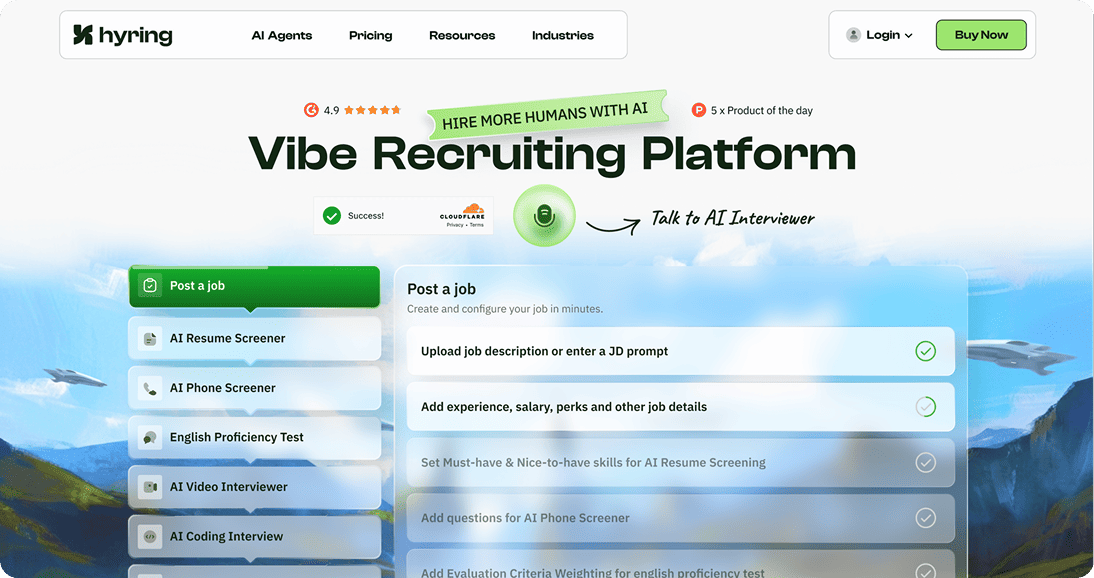
These products plug into each other to create a screening-to-hire system that recruiting teams can actually rely on day to day.
Brief
Hyring is an AI recruitment software designed for recruiters who want fast, scalable, and auditable candidate screening. On platforms like G2 and Capterra, users regularly talk about how it takes the grind out of early-stage hiring and helps them spot stronger candidates sooner in the funnel.
PROS
- Cuts early-stage screening time significantly
- Consistent, structured interviews across roles
- Integrity signals visible right inside the reports
- Clear summaries that hiring managers can act on
- Quick rollout for recruiting teams
CONS
- Less useful for very small teams
- Best value shows at moderate to high volume
- Does not replace an ATS
TAKEAWAY
Hyring is widely regarded as a practical, dependable AI recruitment software for larger teams and multinational companies that need speed and structure without handing over control to machines. People still make the decisions that matter.
Jobma Review
Product Ecosystem
Jobma is structured around video-based interviewing. Its primary focus is on one-way pre-recorded sessions, supplemented by live recruiter-led interviews. Here is what the platform includes:
One-Way Video Interviews
Candidates answer a pre-set list of questions on their own time. There is no live interviewer on the other end.
Live Video Interviews
Coding Assessments
Skill Assessments
Custom Branding
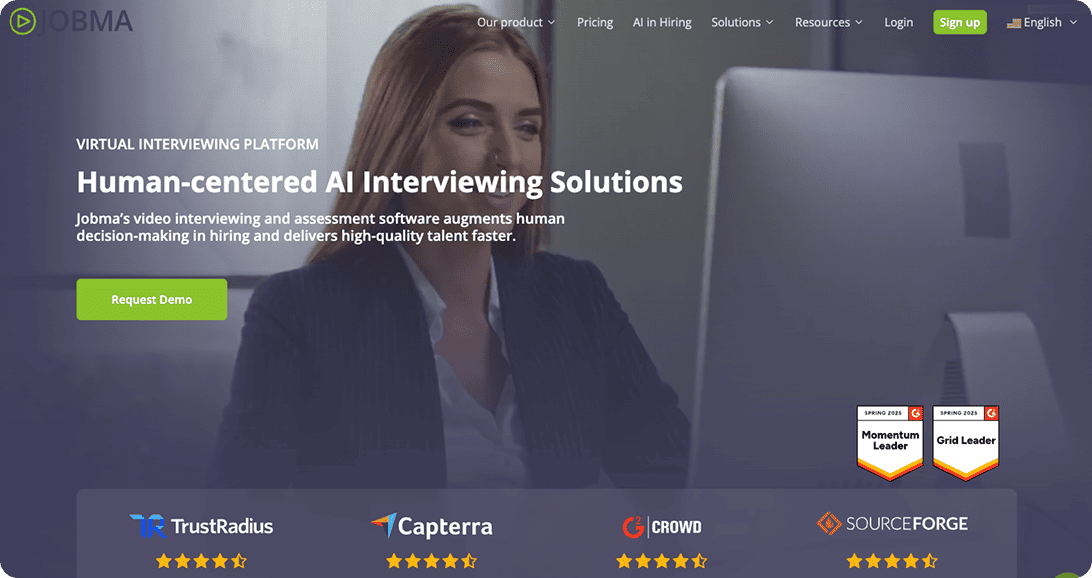
These products are designed around the video interviewing process. Compared to Hyring, there is less emphasis on end-to-end recruitment automation.
Brief
Jobma is a video interviewing suite that revolves around one-way pre-recorded interviews, with live interview options where human recruiters lead the sessions. It has built a solid reputation in the video interviewing space, especially among mid-sized companies and enterprises.
PROS
- Reliable one-way video interview experience
- Live interviews available for hands-on screening
- Coding assessments on offer
- Branding options for a polished candidate-facing experience
CONS
- No AI-driven two-way conversational interviews
- Proctoring is limited compared to what AI-native platforms provide
- No AI phone screener or AI resume screener
- Reporting and analytics lack the depth that hiring managers increasingly expect
TAKEAWAY
Jobma is a capable video interview tool. But it sits closer to traditional, one-way interviewing than to the kind of recruitment automation software that modern high-volume teams tend to look for.
Bottom Line
Hyring is built around modular AI tools that cover high-volume, role-based hiring from the first screen all the way to ATS handoff.
Jobma is built around video interviewing, primarily one-way pre-recorded sessions, with live interviews and coding assessments as supporting features.

Hyring excels at: Recruiter-driven screening, assessment integrity, AI-powered multi-format interviews, and fast, informed hiring decisions

Jobma excels at: One-way video interviewing, simple setup, and live recruiter-led sessions
Both platforms have merit. The question is how much complexity your hiring actually demands.
Jobma vs Hyring: Feature Comparison At A Glance
Feature / Capability
Jobma
Conversational AI interviewing (dynamic, two-way)
No AI integration; live interview with recruiter panel
Dynamic follow-up questions
No AI-generated follow-up questions
Candidate authenticity & remote proctoring
Limited
Liveness checks & proctoring
Limited
Coding & role-based assessments
Coding assessments with AI integration; less role depth
Language & communication testing
Automated scheduling / calendar sync
Hiring analytics & reports
Limited analysis and reports
ATS / HRIS integrations & public API
SOC2 & ISO 27001 enterprise security
Custom branding & candidate experience
Accessibility & global support
Support & onboarding (SLA, Account Manager, training)
AI Resume Screener
AI Phone Screener
AI Video Interviewer
No dedicated AI interviewer
AI Coding Interviewer
Coding assessments with AI integration
Proctoring depth
Limited, not as extensive as Hyring
As audited on 30th Jan 2026.
Jobma vs Hyring: Detailed Feature Comparison
When you put both platforms side by side across what actually matters in hiring - screening, assessment integrity, recruiter efficiency, and ATS handoff - Hyring comes out ahead for recruiting teams.
Conversational AI Interviewing

Hyring
Runs two-way video and audio interviews where the questions change based on what the candidate actually says. The system picks up on context, digs into relevant points, and asks follow-ups that a fixed question list simply cannot. Scoring looks at speech patterns, content depth, and role fit rather than just keyword matching. For high-volume positions where you need structured conversational screening to produce reliable shortlists quickly, this setup works.

Jobma
The core offering is the one-way interview. Candidates answer pre-recorded questions, and that is the extent of the interaction on the AI side. There is no real-time conversation happening. Live interviews are available, but a human recruiter runs those sessions. There are no dynamic follow-ups generated by AI. If all you need is for candidates to record answers to a standard set of questions, it does the job. But it does not adapt or dig deeper based on what the candidate says.
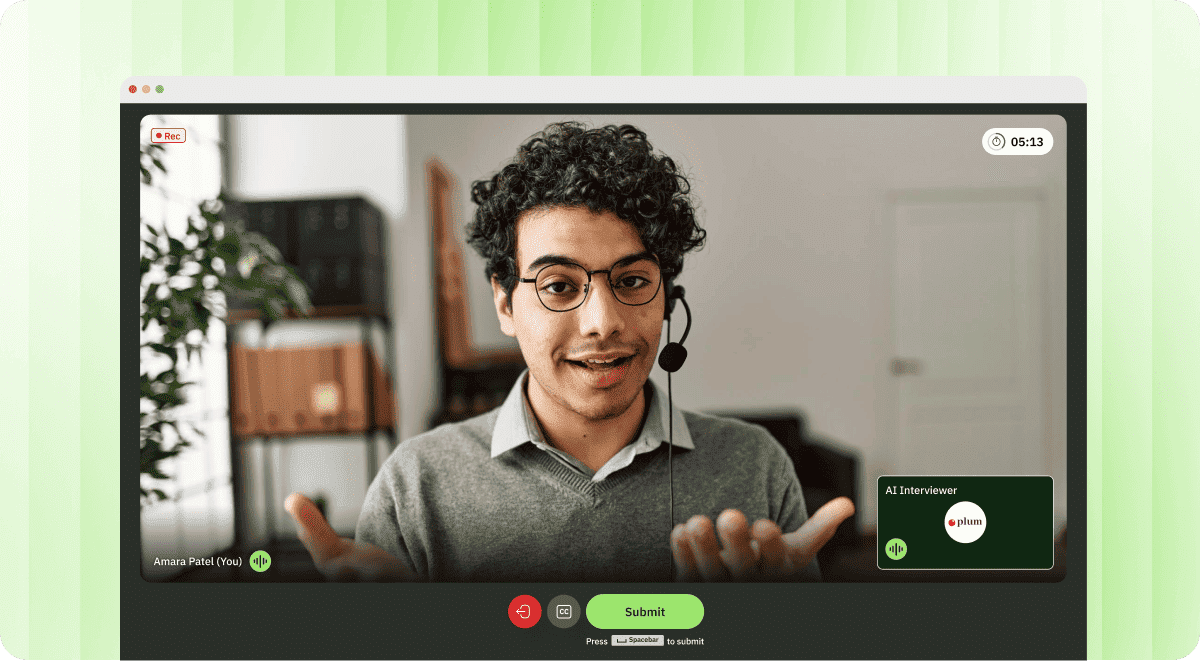
If your team needs intelligent, two-way screening that responds to each candidate individually, Hyring is the obvious pick. Jobma's one-way model is functional, but it is static by nature.
Candidate Authenticity & Proctoring
Hyring
Flags specific proctoring events including tab changes, external monitor detection, face going out of frame, multiple faces or voices, and plagiarism indicators. All of this shows up directly in the candidate report, so recruiters can focus their attention on the interviews that need a closer look.
The process stays honest without making the candidate feel like they are under surveillance. Candidate authenticity is treated as a core part of the evaluation, not an afterthought.
Jobma
Provides some authenticity monitoring, but it is limited. The live interviews are run by human recruiters, so proctoring in those sessions depends on the recruiter's own eyes and ears rather than automated detection running in the background.
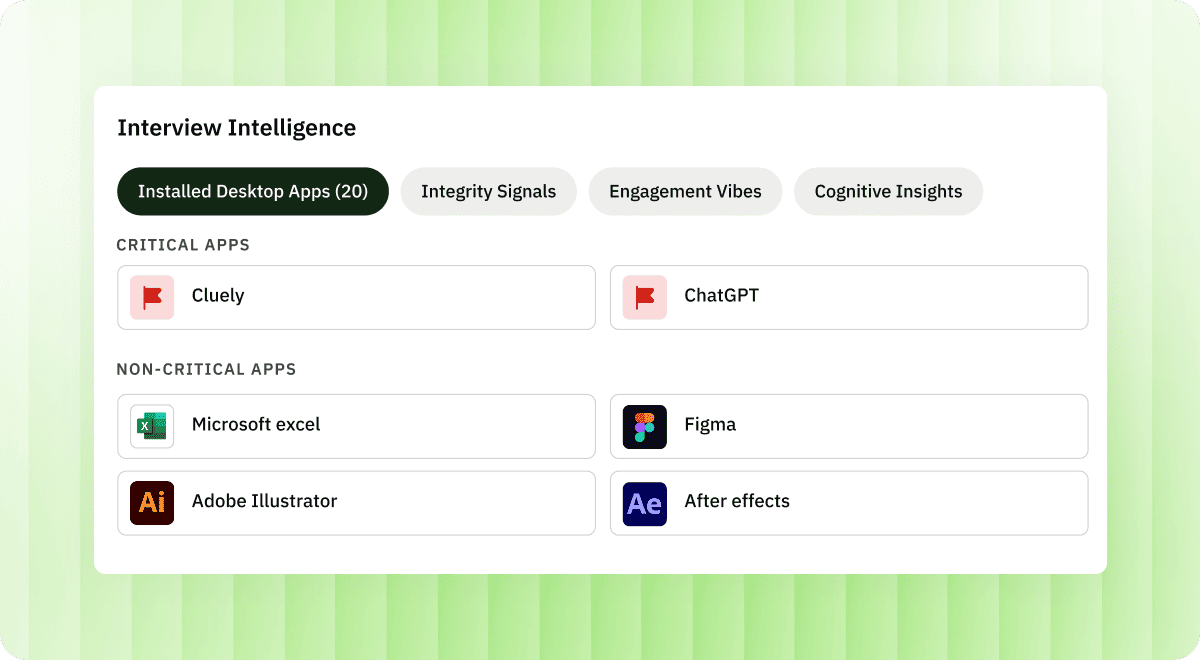
For teams that need clear, documented proctoring signals in every interview report, especially for remote hiring at scale, Hyring is the stronger platform. Jobma's proctoring exists but does not match the depth or automation.
Scoring, Fairness & Bias Reduction
Hyring
Puts real weight on structured scoring where the recruiter always has the final word. Every score comes with context: full transcripts, competency-by-competency breakdowns, and bias mitigation controls through weighted questions.
The idea is that no AI output alone decides a candidate's fate. The recruiter can see exactly why a score looks the way it does and override it if needed.
Jobma
Gives reviewers tools to rate candidates after watching recorded responses. That works at a basic level. But the depth of structured scoring, the explainability behind each rating, and the built-in bias reduction mechanisms are not as deeply integrated or as well-documented.
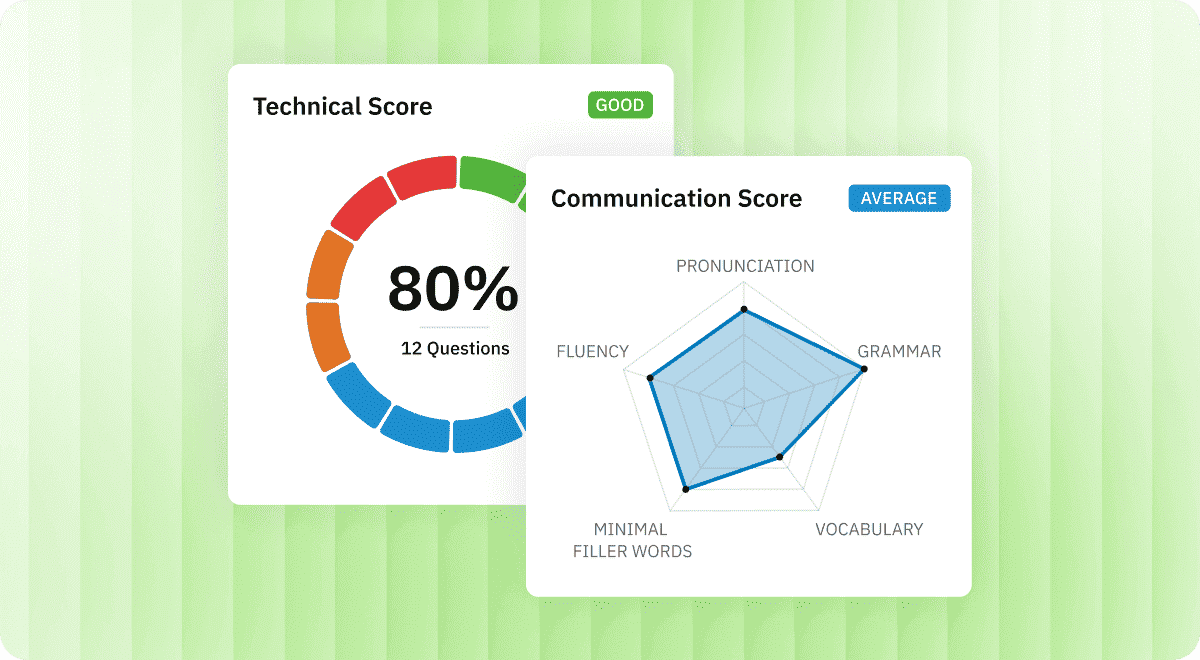
For recruiters who need scoring they can trust, explain, and defend, Hyring offers a materially better framework.
Assessment Types & Role Coverage
Hyring
Handles developer roles through its dedicated AI Coding Interviewer, customer-facing positions through the English proficiency and language tests, and operational roles through scenario and situation-based interviews. Templates cover everything from entry-level to senior positions. The AI Coding Interviewer is designed to walk through the coding thought process and execution with the candidate, giving recruiters a window into how a developer actually approaches problems.
Jobma
Offers coding assessments with AI integration and skill assessments through the pre-recorded interview format. There is some role diversity, but the depth and adaptability fall short of what Hyring provides.
Jobma does not have a dedicated AI phone screener or AI resume screener, which limits its ability to cover the full hiring funnel.
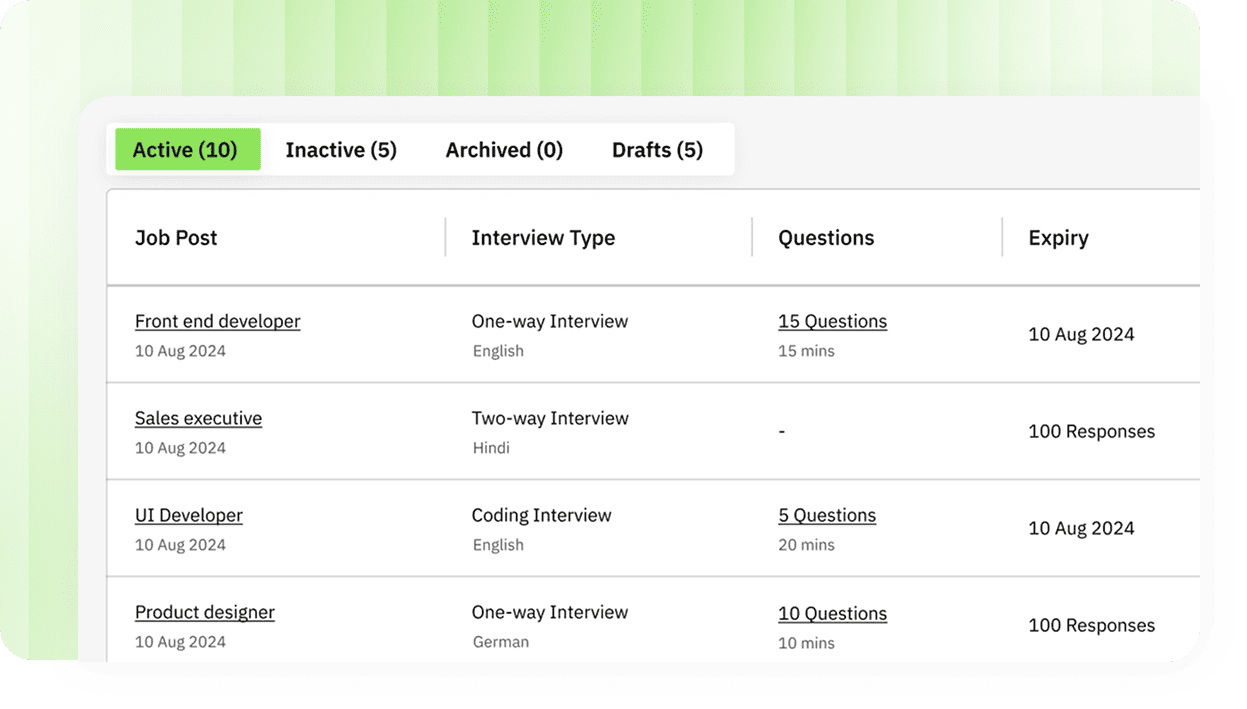
Considering the range of assessment modes and the depth of AI tools for recruitment available, Hyring is the better alternative to Jobma.
Scheduling & Automation
Hyring
Scheduling automation is built right in. Candidates get direct interview links. The API lets teams push and pull candidate data and results into their ATS workflows. Bulk invite and reminder features make it realistic to run campaigns with hundreds or thousands of candidates without drowning in manual follow-up.
Jobma
Scheduling works well for the one-way format. Candidates get invitations and complete interviews on their own time.
But the level of recruitment automation software capability, especially around bulk operations and deep ATS integration, is not as extensive.
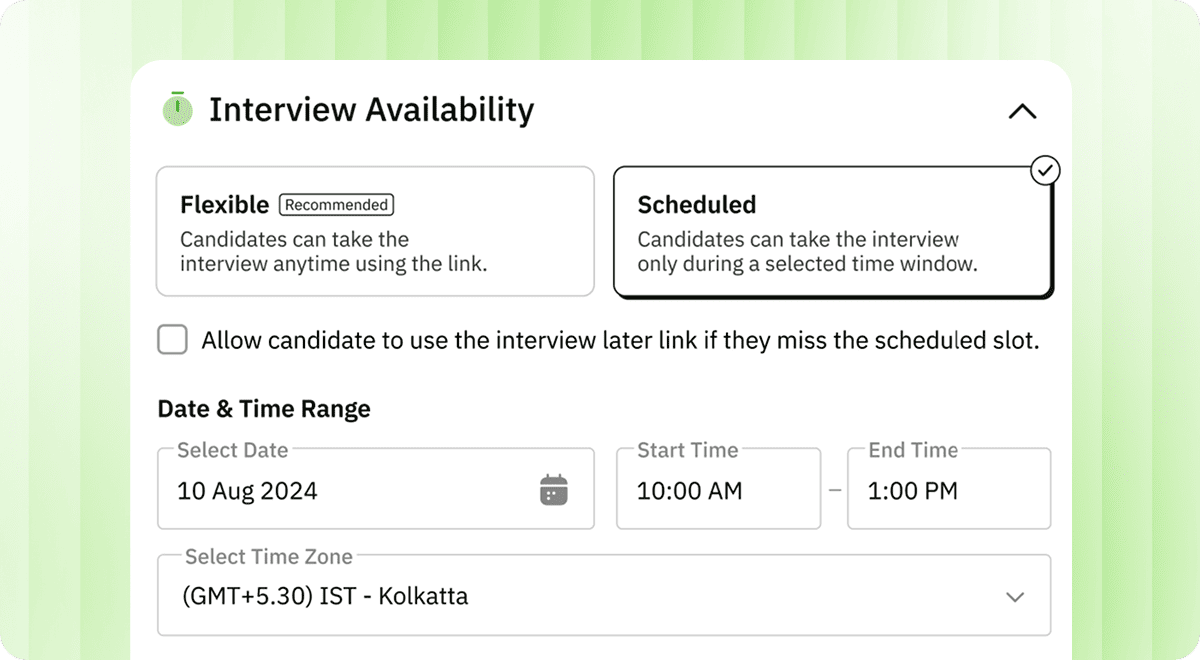
For teams that need scheduling and automation that scales with volume, Hyring has the wider, more practical toolkit.
Reporting & Hiring Analytics
Hyring
Hyring produces cognitive and skill reports for every candidate. It studies on-system activities and behavioral patterns and turns all of that into detailed reports. Recruiters get transcripts, structured scores, proctoring flags, video recordings, sentiment analysis, engagement indicators, and cognitive insights. Everything a hiring manager needs sits in one place.
Jobma
Jobma provides analysis and reports, but the depth is thinner. The reporting works for reviewing one-way interview responses, but it does not layer in the kind of multi-dimensional intelligence that Hyring's analytics deliver.
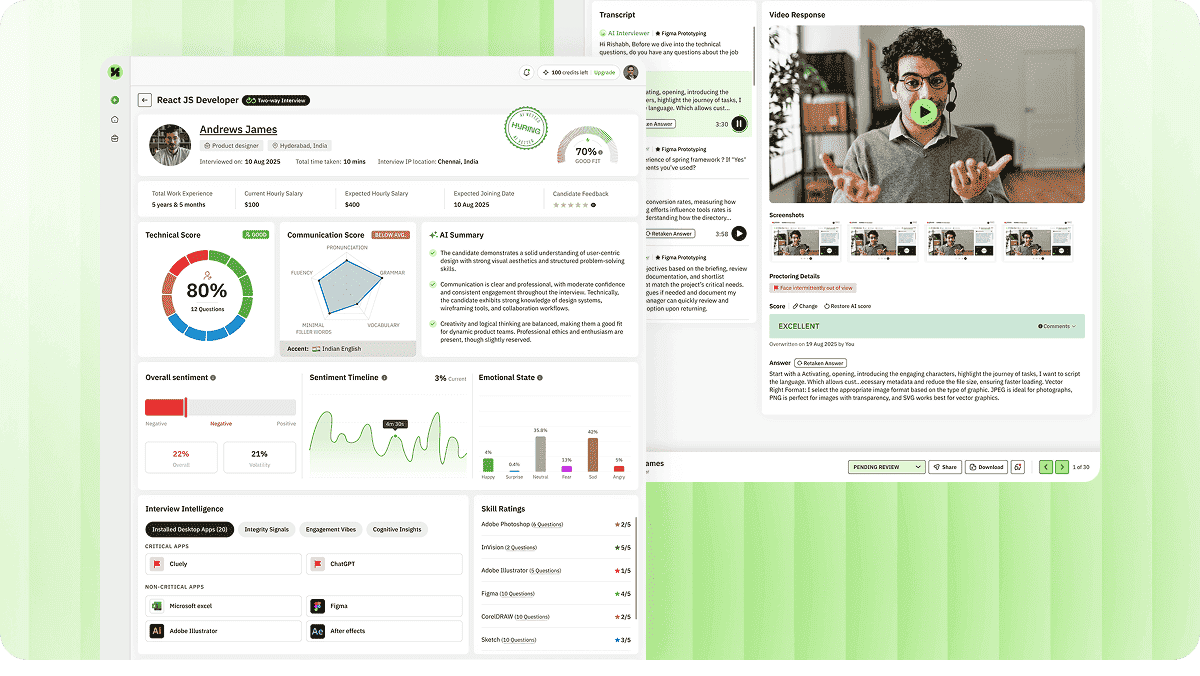
For teams that want recruitment analytics dashboards with real substance behind them, Hyring is the standout choice among alternatives to Jobma.
Global Hiring & Accessibility
Hyring
Supports interviews in 10+ languages and includes a standalone English proficiency assessment test that evaluates communication skills through actual conversation rather than rigid test formats. 24/7 global support with live chat means international teams are never left waiting.
Jobma
Handles global hiring through its one-way format, which naturally works across time zones since candidates record at their convenience. Language and communication testing is available.
But the depth of multilingual AI interview capability is not as strong as what Hyring brings to the table.
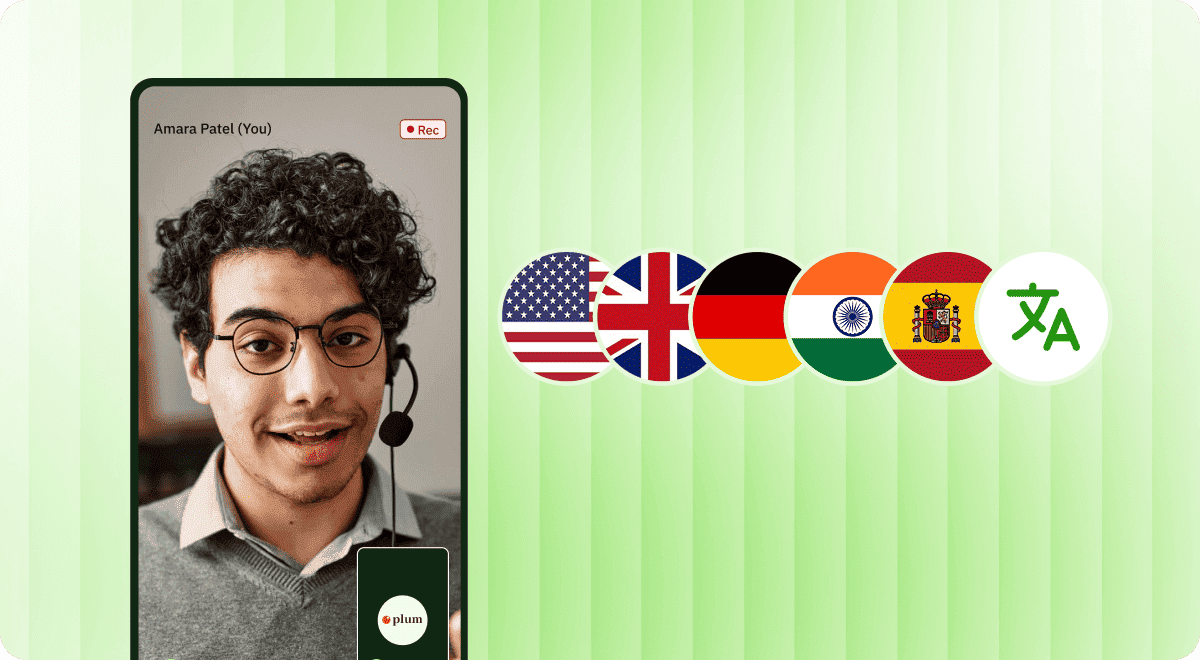
Both platforms work globally. Hyring's multilingual AI interviewing and dedicated language testing tip the scales for teams hiring across regions and languages.
The Human Touch: Jobma vs Hyring
Hyring
Weaves human involvement into every stage that matters. Flagged proctoring incidents go to recruiters for their own assessment. Scoring can be overridden. Hiring managers review full interview data before making a call. The whole system is set up so that AI does the heavy screening work, but people own every decision that actually counts.
Jobma
Jobma's live interview option is human-led by design, which has its own value. But the one-way interview - the platform's main product - is less interactive. The candidate records, and the recruiter reviews later.
The human touch in Jobma is concentrated at the review stage rather than threaded through the entire process.
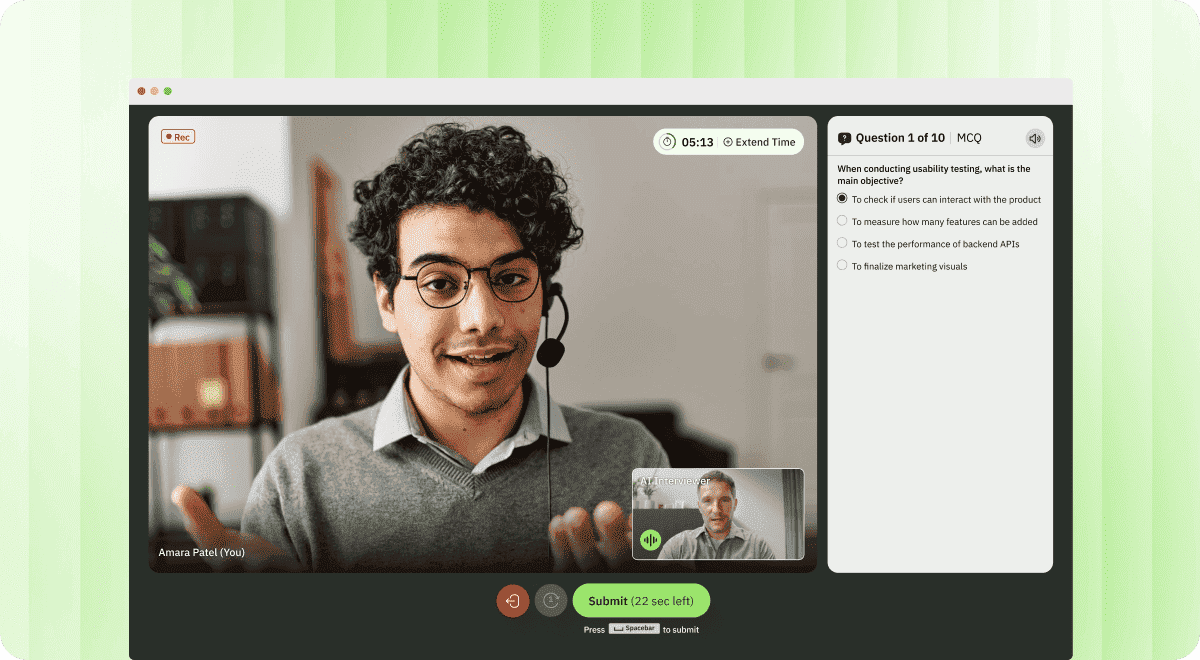
Every hiring decision comes with legal, ethical, and reputational weight. Hyring is built with this reality in mind, keeping humans at the helm of every critical decision while AI takes on the screening workload.
That philosophy lines up with how most organisations actually want to hire, making Hyring the more trusted choice for day-to-day recruitment.
UI UX Experience
Recruiter Experience
Hyring
The dashboard is clean and gets out of the recruiter's way. Templates, interview builders, and a short learning curve mean you can go from setup to a live campaign without a week of training. Help articles and live chat are there when you need them, not buried behind a ticket system.
Jobma
The interface is well-organised for creating one-way and live interviews. Setting up interviews and getting them out to candidates is straightforward. But as AI interview software goes, it does not offer the same depth of dashboard functionality or real-time analytics that Hyring puts in front of recruiters.
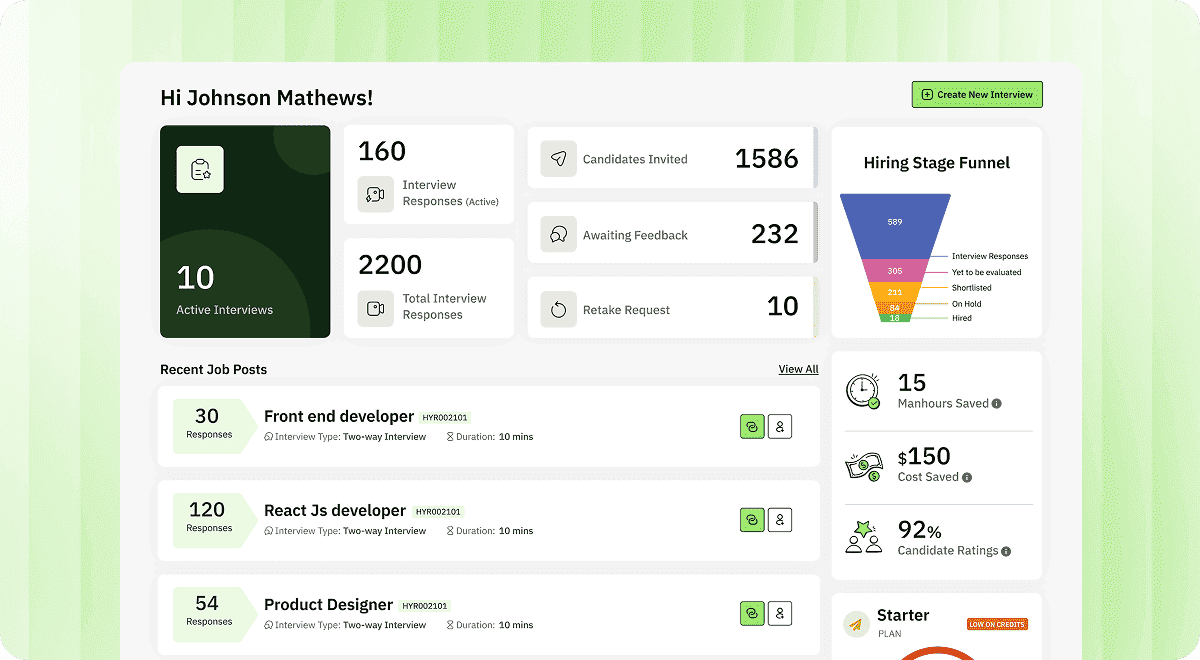
Hyring's interface is more intuitive, richer in features, and easier to get productive with, making it the better pick for recruiters who need more than basic video interview management.
Candidate Experience
Hyring
Gives candidates both asynchronous and live two-way experiences. Proctoring runs in the background, balancing fraud detection with candidate comfort. Candidates get clear instructions, a predictable flow, and a transparent evaluation process. It feels less like a test and more like a real conversation.
Jobma
Delivers a clean one-way interview experience. Candidates record at their own convenience, which takes the pressure off scheduling. Branding options keep things looking professional. But the experience is largely one-directional - the candidate answers fixed questions with no back-and-forth or real-time interaction.
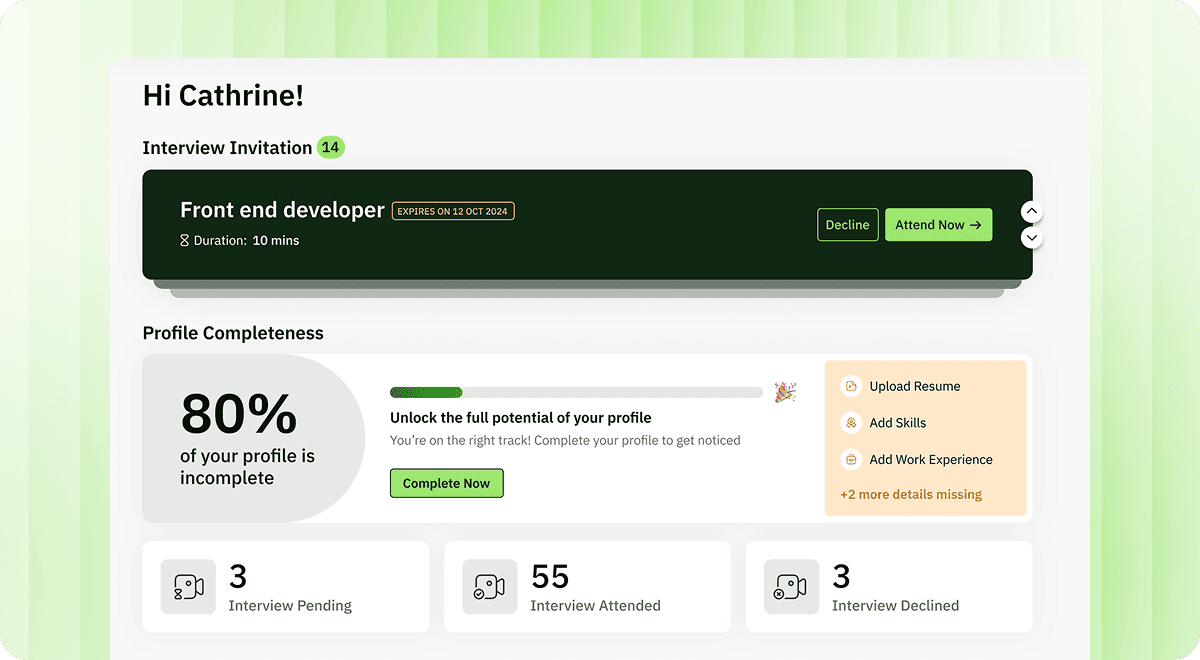
Recruiters ramp faster and lean more heavily on Hyring in practice. For a platform that candidates also feel good about using, Hyring is the stronger alternative to Jobma.
Security & Compliance
Data Protection
Both companies meet enterprise compliance standards. Hyring documents its data handling practices through help center articles and enterprise collateral. Jobma also maintains enterprise-level security controls.
As with any vendor evaluation, have your security team review data residency, encryption, and access control specifics.
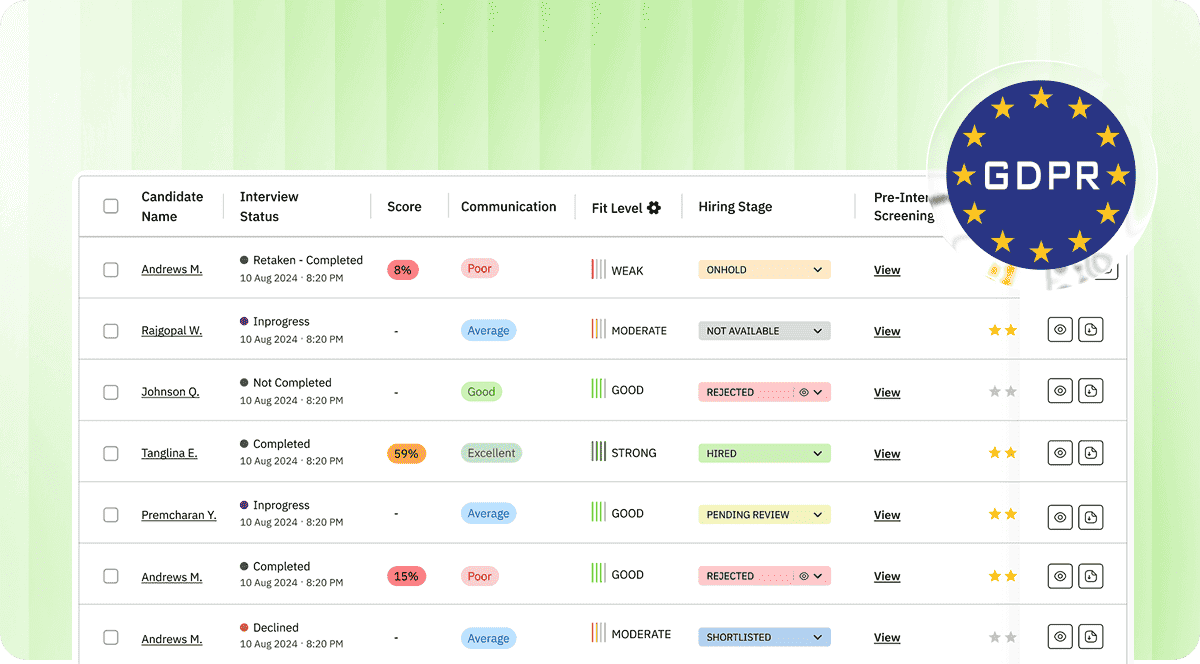
Compliance & Certifications
Hyring and Jobma both hold SOC2 and ISO 27001 certifications. Hyring's badges are displayed across its enterprise pages. Jobma also makes its certifications publicly visible.
For regulated hiring workflows like healthcare, both vendors can discuss formal compliance evidence and data residency during commercial conversations.
Candidate Privacy
Hyring addresses retention, reporting, and candidate transparency through its help articles. Jobma's privacy details are available through standard legal documentation.
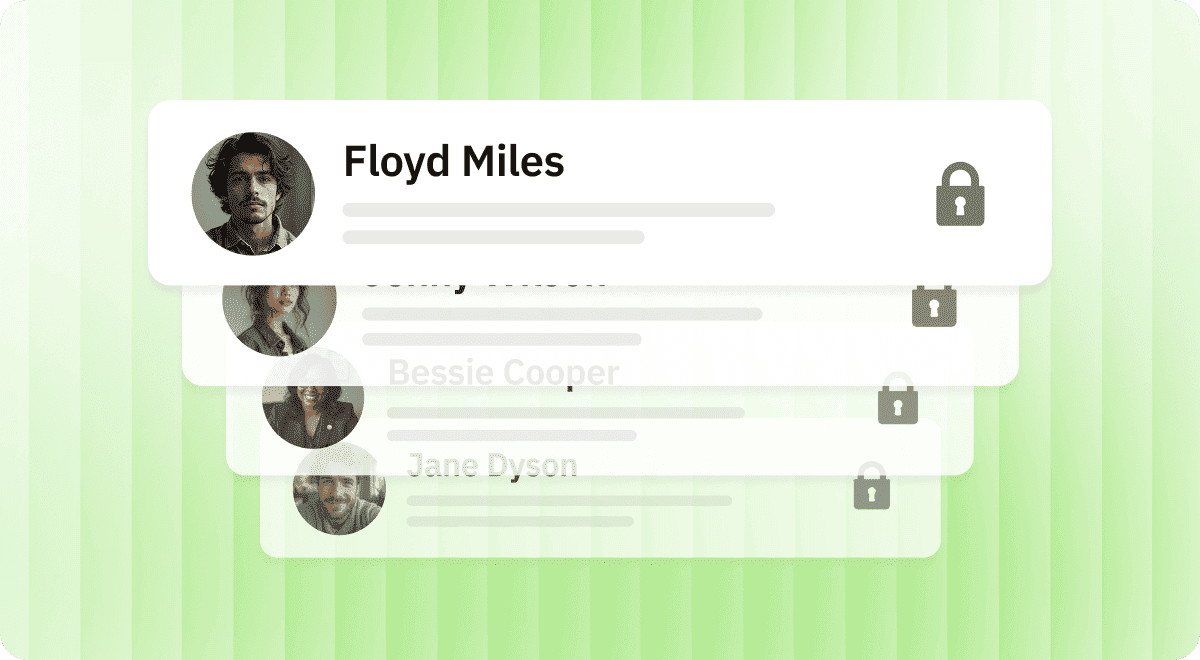
Both platforms meet enterprise security expectations. Hyring's compliance and data-handling practices are specifically designed around interviews, recruiter workflows, and hiring data.
For teams evaluating security in the context of recruitment operations, Hyring is the more natural fit as an alternative to Jobma.
Cost & Pricing Structure
Pricing model
It works out to roughly $1 to $5 per interview at higher volumes. That makes it straightforward for recruiters and finance teams to estimate what each hire actually costs based on their funnel shape and interview volume.
Jobma uses a subscription-based model. Teams pay a recurring fee for platform access. This is predictable in the sense that you know your monthly bill, but it does not flex downward when hiring slows. For teams with uneven hiring cycles, that rigidity can eat into budget.
Transparency
Hyring runs on a usage-based pricing model tied to interview volume. You pay based on what you actually use - whether that is number of interviews, credits consumed, or volume of candidates screened. No flat fee per recruiter seat sitting idle during a slow month.
Subscription pricing is simple to understand, but it does not scale with your actual activity. A usage-based model like Hyring's tends to deliver better value for teams that hire in waves or across seasonal peaks.
Pricing model
It works out to roughly $1 to $5 per interview at higher volumes. That makes it straightforward for recruiters and finance teams to estimate what each hire actually costs based on their funnel shape and interview volume.
Jobma uses a subscription-based model. Teams pay a recurring fee for platform access. This is predictable in the sense that you know your monthly bill, but it does not flex downward when hiring slows. For teams with uneven hiring cycles, that rigidity can eat into budget.
Transparency
Hyring runs on a usage-based pricing model tied to interview volume. You pay based on what you actually use - whether that is number of interviews, credits consumed, or volume of candidates screened. No flat fee per recruiter seat sitting idle during a slow month.
Subscription pricing is simple to understand, but it does not scale with your actual activity. A usage-based model like Hyring's tends to deliver better value for teams that hire in waves or across seasonal peaks.
You can check out Hyring's full pricing structure and even book a consultation at Hyring Subscription Plans. Among alternatives to Jobma, Hyring's cost-per-interview model offers the kind of flexibility that high-volume teams actually need.
Conclusion: Which is the Best AI Interviewer – Jobma or Hyring?
Most hiring teams land on Hyring for its recruiter-owned workflows, visible proctoring, role-ready assessments, and smooth ATS integration - the things that matter when you are actually running a hiring operation day to day.

Why Hyring is stronger for recruiting teams
Recruiter-facing AI interview software with proctoring built into every format, role-based templates for video, automated phone screening, and coding interviews, a public API with 40+ ATS integrations, and pricing that rewards volume instead of punishing it.
Choose Hyring if
You handle high-volume or role-varied hiring and want AI-powered conversational interviews, transparent proctoring, recruiter dashboards, and tight ATS integration.

Where Jobma is strong
One-way video interviewing, a clean candidate experience for pre-recorded responses, live recruiter-led interviews, and coding assessments with AI integration.
Choose Jobma if
Your main need is a simple one-way video interview platform with live interview capability, and you do not need AI-driven two-way screening or advanced proctoring.
For teams where the goal is effective, scalable hiring powered by AI recruitment software that genuinely adapts to your candidates and your process, Hyring is the clearer choice.
Disclaimer: Information is sourced from public records and is subject to change. This comparison does not constitute a guarantee of current service offerings or specifications.
Frequently Asked Questions
Can Hyring or Jobma replace human recruiters?
Neither platform is designed to.
Hyring automates the screening stage while making sure humans stay in charge of scoring, review, and every final decision around culture fit. Jobma's live interviews are human-led by nature, and the one-way format still needs a recruiter to review and rate.
For organisations that want AI assistance without giving up recruiter accountability, Hyring is the more complete option.
Will Hyring or Jobma work with my ATS, like Greenhouse or Workday?
Hyring's API supports 40+ integrations and pipes candidate data, interview results, and reports straight into your ecosystem - Greenhouse, Workday, Lever, Zoho Recruit, iCIMS, Workable, Ashby, SmartRecruiters, BambooHR, JazzHR, Bullhorn, SAP, and more.
Jobma also offers ATS integrations, but the documented depth in terms of public API and connector range is not as broad.
Which integrates better with LinkedIn Recruiter - Hyring or Jobma?
Teams source on LinkedIn, and when the candidate clicks apply, they land directly in Hyring's interview screen. No scheduling back-and-forth needed. Jobma can also receive candidates from LinkedIn, but the typical workflow involves sending a one-way interview link rather than an immediate screening handoff. If LinkedIn is where you do most of your sourcing, Hyring is the smoother complement.
Jobma vs Hyring: Which supports non-English interviews?
Hyring supports interviews in 10+ languages and has a standalone English proficiency test built for global hiring teams. Jobma offers language and communication testing as well. For multilingual recruiting where AI-driven language assessment is important, Hyring covers more ground.
Is Hyring or Jobma better for screening software engineers vs sales roles?
Hyring handles both, and a lot more besides. Its AI Interviewer supports developers, sales, customer support, and operational roles with formats tailored to each. Jobma has coding assessments and skill assessments, but role diversity does not run as deep, particularly outside of technical positions.
For everyday hiring across departments, Hyring is the more versatile platform.
Stop Screening Manually.
Start Hiring Smarter with Hyring.
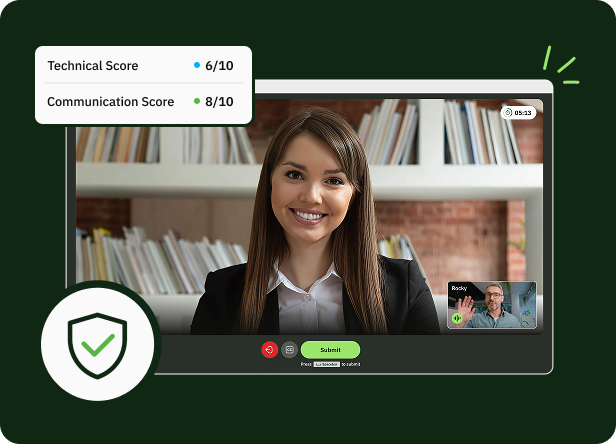
If this comparison has shown you anything, it's that Hyring is built for the way recruiting teams actually work — fast-paced, high-volume, and demanding real accountability at every step. From AI video and phone screening to built-in proctoring and ATS sync, Hyring gives your team the tools to move faster without cutting corners.
See why hiring teams at scaling companies choose Hyring over Jobma.
Compare with other platforms