Karat VS Hyring
Karat vs Hyring:
A Detailed Comparison
Written on: 02 Mar 2026
Last updated: 29 Sep 2026

Written by
Rakesh Kumar

Fact Checked by
Adithyan RK
Table of Contents
- An Overview
- Why Hiring Teams Move From Karat To Hyring
- Karat vs Hyring - Metrics Comparison
- Ecosystem: Products & Hiring Workflow
- Karat vs Hyring: A Snapshot
- How Hyring Outperforms Karat
- Conversational AI Interviewing
- Candidate Authenticity & Proctoring
- Scoring, Fairness & Bias Reduction
- Assessment Types & Role Coverage
- Scheduling & Automation
- Reporting & Hiring Analytics
- Global Hiring & Accessibility
- The Human Touch: Karat vs Hyring
- UI UX Experience
- Recruiter Experience
- Candidate Experience
- Security & Compliance
- Cost & Pricing Structure
- Summary: Which Platform Is Right for You?
- Frequently Asked Questions
An Overview
Karat focuses narrowly on technical interviewing for software engineering roles. Its Interview Engineers handle first-round coding interviews at scale, and the output is a consistent, scored report that engineering managers can act on. The platform is well-regarded among engineering hiring teams specifically.
Hyring is designed for recruiters who need to move quickly across a broader range of roles. It handles video, phone, resume, coding, and language assessments in a single platform. The workflow is built around operational recruiting teams, not just engineering pipelines.
When recruiting teams evaluate Karat alternatives, they are typically looking for broader role coverage, documented remote proctoring, transparent pricing, and recruitment-facing ATS connectors that do not require custom implementation. In the Karat vs Hyring debate, Hyring addresses all of those directly, making it the clear alternative to Karat for teams hiring across multiple functions.
Why Hiring Teams Move From Karat To Hyring
Karat is a strong product for one use case: technical screening of software engineers. Outside that lane, the picture is less clear. Pricing is not publicly listed. Proctoring capabilities are not publicly documented. There is no AI video interviewer, no phone screener, and no resume screening product.
For recruiters running diverse hiring campaigns across engineering, operations, sales, and support roles, those gaps matter. Teams looking for an alternative to Karat find that Hyring gives them a single platform covering all those roles, with per-interview pricing and documentation available without a sales call.
The Karat vs Hyring comparison makes this mismatch obvious. Transparency and role coverage are the two most common reasons teams choose Hyring as their Karat alternative, and neither of those is a minor consideration when you are hiring at scale.
Karat vs Hyring - Metrics Comparison


Ratings change over time. Review live pages for the latest updates.
Ecosystem: Products & Hiring Workflow
How a platform is built tells you a lot about who it was built for. This section breaks down how Hyring and Karat structure their product ecosystems and how candidates move through each platform's hiring workflow, based on publicly available product information from their respective websites.
Hyring Review
Product Ecosystem
Hyring is built around the complete early-stage recruiting workflow. Its core modules are:
AI Video Interviewer
Asynchronous and live two-way video interviews with dynamic follow-ups that adapt to candidate responses.
AI Phone Screener
AI Coding Interviewer
AI Resume Screener
English Proficiency Test

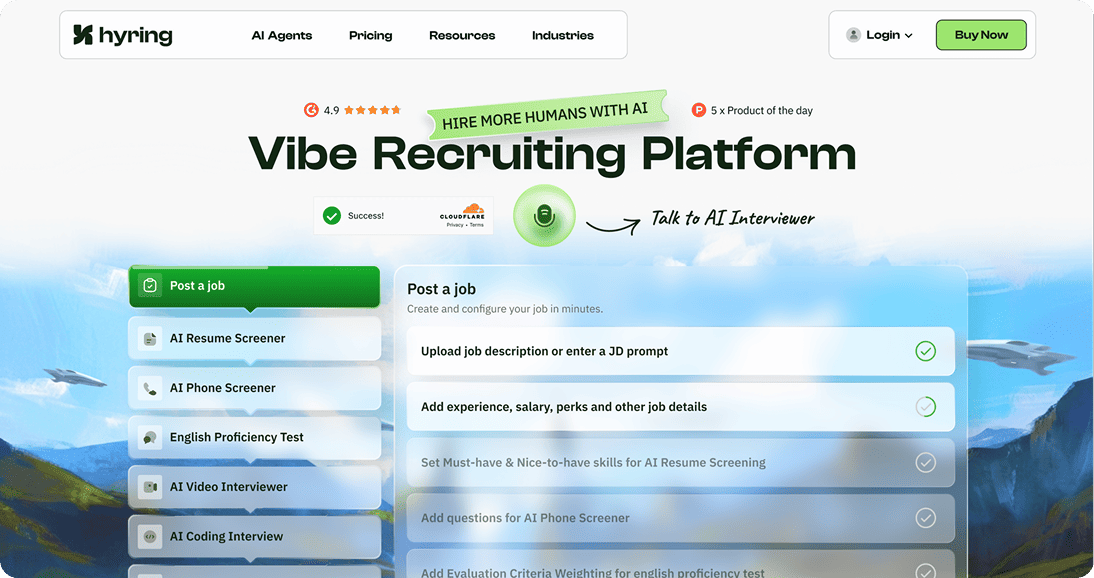
Together, these modules form a unified screening-to-hire system that a single recruiting team can operate without engineering support. For teams researching Karat alternatives with full-funnel coverage, this breadth is a primary differentiator.
Brief
On G2 and Capterra, recruiters frequently describe Hyring as a tool that reduces early-stage screening time while surfacing better candidates earlier in the funnel. The feedback centers on consistency, scoring transparency, and the time saved on manual phone screens.
PROS
- Cuts early screening time significantly
- Structured, consistent interview format
- Proctoring signals are visible and recruiter-friendly
- Summaries are easy for hiring managers to act on
- Quick to roll out
CONS
- Less suited to very small teams
- Best value at moderate to high volume
- Does not replace an ATS
TAKEAWAY
Hyring is built for recruiting teams at mid to large scale who want to hire faster without trading away structure or human judgment. As an alternative to Karat, it serves a much wider range of hiring needs.
Karat Review
Product Ecosystem
Karat's ecosystem centers on one product: the Karat Interview. Its supporting tools include:
Karat Interview
Trained Interview Engineers conduct live, structured technical interviews on behalf of client companies in a real-time IDE. The output is a scored report and, optionally, an AI-generated summary.
Scheduling Tools
ATS Integrations
Interview Performance Benchmarking
AI-Generated Interview Summary
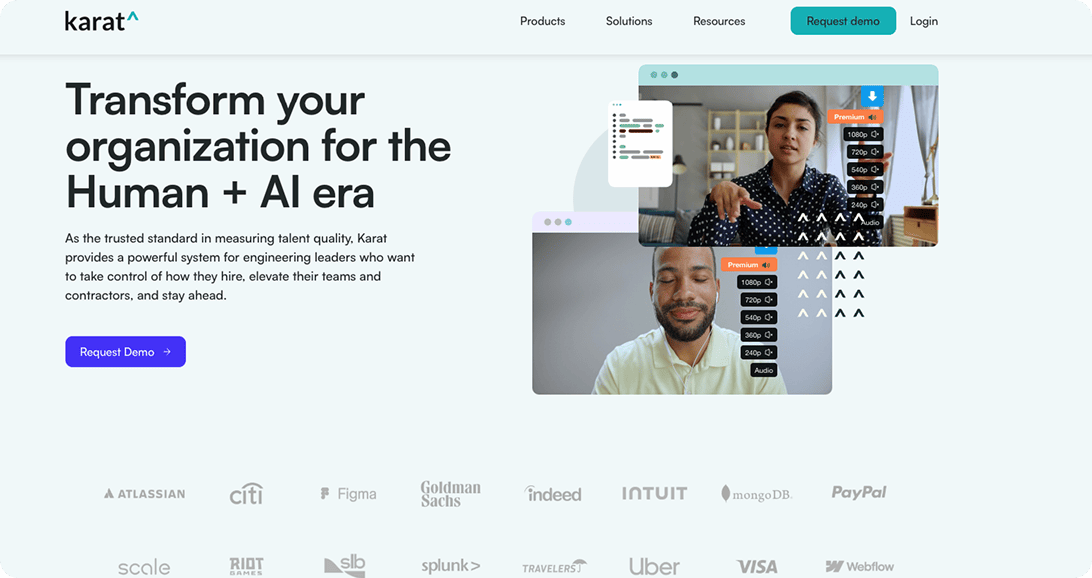
The model solves one problem well: the inconsistency and time cost of first-round technical screens for software engineering roles.
Brief
Reviews on G2 give Karat a 4.2/5. Feedback typically centers on report quality, structured consistency across interviewers, and time saved for engineering teams.
PROS
- Highly structured technical assessments
- Consistent scoring across all interviews
- Reduces engineering team time in first-round screens
- Strong focus on software engineering roles
CONS
- Narrow role coverage
- No AI video, phone, or resume screening
- Pricing is not publicly available
- Proctoring and compliance details are not publicly documented
TAKEAWAY
Karat is a specialist tool for technical hiring. For teams evaluating Karat alternatives with broader role coverage needs, the product gaps become significant very quickly.
Bottom Line
Hyring's ecosystem is modular and covers the full recruiting workflow across role types.
Karat's ecosystem is purpose-built for technical interviewing by human Interview Engineers.

Hyring excels at: High-volume AI screening, role versatility, recruiter dashboards, and transparent pricing.
Karat excels at: Structured, human-led technical interviews for software engineering roles at scale.
In the Karat vs Hyring comparison, both are capable platforms, but they serve different workflows. For most recruiting teams weighing Karat alternatives, Hyring's breadth is the deciding factor.
Karat vs Hyring: A Snapshot
Feature / Capability
Karat
Conversational AI interviewing (dynamic, two-way)
Dynamic follow-up questions
Candidate authenticity and remote proctoring
Not stated publicly
Liveness checks and proctoring signals
Not stated publicly
Coding and role-based assessments
Language and communication testing
Not stated publicly
Automated scheduling / calendar sync
Hiring analytics and reports
ATS / HRIS integrations and public API
SOC 2 and ISO 27001 enterprise security
Not stated publicly
Custom branding and candidate experience
Not stated publicly
Accessibility and global support
Support and onboarding
AI Video Interviewer
AI Phone Screener
Not stated publicly
AI Resume Screener
Not stated publicly
AI Coding Interviewer
Proctoring depth
Not stated publicly
Audited using publicly available product information. Details may change.
How Hyring Outperforms Karat
Conversational AI Interviewing

Hyring
Hyring runs two-way video interviews and AI phone interviews with follow-up questions that adapt in real time. The scoring model goes beyond keyword matching, measuring speech clarity, content depth, and role fit together. For high-volume positions, this produces usable shortlists in hours rather than days.
Karat
Karat's Interview Engineers conduct live two-way sessions as well, but the model is human-dependent. Every interview requires a scheduled slot with a trained engineer. That structure works well for engineering roles but does not scale efficiently across a broader hiring funnel.
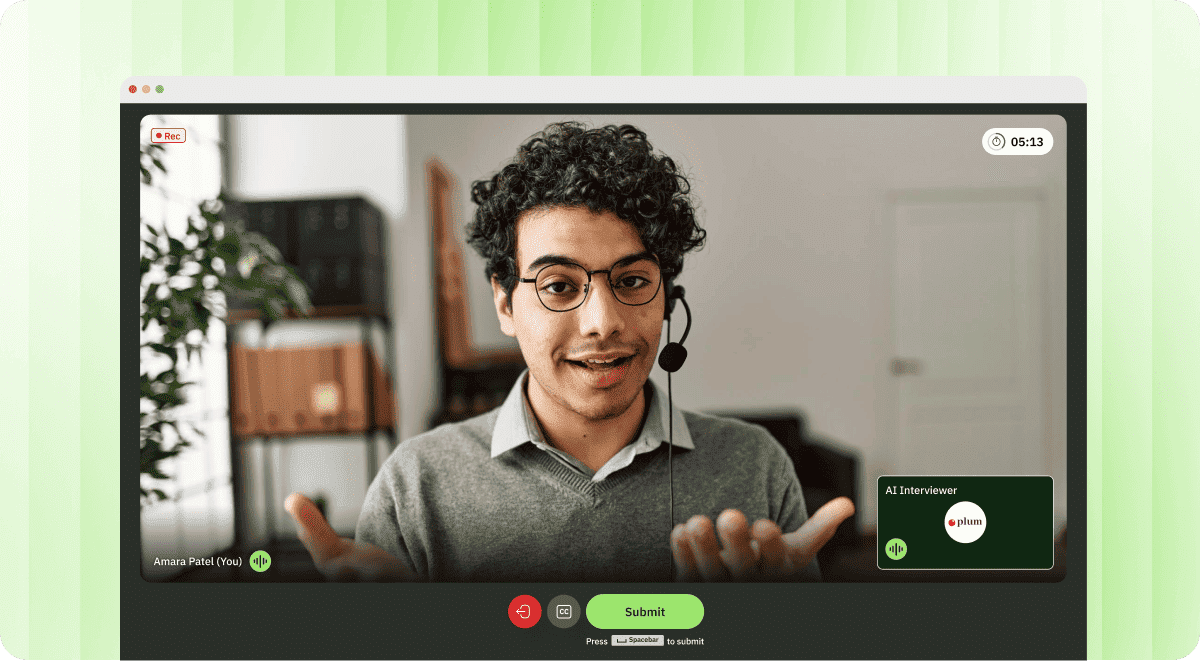
For teams running diverse or high-volume hiring, Hyring is the more scalable option. In the Karat vs Hyring comparison on conversational screening, Hyring's AI-driven approach handles more role types at higher volume without the scheduling dependency.
Candidate Authenticity & Proctoring
Hyring
Hyring captures specific proctoring events: tab switching, multiple faces or voices detected, screen sharing, face out of frame, and plagiarism signals. These events appear directly in recruiter-facing reports so teams can flag and review specific interviews without accepting a black-box result. Hyring also has a proprietary desktop app that detects sophisticated AI-assisted cheating tools, including Parakeet AI and Cluely.
Karat
Karat does not publicly document proctoring capabilities. Given that Karat's model uses human Interview Engineers in live sessions, some detection may happen contextually during the interview itself. But there is no documented proctoring dashboard or recruiter-visible integrity signal from Karat.
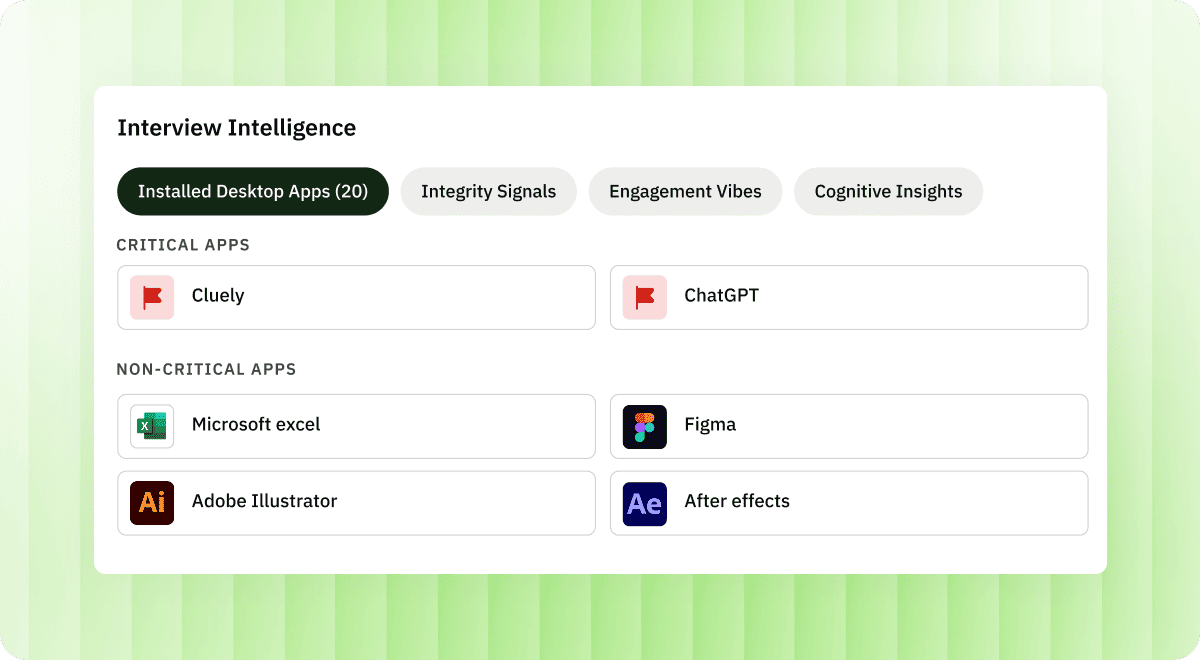
Hyring. The proctoring layer is transparent, recruiter-facing, and specifically built for interview integrity at scale. This is one of the clearest advantages Hyring holds as an alternative to Karat.
Scoring, Fairness & Bias Reduction
Hyring
Hyring's scoring is structured and traceable. Recruiters see competency-by-competency ratings, transcripts, and score explanations. Bias mitigation is built into the question weighting. Human override is available at every scoring stage.
Karat
Karat produces structured scores through its Interview Engineers, which provides consistency across interviewers. The scoring framework is not as publicly documented from a bias-reduction and competency-traceability standpoint as Hyring's.
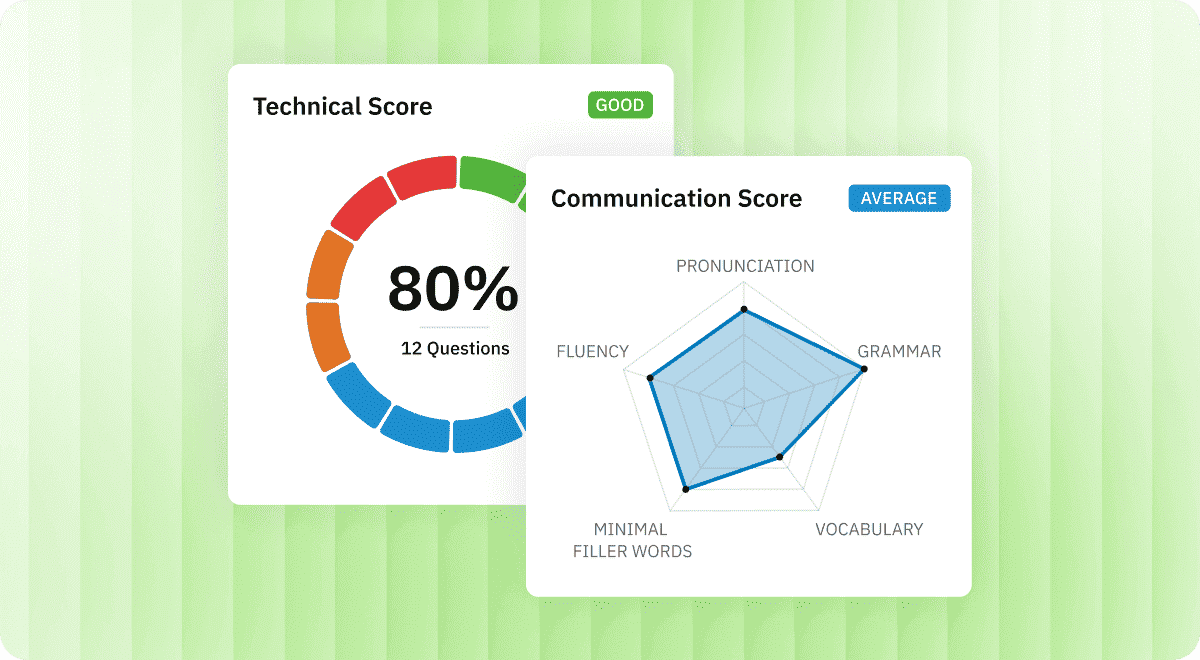
For recruiter workflows where traceable, auditable scoring matters, Hyring has a more visible and documented edge. This is a notable factor when evaluating Karat alternatives for regulated or compliance-heavy hiring environments.
Assessment Types & Role Coverage
Hyring
Hyring covers developers, customer-facing roles, operations, and sales through dedicated assessment modules. Entry-level to senior-level templates exist across these verticals.
Karat
Karat covers software engineering. That is the depth of its role coverage. A company running parallel hiring campaigns for a backend engineer and a customer support lead will need two separate tools if Karat is in the stack. With Hyring, both run through the same platform.
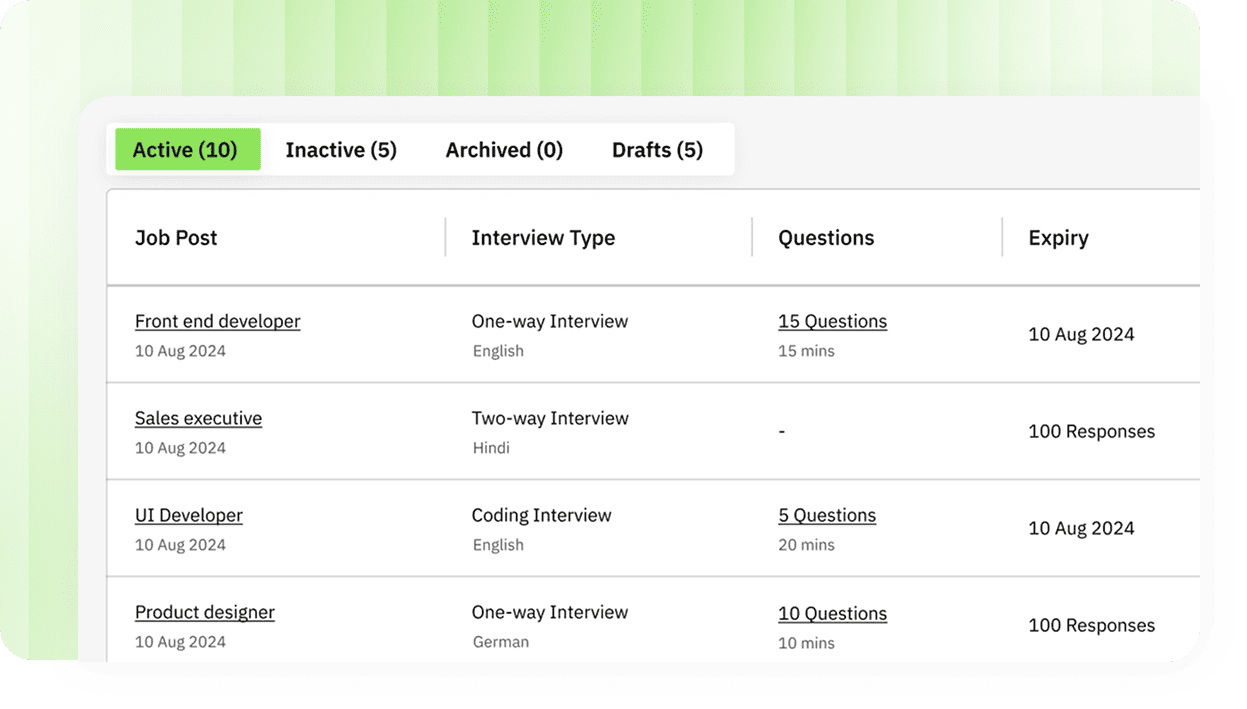
Hyring, by a significant margin, for teams hiring across multiple role types. For teams actively searching for Karat alternatives that handle more than just engineering, this is often the clearest differentiator in the Karat vs Hyring comparison.
Scheduling & Automation
Hyring
Hyring has built-in scheduling automation, bulk invite features, automated candidate reminders, and API-level integration for pushing and pulling candidates from ATS platforms.
Karat
Karat supports flexible scheduling and ATS-linked invite flows, documented primarily for engineering interview workflows.
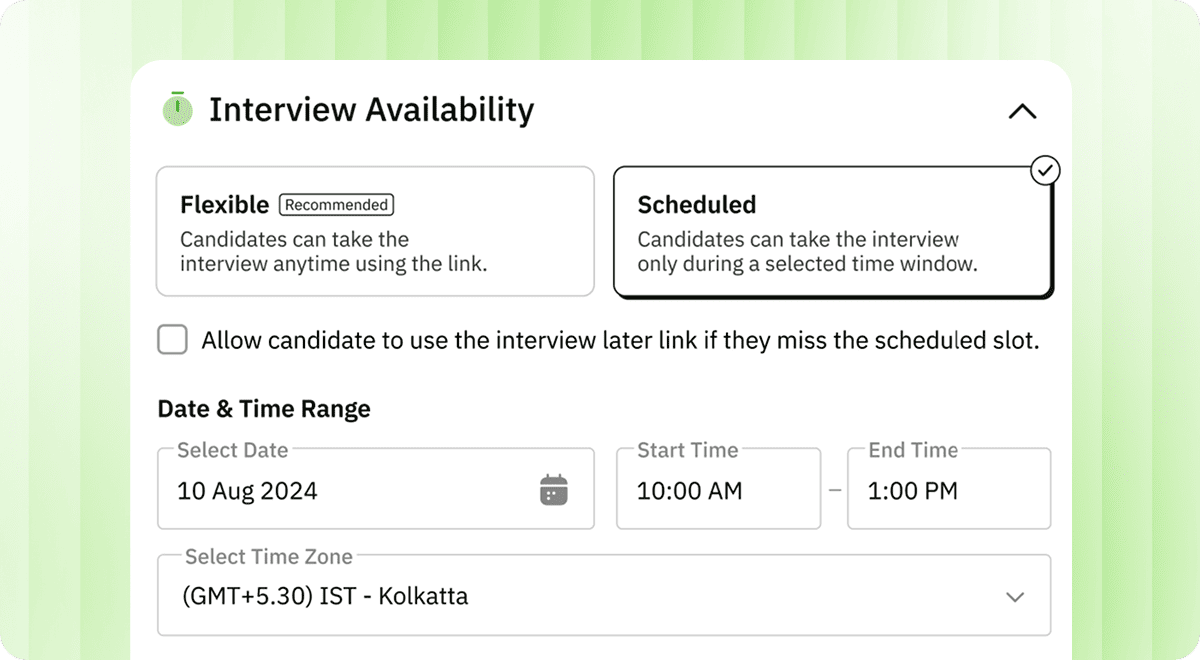
Both platforms handle scheduling competently. For bulk hiring campaigns across multiple role types, Hyring's automation tooling is more comprehensive and makes it a stronger alternative to Karat at scale.
Reporting & Hiring Analytics
Hyring
Hyring reports include transcripts, competency scores, proctoring flags, video recordings, and sentiment and cognitive engagement signals. A hiring manager can open a report and make a decision without needing additional context.
Karat
Karat produces interview reports and, optionally, AI-generated summaries focused on technical performance benchmarking, which is exactly what engineering managers need. Interview performance data and benchmarking are well-documented Karat strengths.
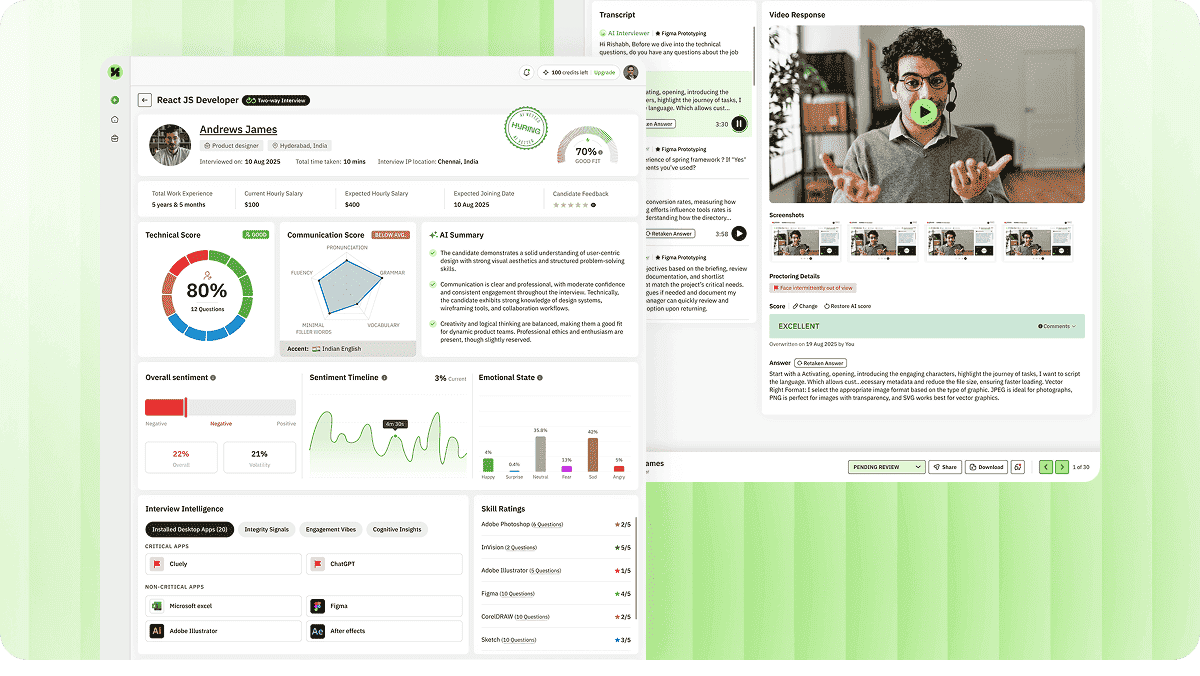
For pure engineering hiring, Karat's reports are well-suited. For mixed-role hiring and recruiter-accessible reporting, Hyring's reports are more versatile. In the broader Karat vs Hyring debate, Hyring serves a wider audience of decision-makers.
Global Hiring & Accessibility
Hyring
Hyring supports multilingual interviews across 10+ languages and has a mobile-optimized candidate flow. That matters for global teams running interviews across time zones and language groups.
Karat
Karat emphasizes global scale and technical coverage across roles and geographies, but language-specific candidate screening is not a publicly documented focus.
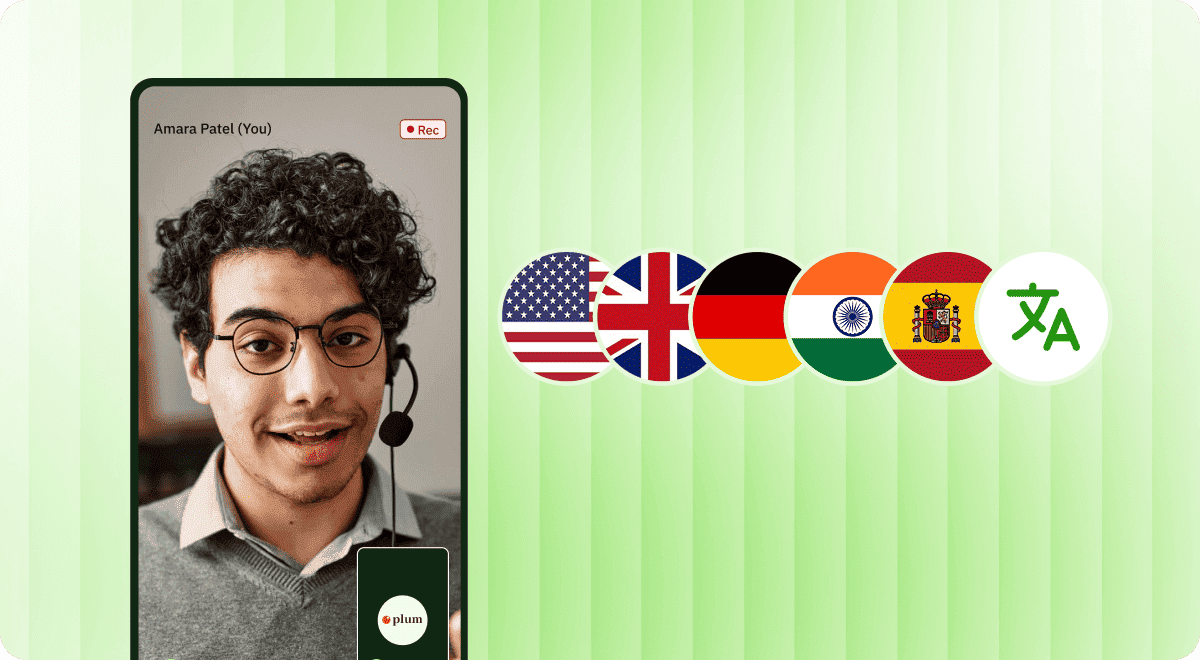
For multilingual or globally distributed hiring, Hyring has clearer documentation and capability, making it the preferred Karat alternative for international recruiting teams.
The Human Touch: Karat vs Hyring
Hyring
Hyring's most distinctive feature here is its AI Twin. Recruiters can build a personalized AI version of themselves, trained on their own interview style, question preferences, and evaluation criteria. The AI Twin conducts interviews on the recruiter's behalf while preserving their individual approach to candidate assessment. It is not a generic bot. It reflects how that specific recruiter hires.
Beyond the AI Twin, Hyring keeps humans involved at every critical decision point. Recruiters review flagged proctoring incidents, apply score overrides, and make final calls on culture fit. AI handles the volume. Humans handle the judgment.
Karat
Karat takes a different route. Every interview involves a trained human Interview Engineer conducting the session live. The human presence is embedded in the interview itself rather than sitting at the review stage. That produces a rich, human-observed data point per candidate, but requires scheduling a live session for every candidate, which limits flexibility at scale.
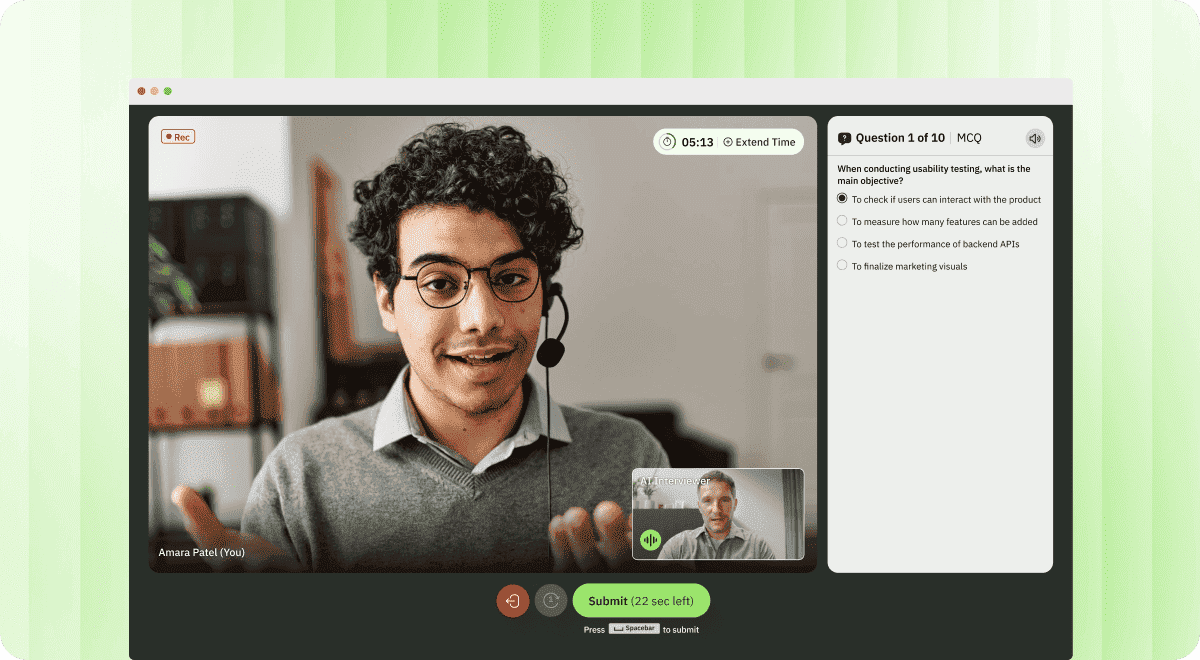
Hyring. The AI Twin brings a genuinely human dimension to automated screening, something most Karat alternatives do not offer. Combined with human oversight at the review and decision stages, Hyring manages to feel recruiter-led even at high volume.
UI UX Experience
Recruiter Experience
Hyring
Hyring's recruiter dashboard is designed for fast onboarding. Templates exist for common interview types. The help center covers the core workflow (create interview, launch, review results) in accessible documentation. Most recruiters are running interviews within a single business day of setup.
Karat
Karat's interface serves engineering hiring teams well. The experience is built around the Interview Engineer coordination and structured technical report review. For a generalist recruiter managing multiple roles simultaneously, the interface is more limited.
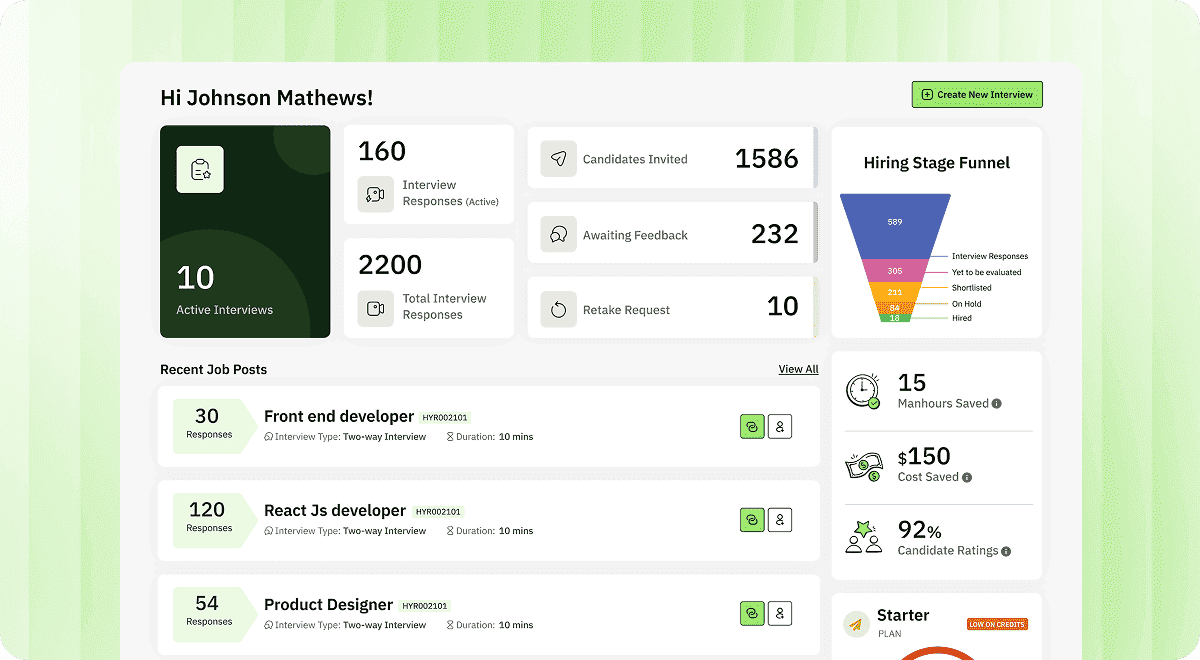
Hyring offers a more versatile recruiter interface for teams managing diverse hiring pipelines.
Candidate Experience
Hyring
Hyring's candidate-facing interface is clean, guided, and consistent across devices. Instructions are clear before the session begins, the interview flow is predictable, and the mobile-optimized design means candidates are not dependent on a specific setup to complete their interview.
Karat
Karat's candidate interface is centered on a real-time IDE for live technical sessions. For engineering candidates comfortable in that environment, the experience feels familiar. The interface is purpose-built for coding interviews and is less relevant to candidates coming in for non-technical roles.
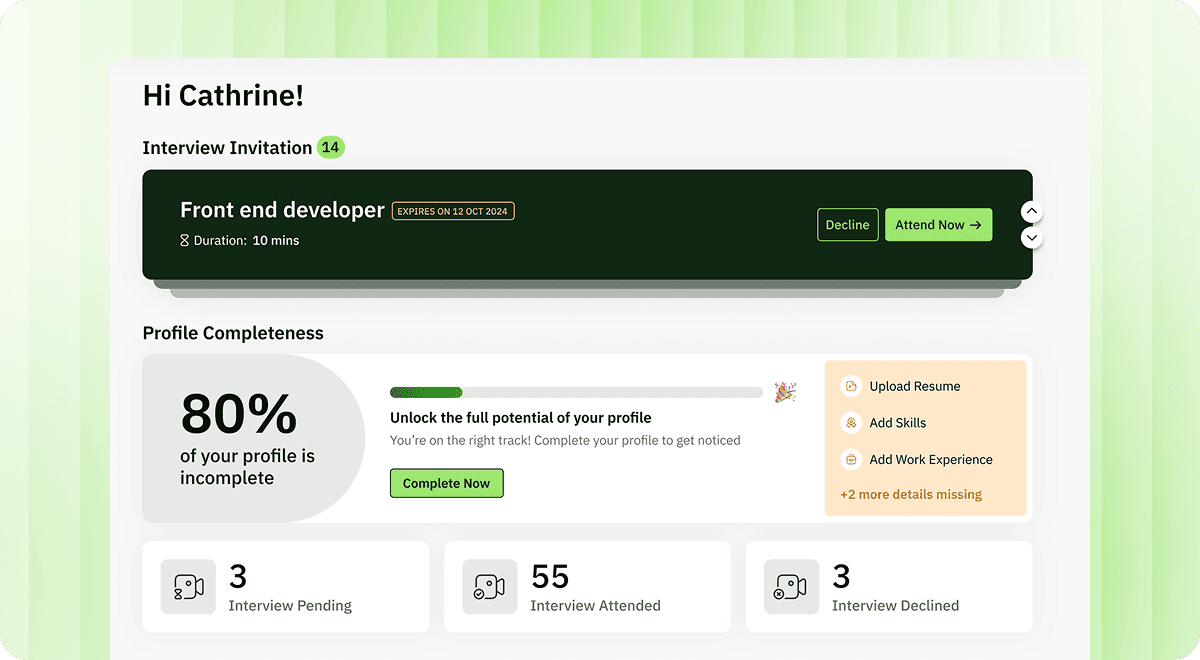
Hyring's candidate interface works across a broader range of roles and devices. For diverse candidate pools, the experience is more accessible and consistent. This is one more reason teams choose Hyring as their alternative to Karat.
Security & Compliance
Data Protection
Hyring
Both platforms handle enterprise-level data security. Hyring's Trust Center documents SOC 2 and ISO 27001 compliance. For regulated industries, the standard advice applies: request formal compliance evidence, data residency options, and encryption documentation during commercial evaluation for either vendor.
Karat
Karat's compliance posture is not publicly detailed in the same way. Teams evaluating Karat should request formal compliance documentation during the evaluation process.
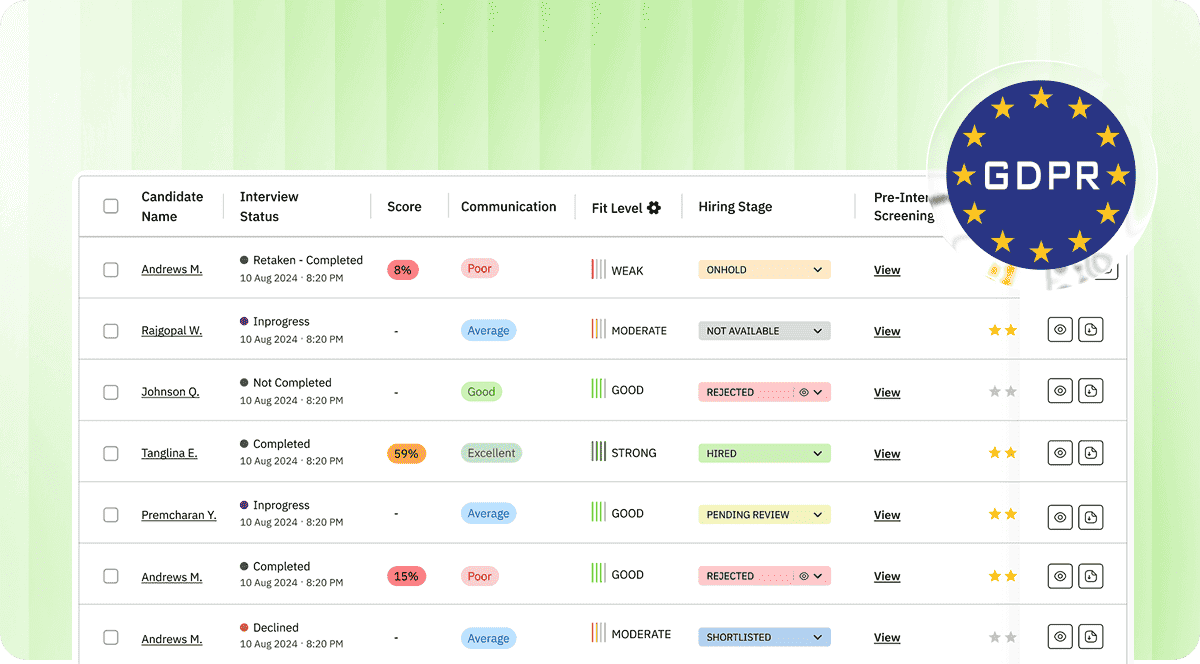
Compliance & Certifications
Hyring
Hyring holds both SOC 2 and ISO 27001 certifications, with public Trust Center documentation. ISO 27001 is specifically relevant for organizations operating under data protection frameworks in Europe, the Middle East, and APAC. For procurement teams comparing Karat vs Hyring on security, Hyring's public certification removes friction from the evaluation process.
Karat
Karat's compliance certifications are not publicly listed. Teams in regulated industries should request formal compliance documentation before proceeding.
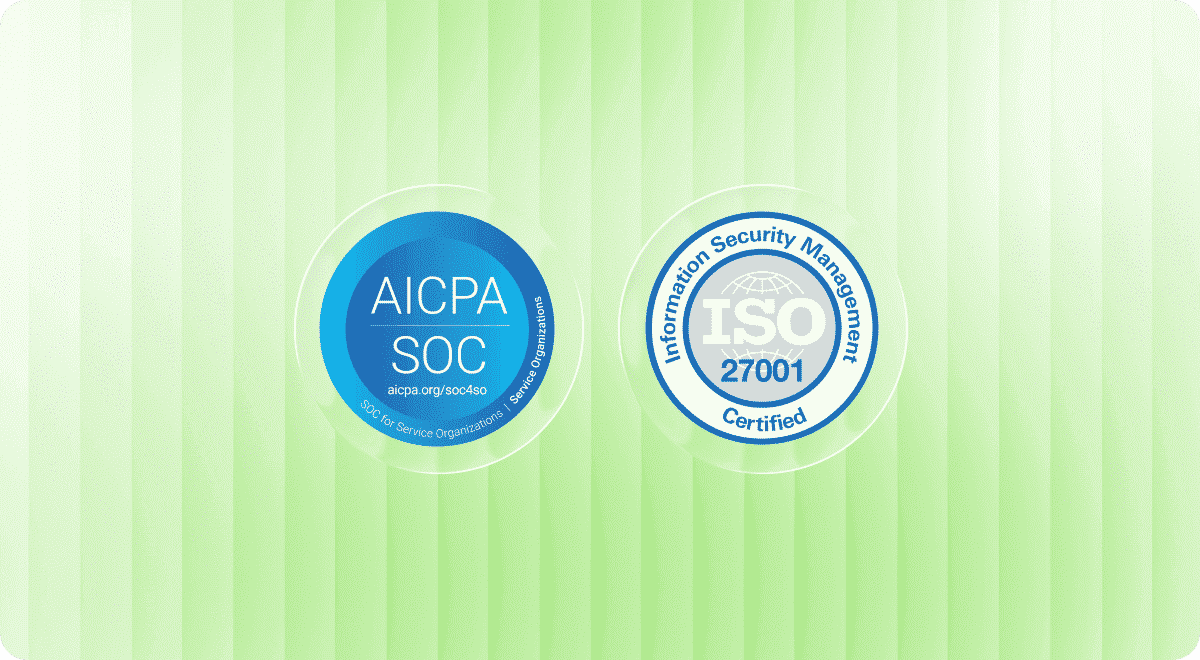
Candidate Privacy
Hyring
Hyring covers data retention, reporting access, and candidate transparency in its help documentation. These details are recruiter-accessible without needing an enterprise contract review.
Karat
Karat's privacy policies are available through its website and enterprise contracts.
On documented security and compliance, Hyring is the more transparent option for procurement teams and a more straightforward Karat alternative for compliance-sensitive organizations.
Cost & Pricing Structure
Pricing Model
Hyring uses a usage-based pricing model aligned to interview volume, making costs predictable and scalable for teams running high-volume or diverse hiring campaigns. This approach allows organizations to pay based on screening activity rather than seat count.
Pricing translates directly to cost per interview, starting at around $1 to $5 per interview for larger volumes. That enables recruiters and finance teams to estimate cost per hire based on interview volume and hiring funnel design.
Karat's pricing is not publicly disclosed. Given the model relies on trained Interview Engineers conducting live sessions, costs are likely structured around interview volume and contract scope. No per-interview figures are published, which makes budgeting less straightforward for teams comparing Karat alternatives.
Transparency
Hyring's usage-based pricing is transparent, publicly available, and directly tied to hiring activity. For recruiting teams evaluating Karat alternatives on cost, that clarity alone makes budgeting and vendor comparison significantly easier.
Karat follows an enterprise-oriented pricing model with costs shaped by scope, role type, and integration requirements rather than a usage-based rate.
Pricing Model
Hyring uses a usage-based pricing model aligned to interview volume, making costs predictable and scalable for teams running high-volume or diverse hiring campaigns. This approach allows organizations to pay based on screening activity rather than seat count.
Pricing translates directly to cost per interview, starting at around $1 to $5 per interview for larger volumes. That enables recruiters and finance teams to estimate cost per hire based on interview volume and hiring funnel design.
Karat's pricing is not publicly disclosed. Given the model relies on trained Interview Engineers conducting live sessions, costs are likely structured around interview volume and contract scope. No per-interview figures are published, which makes budgeting less straightforward for teams comparing Karat alternatives.
Transparency
Hyring's usage-based pricing is transparent, publicly available, and directly tied to hiring activity. For recruiting teams evaluating Karat alternatives on cost, that clarity alone makes budgeting and vendor comparison significantly easier.
Karat follows an enterprise-oriented pricing model with costs shaped by scope, role type, and integration requirements rather than a usage-based rate.
You can review Hyring's pricing structure and request a consultation. As an alternative to Karat, Hyring offers predictable, scalable value that is rarely matched when hiring across multiple roles at volume.
Summary: Which Platform Is Right for You?

Why Hyring is the Stronger Alternative to Karat
It covers more roles, automates more of the pipeline, makes compliance documentation accessible without a sales call, and prices per interview rather than per contract scope. Teams that have evaluated multiple Karat alternatives consistently land on Hyring when role coverage, pricing transparency, and recruiter-facing proctoring are the deciding criteria.
Choose Hyring if:
your team runs high-volume or multi-role hiring and needs transparent proctoring, recruiter dashboards, and ATS integration that works out of the box. For most recruiting teams weighing Karat alternatives, Hyring is the faster, more flexible, and more transparent path to better hires.
Why Karat Works for Engineering-Only Hiring
If your entire recruiting challenge is software engineering interviews and you have the budget for a managed service model with scheduled sessions, Karat is a credible, well-reviewed option. Interview Engineers produce consistent technical scores, and the engineering hiring community regards the output positively.
Choose Karat if:
your primary need is structured, human-led technical interviews for software engineering roles at scale, and role coverage outside engineering is not a concern.
Karat vs Hyring is not a close call once you map the comparison to your actual hiring needs.
Disclaimer: Information is based on publicly available product documentation and is subject to change. This comparison does not constitute a guarantee of current service offerings or specifications.
Frequently Asked Questions
Can Hyring or Karat replace human recruiters?
No. Hyring is intentionally designed not to. Hyring augments recruiters by automating screening while keeping humans in control of scoring, review, and final decisions around culture fit. Karat places a human Interview Engineer inside every session, so human judgment is embedded at the interview stage itself. For organizations that want AI support without losing recruiter accountability, Hyring is the safer and more practical option.
Will Hyring or Karat work with my ATS, like Greenhouse or Workday?
Yes, but Hyring integrates more directly into recruiter workflows. Hyring provides a robust API that pipes candidate data, interview results, and reports into Greenhouse, Workday, Lever, Zoho Recruit, iCIMS, Workable, Ashby, SmartRecruiters, BambooHR, JazzHR, Bullhorn, and SAP. Karat documents integrations with Greenhouse and Lever. Custom integrations beyond those typically require additional implementation work on the Karat side.
Which integrates better with LinkedIn Recruiter - Hyring or Karat?
Hyring fits more naturally with LinkedIn Recruiter-led hiring workflows. Teams source candidates via LinkedIn Recruiter, then use Hyring for screening and assessment. A sourced candidate clicking apply enters the interview screen directly, cutting out manual scheduling steps. Karat focuses on structured technical sessions rather than sourcing-to-screening pipeline integration. If LinkedIn is your primary sourcing channel, Hyring complements it better as an alternative to Karat.
Karat vs Hyring: Which supports non-English interviews?
Hyring supports non-English and multilingual interviews for global hiring teams, with over 10 languages available. Karat emphasizes global technical coverage and scale, but language-specific candidate screening is not a primary focus in its public documentation. For global or multilingual recruiting, Hyring is the more capable Karat alternative.
Is Hyring or Karat better for screening software engineers vs sales roles?
Hyring covers both and more. Its AI Interviewer supports developers, sales, customer support, and operational roles with dedicated assessment formats at each level. Karat is purpose-built for software engineering. A team running parallel pipelines for an engineer and a sales rep will need a separate tool alongside Karat, whereas Hyring handles both in the same platform. For most day-to-day hiring roles beyond engineering, Hyring is the more practical Karat alternative.
Stop Screening Manually.
Start Hiring Smarter with Hyring.
If this comparison has shown you anything, it's that Hyring is built for the way recruiting teams actually work — fast-paced, high-volume, and demanding real accountability at every step. From AI video and phone screening to built-in proctoring and ATS sync, Hyring gives your team the tools to move faster without cutting corners.
See why hiring teams at scaling companies choose Hyring over Karat.
Compare with other platforms