Phenom VS Hyring
Phenom vs Hyring:
A Detailed Comparison
Written on: 02 Mar 2026
Last updated: 02 Mar 2026

Written by
Rakesh Kumar

Fact Checked by
Surya N
Table of Contents
- An Overview
- Why Hiring Teams Migrate From Phenom To Hyring
- Phenom vs Hyring – Metrics Comparison
- Ecosystem: Products & Hiring Workflow
- Phenom vs Hyring: Feature Snapshot
- How Hyring Outperforms Phenom
- Conversational AI Interviewing
- Candidate Authenticity & Proctoring
- Scoring, Fairness & Bias Reduction
- Assessment Types & Role Coverage
- Scheduling & Automation
- Reporting & Hiring Analytics
- Global Hiring & Accessibility
- The Human Touch: Phenom vs Hyring
- UI UX Experience
- Recruiter Experience
- Candidate Experience
- Security & Compliance
- Cost & Pricing Structure
- Conclusion: Which is the Best AI Interviewer?
- Frequently Asked Questions
An Overview
Phenom is an AI recruitment tool that helps businesses hire candidates faster. The platform helps upskill existing employees and retain them longer, using its AI-based platform: Intelligent Talent Experience. Phenom combines people, data, automation, and personalized experiences throughout the hiring and employment process, making the experience smoother and more efficient for candidates and recruiters. This reduces manual, monotonous tasks and supports better decision-making at every hiring stage.
Hyring is an AI-powered recruiting platform that completely automates the initial screening of candidates through resume and phone screeners, video interviews, and coding tests. It gives hiring teams clear reports with scores, recordings with timestamps, transcripts, and other insights, which help recruiters quickly narrow down candidates. For HR professionals and hiring managers dealing with many applicants, Hyring acts as a fast screening tool to speed up the hiring process.
Why Hiring Teams Migrate From Phenom To Hyring
The teams that end up looking at Hyring tend to share a profile. They're mid-to-large-sized enterprises. They already have an ATS, and they have a specific problem. Their screening volume is outpacing recruiter capacity, interview quality varies wildly across hiring managers, or someone in legal has asked an uncomfortable question about audit trails.
Phenom can address some of this. But you're not flipping a switch. You're configuring a platform, which takes time, dedicated resources, and internal sign-off across TA, IT, and sometimes HR leadership. For teams whose screening problem is urgent right now, that timeline is genuinely frustrating.
Hyring's pitch is simpler: structured AI screening running in days, connected to the ATS you already use, with per-candidate reports your hiring managers will actually read. Less transformational. More immediately useful.
Phenom vs Hyring – Metrics Comparison


Ratings change over time. Review live pages for the latest updates.
Ecosystem: Products & Hiring Workflow
Hyring Review
Product Ecosystem
Hyring's ecosystem is built around automating the initial screening stages in the recruiting process. Its core products and modules include:
AI Video Interviewer
Asynchronous and live two-way video interviews are conducted with the video interview software, which also offers dynamic follow-ups.
AI Phone Screener
AI Coding Interviewer
AI Resume Screener
English Proficiency Test

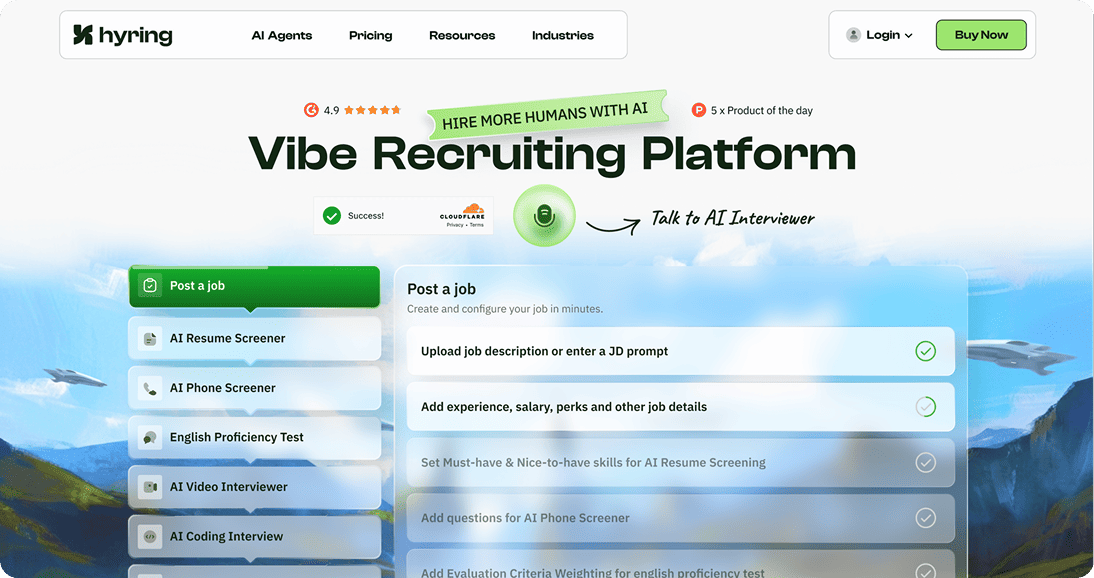
Together, these products form a unified screening-to-hire system focused on operational recruiting teams.
Brief
Hyring is an AI interviewing platform designed for recruiters who need to hire quickly without sacrificing judgment or control. On several review platforms like G2 and Capterra, users talk about how Hyring reduces screening work in the early stages of hiring and makes the process faster.
PROS
- Cuts early-stage screening time
- Consistent, structured interviews
- Visible interview integrity signals
- Clear summaries for hiring managers
- Easy to roll out for recruiters
CONS
- Less useful for very small teams
- Best value at moderate to high volume
- Not a replacement for an ATS
TAKEAWAY
Hyring is commonly seen as a dependable tool for larger hiring teams and companies hiring at scale who want speed and transparency without compromising on candidate quality.
Phenom Review
Product Ecosystem
Phenom's ecosystem is centered on delivering a connected talent experience across the full employee lifecycle. Its main products and components include:
Career Site & CMS
AI-personalized, branded career sites built to improve candidate attraction and conversion.
Talent CRM
AI Recruiting Chatbot
Voice Screening Agent
Internal Mobility Tools
Talent Analytics
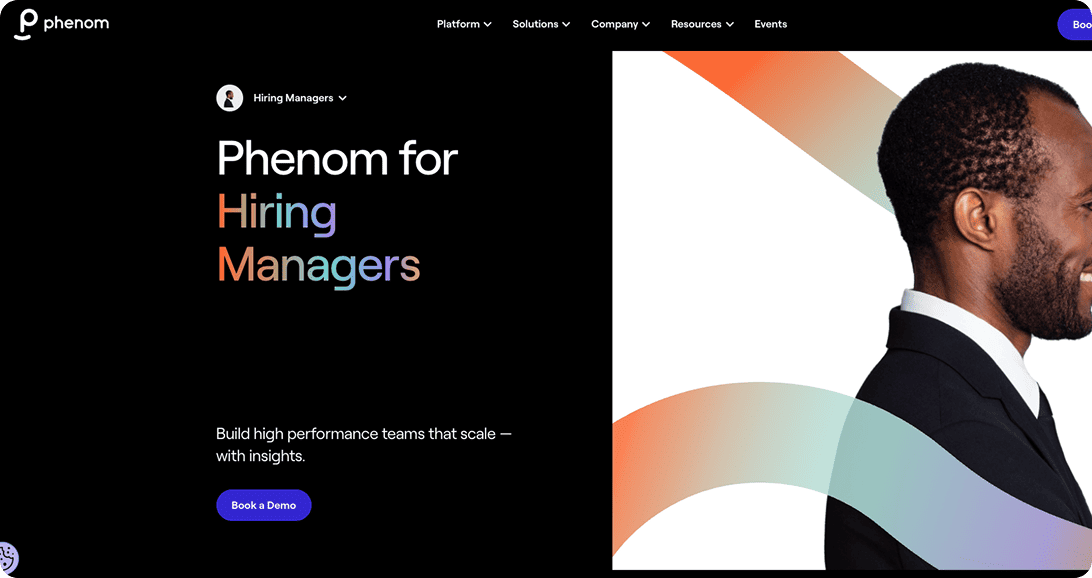
These products are designed primarily for enterprise organizations managing the full talent lifecycle rather than teams focused on high-volume screening workflows.
Brief
Phenom is a talent experience platform built for enterprises that want to manage candidate attraction, hiring, and employee development in one connected system. Reviews on G2 and Capterra tend to highlight the strength of the career site and CRM capabilities, along with the platform's ability to deliver personalized experiences at scale. Feedback around implementation complexity and support responsiveness is more mixed.
PROS
- Strong candidate attraction and career site tooling
- Enterprise-grade CRM for pipeline management
- Internal mobility and employee development tools
- Broad talent analytics for TA leadership
CONS
- Heavy implementation investment
- Pricing is not publicly available
- Some interview-stage features are less mature than dedicated tools
- Quarterly release cadence means slower iteration
TAKEAWAY
Phenom is well regarded for candidate experience and talent pipeline management, but it aligns more closely with enterprises managing the full talent lifecycle than with recruiting teams whose primary need is fast, auditable screening workflows.
Bottom Line
Hyring's ecosystem is built around modular recruiting tools that support high-volume and role-based hiring from screening to handoff.
Phenom's ecosystem is built around the full talent experience, candidate attraction, pipeline management, and employee development under one roof.

Hyring excels at: Recruiter-driven screening, assessment integrity, and fast hiring decisions.

Phenom excels at: Enterprise candidate attraction, CRM-driven pipeline management, and long-term talent lifecycle management.
Both ecosystems are mature, but they serve fundamentally different workflow priorities.
Phenom vs Hyring: Feature Snapshot
Feature / Capability
Phenom
Conversational AI interviewing (dynamic, two-way)
Dynamic follow-up questions
Candidate authenticity & remote proctoring
Not clearly stated
Liveness Checks & Proctoring
Not clearly stated
Coding & role-based assessments
Not clearly stated
Language & communication testing
Not clearly stated
Automated scheduling/calendar sync
Hiring analytics & reports
ATS / HRIS integrations & public API
SOC2 & ISO 27001 enterprise security
Custom branding & candidate experience
Accessibility & global support
Not clearly stated
Support & onboarding
Video Interviewer
Partial: one-way style
Phone Screener
Resume Screener
Partial: via chatbot/CRM matching
Coding Interviewer
Not clearly stated
Proctoring
Not clearly stated
Based on publicly available product materials. Verify directly with each vendor before making procurement decisions.
How Hyring Outperforms Phenom
Conversational AI Interviewing

Hyring
Hyring's two-way video interview isn't a recorded prompt with a countdown clock. The AI listens to what the candidate says and follows up based on that. Vague answer on conflict resolution, it probes. Strong answer on a technical topic, it moves on. That's what makes it feel more like an actual interview than a digital form.

Phenom
Phenom's voice screening agent and chatbot handle early-stage qualification well. But the depth of conversational follow-up at the interview stage, and how that translates into individual candidate scoring, isn't clearly documented in available product materials. For teams processing thousands of interviews, that gap in visibility matters.

Phenom's voice agent is good for early qualification. It's not built for structured, scoreable interviews at volume. Hyring's two-way format adapts to what the candidate says and produces scoring recruiters can actually use.
Candidate Authenticity & Proctoring
Hyring
Hyring's proctoring surfaces. When a candidate switches tabs, multiple voices are detected, or their face leaves the frame, it shows up as a timestamped flag in the candidate report. The recruiter sees it, makes a judgment call, and decides if it's meaningful for that specific role. No black box. No automated disqualification.
Phenom
Phenom doesn't publicly document a comparable interview-level proctoring framework. For enterprise hiring teams that have faced compliance questions about screening integrity, and most eventually do, that's a real gap.
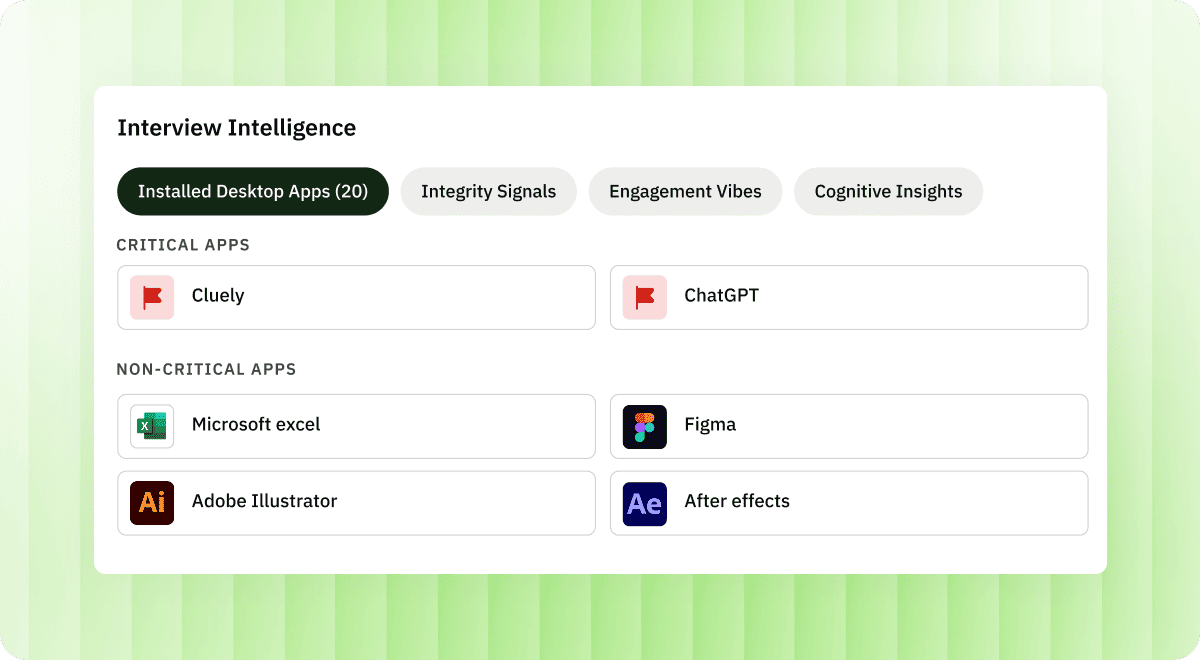
Timestamped flags in the candidate report are a real, usable feature. "The platform may handle this" is not, especially when compliance is asking.
Scoring, Fairness & Bias Reduction
Hyring
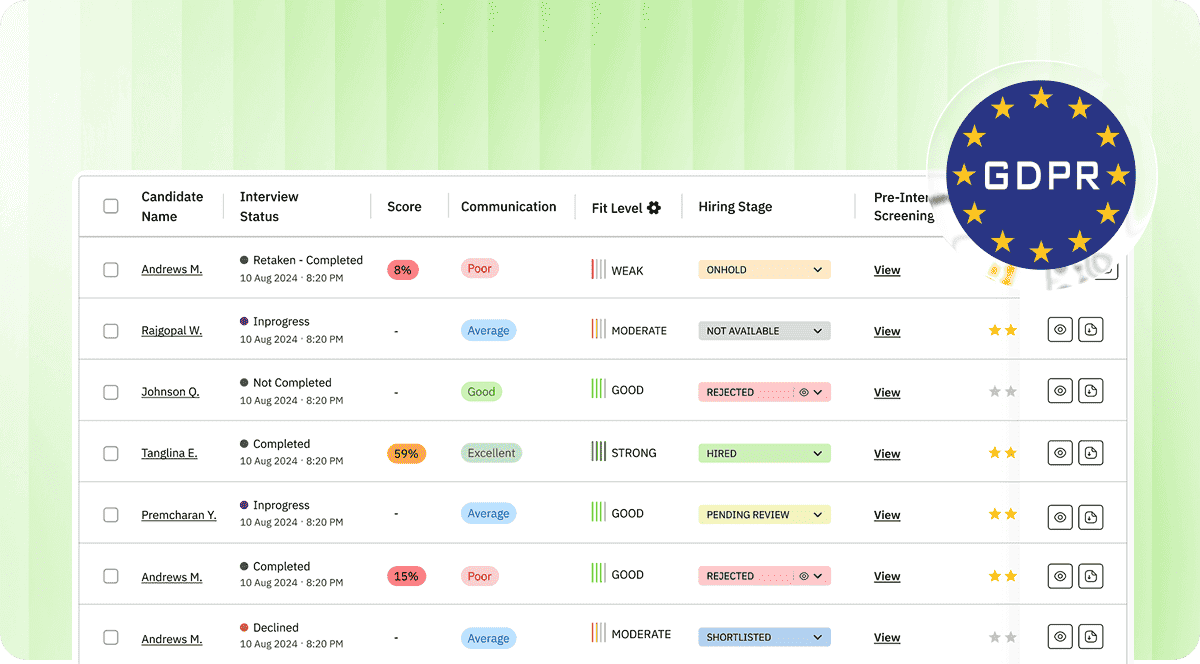
Hyring scores candidates by competency. Every rating is backed by a full transcript. Recruiters can override scores when context warrants it. If a hiring decision gets challenged six months later, you can pull the transcript, the score rationale, and the proctoring report and show exactly what happened.
Phenom
Phenom's analytics are genuinely strong at the pipeline level, funnel conversion, time-to-hire, and source effectiveness. At the individual candidate level, interview scoring transparency and bias control mechanisms aren't clearly documented.
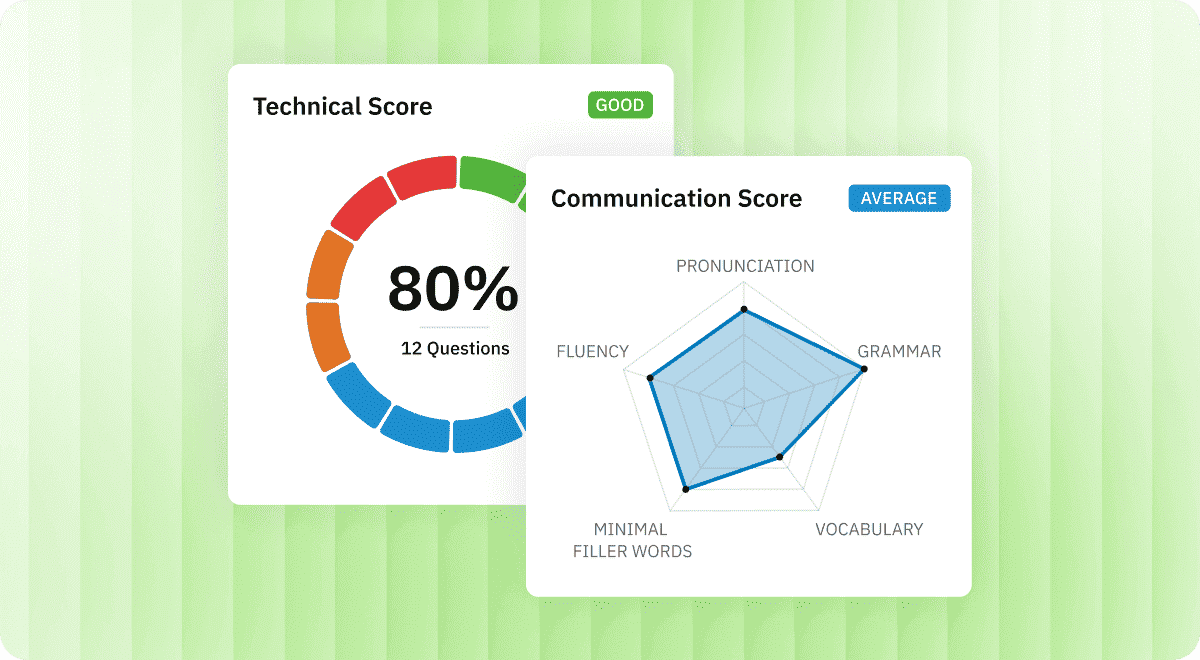
The AI scored them lower isn't a defensible answer if a hiring decision gets challenged. A transcript, a competency breakdown, and an override log are.
Assessment Types & Role Coverage
Hyring
Hyring covers the roles most hiring teams actually fill at volume. Developers through the AI Coding Interviewer. Customer-facing roles through the English Proficiency Test. Operational roles through structured video or phone screening. Role-specific templates exist from entry to senior, so a new req doesn't mean starting from scratch.
Phenom
Phenom covers early-stage screening broadly but doesn't surface coding assessment or language testing as standalone native products. For a platform at Phenom's price point and maturity, that's a gap worth naming.
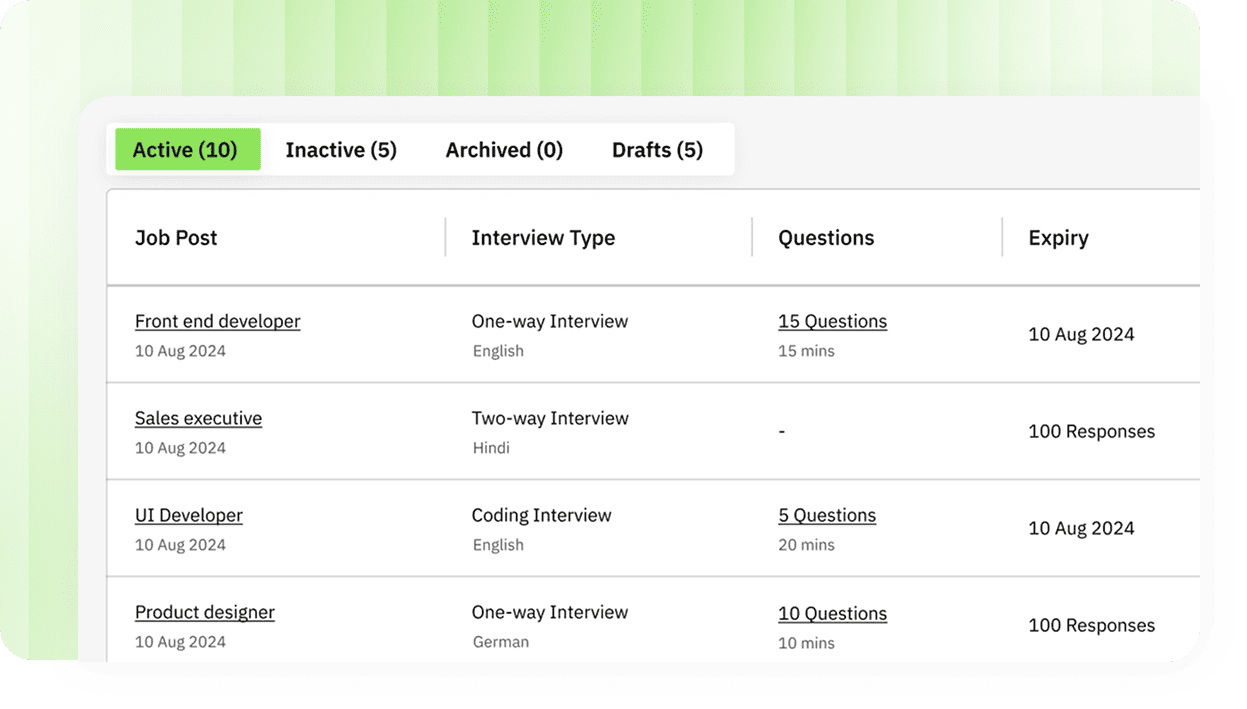
Phenom covers early screening broadly, but doesn't go deep on role-specific assessment, which makes Hyring a better alternative to Phenom. Hyring gives recruiters a dedicated assessment module for the roles most teams hire most often.
Scheduling & Automation
Hyring
Hyring's approach is more direct. Bulk invites, automated reminders, calendar sync, API push to ATS. A team sending 500 interview invites on Monday and needing results by Wednesday will find Hyring's setup more purpose-built for that pace.
Phenom
Phenom's tooling handles complex multi-stakeholder coordination well, panel interviews, multi-round scheduling, that kind of thing.
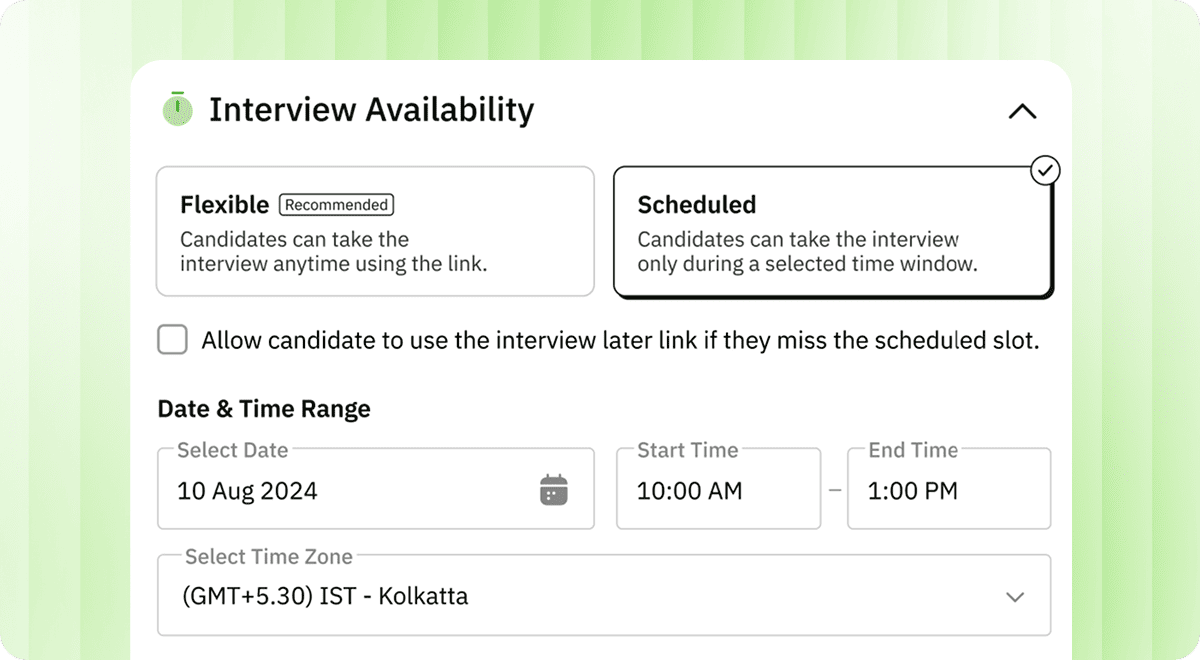
For high-volume speed, bulk invites, reminders, and a fast ATS push making Hyring is a better alternative to Phenom. Phenom offers complex scheduling with panels and multiple approval stages. Know which problem you actually have.
Reporting & Hiring Analytics
Hyring
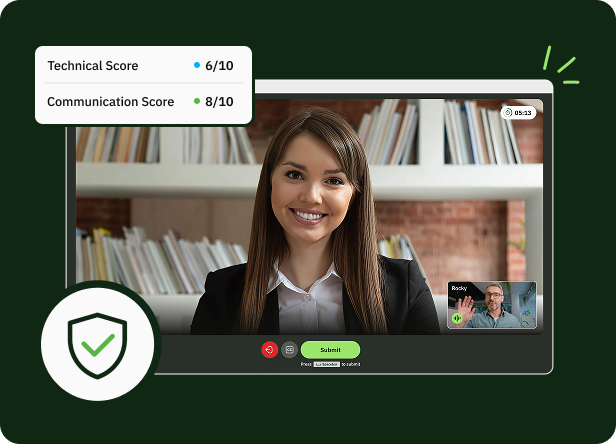
Hyring's reports are built for one moment: a recruiter and a hiring manager deciding who advances from a pool of 80 candidates. Transcript, competency scores, proctoring flags, video recording, sentiment signals, all in one place, structured for a decision.
Phenom
Phenom's analytics serve a different audience. A TA leader tracking source effectiveness, pipeline conversion by department, time-to-fill across regions, that's where Phenom earns its keep. Less useful for the recruiter who needs to clear a 200-person applicant pool by the end of the week.
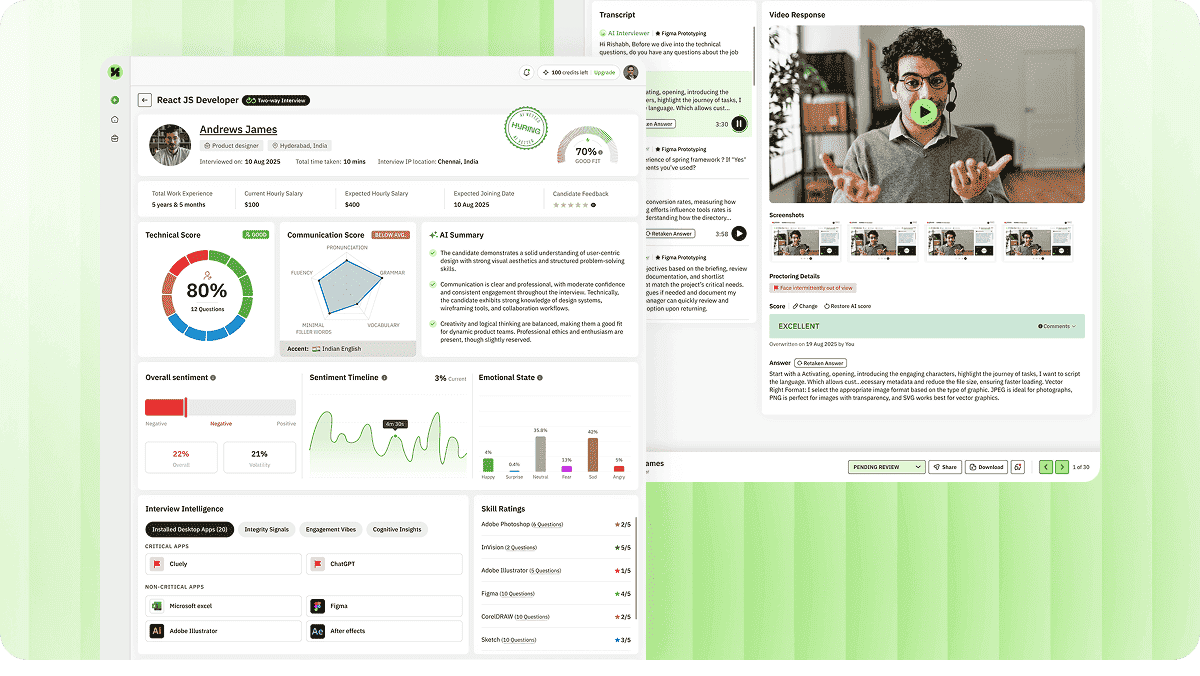
That depends on your role. Hyring is for the recruiter clearing a pool of high-volume candidates. Phenom is for the Talent Acquisition leader reporting pipeline health upward. Different tools for different questions.
Global Hiring & Accessibility
Hyring
Hyring supports interviews in 10 languages. No additional configuration. A global team screening candidates across Southeast Asia, Latin America, and Europe runs language-appropriate interviews from the same platform.
Phenom
Phenom's localization is strong on the candidate-facing side, and career sites and chatbot interactions adapt to different markets. Language-specific AI interview screening isn't clearly documented as a native feature.

Hyring offers multilingual interview screening. Ten languages built in, no extra setup. Phenom localizes the candidate experience well, but doesn't clearly extend that to the AI interview layer.
The Human Touch: Phenom vs Hyring
Hyring
Hyring is explicit about where humans stay in control. Proctoring flags surface for human review. Scores can be overridden. Nothing advances without a recruiter or hiring manager sign-off. In a process where AI is highly utilized, it is important to have a human touch so candidates feel comfortable during the interview process.
Phenom
Phenom's philosophy is broader: enhance every touchpoint across the talent journey. Coherent approach. But the specific human control points within the interview and assessment workflow are less clearly defined in the product documentation.
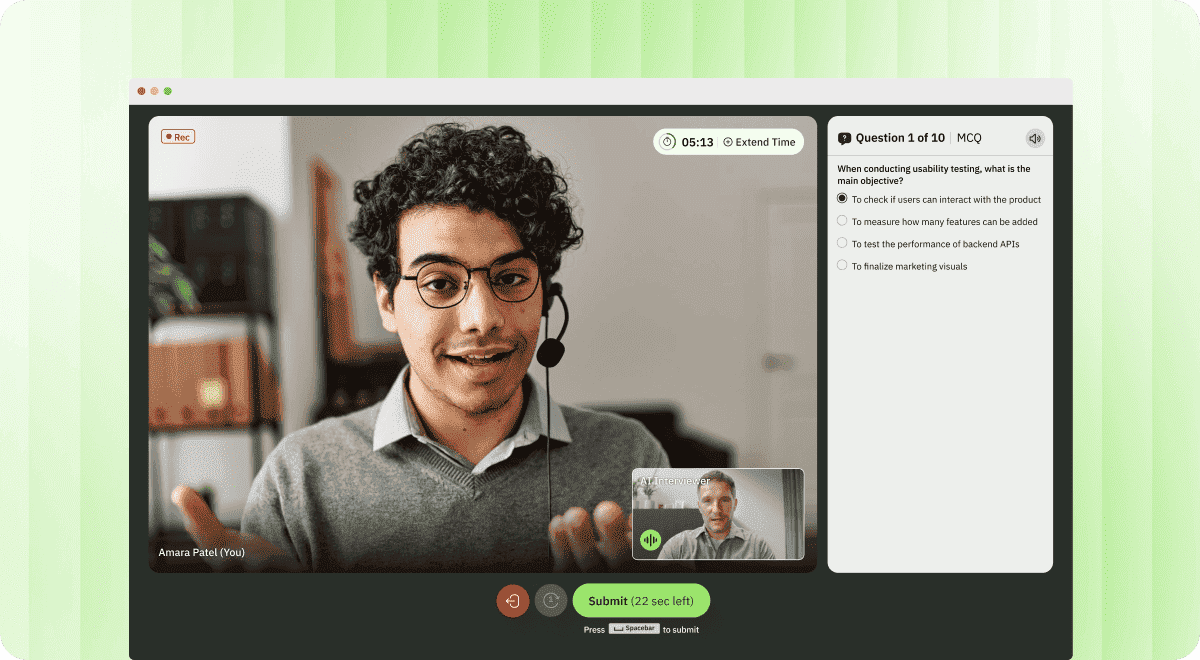
Most enterprise vendor approvals go through HR, legal, and compliance. A platform where human control points are visible and documented is a much easier sell than one where you have to take it on faith.
UI UX Experience
Recruiter Experience
Hyring
Hyring's interface is task-oriented. Create an interview, configure questions, send invites, and review results. Most recruiting teams are operational within days. No months-long implementation before the core product is usable.
Phenom
Phenom is a different commitment. It's built for users working across multiple modules, CRM, career site, analytics, and scheduling. Implementation timelines are measured in months, not days. For enterprise procurement teams, that's expected. For a lean TA team with an urgent screening problem, it's a real constraint.
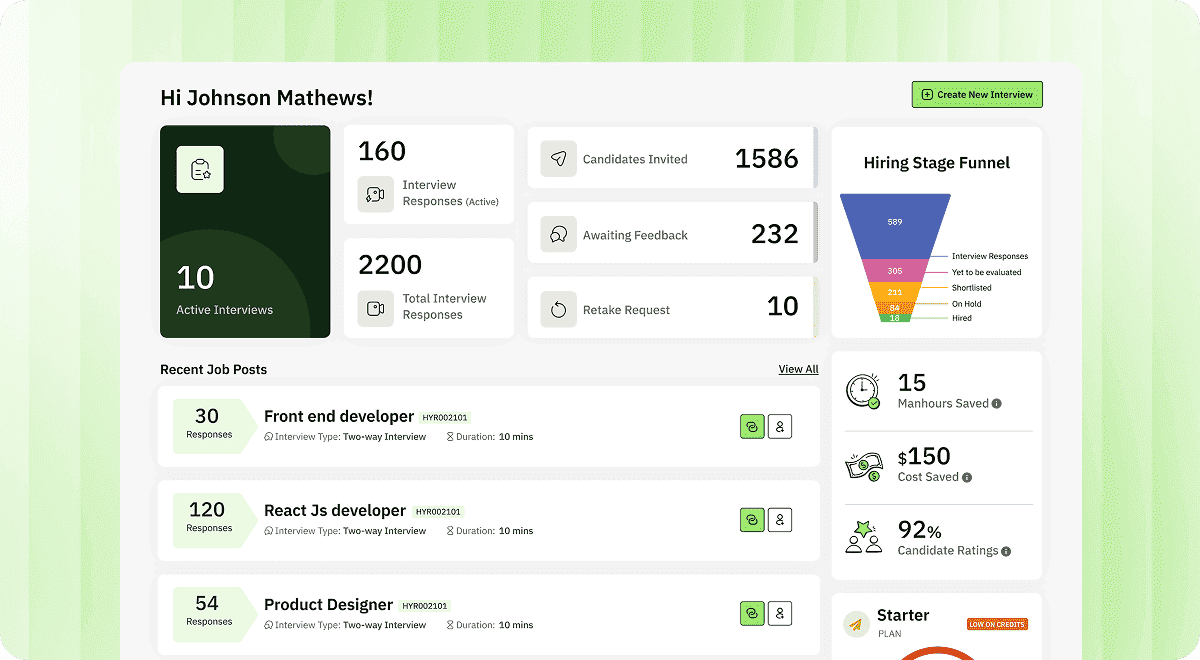
If your team needs to be up and running fast, Hyring wins on simplicity. Phenom is worth the onboarding investment only if you're using the broader platform, not just the screening layer.
Candidate Experience
Hyring
At the interview stage, Hyring is more clearly documented. Instructions are explicit. The format is predictable. Candidates know what they're being assessed on. For a process many candidates find stressful, transparency reduces the kind of anxiety that distorts performance and muddies the signal you're trying to get.
Phenom
Phenom delivers a genuinely strong candidate experience at the top of the funnel. Career sites feel personalized. The chatbot handles common questions without feeling robotic. Candidates who interact with a Phenom-powered career site before they even apply tend to come in with a better impression of the employer.
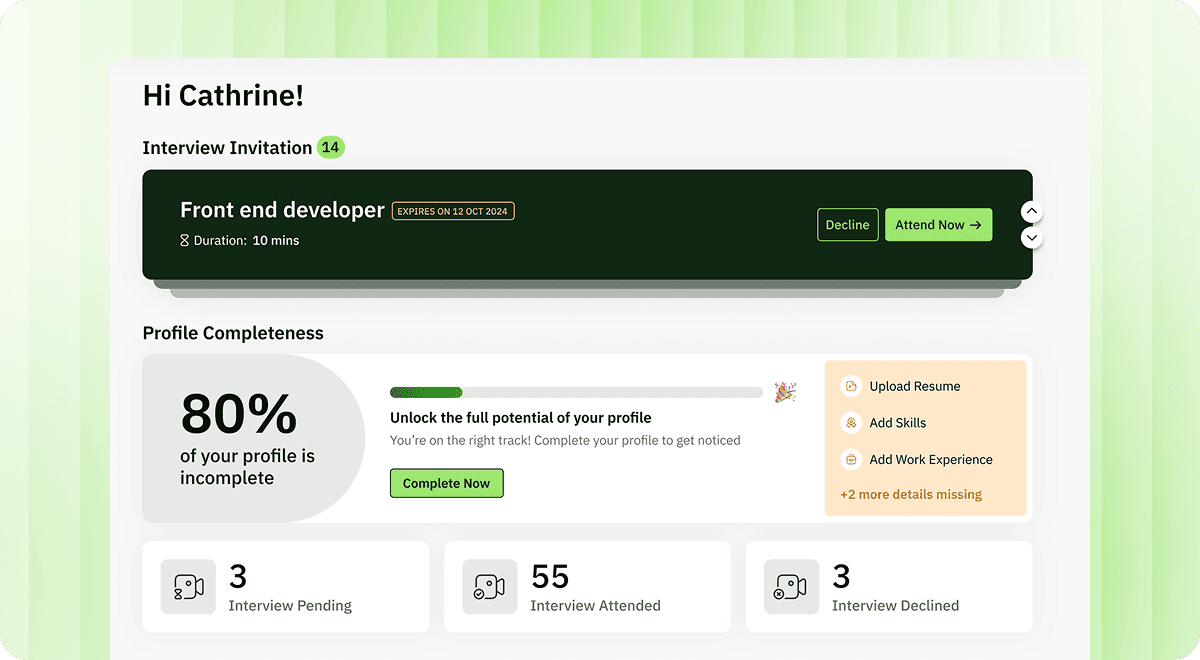
Phenom at the top of the funnel, career sites, chatbot, and first impressions. Hyring at the interview stage, clear instructions, predictable format, no nasty surprises. If you're evaluating end-to-end candidate experience, you'd want both. Most teams, though, already have a career site. The interview stage is where the drop-off happens, which is why Hyring is a great alternative to Phenom.
Security & Compliance
Data Protection
Hyring
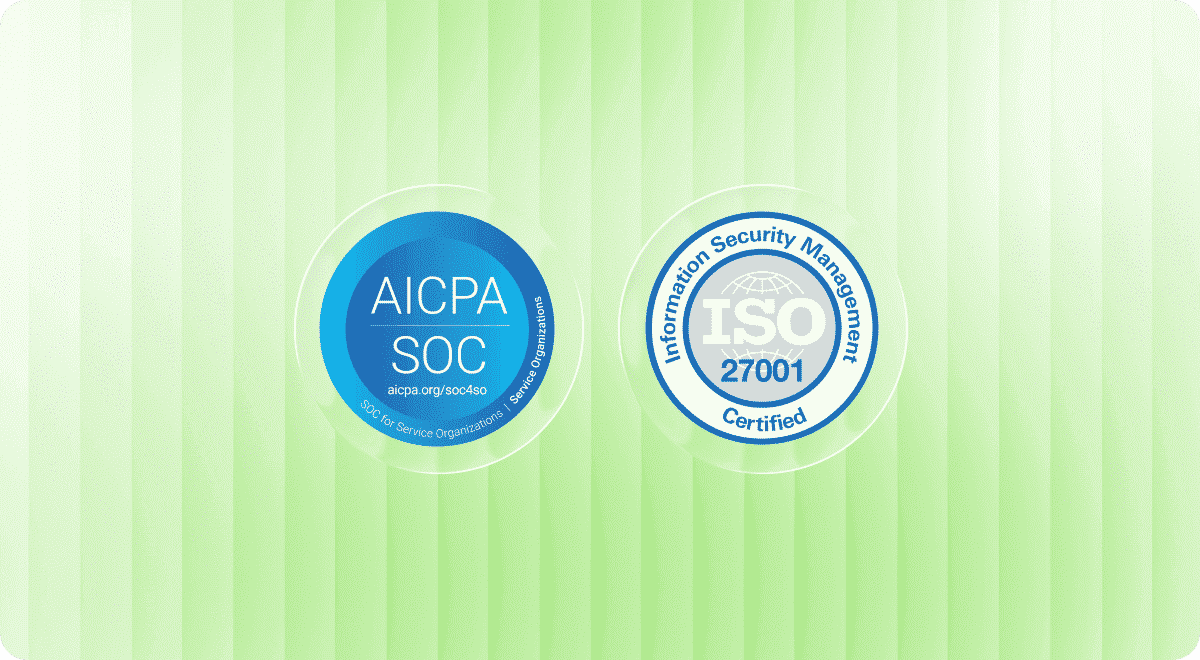
Both platforms clear the enterprise security bar. Hyring holds SOC 2 and ISO 27001 certifications. For either platform, verify data residency, encryption standards, and access controls directly with the vendor before signing anything.
Phenom
Phenom lists SOC 2 and ISO/IEC 27001 compliance in enterprise documentation. For either platform, verify data residency, encryption standards, and access controls directly with the vendor before signing anything.
Compliance & Certifications
Hyring
Hyring's SOC 2 and ISO 27001 certifications are publicly documented.
Phenom
Phenom lists SOC 2 and ISO/IEC 27001 compliance in its enterprise materials, listed rather than independently verified by a third party, so worth confirming directly during procurement. For regulated workflows, healthcare hiring, financial services, and staffing in jurisdictions with strict employment law, a formal compliance review is non-negotiable regardless of which platform you're evaluating.
Candidate Privacy
Hyring
Hyring's privacy and data retention practices are covered in help center documentation, organized specifically around candidate interview data.
Phenom
Phenom's privacy framework is available through its legal center and enterprise contracts, reflecting a broader data footprint across the full talent lifecycle.
Hyring is great for recruiting-specific compliance. Both platforms meet enterprise security standards, but Hyring's documentation is organized around hiring data specifically, which makes the due diligence conversation with legal a lot simpler. For regulated industries, both require direct engagement with the vendor's security team. For better public documentation as a starting point, Hyring is a better alternative to Phenom.
Cost & Pricing Structure
Pricing model
Usage-based, starting around $1–$5 per interview, depending on volume. You pay for what you use. Scale up during a hiring sprint, pull back in a slow quarter. If you're screening 2,000 candidates a quarter at $3 per interview, that's $6,000 per quarter for your screening layer.
No public pricing. You'll need to engage sales, go through discovery, and get a custom quote based on platform scope, modules, and implementation complexity. Standard for enterprise procurement, but for a recruiting leader trying to build a quick internal business case or benchmark Phenom against alternatives, it's a real obstacle.
Transparency
That's a number a TA leader can put in a budget deck and defend. No surprises buried in a contract negotiation. Finance teams like it because the cost line makes sense: more interviews, higher spend; fewer interviews, lower spend.
Phenom's 3.5 out of 5 on Capterra's value for money dimension is telling. When enterprise customers feel uncertain about whether they're getting fair value, it usually traces back to a pricing conversation that didn't leave them with confidence. That's as much a vendor relationship problem as a product one.
Pricing model
Usage-based, starting around $1–$5 per interview, depending on volume. You pay for what you use. Scale up during a hiring sprint, pull back in a slow quarter. If you're screening 2,000 candidates a quarter at $3 per interview, that's $6,000 per quarter for your screening layer.
No public pricing. You'll need to engage sales, go through discovery, and get a custom quote based on platform scope, modules, and implementation complexity. Standard for enterprise procurement, but for a recruiting leader trying to build a quick internal business case or benchmark Phenom against alternatives, it's a real obstacle.
Transparency
That's a number a TA leader can put in a budget deck and defend. No surprises buried in a contract negotiation. Finance teams like it because the cost line makes sense: more interviews, higher spend; fewer interviews, lower spend.
Phenom's 3.5 out of 5 on Capterra's value for money dimension is telling. When enterprise customers feel uncertain about whether they're getting fair value, it usually traces back to a pricing conversation that didn't leave them with confidence. That's as much a vendor relationship problem as a product one.
Conclusion: Which is the Best AI Interviewer - Phenom or Hyring?

Why Hyring Works for Many Teams
Hyring doesn't try to own the whole talent stack. It tries to make the screening and assessment stage faster, more consistent, and more defensible, then gets out of the way. For enterprise teams that already have an ATS and an HCM and just need the interview layer to work properly, that's a compelling case.
Choose Hyring if:
Your team processes high volumes of candidates, needs interview-level proctoring that's recruiter-reviewable, and wants something operational in days rather than months.

Why Phenom Works for Many Teams
Phenom is a serious platform for enterprises managing the full talent lifecycle. Career site and CRM capabilities are strong. Internal mobility tools are useful for organizations with complex internal talent needs. If the current problem is candidate attraction, pipeline management, or connecting hiring to employee development, Phenom deserves a serious look.
But that breadth has a cost. When the urgent problem is the screening workflow, volume, consistency, proctoring, and per-candidate reporting, some of the capabilities that matter most (interview-level proctoring, coding assessment, scoring transparency) aren't as developed as you'd expect at Phenom's price point and maturity.
Choose Phenom if:
You need a unified platform across the full talent lifecycle, the current gap is in candidate attraction or pipeline management, and you have the implementation resources to configure a complex platform properly.
Disclaimer: All information sourced from publicly available product materials and review platforms. Features and ratings subject to change. Verify current specifications directly with each vendor.
Frequently Asked Questions
Can Hyring or Phenom replace human recruiters?
Neither platform is designed to. Hyring is explicit: AI runs the screening, humans make the decisions. Scores are reviewable. Proctoring flags require human judgment. Nothing advances without a recruiter sign-off. Phenom positions AI as something that enhances recruiter and candidate experiences, not something that replaces the people making hiring calls.
Will Hyring or Phenom work with my ATS, like Greenhouse or Workday?
Both integrate with major ATS platforms. Hyring's public API connects with Greenhouse, Workday, Lever, Zoho Recruit, iCIMS, Workable, Ashby, SmartRecruiters, BambooHR, JazzHR, Bullhorn, and SAP, typically without IT involvement to configure. Phenom's integrations are enterprise-grade and configured during implementation. For teams that need something running against an existing ATS quickly, Hyring is the faster path.
Which integrates better with LinkedIn Recruiter Hyring or Phenom?
Both work alongside LinkedIn Recruiter. Hyring fits a specific pattern well: source on LinkedIn, candidates click through and enter Hyring's screening flow directly, no manual scheduling step in between. Phenom pulls LinkedIn sourcing into its CRM and pipeline management layer. If speed from source to first screen is the priority, Hyring complements LinkedIn Recruiter more directly.
Phenom vs Hyring: Which supports non-English interviews?
Hyring supports interviews in 10 languages, built in. Phenom has strong localization on the candidate-facing side, career sites, and chatbot interactions adapt to different markets, but language-specific AI interview screening isn't clearly documented as a native feature. For global teams running multilingual screening at scale, Hyring is the more directly supported option.
Is Hyring or Phenom better for screening software engineers vs sales roles?
Hyring handles both with dedicated tools. Developers go through the AI Coding Interviewer. Sales and customer-facing candidates go through video interviews or the English Proficiency Test. Role-specific templates mean teams aren't starting from scratch each time. Phenom covers early-stage screening broadly but doesn't surface coding assessment or language testing as native standalone products.
Stop Screening Manually.
Start Hiring Smarter with Hyring.
If this comparison has shown you anything, it's that Hyring is built for the way recruiting teams actually work — fast-paced, high-volume, and demanding real accountability at every step. From AI video and phone screening to built-in proctoring and ATS sync, Hyring gives your team the tools to move faster without cutting corners.
See why hiring teams at scaling companies choose Hyring over Phenom.
Compare with other platforms