Diversity Hiring OKR Examples That Drive Measurable Inclusion
Diversity Hiring OKR Examples That Drive Measurable Inclusion
Stop treating diversity as a checkbox and start building it as a competitive advantage. Discover OKR frameworks that help organizations build diverse pipelines, eliminate bias from selection, create inclusive hiring experiences, retain diverse talent, and hold leaders accountable with transparent metrics.
What Are OKRs for Diversity Hiring?
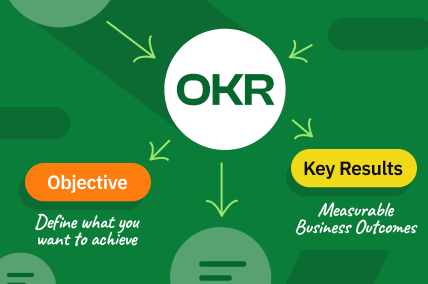
OKRs (Objectives and Key Results) give diversity hiring programs the strategic structure and measurability they need to move beyond good intentions to real outcomes. Unlike vague commitments to hire more diversely, diversity hiring OKRs break down the specific levers — pipeline composition, sourcing channel effectiveness, bias elimination in selection, retention of diverse talent, and leadership accountability — that actually determine whether your organization reflects the communities it serves.
For DEI leaders and hiring teams, the power of OKRs lies in making invisible problems visible and abstract goals concrete. Saying we value diversity is a statement. The OKR is the deliberate plan to prove it: increasing underrepresented candidate pipeline from 18% to 40%, eliminating stage-by-stage funnel drop-off disparities, achieving pay equity within 3% across all demographics, or ensuring 100% of interview panels include diverse perspectives. This shift from aspiration to measurement is what separates performative DEI from programs that actually change organizational composition.
Whether you are launching your first diversity hiring initiative, scaling an established DEI program, or embedding inclusive practices into enterprise-wide talent operations, the examples below provide proven OKR patterns. Each objective is outcome-oriented, each key result is quantifiable, and every example includes the strategic context you need to build a genuinely inclusive hiring function.
Interactive OKR Examples
Expand the candidate pipeline to include 40% underrepresented talent
Transform the top of the hiring funnel by systematically broadening sourcing channels, building community partnerships, and ensuring job postings reach diverse talent pools that traditional sourcing misses.
Build university recruiting relationships that prioritize HBCUs and HSIs
Historically Black Colleges and Universities and Hispanic-Serving Institutions produce exceptional talent that many companies overlook. Establish recruiting partnerships that create a sustainable pipeline of diverse early-career candidates.
Create an internal referral program specifically designed to increase diverse candidate submissions
Employee referral programs often replicate existing demographics because people refer candidates from their own networks. Redesign the referral program with incentives and structures that encourage referrals from diverse talent pools.
Develop a talent community for underrepresented professionals in the technology sector
Build a long-term talent community that nurtures relationships with diverse professionals regardless of immediate openings, creating a warm pipeline that activates when roles become available.
Implement a diverse slate requirement that expands candidate consideration sets
Mandating diverse slates forces the sourcing machine to look beyond the usual channels. Implement a policy where no hiring decision proceeds without a slate that includes qualified underrepresented candidates.
Build a returnship program for caregivers and career-break professionals
Career breaks disproportionately affect women, caregivers, and military veterans. Create a structured returnship program that provides a supported pathway back into professional roles with mentorship, training, and guaranteed evaluation for full-time conversion.
Expand apprenticeship pathways for non-traditional talent entry into the organization
Degree requirements exclude capable candidates who gained skills through bootcamps, self-study, military service, or non-traditional paths. Build apprenticeship programs that evaluate ability over credentials.
Create a proactive pipeline for leadership roles that addresses the diversity gap at senior levels
Diversity often exists at entry level but drops off dramatically at senior levels. Build a proactive leadership pipeline that identifies and nurtures diverse candidates for director-and-above roles before positions open.
Build a comprehensive diversity sourcing intelligence platform
Aggregate data on diversity sourcing effectiveness across all channels, events, partnerships, and campaigns to identify which investments actually produce diverse hires and which are performative.
Launch a venture-backed diversity talent marketplace for the startup ecosystem
Create a shared talent marketplace where startups that individually lack diversity sourcing resources can collectively access diverse talent pools, community partnerships, and inclusive hiring support.
Create an industry coalition for diversity pipeline sharing across non-competing companies
Companies compete for diverse talent individually when they could collaborate on pipeline building. Form an industry coalition where non-competing companies share diversity sourcing resources, candidate pools, and best practices.
Implement a global diversity pipeline strategy that accounts for regional demographic contexts
Diversity means different things in different markets. Build a global pipeline strategy that defines diversity goals based on local demographic contexts while maintaining a unified organizational commitment to inclusion.
Build Your Own OKR
Select a focus area for your OKR:
#RecruitingPartner
Join as freelance recruiter.
Get clients, AI tools & 65% of commissions


OKR Scoring Calculator
Use Google's 0.0 to 1.0 scoring scale to evaluate your diversity hiring OKRs at the end of each quarter. A score of 0.7-1.0 means the key result was delivered, 0.3-0.7 means meaningful progress was made, and 0.0-0.3 signals a miss that needs root cause analysis. The sweet spot is landing between 0.6 and 0.7 on average — if you consistently score 1.0, your OKRs are not ambitious enough.
Overall Score
Top 5 OKR Mistakes Diversity Hiring Teams Make
Don't do this:
KR: Achieve 40% diverse candidate pipeline (while using the same sourcing channels that produced 18%)
Do this instead:
KR: Launch 8 new diversity-focused sourcing partnerships and achieve 40% diverse pipeline from these expanded channels
Declaring a diversity target without changing process is magical thinking. Diversity OKRs must be paired with specific process changes — new sourcing partnerships, inclusive job rewrites, structured interviews, blind screening — that create the conditions for different outcomes.
Don't do this:
KR: Increase diverse applicants to 35% of total applicants
Do this instead:
KR: Achieve less than 5% variance in pass-through rates across demographics at every funnel stage (apply, screen, interview, offer)
A diverse top-of-funnel is meaningless if underrepresented candidates disproportionately drop out at the screen, interview, or offer stage. Effective diversity OKRs measure representation and progression rates at every stage of the funnel.
Don't do this:
Only the DEI team has diversity hiring OKRs; hiring managers have no diversity accountability
Do this instead:
Every hiring manager owns a diversity OKR: Ensure 50% diverse slate for all roles and achieve equitable interview scoring
When diversity OKRs live only in the HR or DEI team's goals, hiring managers feel no ownership and make no behavioral changes. Diversity must be embedded in every hiring manager's OKRs with specific, measurable accountability.
Don't do this:
KR: Hire 30% underrepresented candidates regardless of qualification match
Do this instead:
KR: Expand sourcing to 8 new channels, remove degree requirements from 60% of roles, and hire candidates meeting all job-relevant criteria from the expanded pool
Diversity goals expand the search aperture to find qualified candidates who were previously invisible, not lower standards. OKRs should focus on expanding sourcing channels and removing bias from evaluation — not on accepting candidates who do not meet requirements.
Don't do this:
KR: Hire 25 candidates from underrepresented groups this quarter
Do this instead:
KR: Hire 25 diverse candidates AND achieve 90%+ 12-month retention with belonging scores above 4.2
Hiring diverse candidates only to lose them within 12 months due to non-inclusive culture is worse than not hiring them at all. Complete diversity OKRs extend through onboarding, first-year retention, and belonging scores.
OKRs vs KPIs for Diversity Hiring: What's the Difference?
| Dimension | OKR | KPI | Diversity Hiring Example |
|---|---|---|---|
| Purpose | Drive systemic change in sourcing and evaluation to expand diverse representation | Monitor ongoing pipeline diversity percentage | OKR: Expand pipeline to 40% underrepresented through new partnerships. KPI: Track weekly pipeline diversity %. |
| Time Horizon | Quarterly with defined milestones for process changes | Ongoing continuous measurement of diversity metrics | OKR: Implement blind screening by end of Q2. KPI: Monthly diverse candidate pass-through rate. |
| Ambition Level | Stretch goals — 70% completion signals strong progress | Targets meant to be maintained at 100% | OKR: Achieve equitable pass-through rates within 5% variance (stretch). KPI: Diverse slate requirement met for all roles. |
| Scope | Focused on the 2-3 highest-impact diversity initiatives | Comprehensive tracking of all diversity metrics | OKR: 2 objectives on pipeline and retention. KPI: Dashboard tracking 15+ DEI metrics. |
| Ownership | Shared across hiring managers with individual accountability | Centralized in DEI or HR team for monitoring | OKR: Every hiring manager owns a diversity slate KR. KPI: HR tracks overall representation. |
| Flexibility | Can pivot focus based on where the funnel is leaking | Generally fixed representation targets | OKR: Shift from sourcing to retention after Q1 data. KPI: Overall diversity % target stays fixed. |
| Measurement | Scored on 0.0-1.0 scale with 0.7 considered strong | Measured as absolute percentages or pass/fail | OKR: Score 0.7 on funnel equity = success. KPI: Diverse hire % either hits 30% or it doesn't. |
| Alignment | Cascades from company DEI strategy to team-level hiring goals | Often siloed within HR with limited cross-functional visibility | OKR: Company DEI goal cascades to each team's hiring OKR. KPI: HR tracks aggregate diversity metrics separately. |
Purpose
OKR: Expand pipeline to 40% underrepresented through new partnerships. KPI: Track weekly pipeline diversity %.
Time Horizon
OKR: Implement blind screening by end of Q2. KPI: Monthly diverse candidate pass-through rate.
Ambition Level
OKR: Achieve equitable pass-through rates within 5% variance (stretch). KPI: Diverse slate requirement met for all roles.
Scope
OKR: 2 objectives on pipeline and retention. KPI: Dashboard tracking 15+ DEI metrics.
Ownership
OKR: Every hiring manager owns a diversity slate KR. KPI: HR tracks overall representation.
Flexibility
OKR: Shift from sourcing to retention after Q1 data. KPI: Overall diversity % target stays fixed.
Measurement
OKR: Score 0.7 on funnel equity = success. KPI: Diverse hire % either hits 30% or it doesn't.
Alignment
OKR: Company DEI goal cascades to each team's hiring OKR. KPI: HR tracks aggregate diversity metrics separately.
How to Track Diversity Hiring OKRs Effectively
Weekly Diversity Pipeline Check
Review the demographic composition of active candidate pipelines for all open roles. Flag roles where the diverse candidate pipeline is below target for immediate sourcing intervention.
- •Check diverse slate completion rates for all active requisitions
- •Review sourcing channel yield by demographic and flag underperforming channels
- •Identify any roles stalled due to pipeline composition gaps and escalate for sourcing intervention
- •Update the diversity hiring dashboard with current pipeline metrics
Monthly Funnel Equity Review
Analyze stage-by-stage progression rates segmented by demographics across all departments. Identify where underrepresented candidates are disproportionately rejected or withdrawing.
- •Review pass-through rates at each funnel stage segmented by demographics to identify equity gaps
- •Analyze interview scorecard data for scoring disparities across candidate demographics
- •Assess progress against quarterly diversity targets and adjust sourcing or training investments
- •Share findings with hiring managers and TA partners with specific action recommendations
Quarterly Diversity Hiring Retrospective
Score all diversity hiring OKRs using the 0.0-1.0 scale. Review hiring outcomes by demographic, retention data for diverse hires, and belonging survey results.
- •Final-score every key result and calculate average score per objective
- •Review retention data for diverse hires and belonging survey results from the quarter
- •Conduct an honest retrospective on what worked, what failed, and what needs investment
- •Present results to executive leadership and draft next quarter's OKRs based on data-driven priorities
Frequently Asked Questions About Diversity Hiring OKRs
How do you set realistic diversity hiring goals when the talent market is not equally diverse across all roles?
Should diversity hiring OKRs focus on specific demographic groups or overall underrepresentation?
How do you prevent diversity OKRs from creating pressure to lower hiring standards?
What is the difference between a diversity hiring OKR and a DEI KPI?
How often should diversity hiring OKRs be reviewed and updated?
Should diversity hiring goals be mandatory or aspirational?
How do you measure the ROI of diversity hiring investments?
What should you do when a diversity hiring OKR consistently scores below 0.4?

Rakesh Kumar Karthikeyan is Vice President of Recruiting Partners at Hyring, where he builds and scales the company's US recruitment business. He leads Hyring's US recruiting team and a growing network of freelance recruiting partners, owning client acquisition, partner development, delivery, and growth strategy.
Expertise

Adithyan RK is the Co-Founder and CEO of Hyring, an AI-native recruitment platform that has run over 900,000 AI interviews for companies ranging from early-stage startups to the Fortune 500. He has spent 18 years building technology businesses, starting with a digital consultancy in 2008 and a staff augmentation firm in 2017, before founding Hyring in 2022 to rebuild hiring around evidence instead of guesswork.
Expertise
Need the Right People to Hit These OKRs?
Building diverse teams requires reaching candidates you have never reached before. Hyring helps you source, assess, and hire talent from every background — so your diversity OKRs translate into a workforce that truly reflects the world you serve.
See How Hyring Works