Recruiter OKR Examples That Accelerate Hiring Impact
Recruiter OKR Examples That Accelerate Hiring Impact
Stop counting resumes screened and start measuring hiring outcomes. Discover OKR frameworks that help individual recruiters and recruiting teams accelerate pipeline velocity, close top talent, and become true strategic partners to the business.
What Are OKRs for Recruiter Teams?
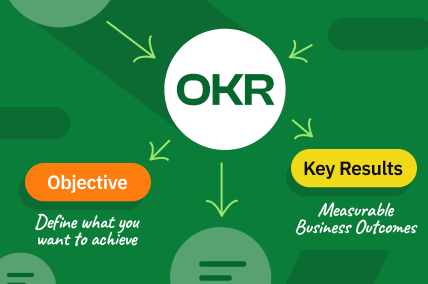
OKRs (Objectives and Key Results) give recruiters a framework to shift from reactive order-taking to proactive talent strategy. Unlike traditional recruiter metrics that count calls made, emails sent, and interviews scheduled, recruiter OKRs focus on the outcomes that matter — how fast the pipeline moves, how often offers are accepted, how effective sourcing channels are, and how strong candidate relationships become.
For recruiters, the power of OKRs lies in connecting daily activities to measurable hiring impact. Sending 100 outreach messages is an activity. The OKR is the deliberate plan to generate results: achieving a 40% response rate on personalized outreach, converting 25% of phone screens to on-site interviews, or closing 95% of extended offers. This shift from activity tracking to outcome measurement is what elevates a recruiter from coordinator to strategic hiring partner.
Whether you are an agency recruiter managing multiple clients, an in-house recruiter handling 15 requisitions, or a recruiting lead managing a team of sourcers, the examples below cover the OKR patterns that drive measurable recruiter performance. Each objective is specific and actionable, each key result is quantifiable, and every example reflects real recruiting workflows.
Interactive OKR Examples
Reduce average pipeline stage duration from 8 days to 4 days at every funnel stage
Compress the time candidates spend in each pipeline stage by eliminating scheduling delays, accelerating feedback loops, and proactively managing interviewer availability.
Increase phone-screen-to-onsite conversion rate from 25% to 45% through better pre-qualification
Improve the quality of candidates advancing past phone screen by implementing structured screening criteria and better alignment with hiring manager expectations.
Achieve 100% of requisitions with 3+ qualified candidates in pipeline within 10 business days
Ensure no requisition sits without viable candidates by building sourcing discipline and pipeline health standards.
Eliminate pipeline stalls by ensuring zero candidates wait more than 5 days without a status update
Build a proactive pipeline management discipline where every candidate receives timely communication and no opportunity slips through the cracks.
Increase interview-to-offer conversion rate from 15% to 30% through sharper candidate pre-qualification
Cut wasted interview cycles by improving the quality of candidates who reach on-site interviews through better screening, skills assessment, and expectation alignment.
Build a real-time pipeline health dashboard providing instant visibility across all 30 active requisitions
Create automated pipeline visibility that enables the recruiting team and hiring managers to see exactly where every candidate stands without manual reporting.
Reduce end-to-end hiring cycle from 42 days to 25 days for engineering roles
Compress the notoriously long engineering hiring timeline by parallelizing interview stages, implementing async assessments, and streamlining debrief decisions.
Achieve 24-hour debrief turnaround on 90% of candidate interviews through structured decision frameworks
Eliminate the debrief bottleneck where hiring decisions languish for days by implementing structured scorecards, forced-ranking systems, and time-bound decision rules.
Deploy predictive pipeline analytics that forecast fill probability and flag at-risk requisitions 2 weeks early
Build a data-driven pipeline management system that predicts which requisitions are on track and which are at risk based on pipeline health signals.
Build a talent-on-demand model that delivers 3 pre-qualified candidates within 48 hours for any standard role
Create a ready-to-deploy talent pipeline for recurring role types that enables near-instant candidate delivery when new requisitions open.
Implement a candidate velocity scoring system that identifies and fast-tracks top-tier talent through the process
Create a structured fast-track program for exceptional candidates that compresses their timeline while maintaining assessment rigor, reducing the risk of losing top talent to competitors.
Orchestrate a global pipeline management system with standardized stage definitions and velocity benchmarks across 4 regions
Harmonize pipeline management practices across regional recruiting teams so that pipeline data is comparable, bottlenecks are visible, and best practices are shared.
Build Your Own OKR
Select a focus area for your OKR:
#RecruitingPartner
Join as freelance recruiter.
Get clients, AI tools & 65% of commissions


OKR Scoring Calculator
Use Google's 0.0 to 1.0 scoring scale to evaluate your recruiter OKRs at the end of each quarter. A score of 0.7-1.0 means the key result was delivered, 0.3-0.7 means meaningful progress was made, and 0.0-0.3 signals a miss that needs root cause analysis. The sweet spot is landing between 0.6 and 0.7 on average — if you consistently score 1.0, your OKRs are not ambitious enough.
Overall Score
Top 5 OKR Mistakes Recruiter Teams Make
Don't do this:
KR: Send 500 outreach messages and schedule 80 phone screens this quarter
Do this instead:
KR: Source and close 12 hires with 85%+ hiring manager satisfaction and 90%+ 90-day retention
A recruiter who sends 500 messages and closes 2 poor hires is less effective than one who sends 100 messages and closes 10 great hires. OKRs should measure the quality and impact of recruiter effort, not the volume of activities performed.
Don't do this:
KR: Fill all roles within 20 days regardless of candidate feedback or process quality
Do this instead:
KR: Fill all roles within 28 days while maintaining candidate NPS above 55 and hiring manager satisfaction above 85%
Rushing candidates through a sloppy process creates bad hires and damages employer brand. Every speed-focused OKR must include quality and experience guardrails to prevent the team from cutting corners that create long-term problems.
Don't do this:
KR: Source 200 candidates and present 50 slates to hiring managers
Do this instead:
KR: Fill 15 positions with 90%+ offer acceptance and 4.5+ candidate satisfaction rating
Recruiters need to be accountable for outcomes even when they cannot control every variable. Presenting 50 slates means nothing if none result in hires. Outcome-based OKRs force recruiters to own the entire process — including managing hiring manager behavior, candidate experience, and offer competitiveness.
Don't do this:
KR: Close 20 requisitions this quarter (transactional, short-term)
Do this instead:
KR: Close 15 requisitions while building a warm talent pool of 200+ candidates for future roles
Transactional recruiting that ignores long-term relationship building creates a treadmill where the team starts from zero every quarter. The best recruiters invest in relationships today that reduce time-to-fill and improve quality tomorrow. OKRs should balance immediate fills with pipeline building.
Don't do this:
Every recruiter must fill 5 positions per month regardless of role type
Do this instead:
Senior technical recruiter: fill 3 engineering positions/month. Volume recruiter: fill 8 operations positions/month
Filling a senior engineering role requiring 6 interviews is fundamentally different from filling a high-volume operations role with 2 interviews. OKRs must account for role complexity, market scarcity, and hiring manager involvement to be fair and useful.
OKRs vs KPIs for Recruiter: What's the Difference?
| Dimension | OKR | KPI | Recruiter Example |
|---|---|---|---|
| Purpose | Drive step-change improvements in recruiting performance and outcomes | Monitor ongoing recruiting operational health | OKR: Reduce pipeline velocity to 4 days per stage through process redesign. KPI: Track daily pipeline movement and stage durations. |
| Time Horizon | Quarterly, with clear milestones and targets | Ongoing and continuously measured | OKR: Launch structured interviewing across 100% of roles by Q2. KPI: Weekly interview-to-offer ratio tracking. |
| Ambition Level | Stretch goals — 70% completion is often considered successful | Targets are meant to be hit 100% of the time | OKR: Achieve 90% offer acceptance rate (stretch). KPI: Maintain response time under 24 hours for all candidates. |
| Scope | Focused on 2-3 improvements that will transform recruiting effectiveness | Comprehensive coverage of all recruiting metrics | OKR: 2-3 objectives per quarter. KPI: Dashboard tracking 15+ metrics (TTF, CPH, pipeline, conversion, etc.). |
| Ownership | Shared across the recruiting team with individual accountability | Typically assigned to individual recruiters to monitor | OKR: Team owns 'transform pipeline velocity' with individual KRs. KPI: Each recruiter tracks their own requisition metrics. |
| Flexibility | Can be adjusted mid-quarter based on market conditions or demand changes | Generally fixed for the measurement period | OKR: Pivot sourcing strategy after market data shows talent pool shift. KPI: Monthly cost-per-hire target stays fixed. |
| Measurement | Progress scored on a 0.0-1.0 scale with 0.7 considered strong | Measured as absolute numbers, percentages, or pass/fail | OKR: Score 0.7 on 'improve offer acceptance' = meaningful progress. KPI: TTF either hits 30-day target or it doesn't. |
| Alignment | Cascades from business hiring needs to team to individual recruiter goals | Often siloed within recruiting with limited business visibility | OKR: Business growth cascades to recruiting team OKR to individual KRs. KPI: Each recruiter tracks pipeline; business tracks headcount separately. |
Purpose
OKR: Reduce pipeline velocity to 4 days per stage through process redesign. KPI: Track daily pipeline movement and stage durations.
Time Horizon
OKR: Launch structured interviewing across 100% of roles by Q2. KPI: Weekly interview-to-offer ratio tracking.
Ambition Level
OKR: Achieve 90% offer acceptance rate (stretch). KPI: Maintain response time under 24 hours for all candidates.
Scope
OKR: 2-3 objectives per quarter. KPI: Dashboard tracking 15+ metrics (TTF, CPH, pipeline, conversion, etc.).
Ownership
OKR: Team owns 'transform pipeline velocity' with individual KRs. KPI: Each recruiter tracks their own requisition metrics.
Flexibility
OKR: Pivot sourcing strategy after market data shows talent pool shift. KPI: Monthly cost-per-hire target stays fixed.
Measurement
OKR: Score 0.7 on 'improve offer acceptance' = meaningful progress. KPI: TTF either hits 30-day target or it doesn't.
Alignment
OKR: Business growth cascades to recruiting team OKR to individual KRs. KPI: Each recruiter tracks pipeline; business tracks headcount separately.
How to Track Recruiter OKRs Effectively
Weekly Check-in
A quick 15-minute sync to review pipeline health, score key results, and identify any candidates or requisitions at risk.
- •Score each key result 0.0-1.0 based on current pipeline data and hiring metrics
- •Review all candidates stalled in pipeline for more than 5 days and assign next actions
- •Identify the single biggest bottleneck in the hiring process this week and assign an owner
- •Update hiring manager dashboards so status conversations are data-driven
Monthly Review
A deeper session to analyze sourcing channel performance, review hiring outcomes, and assess whether OKRs need adjustment based on changing demand.
- •Analyze month-over-month trends for each key result to identify acceleration or stalls
- •Review sourcing channel ROI data and adjust budget allocation for underperforming channels
- •Share candidate experience feedback with the team and implement quick-win improvements
- •Align with hiring managers on evolving requirements and priority changes
Quarterly Retrospective
A comprehensive review where the team scores all OKRs, analyzes quality of hire data, captures learnings, and plans next quarter.
- •Final-score every key result with supporting data and calculate objective-level averages
- •Review quality of hire data (90-day surveys) for all hires made during the quarter
- •Identify the top 3 process improvements that should carry forward to next quarter
- •Draft next quarter's recruiter OKRs incorporating learnings and updated hiring priorities
Frequently Asked Questions About Recruiter OKRs
How many OKRs should an individual recruiter have per quarter?
Should recruiters have individual OKRs or just team OKRs?
How do you measure recruiter performance beyond fill rate?
Should agency recruiters use OKRs differently than in-house recruiters?
How do you set OKRs when requisition volume is unpredictable?
What is the relationship between recruiter OKRs and hiring manager OKRs?
How do you handle OKRs when a major layoff or hiring freeze occurs?
Should candidate experience be part of every recruiter's OKRs?

Rakesh Kumar Karthikeyan is Vice President of Recruiting Partners at Hyring, where he builds and scales the company's US recruitment business. He leads Hyring's US recruiting team and a growing network of freelance recruiting partners, owning client acquisition, partner development, delivery, and growth strategy.
Expertise

Surya N is the Co-Founder and CTO of Hyring, where he architected the AI interviewing engine that has now conducted over 900,000 interviews for companies ranging from early-stage startups to the Fortune 500. A mechanical engineer who moved into artificial intelligence, he spent 6 years building AI applications inside a technology consultancy before co-founding Hyring, and wrote the first version of its AI interviewer from scratch: a system that listens, adapts its questioning in real time, and flags fraud rather than following a fixed script.
Expertise
Need the Right People to Hit These OKRs?
Great recruiting outcomes require great recruiters — the sourcers who find hidden talent, the closers who win competitive offers, and the relationship builders who create lasting candidate connections. Hyring helps you find, assess, and hire the recruiting professionals who turn ambitious hiring goals into results.
See How Hyring Works