Human Resource OKR Examples That Build High-Performing Organizations
Human Resource OKR Examples That Build High-Performing Organizations
Move beyond headcount tracking and compliance checklists. These OKR frameworks help CHROs, HR directors, and people managers drive talent acquisition, employee engagement, performance management, and organizational development with measurable outcomes.
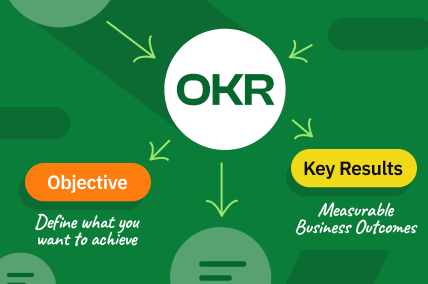
What Are OKRs for Human Resource Teams?
OKRs (Objectives and Key Results) give HR teams a framework to demonstrate strategic impact beyond administrative tasks. Instead of measuring success by how many positions were filled or how many trainings were delivered, HR OKRs connect people initiatives to business outcomes — faster hiring that reduces revenue gaps, engagement programs that cut regrettable attrition, and development investments that build leadership bench strength.
For HR organizations, OKRs bridge the gap between people programs and business performance. A time-to-fill metric is a KPI. The OKR is the strategic plan to transform the talent acquisition engine: reducing time-to-hire from 60 days to 30 days while improving quality-of-hire scores, or building an employer brand that generates 40% of applications from inbound channels. This shift from activity reporting to outcome ownership is what elevates HR from a support function to a strategic partner.
Whether you are a solo HR generalist at a 50-person startup or lead a global people team of 200, the examples below cover every dimension of modern HR. Each objective is outcome-oriented, each key result is measurable, and every example includes context to help you adapt it to your organization's stage, culture, and strategic priorities.
Interactive OKR Examples
Build a structured hiring process that reduces time-to-hire from 45 days to 25 days for all roles
Create the startup's first standardized recruiting workflow with defined stages, scorecards, and SLAs to eliminate ad-hoc hiring and accelerate the talent acquisition pipeline.
Scale recruiting capacity to hire 50 employees in Q2 while maintaining quality-of-hire above 85%
Build the recruiting engine needed to support rapid headcount growth by expanding sourcing channels, adding recruiter capacity, and implementing quality gates that prevent speed from sacrificing standards.
Launch global employer brand campaign increasing application volume by 60% from target talent pools
Build a compelling employer brand that attracts top enterprise talent by showcasing culture, career growth opportunities, and employee impact stories across multiple channels and regions.
Build an employee referral program that sources 35% of all new hires with higher retention rates
Launch a structured referral program with clear incentives, easy submission process, and tracking that turns the existing team into the most effective recruiting channel.
Implement data-driven recruiting analytics that improve pipeline conversion rates by 30% at every stage
Build recruiting analytics capability that identifies bottlenecks in the hiring funnel and enables data-driven decisions about sourcing channels, interview processes, and offer competitiveness.
Build a diverse talent pipeline achieving 40% underrepresented candidates in final interview rounds
Transform diversity hiring from aspirational to systematic by partnering with diverse talent networks, removing bias from screening, and tracking representation at every funnel stage.
Launch technical hiring assessment platform reducing mis-hires by 40% for engineering roles
Implement a structured technical assessment process that objectively evaluates engineering candidates' skills, reducing reliance on subjective interviews and improving quality-of-hire for technical positions.
Build a proactive talent pipeline for critical roles reducing reactive sourcing from 80% to 30%
Shift from filling positions only when they open to proactively building relationships with top talent in critical skill areas so positions can be filled faster when demand arises.
Deploy AI-powered talent matching platform reducing recruiter screening time by 60% while improving candidate quality
Implement artificial intelligence to automate initial candidate screening, match candidates to roles based on skill profiles, and predict candidate success using historical hiring and performance data.
Build a talent acquisition function capable of supporting a 3x team scale from 30 to 90 employees
Design and implement the recruiting infrastructure, processes, and team structure needed to triple headcount over the next 12 months while maintaining hiring quality and culture fit.
Implement a global talent acquisition operating model covering 6 regions with unified process and local execution
Standardize recruiting practices across international offices while allowing regional flexibility on sourcing channels, compensation benchmarking, and compliance requirements.
Build a predictive workforce planning model that forecasts hiring needs 4 quarters ahead with 85% accuracy
Partner with finance and business leaders to build a data-driven workforce planning model that predicts future hiring needs based on business plans, attrition patterns, and growth projections.
Build Your Own OKR
Select a focus area for your OKR:
#RecruitingPartner
Join as freelance recruiter.
Get clients, AI tools & 65% of commissions


OKR Scoring Calculator
Use Google's 0.0 to 1.0 scoring scale to evaluate your HR OKRs at the end of each quarter. A score of 0.7-1.0 means the key result was delivered, 0.3-0.7 means meaningful progress was made, and 0.0-0.3 signals a miss that needs root cause analysis. The sweet spot is landing between 0.6 and 0.7 on average — if you consistently score 1.0, your OKRs are not ambitious enough.
Overall Score
Top 5 OKR Mistakes Human Resource Teams Make
Don't do this:
KR: Conduct 50 interviews this quarter and post 20 job descriptions
Do this instead:
KR: Fill 15 critical roles within 25 days average time-to-hire with 90% quality-of-hire score
Counting interviews and job postings measures busy-ness, not effectiveness. An HR team could conduct 100 interviews and still fail to fill critical roles. Outcome-based key results focus on what those activities should produce — filled positions, quality hires, and speed.
Don't do this:
Objective: Make employees happier and improve the workplace culture
Do this instead:
Objective: Increase eNPS from 25 to 50 by addressing the top 3 engagement detractors identified in Q4 survey
Happiness is not a metric. Effective HR OKRs use specific measurement tools like eNPS, engagement scores, or attrition rates with clear numeric targets. Without measurable baselines and targets, there is no way to know if initiatives are working.
Don't do this:
Objective: Complete all mandatory compliance training for 100% of employees
Do this instead:
Objective: Build an automated compliance training system that achieves 100% completion within 2 weeks of hire and reduces annual compliance effort by 50%
Compliance completion is a baseline requirement, not a stretch goal. If your OKR is something you must do regardless, it is a KPI. The OKR should be about how you transform the compliance process to be faster, automated, and less burdensome — creating value beyond mere compliance.
Don't do this:
Objective: Implement a new HRIS platform by end of Q2
Do this instead:
Objective: Reduce HR operational cost per employee by 30% through HRIS automation, freeing HR bandwidth to support the company's 2x headcount growth plan
Technology implementations are not objectives — they are enablers. HR OKRs should connect directly to business outcomes the leadership team cares about. A new HRIS matters because it saves money and enables growth, not because it is new technology.
Don't do this:
HR sets 6 objectives with 4 key results each (24 KRs) covering every possible people initiative
Do this instead:
HR sets 2-3 objectives with 3 key results each (6-9 KRs) focused on the highest-impact people challenges
HR teams are chronically overstretched. Setting 24 key results guarantees that none receive adequate attention. The discipline of limiting to 2-3 objectives forces the CHRO to decide what truly moves the needle this quarter and to say no to initiatives that can wait.
OKRs vs KPIs for Human Resource: What's the Difference?
| Dimension | OKR | KPI | Human Resource Example |
|---|---|---|---|
| Purpose | Drive ambitious change and strategic improvement | Monitor ongoing operational health | OKR: Reduce time-to-hire from 45 to 25 days through process redesign. KPI: Track monthly time-to-hire metric. |
| Time Horizon | Quarterly, with defined start and end dates | Ongoing and continuously measured | OKR: Launch employee engagement program by end of Q2. KPI: Monthly voluntary attrition rate. |
| Ambition Level | Stretch goals — 70% completion is often considered successful | Targets are meant to be hit 100% of the time | OKR: Achieve eNPS of 60 (stretch). KPI: Maintain eNPS above 30 at all times. |
| Scope | Focused on the few priorities that move the needle most | Comprehensive coverage of all key metrics | OKR: 2-3 objectives per quarter. KPI: Dashboard tracking 25+ metrics (attrition, time-to-hire, engagement, compliance, etc.). |
| Ownership | Shared across team with individual accountability for key results | Typically assigned to individuals or departments to track | OKR: Team owns 'transform recruiting' with individual KRs for sourcing, process, and employer brand. KPI: Each recruiter tracks their open requisitions. |
| Flexibility | Can be adjusted mid-quarter based on new learning or market shifts | Generally fixed for the measurement period | OKR: Pivot engagement focus from remote work to manager training after survey reveals real driver. KPI: Monthly engagement score target stays fixed. |
| Measurement | Progress scored on a 0.0-1.0 scale with 0.7 considered strong | Measured as absolute numbers, percentages, or pass/fail | OKR: Score 0.7 on 'build leadership pipeline' = success. KPI: Succession coverage either meets 80% or it doesn't. |
| Alignment | Cascades from company to team to individual to ensure strategic coherence | Often siloed within departments with limited cross-functional visibility | OKR: Company talent goal cascades to HR OKR to recruiter KRs. KPI: HR tracks attrition; finance tracks headcount costs separately. |
Purpose
OKR: Reduce time-to-hire from 45 to 25 days through process redesign. KPI: Track monthly time-to-hire metric.
Time Horizon
OKR: Launch employee engagement program by end of Q2. KPI: Monthly voluntary attrition rate.
Ambition Level
OKR: Achieve eNPS of 60 (stretch). KPI: Maintain eNPS above 30 at all times.
Scope
OKR: 2-3 objectives per quarter. KPI: Dashboard tracking 25+ metrics (attrition, time-to-hire, engagement, compliance, etc.).
Ownership
OKR: Team owns 'transform recruiting' with individual KRs for sourcing, process, and employer brand. KPI: Each recruiter tracks their open requisitions.
Flexibility
OKR: Pivot engagement focus from remote work to manager training after survey reveals real driver. KPI: Monthly engagement score target stays fixed.
Measurement
OKR: Score 0.7 on 'build leadership pipeline' = success. KPI: Succession coverage either meets 80% or it doesn't.
Alignment
OKR: Company talent goal cascades to HR OKR to recruiter KRs. KPI: HR tracks attrition; finance tracks headcount costs separately.
How to Track Human Resource OKRs Effectively
Weekly Check-in
A focused 15-20 minute sync to review progress on each key result, flag blockers early, and adjust tactics while the quarter is still young enough to course-correct.
- •Score each key result on the 0.0-1.0 scale based on current recruiting pipeline, engagement, and operational data
- •Review active hiring pipeline health and flag any roles stuck in process or at risk of missing timelines
- •Identify cross-functional blockers (hiring manager availability, budget approvals, IT support) and escalate promptly
- •Confirm next week's top 3 HR actions that will advance the most critical lagging key results
Monthly Review
A deeper review to assess trajectory, determine if any OKRs need rescoping, and share learnings across the HR team. This is where hiring data, engagement trends, and operational metrics paint a clear picture.
- •Analyze month-over-month trends in hiring metrics, engagement scores, and HR operations efficiency
- •Review recent exit interview themes and engagement pulse data for early warning signals
- •Align with business leaders on any changes to headcount plans, organizational design, or strategic priorities affecting HR OKRs
- •Celebrate hiring wins, engagement improvements, and process optimizations to maintain team momentum
Quarterly Retrospective
A comprehensive end-of-quarter review where the team scores all OKRs, conducts root cause analysis on misses, extracts lessons learned, and drafts the next quarter's OKRs based on what was discovered.
- •Final-score every key result with supporting data from HRIS, ATS, engagement platform, and operational metrics
- •Conduct a structured retrospective: which people initiatives moved the needle, which fell flat, what surprised us
- •Review feedback from business stakeholders on HR team performance and responsiveness to their needs
- •Draft next quarter's HR OKRs incorporating lessons learned, emerging business needs, and workforce planning insights
Frequently Asked Questions About Human Resource OKRs
How many OKRs should an HR team set per quarter?
Should hiring targets like time-to-fill be OKRs or KPIs?
How do you measure the ROI of engagement initiatives through OKRs?
Can HR set OKRs that depend on manager behavior changes?
What is the best OKR for measuring quality of hire?
How should HR handle OKRs during organizational restructuring?
Should diversity and inclusion metrics be separate OKRs or embedded in existing ones?
How do you set OKRs for HR operations when the work is largely transactional?

Adithyan RK is the Co-Founder and CEO of Hyring, an AI-native recruitment platform that has run over 900,000 AI interviews for companies ranging from early-stage startups to the Fortune 500. He has spent 18 years building technology businesses, starting with a digital consultancy in 2008 and a staff augmentation firm in 2017, before founding Hyring in 2022 to rebuild hiring around evidence instead of guesswork.
Expertise

Surya N is the Co-Founder and CTO of Hyring, where he architected the AI interviewing engine that has now conducted over 900,000 interviews for companies ranging from early-stage startups to the Fortune 500. A mechanical engineer who moved into artificial intelligence, he spent 6 years building AI applications inside a technology consultancy before co-founding Hyring, and wrote the first version of its AI interviewer from scratch: a system that listens, adapts its questioning in real time, and flags fraud rather than following a fixed script.
Expertise
Need the Right People to Hit These OKRs?
The best OKRs mean nothing without the right team. Hyring helps you find, assess, and hire top HR talent faster — so your ambitious objectives actually get met.
See How Hyring Works