New Manager OKR Examples That Set You Up for Success From Day One
New Manager OKR Examples That Set You Up for Success From Day One
The transition from individual contributor to manager is the hardest career shift most people make. Discover OKR frameworks specifically designed for first-time managers — covering your first 90 days, building team trust, setting up processes, improving communication, and developing your own leadership skills.
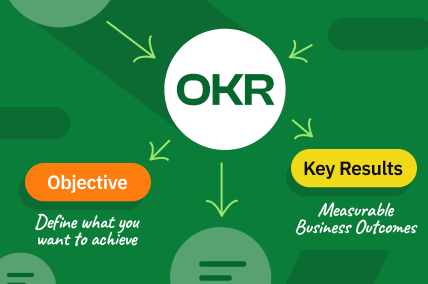
What Are OKRs for New Managers?
OKRs (Objectives and Key Results) give new managers a structured way to navigate the most challenging career transition they will face. Instead of trying to do everything at once — learn the team, prove yourself, deliver results, manage up — OKRs help first-time managers focus on the specific outcomes that matter most in their first quarters as a leader.
For new managers, OKRs serve as both a performance framework and a learning tool. They force you to think about what success looks like in your new role (hint: it is no longer about your personal output) and create measurable milestones for building the management muscles — trust, communication, delegation, feedback — that take time to develop.
Whether you just got promoted from within the team, were hired as a first-time manager from outside, or are transitioning from a technical lead role, these examples address the specific challenges new managers face. Each objective is designed for the reality of learning on the job, each key result is achievable within a quarter, and every example includes the context to make it immediately applicable.
Interactive OKR Examples
Complete a comprehensive team assessment within 30 days understanding each person's strengths, goals, and concerns
Build a deep understanding of your new team by conducting thorough discovery conversations with every team member, stakeholder, and peer before making any changes.
Establish a stable weekly operating rhythm that the team rates 8+ out of 10 for clarity and usefulness within 60 days
Create the foundational management cadence — standups, 1:1s, team meetings, planning sessions — that gives the team structure and predictability from a new manager.
Map all stakeholder relationships and establish productive working partnerships with 5 key cross-functional peers
Build the external relationships a new manager needs to succeed by identifying key stakeholders, understanding their priorities, and establishing regular touchpoints.
Deliver one meaningful quick win within 45 days that demonstrates value and builds team confidence in new leadership
Identify and execute a visible improvement that addresses a real team pain point, showing that the new manager listens, acts, and delivers tangible results.
Transition from individual contributor to manager mindset by delegating 80% of former IC responsibilities within 60 days
Complete the critical mental shift from doing the work to enabling others to do it by systematically handing off individual contributor tasks to capable team members.
Gain full understanding of the department's strategy, budget, and political landscape within 90 days
Build the organizational awareness that a new manager needs by understanding how the department fits into the company, where the budget comes from, and who the key decision-makers are.
Successfully navigate managing former peers by establishing new relationship dynamics with zero team friction
Handle the awkward transition of managing people who were recently peers by setting clear expectations, having honest conversations, and earning respect through fair and transparent leadership.
Build a 90-day management success plan reviewed weekly with your manager ensuring alignment and support
Create a structured onboarding plan for yourself as a new manager with weekly milestones, clear success criteria, and regular check-ins with your own manager for guidance.
Inherit and stabilize a struggling team achieving 90% delivery rate within 90 days while rebuilding morale
Take over a team with existing performance and morale problems and execute a turnaround by quickly diagnosing issues, prioritizing fixes, and building trust under pressure.
Build a management from scratch for a newly formed team achieving full team formation within 90 days
Lead the formation of a brand new team from initial hiring through team norms establishment and first delivery milestone as a first-time manager with no inherited infrastructure.
Transition into a remote-first management role establishing virtual team effectiveness within 90 days
Navigate the additional complexity of managing a distributed team as a new manager by building async communication skills, virtual presence, and remote-specific management practices.
Successfully manage a team twice your age and experience by earning credibility through competence and humility within 90 days
Navigate the unique challenge of managing senior team members as a younger or less-experienced new manager by leading with questions, leveraging their expertise, and adding value through coordination and enablement.
Build Your Own OKR
Select a focus area for your OKR:
#RecruitingPartner
Join as freelance recruiter.
Get clients, AI tools & 65% of commissions


OKR Scoring Calculator
Use Google's 0.0 to 1.0 scoring scale to evaluate your new manager OKRs at the end of each quarter. A score of 0.7-1.0 means the key result was delivered, 0.3-0.7 means meaningful progress was made, and 0.0-0.3 signals a miss that needs root cause analysis. The sweet spot is landing between 0.6 and 0.7 on average — if you consistently score 1.0, your OKRs are not ambitious enough.
Overall Score
Top 5 OKR Mistakes New Manager Teams Make
Don't do this:
Q1 OKR: Restructure the team, implement 5 new processes, and overhaul the workflow within 30 days
Do this instead:
Q1 OKR: Complete team discovery within 30 days, deliver 1 quick win by day 45, and establish a stable weekly rhythm by day 60
New managers who rush to make sweeping changes before understanding the team's context usually create more problems than they solve. The first 90 days should prioritize listening, relationship building, and small wins that build credibility. Major changes should come in quarter 2 after you have earned the trust and context to make them wisely.
Don't do this:
KR: Complete 15 code reviews, ship 3 features, and close 10 support tickets this quarter
Do this instead:
KR: Build team capability to deliver 3 features per sprint without depending on the manager for reviews or approvals
The hardest part of becoming a new manager is letting go of individual contributor metrics. Your success is no longer measured by your personal output — it is measured by your team's output, growth, and engagement. If your OKRs look like an IC's to-do list, you have not made the mental transition to management.
Don't do this:
All 3 OKRs focus on implementing tools, dashboards, and workflows
Do this instead:
1 OKR on processes, 1 on team trust and relationships, 1 on your personal management development
New managers often retreat to the comfort of systems and tools because the people side of management feels uncomfortable. But no amount of process will compensate for a team that does not trust you or feel supported. At least half of your OKRs should directly address the human elements — trust, communication, development, engagement.
Don't do this:
KR: Achieve 100% team satisfaction, zero missed deadlines, and top performance ratings for all team members
Do this instead:
KR: Increase team satisfaction from baseline to 75%+ while delivering 85% of sprint commitments on time
Your first quarter as a manager will involve mistakes, learning curves, and imperfect results. OKRs should reflect realistic stretch goals, not perfection fantasies. Setting unachievable standards leads to discouragement when you inevitably fall short. Better to set ambitious-but-realistic targets and build from there each quarter.
Don't do this:
All OKRs focus on team outcomes with zero objectives for personal management growth
Do this instead:
At least 1 OKR dedicated to: Complete management training, establish a mentorship relationship, and build a reflective practice
You cannot pour from an empty cup. New managers who skip their own development will hit a ceiling quickly. The first year of management is the steepest learning curve of your career — dedicate at least one OKR to deliberately building your management skills through training, mentorship, reading, and reflection.
OKRs vs KPIs for New Manager: What's the Difference?
| Dimension | OKR | KPI | New Manager Example |
|---|---|---|---|
| Purpose | Drive the critical management skill development and team-building priorities for the quarter | Monitor basic team health and delivery baselines as you learn | OKR: Build team trust scoring 85%+ on psychological safety. KPI: Track weekly sprint completion rate. |
| Time Horizon | Quarterly, aligned with the 90-day management milestones | Ongoing, providing real-time signals about team performance and health | OKR: Complete team discovery and establish operating rhythm by Q1 end. KPI: Daily standup attendance and weekly 1:1 completion. |
| Ambition Level | Stretch goals that push you to develop new management capabilities | Minimum viable performance floors for team stability | OKR: Zero cancellations on 1:1s for 12 weeks (stretch for new habit). KPI: Ensure at least 80% of 1:1s happen weekly. |
| Scope | 2-3 priorities covering team relationships, delivery processes, and personal development | 5-10 metrics covering team output, engagement, and operational basics | OKR: 1 objective on trust, 1 on processes, 1 on personal growth. KPI: Dashboard tracking velocity, engagement, and attendance. |
| Ownership | You own the management development objectives; team contributes to delivery objectives | Team owns delivery KPIs; you monitor and support | OKR: You own 'build team trust' while team owns sprint delivery. KPI: Team tracks their own quality and velocity metrics. |
| Flexibility | Adjust approaches based on what you learn about the team and yourself | Fixed thresholds that signal when intervention is needed | OKR: Pivot from group trust exercises to individual conversations if team dynamics require it. KPI: Engagement below 60 triggers check-in. |
| Measurement | Scored 0.0-1.0 with grace for the learning curve — 0.5 is a good start | Binary or threshold-based measurement against established standards | OKR: Score 0.6 on first quarter's trust-building = solid foundation. KPI: Sprint delivery meets or misses the 80% baseline. |
| Alignment | Connects upward to department goals and downward to individual development plans | Department-level metrics you contribute to as part of the broader team | OKR: Your trust OKR supports department's retention goal. KPI: Your team's velocity feeds into the department delivery dashboard. |
Purpose
OKR: Build team trust scoring 85%+ on psychological safety. KPI: Track weekly sprint completion rate.
Time Horizon
OKR: Complete team discovery and establish operating rhythm by Q1 end. KPI: Daily standup attendance and weekly 1:1 completion.
Ambition Level
OKR: Zero cancellations on 1:1s for 12 weeks (stretch for new habit). KPI: Ensure at least 80% of 1:1s happen weekly.
Scope
OKR: 1 objective on trust, 1 on processes, 1 on personal growth. KPI: Dashboard tracking velocity, engagement, and attendance.
Ownership
OKR: You own 'build team trust' while team owns sprint delivery. KPI: Team tracks their own quality and velocity metrics.
Flexibility
OKR: Pivot from group trust exercises to individual conversations if team dynamics require it. KPI: Engagement below 60 triggers check-in.
Measurement
OKR: Score 0.6 on first quarter's trust-building = solid foundation. KPI: Sprint delivery meets or misses the 80% baseline.
Alignment
OKR: Your trust OKR supports department's retention goal. KPI: Your team's velocity feeds into the department delivery dashboard.
How to Track New Manager OKRs Effectively
Weekly Check-in
A 20-minute personal reflection to assess your management progress, identify what went well and what you would do differently, and plan next week's management priorities.
- •Score each key result honestly on the 0.0-1.0 scale based on this week's evidence and interactions
- •Reflect on your best and worst management moment of the week and extract one specific learning
- •Check in with yourself on energy and wellbeing — new management is exhausting and burnout is real
- •Identify the single most important management action for next week that will move your OKRs forward
Monthly Review
A deeper review with your own manager and mentor to assess management growth, discuss challenges, and adjust your development approach based on the first month's learning.
- •Review month-over-month progress on each key result and honestly assess your trajectory
- •Discuss specific management challenges with your mentor and apply their advice to next month's approach
- •Collect informal feedback from 2-3 team members on how they feel about the team direction under your leadership
- •Celebrate at least one management win no matter how small — positive reinforcement matters for your development too
Quarterly Retrospective
A comprehensive review of your first quarter as a manager — scoring all OKRs, reflecting on the biggest lessons, getting formal feedback, and planning the next quarter's priorities.
- •Final-score every key result and write a candid self-assessment of your management performance
- •Collect formal feedback from your team, manager, and peers on your management effectiveness
- •Identify the top 3 management skills you improved most and the top 3 areas that still need work
- •Draft next quarter's OKRs building on lessons learned — the second quarter should show meaningful evolution from Q1
Frequently Asked Questions About New Manager OKRs
Should a new manager set OKRs in their very first week?
How many OKRs should a first-time manager set?
What if I am managing former peers — how should that affect my OKRs?
How do I balance learning the role with delivering team results?
Should I share my management development OKRs with my team?
What is the most important OKR for a new manager's first quarter?
How do I handle inheriting a team with existing problems?
When should a new manager start giving performance feedback to their team?

Adithyan RK is the Co-Founder and CEO of Hyring, an AI-native recruitment platform that has run over 900,000 AI interviews for companies ranging from early-stage startups to the Fortune 500. He has spent 18 years building technology businesses, starting with a digital consultancy in 2008 and a staff augmentation firm in 2017, before founding Hyring in 2022 to rebuild hiring around evidence instead of guesswork.
Expertise

Surya N is the Co-Founder and CTO of Hyring, where he architected the AI interviewing engine that has now conducted over 900,000 interviews for companies ranging from early-stage startups to the Fortune 500. A mechanical engineer who moved into artificial intelligence, he spent 6 years building AI applications inside a technology consultancy before co-founding Hyring, and wrote the first version of its AI interviewer from scratch: a system that listens, adapts its questioning in real time, and flags fraud rather than following a fixed script.
Expertise
Need the Right People to Hit These OKRs?
Every new manager's success depends on having the right team. Hyring helps you find, assess, and hire talented people who make your transition to leadership smoother and your team's results stronger.
See How Hyring Works