People Manager OKR Examples That Build High-Performing Teams
People Manager OKR Examples That Build High-Performing Teams
Stop managing tasks and start leading people. Discover OKR frameworks that help people managers drive team performance, develop individual talent, build engaged cultures, and deliver results through others — not despite them.
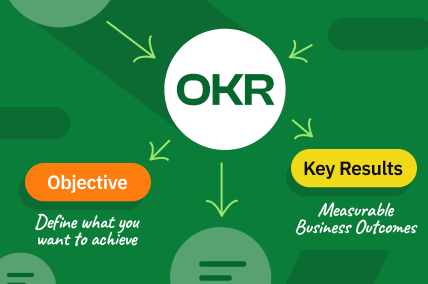
What Are OKRs for People Managers?
OKRs (Objectives and Key Results) give people managers a framework to balance the dual mandate of delivering business results and developing the humans who produce those results. Unlike individual contributor OKRs that focus on personal output, people manager OKRs must account for team dynamics, engagement, skill development, and the multiplier effect of good leadership on organizational performance.
For people managers, the most impactful OKRs address the levers only a manager can pull: removing blockers that slow the team, creating clarity that reduces wasted effort, developing skills that increase team capacity, and building a culture that attracts and retains top talent. The best manager OKRs measure outcomes — team delivery, individual growth, engagement scores — not the activities of managing itself.
Whether you manage a 3-person squad or a 30-person department, these examples cover the full range of people management challenges. Each objective focuses on an outcome that managers directly influence, each key result is measurable, and every example includes context to help you adapt it to your team's specific situation and maturity level.
Interactive OKR Examples
Increase team delivery velocity by 30% while maintaining quality standards above 95%
Improve the team's throughput by removing process bottlenecks, reducing context-switching, and protecting focus time so the team ships more without cutting corners.
Reduce project cycle time from 6 weeks to 4 weeks by streamlining the team's workflow and approval processes
Cut delivery time by a third by identifying and eliminating the waiting, rework, and unnecessary handoffs that slow the team down without adding value.
Achieve 95% on-time delivery across all team commitments by implementing structured sprint planning and risk management
Transform the team from reactive to predictable by building planning disciplines that account for risks, dependencies, and realistic capacity so commitments are consistently met.
Build team self-sufficiency so that 80% of decisions are made without manager involvement by end of Q4
Empower the team to operate more autonomously by establishing clear decision-making frameworks, delegating authority, and coaching team members to handle decisions independently.
Improve cross-team collaboration reducing inter-team dependency resolution time from 5 days to 1 day
Build better working relationships with adjacent teams so that requests, handoffs, and dependencies flow smoothly instead of creating multi-day bottlenecks.
Transform a consistently underperforming team from 55% target achievement to 85% within one quarter
Lead a performance turnaround by diagnosing the root causes of underperformance, implementing targeted interventions, and rebuilding the team's confidence and momentum.
Build a results-oriented team culture that eliminates busywork and increases impactful output by 40%
Shift the team from measuring hours and activities to measuring outcomes and impact, cutting low-value work to create space for high-impact contributions.
Scale team output by 50% through process automation and workflow optimization without adding headcount
Find ways to dramatically increase what the team produces by automating repetitive tasks, improving tools, and streamlining workflows so the same team can handle significantly more.
Build a high-reliability team that achieves zero critical incidents and 99.9% delivery quality for 3 consecutive months
Elevate the team's operational excellence by implementing quality gates, error-proofing processes, and creating a culture of meticulous attention to detail in every deliverable.
Create a self-managing team that operates effectively during a 4-week manager absence with no performance degradation
Build such strong processes, delegation, and team leadership that the team can sustain performance even when the manager is unavailable for an extended period.
Implement predictive delivery analytics that forecasts project completion dates with 90% accuracy 4 weeks in advance
Build data-driven delivery intelligence that uses historical velocity, current capacity, and risk factors to predict when projects will actually ship, not when they were optimistically planned to ship.
Lead the team through a major organizational restructuring maintaining 100% delivery continuity and 90% team retention
Navigate the team through significant organizational change by providing clear communication, emotional support, and practical transition planning so delivery and morale survive intact.
Build Your Own OKR
Select a focus area for your OKR:
#RecruitingPartner
Join as freelance recruiter.
Get clients, AI tools & 65% of commissions


OKR Scoring Calculator
Use Google's 0.0 to 1.0 scoring scale to evaluate your people manager OKRs at the end of each quarter. A score of 0.7-1.0 means the key result was delivered, 0.3-0.7 means meaningful progress was made, and 0.0-0.3 signals a miss that needs root cause analysis. The sweet spot is landing between 0.6 and 0.7 on average — if you consistently score 1.0, your OKRs are not ambitious enough.
Overall Score
Top 5 OKR Mistakes People Manager Teams Make
Don't do this:
All 3 objectives focus on sprint velocity, project delivery, and output metrics
Do this instead:
1 objective on team delivery, 1 on individual development, and 1 on team culture and engagement
If your OKRs could belong to a project manager instead of a people manager, they are missing the point. People managers have a unique responsibility to develop humans, not just deliver projects. A balanced OKR set should always include at least one objective focused on the growth and wellbeing of your team members.
Don't do this:
KR: Conduct 12 weekly 1:1 meetings with each team member this quarter
Do this instead:
KR: Achieve 90% team satisfaction with feedback quality and frequency as measured by anonymous pulse survey
Conducting 1:1s is an activity. Having your team feel well-supported, heard, and developed is the outcome. You could have 12 terrible 1:1s or 6 transformative ones. OKRs should measure the impact of your management practices, not the activities themselves. Track whether the feedback is working, not whether the meetings happened.
Don't do this:
Manager OKR: Ship the new dashboard feature by end of Q2 (this is the team lead's OKR)
Do this instead:
Manager OKR: Build team capability to deliver 2 major features per quarter by upskilling 3 engineers on frontend architecture
Your OKRs should reflect what only you as a manager can influence — team capability, culture, process quality, and cross-functional alignment. If one of your OKRs is actually a specific team member's deliverable, you are micromanaging through the OKR framework instead of enabling your team to own their own outcomes.
Don't do this:
No OKRs addressing team health until 3 people resign in one month
Do this instead:
Proactive OKR: Increase team engagement from 65 to 80 and reduce burnout indicators by 50% before any attrition occurs
By the time someone resigns, you have already failed as a people manager. Effective manager OKRs include leading indicators of team health — engagement scores, burnout signals, satisfaction trends — that let you intervene before problems become departures. Being reactive on people issues is always more expensive than being proactive.
Don't do this:
Every team member gets the same OKR: Improve coding speed by 20% this quarter
Do this instead:
Junior dev: Master testing fundamentals. Senior dev: Lead architecture decisions. Staff dev: Mentor 2 juniors to independence
A new hire and a 5-year veteran need completely different development goals. One-size-fits-all team OKRs show that you have not invested the time to understand each person's unique growth edge. As a people manager, your value is in personalizing development — meeting each person where they are and helping them get to where they want to be.
OKRs vs KPIs for People Manager: What's the Difference?
| Dimension | OKR | KPI | People Manager Example |
|---|---|---|---|
| Purpose | Drive improvement in team performance, culture, and individual growth | Monitor ongoing team health and delivery baselines | OKR: Build a self-managing team by end of Q2. KPI: Track sprint velocity and on-time delivery weekly. |
| Time Horizon | Quarterly, aligned with team development cycles and company planning | Ongoing, measured weekly to maintain awareness of team health | OKR: Improve engagement score to 80 by Q1 end. KPI: Weekly pulse survey tracking engagement trends. |
| Ambition Level | Stretch goals that push the team to a new level of performance | Baselines that flag when the team drops below acceptable levels | OKR: Achieve zero voluntary attrition (stretch). KPI: Attrition must stay below 15% annualized. |
| Scope | 2-3 priorities that address the most impactful improvement levers | 10-15 metrics covering delivery, quality, engagement, and individual performance | OKR: 2 objectives on delivery improvement and team development. KPI: Dashboard with 12 team health metrics. |
| Ownership | Manager owns people and culture objectives with team owning delivery results | Shared across the team with manager overseeing aggregate trends | OKR: Manager owns 'build feedback culture' with team leads owning implementation KRs. KPI: Everyone monitors quality. |
| Flexibility | Can adjust approach based on what the team needs as the quarter progresses | Fixed thresholds that trigger conversations when breached | OKR: Shift from skills training to mentorship approach based on Q1 feedback. KPI: Engagement below 60 triggers action plan. |
| Measurement | Scored 0.0-1.0 at quarter end reflecting the ambition of the goal | Binary met/not-met or continuous trend monitoring | OKR: Score 0.7 on 'develop team members' = excellent progress. KPI: Training completion rate hits 90% or misses. |
| Alignment | Cascades from company and department OKRs to team-level people objectives | Team-level metrics that may connect to department dashboards | OKR: Department 'scale team' objective cascades to manager's hiring and onboarding OKR. KPI: HR tracks headcount centrally. |
Purpose
OKR: Build a self-managing team by end of Q2. KPI: Track sprint velocity and on-time delivery weekly.
Time Horizon
OKR: Improve engagement score to 80 by Q1 end. KPI: Weekly pulse survey tracking engagement trends.
Ambition Level
OKR: Achieve zero voluntary attrition (stretch). KPI: Attrition must stay below 15% annualized.
Scope
OKR: 2 objectives on delivery improvement and team development. KPI: Dashboard with 12 team health metrics.
Ownership
OKR: Manager owns 'build feedback culture' with team leads owning implementation KRs. KPI: Everyone monitors quality.
Flexibility
OKR: Shift from skills training to mentorship approach based on Q1 feedback. KPI: Engagement below 60 triggers action plan.
Measurement
OKR: Score 0.7 on 'develop team members' = excellent progress. KPI: Training completion rate hits 90% or misses.
Alignment
OKR: Department 'scale team' objective cascades to manager's hiring and onboarding OKR. KPI: HR tracks headcount centrally.
How to Track People Manager OKRs Effectively
Weekly Check-in
A 20-minute self-review where the manager assesses progress on each people management key result, identifies team members who need additional support, and plans the upcoming week's coaching and development activities.
- •Score each key result on the 0.0-1.0 scale using data from 1:1s, team metrics, and engagement signals
- •Identify any team member showing early warning signs (disengagement, overwhelm, conflict) and plan intervention
- •Review the upcoming week's development activities and ensure they are scheduled and prepared for
- •Reflect on one management behavior to improve this week based on team feedback or self-observation
Monthly Review
A deeper reflection on management effectiveness, team trajectory, and whether current OKR approaches are working. This is where the manager steps back from daily management to assess the bigger picture.
- •Review month-over-month trends on engagement, performance, and development metrics for each team member
- •Assess whether current management approaches are moving key results in the right direction or need adjustment
- •Discuss team health and OKR progress with your own manager to surface any support needs
- •Celebrate team wins publicly and ensure individual contributions are recognized and documented
Quarterly Retrospective
A comprehensive review where the manager scores all OKRs, reflects on management growth areas, conducts development conversations with each team member, and designs the next quarter's people management priorities.
- •Final-score every key result and share results transparently with the team in a retrospective format
- •Conduct career development conversations with each team member assessing growth and setting next-quarter goals
- •Reflect on your own management effectiveness and identify 2-3 personal development areas for next quarter
- •Draft next quarter's people manager OKRs based on team needs, department priorities, and personal growth areas
Frequently Asked Questions About People Manager OKRs
Should people manager OKRs focus on delivery or people development?
How many OKRs should a people manager set per quarter?
How do you measure people management OKRs when results are qualitative?
Should each team member's individual OKRs roll up into the manager's OKRs?
How do you handle OKRs when you have a team member on a performance improvement plan?
What is the best OKR for a new people manager in their first quarter?
How do people manager OKRs connect to company-level OKRs?
Should people managers share their OKR scores with their team?

Adithyan RK is the Co-Founder and CEO of Hyring, an AI-native recruitment platform that has run over 900,000 AI interviews for companies ranging from early-stage startups to the Fortune 500. He has spent 18 years building technology businesses, starting with a digital consultancy in 2008 and a staff augmentation firm in 2017, before founding Hyring in 2022 to rebuild hiring around evidence instead of guesswork.
Expertise

Surya N is the Co-Founder and CTO of Hyring, where he architected the AI interviewing engine that has now conducted over 900,000 interviews for companies ranging from early-stage startups to the Fortune 500. A mechanical engineer who moved into artificial intelligence, he spent 6 years building AI applications inside a technology consultancy before co-founding Hyring, and wrote the first version of its AI interviewer from scratch: a system that listens, adapts its questioning in real time, and flags fraud rather than following a fixed script.
Expertise
Need the Right People to Hit These OKRs?
Great people managers need great people to manage. Hyring helps you find, assess, and hire talent that raises the bar for your entire team — so your management investment compounds into extraordinary results.
See How Hyring Works