Talent Acquisition OKR Examples That Build World-Class Teams
Talent Acquisition OKR Examples That Build World-Class Teams
Move beyond vanity metrics like applications received. Discover OKR frameworks that align your talent acquisition function around sourcing quality, hiring velocity, candidate experience, and employer brand — from TA coordinators to heads of recruiting.
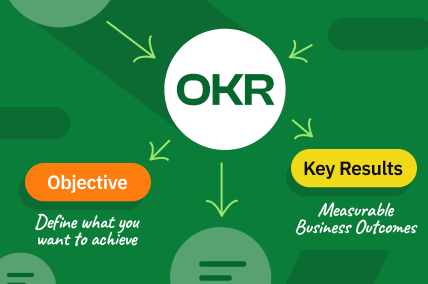
What Are OKRs for Talent Acquisition Teams?
OKRs (Objectives and Key Results) give talent acquisition teams a framework to pursue ambitious hiring goals without falling into the trap of measuring activity instead of outcomes. Unlike traditional recruiting metrics that count resumes screened or interviews scheduled, TA OKRs focus on the strategic outcomes — pipeline quality, time-to-fill, quality of hire, and candidate experience — that determine whether the organization can actually build the team it needs.
For talent acquisition organizations, the power of OKRs lies in separating recruiting busywork from hiring impact. Posting a job is an activity. The OKR is the deliberate plan to fill it well: building a diverse slate of qualified candidates within 15 days, achieving an 85% hiring manager satisfaction score, or reducing offer decline rates from 25% to 10%. This shift from measuring volume to measuring hiring effectiveness is what turns a reactive recruiting function into a strategic talent partner.
Whether you run a lean startup TA team of 2 or a global enterprise recruiting organization, the examples below are designed to be adapted to your hiring volume, your market competitiveness, and your organizational maturity. Each objective is outcome-oriented, each key result is measurable, and every example includes the context you need to make it your own.
Interactive OKR Examples
Build a qualified candidate pipeline of 200+ vetted professionals across all open roles
Create a proactive sourcing engine that keeps the pipeline full with pre-qualified candidates so recruiters are never starting from zero when a new requisition opens.
Diversify sourcing channels so no single source accounts for more than 40% of hires
Reduce dependency on job boards by building sourcing capability across referrals, social media, events, communities, and direct outreach.
Implement AI-powered candidate matching reducing manual resume screening time by 70%
Deploy technology to automate initial candidate screening and ranking, freeing recruiters to focus on relationship building and high-value assessment activities.
Launch an employee referral program generating 30% of all hires with higher retention rates
Build a structured referral program with clear incentives, easy submission process, and rapid feedback loops that makes employees the top sourcing channel.
Build a diverse candidate pipeline where 50%+ of qualified candidates represent underrepresented groups
Proactively source from underrepresented communities, partner with diversity-focused organizations, and remove bias from sourcing criteria to build genuinely diverse slates.
Deploy a talent CRM managing 5,000+ passive candidates with automated nurture sequences
Build a long-term relationship management system for passive talent that keeps the company top-of-mind so candidates are warm when roles open.
Build a talent intelligence function that maps competitor talent pools and predicts hiring needs 2 quarters ahead
Create a data-driven talent intelligence capability that informs sourcing strategy with market insights, competitor movement tracking, and demand forecasting.
Increase sourcing team productivity by 40% through process automation and tool optimization
Streamline the sourcing workflow by automating repetitive tasks, consolidating tools, and implementing productivity frameworks that maximize recruiter output.
Build a global sourcing capability covering 6 markets with localized strategies and 48-hour pipeline activation
Scale the sourcing function internationally with market-specific channel strategies, local talent networks, and the ability to activate sourcing for any market within 48 hours.
Launch an internal mobility program filling 25% of open roles with existing employees
Build internal career marketplace and mobility framework that gives current employees first access to open roles, reducing external hiring costs and improving retention.
Implement predictive sourcing analytics that identify high-propensity candidates 30 days before they enter the job market
Use data signals (profile updates, engagement patterns, company changes) to predict when passive candidates are likely to be open to new opportunities and reach them first.
Orchestrate a unified global talent acquisition platform processing 50,000 candidates annually with end-to-end visibility
Consolidate the global TA tech stack into a single platform that provides real-time visibility across all markets, channels, and stages of the hiring funnel.
Build Your Own OKR
Select a focus area for your OKR:
#RecruitingPartner
Join as freelance recruiter.
Get clients, AI tools & 65% of commissions


OKR Scoring Calculator
Use Google's 0.0 to 1.0 scoring scale to evaluate your talent acquisition OKRs at the end of each quarter. A score of 0.7-1.0 means the key result was delivered, 0.3-0.7 means meaningful progress was made, and 0.0-0.3 signals a miss that needs root cause analysis. The sweet spot is landing between 0.6 and 0.7 on average — if you consistently score 1.0, your OKRs are not ambitious enough.
Overall Score
Top 5 OKR Mistakes Talent Acquisition Teams Make
Don't do this:
KR: Screen 500 resumes and conduct 100 phone screens this quarter
Do this instead:
KR: Fill 15 roles with 90%+ hiring manager satisfaction and 90%+ 90-day retention
Screening volume is meaningless if the right people are not being hired. A recruiter who screens 500 resumes and fills 5 roles poorly is less effective than one who screens 100 and fills 10 roles with excellent candidates. OKRs should measure hiring impact, not recruiting busywork.
Don't do this:
KR: Reduce average time-to-fill to 20 days across all roles
Do this instead:
KR: Reduce average time-to-fill to 30 days while maintaining 90%+ hiring manager satisfaction and 85%+ 12-month retention
Speed without quality creates a revolving door. A 20-day fill that produces a 6-month turnover costs far more than a 35-day fill that produces a 3-year performer. Every time-to-fill OKR must include quality guardrails to prevent the team from optimizing for speed alone.
Don't do this:
Objective: Optimize the recruiting process to minimize recruiter workload per hire
Do this instead:
Objective: Build a candidate-first hiring process that achieves 60+ NPS while reducing recruiter workload by 30%
Internal efficiency gains that degrade the candidate experience (automated rejections without feedback, slow communication, impersonal processes) ultimately hurt the employer brand and reduce the quality of future applicant pools. TA OKRs should serve both the company and the candidate.
Don't do this:
KR: Achieve 30-day time-to-fill for all positions including executive and specialist roles
Do this instead:
KR: Achieve 25-day TTF for standard roles, 45-day TTF for specialist roles, and 60-day TTF for executive roles
A junior coordinator and a VP of Engineering have fundamentally different hiring dynamics. Market availability, assessment complexity, and candidate expectations vary dramatically by level and specialization. TA OKRs should set appropriate benchmarks for each role category.
Don't do this:
KR: Launch a new careers video and 3 social media posts about company culture
Do this instead:
KR: Increase unprompted employer brand recall from 15% to 35% among target talent pool and grow organic inbound applications by 50%
A careers video is a tactic, not an outcome. Employer branding is a long-term strategic investment that should be measured by its impact on talent attraction — brand awareness, application quality, and offer acceptance rates — not by the volume of content produced.
OKRs vs KPIs for Talent Acquisition: What's the Difference?
| Dimension | OKR | KPI | Talent Acquisition Example |
|---|---|---|---|
| Purpose | Drive transformative improvements in hiring capability and outcomes | Monitor ongoing recruiting operational health | OKR: Reduce time-to-fill by 40% while improving quality of hire scores. KPI: Track weekly time-to-fill by role. |
| Time Horizon | Quarterly, with defined improvement milestones | Ongoing and continuously measured | OKR: Launch structured interviewing across 100% of roles by Q2 end. KPI: Track daily pipeline health and interview volume. |
| Ambition Level | Stretch goals — 70% completion is often considered successful | Targets are meant to be hit 100% of the time | OKR: Achieve 60+ candidate NPS (stretch). KPI: Maintain response rate above 90% on candidate surveys. |
| Scope | Focused on the 2-3 TA improvements that will transform hiring outcomes | Comprehensive coverage of all recruiting metrics | OKR: 2-3 objectives per quarter. KPI: Dashboard tracking 15+ metrics (TTF, CPH, pipeline, conversion, etc.). |
| Ownership | Shared across TA team with individual accountability for key results | Typically assigned to individual recruiters or TA operations | OKR: Team owns 'transform candidate experience' with individual KRs. KPI: Each recruiter tracks their own requisition metrics. |
| Flexibility | Can be adjusted based on hiring demand shifts or market changes | Generally fixed for the measurement period | OKR: Pivot sourcing strategy after Q1 shows engineering market tightening. KPI: Monthly cost-per-hire target stays fixed. |
| Measurement | Progress scored on a 0.0-1.0 scale with 0.7 considered strong | Measured as absolute numbers, percentages, or pass/fail | OKR: Score 0.7 on 'improve quality of hire' = meaningful progress. KPI: TTF either hits 30-day target or it doesn't. |
| Alignment | Cascades from company hiring strategy to TA team to individual recruiters | Often siloed within TA with limited business-side visibility | OKR: Company growth cascades to TA OKR to sourcing specialist KRs. KPI: TA tracks pipeline; business tracks headcount separately. |
Purpose
OKR: Reduce time-to-fill by 40% while improving quality of hire scores. KPI: Track weekly time-to-fill by role.
Time Horizon
OKR: Launch structured interviewing across 100% of roles by Q2 end. KPI: Track daily pipeline health and interview volume.
Ambition Level
OKR: Achieve 60+ candidate NPS (stretch). KPI: Maintain response rate above 90% on candidate surveys.
Scope
OKR: 2-3 objectives per quarter. KPI: Dashboard tracking 15+ metrics (TTF, CPH, pipeline, conversion, etc.).
Ownership
OKR: Team owns 'transform candidate experience' with individual KRs. KPI: Each recruiter tracks their own requisition metrics.
Flexibility
OKR: Pivot sourcing strategy after Q1 shows engineering market tightening. KPI: Monthly cost-per-hire target stays fixed.
Measurement
OKR: Score 0.7 on 'improve quality of hire' = meaningful progress. KPI: TTF either hits 30-day target or it doesn't.
Alignment
OKR: Company growth cascades to TA OKR to sourcing specialist KRs. KPI: TA tracks pipeline; business tracks headcount separately.
How to Track Talent Acquisition OKRs Effectively
Weekly Check-in
A focused 15-20 minute sync to review progress on each key result, discuss pipeline health, and address blockers before candidates go cold.
- •Score each key result on the 0.0-1.0 scale based on current recruiting data and pipeline metrics
- •Review top 5 open requisitions by urgency and confirm sourcing actions are on track
- •Identify any candidates at risk of dropping out and assign immediate follow-up actions
- •Update pipeline dashboards and hiring manager status reports before the meeting
Monthly Review
A deeper review to assess hiring funnel health, evaluate channel effectiveness, and determine if any OKRs need adjustment based on changing hiring demand.
- •Analyze month-over-month trends for each key result — are sourcing, quality, and speed improving?
- •Review sourcing channel ROI and reallocate budget from underperforming to high-performing channels
- •Share candidate experience feedback themes with the team and implement quick-win improvements
- •Align with hiring managers on evolving role requirements and priority changes affecting TA OKRs
Quarterly Retrospective
A comprehensive end-of-quarter review where the TA team scores all OKRs, analyzes hiring outcomes, extracts lessons, and sets next quarter's priorities.
- •Final-score every key result and calculate average scores per objective with supporting data
- •Conduct a structured retrospective: what improved hiring outcomes, what did not move the needle
- •Analyze quality of hire data from 90-day surveys for hires made during the quarter
- •Draft next quarter's TA OKRs incorporating learnings and updated business hiring priorities
Frequently Asked Questions About Talent Acquisition OKRs
How many OKRs should a talent acquisition team set per quarter?
Should time-to-fill be an OKR or a KPI for talent acquisition?
How do you measure quality of hire as a key result?
Should candidate experience be a standalone OKR or part of every hiring OKR?
How do you set OKRs when hiring demand is unpredictable?
How do TA OKRs align with business OKRs?
Should employer branding sit within talent acquisition OKRs or marketing?
How do you handle TA OKRs during a hiring freeze?

Rakesh Kumar Karthikeyan is Vice President of Recruiting Partners at Hyring, where he builds and scales the company's US recruitment business. He leads Hyring's US recruiting team and a growing network of freelance recruiting partners, owning client acquisition, partner development, delivery, and growth strategy.
Expertise

Surya N is the Co-Founder and CTO of Hyring, where he architected the AI interviewing engine that has now conducted over 900,000 interviews for companies ranging from early-stage startups to the Fortune 500. A mechanical engineer who moved into artificial intelligence, he spent 6 years building AI applications inside a technology consultancy before co-founding Hyring, and wrote the first version of its AI interviewer from scratch: a system that listens, adapts its questioning in real time, and flags fraud rather than following a fixed script.
Expertise
Need the Right People to Hit These OKRs?
Great talent acquisition OKRs require great talent acquisition professionals — the sourcers who build deep pipelines, the recruiters who close top candidates, and the TA leaders who transform hiring into a competitive advantage. Hyring helps you find, assess, and hire the recruiting talent that makes ambitious hiring goals achievable.
See How Hyring Works