Hiring Manager OKR Examples That Build World-Class Teams
Hiring Manager OKR Examples That Build World-Class Teams
Stop treating hiring as an HR task and start owning it as a leadership discipline. Discover OKR frameworks that help hiring managers define great talent, run effective interview processes, collaborate with recruiting partners, prepare for seamless onboarding, and build diverse teams that outperform.
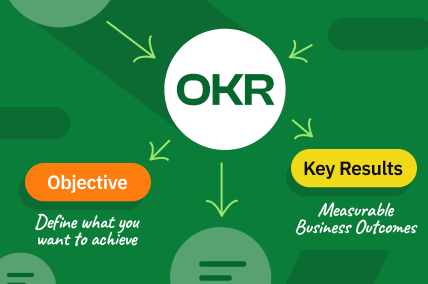
What Are OKRs for Hiring Managers?
OKRs (Objectives and Key Results) give hiring managers a structured framework to take ownership of hiring outcomes rather than delegating everything to talent acquisition. Unlike traditional hiring metrics that only track time-to-fill and cost-per-hire, hiring manager OKRs focus on the behaviors and decisions that actually determine hiring quality — how well requisitions are scoped, how effectively interviews evaluate talent, how smoothly the handoff to onboarding happens, and whether the team you build reflects the diversity your organization needs.
For hiring managers, the power of OKRs lies in treating hiring like any other critical business function that deserves strategic planning and measurable goals. Posting a job and waiting for resumes is a task. The OKR is the deliberate plan to build a great team: reducing requisition-to-kickoff time to 48 hours, achieving 90% interviewer calibration scores, ensuring every new hire reaches productivity milestones within 60 days, or increasing underrepresented candidate progression past the hiring manager screen by 25%.
Whether you are a first-time manager making your inaugural hire, a director scaling a department from 10 to 50, or a VP building an entirely new function, the examples below are designed to make you a better hiring leader. Each objective is outcome-oriented, each key result is measurable, and every example includes the practical context you need to adapt it to your team and stage.
Interactive OKR Examples
Reduce average time from headcount approval to recruiter kickoff meeting
Streamline the requisition creation process so that every approved role has a detailed intake document and kickoff meeting scheduled within 48 hours, eliminating the weeks of drift that delay pipeline building.
Build a standardized role scoping framework for all engineering requisitions
Create a repeatable framework that ensures every engineering requisition includes clear must-have vs. nice-to-have skills, leveling criteria, and team context so recruiters can source accurately from day one.
Align headcount planning with quarterly business objectives to eliminate reactive hiring
Shift from last-minute fire-drill hiring to proactive workforce planning by connecting headcount requests directly to quarterly business goals and revenue targets.
Create compelling job descriptions that attract qualified candidates organically
Rewrite all active job postings to focus on impact, growth, and team culture rather than generic requirement lists, measuring success through application quality and volume improvements.
Implement a hiring prioritization system that maximizes team impact per hire
Not all open roles have equal impact. Build a prioritization framework that ranks requisitions by business urgency, team bottleneck severity, and revenue impact so the most critical roles get filled first.
Establish cross-functional alignment on senior leadership requisitions
Senior hires affect multiple teams. Create a cross-functional stakeholder alignment process for director-and-above requisitions that ensures buy-in before the search begins.
Reduce role ambiguity that leads to candidate drop-off during interviews
Candidates drop out when the role they interview for does not match what was advertised. Close the gap between job posting, recruiter pitch, and interview experience through rigorous requisition alignment.
Build a talent market intelligence process to inform realistic requisition expectations
Many requisitions fail because hiring managers set unrealistic expectations about available talent. Build a process where market data informs every requisition before sourcing begins.
Implement a requisition quality audit process across all business units
Create a quarterly audit process that evaluates requisition quality across all departments, identifying patterns of scope creep, unrealistic expectations, and missing information that slow down hiring.
Build a succession-driven requisition planning model for critical roles
Move beyond reactive backfill hiring by identifying critical roles that need succession pipelines and proactively creating requisition plans before positions become vacant.
Redesign the requisition approval workflow to eliminate bottlenecks
The current multi-level approval process adds 2-3 weeks to every hire. Redesign the workflow with parallel approvals, auto-escalation, and delegated authority to cut approval time by 70%.
Create a predictive headcount model that anticipates hiring needs 2 quarters ahead
Use historical hiring data, attrition patterns, and business growth projections to build a predictive model that generates requisition forecasts two quarters in advance.
Build Your Own OKR
Select a focus area for your OKR:
#RecruitingPartner
Join as freelance recruiter.
Get clients, AI tools & 65% of commissions


OKR Scoring Calculator
Use the Google-style 0.0-1.0 scale to evaluate your hiring manager OKR progress. Score each key result based on actual achievement against target, then average for the objective score. A score of 0.6-0.7 indicates healthy stretch goal-setting. Consistently scoring 1.0 means your targets are not ambitious enough.
Overall Score
Top 5 OKR Mistakes Hiring Manager Teams Make
Don't do this:
KR: Reduce average time-to-fill to 25 days across all roles
Do this instead:
KR: Reduce time-to-fill to 30 days while maintaining 90-day new hire performance ratings above 4.0
Hiring managers who only track speed end up with fast but poor hires. Time-to-fill is a process efficiency metric, not a quality metric. OKRs should balance speed with quality-of-hire, new hire retention, and team performance impact.
Don't do this:
KR: TA team delivers 10 qualified candidates per role within 2 weeks
Do this instead:
KR: Complete structured intake documents for 100% of requisitions and respond to all candidate submissions within 24 hours
Hiring is a management responsibility, not an HR task. When hiring managers set OKRs that only measure recruiter outputs, they avoid accountability for their own contribution — intake quality, interview effectiveness, onboarding commitment, and candidate selling.
Don't do this:
KR: Conduct 20 interviews per week across all open roles
Do this instead:
KR: Achieve 85% inter-rater reliability and reduce post-hire regret rate to under 10%
Conducting 20 interviews per week is an activity. Identifying the right person who succeeds in the role is an outcome. Hiring manager OKRs should focus on selection quality, onboarding effectiveness, and team impact rather than counting interviews completed.
Don't do this:
KR: Ensure at least one diverse candidate in the final round of interviews
Do this instead:
KR: Achieve diverse candidate representation at every funnel stage with less than 10% variance in progression rates across demographic groups
Adding diversity as an afterthought — checking demographics only at the offer stage — is too late. Effective diversity OKRs start at the sourcing stage and measure representation at every step of the funnel, catching drop-off points early.
Don't do this:
Every hiring manager gets the same OKR: Fill all open roles within 30 days
Do this instead:
Engineering managers: Reduce technical assessment-to-offer time to 5 days; Executive hiring: Achieve 95% stakeholder alignment before sourcing begins
Hiring an entry-level associate and hiring a VP of Engineering require completely different strategies. Copy-pasting the same OKR across all roles ignores the unique challenges of each search — market availability, compensation dynamics, interview complexity, and stakeholder alignment.
OKRs vs KPIs for Hiring Manager: What's the Difference?
| Dimension | OKR | KPI | Hiring Manager Example |
|---|---|---|---|
| Interview Speed | Reduce interview-to-offer time from 21 days to 10 days while maintaining hire quality | Average interview-to-offer days = 10 | OKR: Compress the timeline and improve candidate experience. KPI: Track the metric monthly. |
| Interview Quality | Implement structured scorecards that achieve 85% inter-rater reliability | Inter-rater reliability percentage = 85% | OKR: Drive evaluation consistency across all panels. KPI: Monitor reliability score weekly. |
| Diversity | Build diverse interview slates for every open role to expand talent access | Percentage of slates with diverse candidates = 100% | OKR: Strategically expand sourcing to underrepresented communities. KPI: Track slate diversity rate. |
| Onboarding | Create 30-60-90 day onboarding plans that reduce new hire ramp time by 30% | Average new hire time-to-productivity in days | OKR: Build role-specific onboarding to accelerate ramp. KPI: Measure days to full productivity. |
| Responsiveness | Achieve 24-hour feedback turnaround on all recruiter candidate submissions | Average recruiter submission response time in hours | OKR: Improve hiring manager partnership with TA. KPI: Track response time SLA compliance. |
| Requisition Quality | Build a requisition quality framework that eliminates mid-search scope changes | Number of mid-search requisition scope changes = 0 | OKR: Improve upfront alignment to prevent downstream delays. KPI: Count scope changes per quarter. |
| Retention | Reduce 90-day new hire attrition through improved onboarding and manager support | 90-day voluntary attrition rate = 5% | OKR: Own the full new-hire journey from offer to productivity. KPI: Track early attrition rate. |
| Calibration | Establish interviewer calibration program that reduces post-hire regret rate to under 10% | 6-month manager dissatisfaction rate = 10% | OKR: Align interviewers on what great looks like. KPI: Monitor regret rate at 6 months. |
Interview Speed
OKR: Compress the timeline and improve candidate experience. KPI: Track the metric monthly.
Interview Quality
OKR: Drive evaluation consistency across all panels. KPI: Monitor reliability score weekly.
Diversity
OKR: Strategically expand sourcing to underrepresented communities. KPI: Track slate diversity rate.
Onboarding
OKR: Build role-specific onboarding to accelerate ramp. KPI: Measure days to full productivity.
Responsiveness
OKR: Improve hiring manager partnership with TA. KPI: Track response time SLA compliance.
Requisition Quality
OKR: Improve upfront alignment to prevent downstream delays. KPI: Count scope changes per quarter.
Retention
OKR: Own the full new-hire journey from offer to productivity. KPI: Track early attrition rate.
Calibration
OKR: Align interviewers on what great looks like. KPI: Monitor regret rate at 6 months.
How to Track Hiring Manager OKRs Effectively
Weekly Hiring Check-in
Review pipeline status, interviewer feedback turnaround, and candidate progression for all active requisitions.
- •Check candidate progression for all active requisitions and flag stalled roles
- •Review interviewer feedback turnaround times and follow up on overdue scorecards
- •Assess diverse slate completion status for each open role
- •Confirm next week's interview panel availability and preparation status
Monthly Hiring Quality Review
Analyze interview-to-hire conversion rates, scorecard consistency, and diversity pipeline metrics against OKR targets.
- •Review interview-to-hire conversion rates and identify process bottlenecks
- •Analyze scorecard consistency data and address any inter-rater reliability issues
- •Track diversity pipeline metrics against quarterly targets and adjust approach if needed
- •Share findings with TA partners and align on process improvements
Quarterly Hiring Retrospective
Score all hiring manager OKRs using the 0.0-1.0 scale and review quality-of-hire data for candidates hired this quarter.
- •Final-score every key result and calculate average score per objective
- •Review quality-of-hire data and new hire ramp progress for this quarter's hires
- •Conduct a retrospective with TA partners on what worked and what needs to change
- •Draft next quarter's hiring OKRs based on lessons learned and upcoming business priorities
Frequently Asked Questions About Hiring Manager OKRs
Should hiring managers set their own OKRs for hiring, or should HR set them?
How many hiring OKRs should a hiring manager have per quarter?
What is the difference between a hiring manager OKR and a recruiter OKR?
How do I measure interview quality as a hiring manager?
Should onboarding be part of a hiring manager's hiring OKRs?
How can I track diversity in my hiring process without collecting protected data?
What is a good OKR score for hiring manager OKRs?
How do hiring manager OKRs work when the hiring manager has no open roles?

Rakesh Kumar Karthikeyan is Vice President of Recruiting Partners at Hyring, where he builds and scales the company's US recruitment business. He leads Hyring's US recruiting team and a growing network of freelance recruiting partners, owning client acquisition, partner development, delivery, and growth strategy.
Expertise

Surya N is the Co-Founder and CTO of Hyring, where he architected the AI interviewing engine that has now conducted over 900,000 interviews for companies ranging from early-stage startups to the Fortune 500. A mechanical engineer who moved into artificial intelligence, he spent 6 years building AI applications inside a technology consultancy before co-founding Hyring, and wrote the first version of its AI interviewer from scratch: a system that listens, adapts its questioning in real time, and flags fraud rather than following a fixed script.
Expertise
Need the Right People to Hit These OKRs?
The best OKRs in the world mean nothing without the right team to execute them. Hyring helps you find, assess, and hire top talent faster — so your ambitious hiring objectives actually translate into great teams.
See How Hyring Works