Growth & Experimentation OKR Examples That Accelerate Product-Led Growth
Growth & Experimentation OKR Examples That Accelerate Product-Led Growth
Move beyond random A/B tests and vanity metrics. Discover proven OKR frameworks that structure your growth engine around experiment velocity, conversion optimization, and retention loops — built for growth PMs, marketers, and full-stack growth teams.
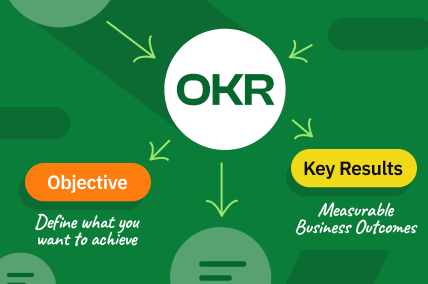
What Are OKRs for Growth & Experimentation Teams?
OKRs (Objectives and Key Results) give growth and experimentation teams a disciplined framework to turn rapid iteration into compounding business impact. Instead of running tests for the sake of testing, growth OKRs anchor every experiment to a measurable outcome — whether that is improving activation rates, reducing time-to-value, or building sustainable retention loops that drive long-term revenue.
For growth teams, the real power of OKRs lies in connecting experiment velocity to business results. Running 20 experiments per sprint is not valuable if none of them move a core metric. A well-structured growth OKR separates the inputs (number of experiments, hypothesis quality, test coverage) from the outputs (conversion lift, activation improvement, retention gain) so the team can optimize for learning speed without losing sight of impact.
Whether you are a two-person growth pod at a seed-stage startup or a 30-person experimentation org at a scaled company, the examples below cover every stage of the growth funnel. Each objective is tied to a real growth lever, each key result is quantifiable, and every example includes the context you need to adapt it to your specific product, audience, and growth model.
Interactive OKR Examples
Increase weekly experiment throughput from 3 to 8 tests while maintaining a 25% win rate
Scale the experimentation cadence by streamlining test design, reducing QA bottlenecks, and building reusable experiment templates so the team ships more tests without sacrificing quality.
Build a hypothesis-driven experiment backlog of 50+ prioritized tests ranked by ICE score
Move from ad-hoc test ideas to a structured backlog where every experiment has a clear hypothesis, expected impact, confidence level, and ease of implementation.
Standardize the experiment lifecycle across 4 product teams to eliminate inconsistent testing practices
Deploy a unified experimentation playbook with shared templates, statistical rigor standards, and review cadences so all teams run experiments the same way.
Launch 12 high-impact experiments in Q4 targeting the 3 largest conversion drop-off points
Focus experimentation resources on the three funnel stages with the highest user drop-off to maximize the impact-per-experiment ratio before year-end.
Reduce experiment cycle time from 21 days to 10 days by automating test deployment and analysis
Eliminate manual bottlenecks in the experiment pipeline by building automated deployment, traffic allocation, and statistical significance detection.
Establish a center of excellence for experimentation serving 6 product lines with shared methodology
Create a centralized growth experimentation team that provides tooling, training, and statistical consulting to product teams across the enterprise.
Run 30 micro-experiments on the signup flow in Q3 using rapid 48-hour test cycles
Adopt a high-frequency, small-scope testing approach to the signup experience where each test runs for 48 hours with sufficient traffic to reach significance quickly.
Double the growth team's experiment output from 20 to 40 tests per quarter while improving win rate to 30%
Scale experimentation capacity by adding parallel test tracks, improving hypothesis quality through data-driven ideation, and reducing the time spent on inconclusive tests.
Build a machine learning-powered experiment prioritization engine that predicts test outcomes with 70% accuracy
Leverage historical experiment data across 200+ past tests to train a prediction model that ranks new experiment ideas by expected impact, reducing wasted cycles on low-probability winners.
Launch a multi-armed bandit testing framework that auto-allocates traffic to winning variants in real time
Replace traditional A/B testing with a bandit approach for high-traffic surfaces so winning variants receive more traffic automatically, reducing opportunity cost during test periods.
Achieve 100 experiments per quarter across the growth org with a centralized learnings repository driving 50% idea reuse
Scale experimentation to triple-digit velocity by combining dedicated growth squads, automated tooling, and a knowledge management system that prevents teams from re-running failed tests.
Implement a global experimentation governance framework ensuring 100% compliance with privacy regulations across all test regions
Scale experimentation internationally while maintaining GDPR, CCPA, and regional privacy compliance by building consent-aware testing infrastructure and automated compliance checks.
Build Your Own OKR
Select a focus area for your OKR:
#RecruitingPartner
Join as freelance recruiter.
Get clients, AI tools & 65% of commissions


OKR Scoring Calculator
Use Google's 0.0 to 1.0 scoring scale to evaluate your growth & experimentation OKRs at the end of each quarter. A score of 0.7-1.0 means the key result was delivered, 0.3-0.7 means meaningful progress was made, and 0.0-0.3 signals a miss that needs root cause analysis. The sweet spot is landing between 0.6 and 0.7 on average — if you consistently score 1.0, your OKRs are not ambitious enough.
Overall Score
Top 5 OKR Mistakes Growth & Experimentation Teams Make
Don't do this:
KR: Run 50 A/B tests this quarter regardless of hypothesis quality or statistical rigor
Do this instead:
KR: Run 30 experiments with documented hypotheses achieving 25% statistically significant win rate
Running a high volume of poorly designed tests creates noise, not signal. An experiment without a clear hypothesis and proper statistical design teaches you nothing — it just burns traffic and engineering cycles. Focus on experiments that produce actionable learnings, whether they win or lose.
Don't do this:
KR: Increase page views by 40% and time on site by 25%
Do this instead:
KR: Increase signup-to-activation conversion from 25% to 40% resulting in 2,000 additional activated users per month
Page views and time on site can increase while your business shrinks. Growth OKRs should target metrics that directly connect to revenue — activation rates, conversion rates, retention rates, and expansion revenue. If a metric cannot be tied to a dollar outcome within two logical steps, it is probably a vanity metric.
Don't do this:
Objective: Double signup conversion rate from 3% to 6%
Do this instead:
Objective: Increase signup conversion from 3% to 5% while maintaining lead quality score above 70 and cost per acquisition below $50
Conversion rates are meaningless without controlling for traffic quality. You can easily double conversion by driving lower-intent traffic or loosening qualification criteria, but the resulting users will churn faster and cost more to serve. Always pair conversion targets with quality and unit economics guardrails.
Don't do this:
KR: Launch winning variant after 3 days of testing regardless of sample size
Do this instead:
KR: Reach 95% statistical significance on all experiments before declaring winners, with minimum sample size of 5,000 per variant
Declaring a winner after a few hundred visitors is not experimentation — it is guessing with extra steps. Early results are dominated by random variation and novelty effects. Proper growth OKRs include statistical rigor as a non-negotiable standard, even if it means running tests longer than the team would prefer.
Don't do this:
KR: Increase landing page conversion by 30% (without measuring downstream impact)
Do this instead:
KR: Increase end-to-end conversion from first visit to paid customer from 2% to 3.5% by coordinating improvements across all funnel stages
Optimizing one funnel step often shifts the bottleneck downstream. A 30% lift in landing page conversion means nothing if those extra signups never activate. Growth OKRs should measure the full funnel, ensuring that improvements at each stage compound rather than create new problems further down.
OKRs vs KPIs for Growth & Experimentation: What's the Difference?
| Dimension | OKR | KPI | Growth & Experimentation Example |
|---|---|---|---|
| Purpose | Drive ambitious growth experiments and strategic conversion improvements | Monitor ongoing funnel health and engagement baselines | OKR: Increase Day-7 retention from 30% to 50% through engagement loops. KPI: Track weekly retention rate. |
| Time Horizon | Quarterly, with defined experiment cycles and review cadences | Ongoing and continuously monitored in real time | OKR: Achieve 40% activation rate by end of Q2. KPI: Daily active user percentage. |
| Ambition Level | Stretch goals — a 70% achievement rate signals healthy ambition | Baselines and thresholds meant to be maintained consistently | OKR: Double experiment velocity to 40 tests per quarter (stretch). KPI: Maintain experiment quality score above 80%. |
| Scope | Focused on the 2-3 growth levers with highest potential impact | Comprehensive dashboard covering all funnel metrics | OKR: 2 objectives focused on activation and retention. KPI: Dashboard tracking 20+ metrics across the full funnel. |
| Ownership | Shared across growth pods with individual accountability for specific experiments | Typically owned by functional teams or individuals for monitoring | OKR: Growth pod owns 'improve activation' with engineer owning onboarding KR. KPI: Each analyst monitors their funnel stage. |
| Flexibility | Can pivot mid-quarter when experiment data reveals new opportunities | Fixed thresholds that trigger alerts when breached | OKR: Shift focus from signup to activation after Q1 data shows activation is the bottleneck. KPI: Signup rate alert threshold stays fixed. |
| Measurement | Scored 0.0-1.0 with 0.6-0.7 indicating strong performance | Measured as absolute numbers, percentages, or pass/fail against thresholds | OKR: Score 0.7 on 'improve conversion' = excellent stretch performance. KPI: Conversion either hits 5% target or it doesn't. |
| Alignment | Cascades from company growth targets to team experiments to individual contributions | Often siloed within growth, product, or marketing without cross-team visibility | OKR: Company growth target cascades to growth team OKR to individual experiment KRs. KPI: Growth tracks conversion; product tracks engagement separately. |
Purpose
OKR: Increase Day-7 retention from 30% to 50% through engagement loops. KPI: Track weekly retention rate.
Time Horizon
OKR: Achieve 40% activation rate by end of Q2. KPI: Daily active user percentage.
Ambition Level
OKR: Double experiment velocity to 40 tests per quarter (stretch). KPI: Maintain experiment quality score above 80%.
Scope
OKR: 2 objectives focused on activation and retention. KPI: Dashboard tracking 20+ metrics across the full funnel.
Ownership
OKR: Growth pod owns 'improve activation' with engineer owning onboarding KR. KPI: Each analyst monitors their funnel stage.
Flexibility
OKR: Shift focus from signup to activation after Q1 data shows activation is the bottleneck. KPI: Signup rate alert threshold stays fixed.
Measurement
OKR: Score 0.7 on 'improve conversion' = excellent stretch performance. KPI: Conversion either hits 5% target or it doesn't.
Alignment
OKR: Company growth target cascades to growth team OKR to individual experiment KRs. KPI: Growth tracks conversion; product tracks engagement separately.
How to Track Growth & Experimentation OKRs Effectively
Weekly Check-in
A focused 20-minute sync to review active experiment results, score key result progress, and prioritize next week's tests based on learnings from completed experiments.
- •Review results from all experiments concluded in the past week and update key result progress scores
- •Triage the experiment backlog and confirm which tests launch next week based on current priorities
- •Flag any blocked experiments and assign owners to unblock within 48 hours
- •Share one key learning from a recent experiment with the broader team to compound knowledge
Monthly Review
A deeper analysis of experiment portfolio performance, funnel trends, and OKR trajectory to determine if the growth strategy is working or needs adjustment.
- •Analyze month-over-month trends for each key result and calculate projected quarter-end scores
- •Review the experiment win rate and identify patterns in what types of tests are succeeding vs. failing
- •Assess whether the current experiment portfolio is balanced across funnel stages or over-indexed on one area
- •Coordinate with product and engineering on upcoming releases that may create new growth experiment opportunities
Quarterly Retrospective
A comprehensive end-of-quarter review where the team scores all OKRs, calculates cumulative experiment impact, documents key learnings, and designs next quarter's growth strategy.
- •Final-score every key result and calculate the cumulative revenue and conversion impact of all quarter experiments
- •Conduct a structured retrospective identifying the top 5 learnings that should inform next quarter's strategy
- •Archive all experiment results in the knowledge base with searchable tags for future reference
- •Draft next quarter's growth OKRs incorporating lessons learned and emerging opportunity areas
Frequently Asked Questions About Growth & Experimentation OKRs
How many experiments should a growth team run per quarter?
Should growth OKRs focus on one funnel stage or the entire funnel?
How do you measure the ROI of a growth experimentation program?
What is the difference between a growth OKR and a product OKR?
How long should an A/B test run before declaring a winner?
Should growth teams set OKRs around experiment velocity or business outcomes?
How do you handle growth OKRs when you do not have enough traffic for statistical significance?
What tools does a growth team need to execute OKRs effectively?

Adithyan RK is the Co-Founder and CEO of Hyring, an AI-native recruitment platform that has run over 900,000 AI interviews for companies ranging from early-stage startups to the Fortune 500. He has spent 18 years building technology businesses, starting with a digital consultancy in 2008 and a staff augmentation firm in 2017, before founding Hyring in 2022 to rebuild hiring around evidence instead of guesswork.
Expertise

Surya N is the Co-Founder and CTO of Hyring, where he architected the AI interviewing engine that has now conducted over 900,000 interviews for companies ranging from early-stage startups to the Fortune 500. A mechanical engineer who moved into artificial intelligence, he spent 6 years building AI applications inside a technology consultancy before co-founding Hyring, and wrote the first version of its AI interviewer from scratch: a system that listens, adapts its questioning in real time, and flags fraud rather than following a fixed script.
Expertise
Need the Right People to Hit These OKRs?
Growth experiments are only as good as the team running them. Hyring helps you find, assess, and hire top growth engineers, product managers, and data scientists — so your experimentation velocity translates into real business outcomes.
See How Hyring Works