Healthcare OKR Examples That Improve Patient Outcomes and Operational Excellence
Healthcare OKR Examples That Improve Patient Outcomes and Operational Excellence
Move beyond compliance checklists and volume-based targets. Discover proven OKR frameworks that align healthcare teams around measurable patient outcomes, operational efficiency, staff performance, and quality improvement — built for hospitals, clinics, digital health startups, and wellness organizations.
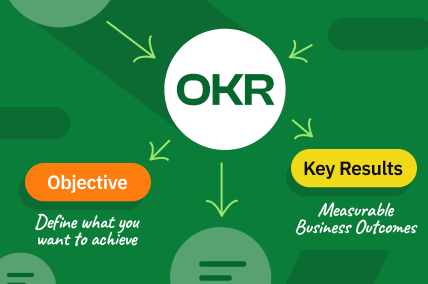
What Are OKRs for Healthcare Organizations?
OKRs (Objectives and Key Results) give healthcare organizations a framework to pursue meaningful improvement in patient care, operational performance, and organizational health without reducing complex medical work to simplistic volume targets. Unlike traditional healthcare metrics that count procedures performed or beds filled, healthcare OKRs focus on the outcomes that matter — patient satisfaction, clinical quality measures, care coordination efficiency, and staff wellbeing — forcing leadership to define what better actually looks like in measurable terms.
For healthcare teams, the power of OKRs lies in bridging the gap between clinical excellence and operational sustainability. A patient volume target is a KPI. The OKR is the strategic initiative that improves both care and efficiency: reducing emergency department wait times from 4 hours to 90 minutes by redesigning triage workflows, increasing preventive care compliance from 45% to 80% through proactive outreach, or cutting hospital readmission rates by 30% with structured discharge planning. This shift from measuring what happened to driving what should happen transforms healthcare organizations from reactive to intentional.
Whether you lead a rural community clinic, a multi-hospital health system, a digital health startup, or a wellness platform, the examples below cover the full spectrum of healthcare operations. Each objective addresses a real care delivery or operational challenge, each key result is measurable with standard healthcare metrics, and every example includes the context needed to adapt it to your patient population, regulatory environment, and organizational scale.
Interactive OKR Examples
Reduce 30-day hospital readmission rate from 18% to 10% through structured discharge planning and follow-up care
Implement a comprehensive discharge protocol that includes patient education, medication reconciliation, follow-up appointment scheduling, and 48-hour post-discharge phone calls to prevent avoidable readmissions.
Increase preventive care screening compliance from 52% to 80% across the primary care patient population
Close the gap between evidence-based screening guidelines and actual patient compliance by implementing proactive outreach, automated reminders, and convenient scheduling for age-appropriate screenings.
Achieve top-quartile patient satisfaction scores across all inpatient units with HCAHPS above 85th percentile
Transform the patient experience through structured hourly rounding, improved nurse communication, pain management protocols, and discharge experience optimization to drive measurable satisfaction improvement.
Reduce emergency department left-without-being-seen rate from 8% to 2% through triage redesign
Address the critical loss of patients who leave the ED before receiving care by implementing rapid medical evaluation, vertical patient flow, and real-time wait time communication.
Improve chronic disease management outcomes for diabetic patients to achieve 65% HbA1c control rate
Build a structured chronic disease management program for diabetic patients that combines care coordination, remote monitoring, and behavioral coaching to improve glycemic control across the patient population.
Reduce hospital-acquired infection rate by 50% through evidence-based prevention bundles and real-time surveillance
Implement a comprehensive infection prevention program targeting catheter-associated UTIs, central line infections, and surgical site infections through standardized bundles, compliance monitoring, and rapid response protocols.
Launch a maternal health program that reduces adverse birth outcomes by 35% in underserved communities
Address maternal health disparities by implementing community health worker outreach, prenatal care coordination, and high-risk pregnancy monitoring in populations with historically poor outcomes.
Implement a behavioral health integration program that improves depression screening and treatment rates by 50%
Embed behavioral health services into primary care workflows to close the treatment gap for depression and anxiety by making screening routine and therapy access immediate.
Build a precision medicine program that improves treatment response rates by 25% through pharmacogenomic-guided prescribing
Implement pharmacogenomic testing for high-risk medication classes to match patients with the most effective treatments sooner, reducing trial-and-error prescribing and adverse drug events.
Create a population health analytics platform that predicts high-risk patient deterioration 72 hours before acute events
Deploy predictive analytics models using EHR data, social determinants, and real-time vitals to identify patients at risk of acute deterioration and trigger proactive interventions before emergencies occur.
Implement a value-based care model that reduces total cost of care by 15% while improving quality scores
Transition from fee-for-service to value-based payment models by building care coordination infrastructure, risk stratification capabilities, and quality reporting that rewards better outcomes at lower cost.
Deploy a system-wide clinical decision support platform that reduces diagnostic errors by 40% across 12 hospitals
Implement AI-assisted clinical decision support integrated into EHR workflows that surfaces evidence-based diagnostic recommendations, flags potential misdiagnoses, and provides real-time clinical guidelines to reduce diagnostic variation.
Build Your Own OKR
Select a focus area for your OKR:
#RecruitingPartner
Join as freelance recruiter.
Get clients, AI tools & 65% of commissions


OKR Scoring Calculator
Use Google's 0.0 to 1.0 scoring scale to evaluate your healthcare OKRs at the end of each quarter. A score of 0.7-1.0 means the key result was delivered, 0.3-0.7 means meaningful progress was made, and 0.0-0.3 signals a miss that needs root cause analysis. In healthcare, patient safety OKRs should target 1.0 (zero tolerance for safety failures), while stretch improvement OKRs follow the standard 0.6-0.7 sweet spot.
Overall Score
Top 5 OKR Mistakes Healthcare Teams Make
Don't do this:
Objective: Increase patient volume by 30% and perform 500 more procedures this quarter
Do this instead:
Objective: Improve surgical outcomes by reducing complication rates from 8% to 4% while maintaining current case volume
Volume-based OKRs in healthcare can lead to inappropriate admissions, unnecessary procedures, and rushed care. Effective healthcare OKRs focus on outcomes — readmission rates, complication rates, patient satisfaction, and quality measures — that improve the value of care delivered rather than the quantity.
Don't do this:
All 3 objectives focus on reducing costs and increasing throughput with zero objectives addressing burnout or retention
Do this instead:
2 objectives on operational improvement balanced with 1 objective on staff wellbeing and retention
Healthcare organizations that set only efficiency OKRs while ignoring staff burnout create a vicious cycle — burned-out staff deliver worse care, turnover increases costs, and temporary staffing reduces quality. Sustainable improvement requires OKRs that invest in the workforce alongside operational targets.
Don't do this:
KR: Complete 100% of fall risk assessment forms within 4 hours of admission
Do this instead:
KR: Reduce patient falls from 4.2 to 2.3 per 1,000 patient days, with 100% fall risk assessment as a supporting process metric
Completing a form does not prevent a fall. Healthcare teams often confuse process compliance (filling out forms) with outcome improvement (fewer falls). OKR key results should measure the outcome first and use process metrics as supporting indicators, not primary targets.
Don't do this:
KR: Reduce average ED length of stay by 50% by discharging low-acuity patients within 30 minutes
Do this instead:
KR: Reduce average ED wait-to-provider time by 50% while maintaining all required screening and evaluation protocols
Speed-focused OKRs in clinical settings can create pressure to cut corners on required clinical evaluations, EMTALA compliance, or standard-of-care protocols. Healthcare OKRs must always include explicit guardrails ensuring that efficiency gains never compromise regulatory compliance or patient safety.
Don't do this:
ED objective: Reduce boarding time by transferring patients to floor faster. Floor objective: Reduce admissions from ED to maintain staffing ratios.
Do this instead:
Shared objective: Reduce door-to-discharge time by 20% through coordinated ED-to-floor patient flow optimization
Healthcare delivery is inherently cross-functional. When departments set OKRs in isolation, they often create conflicting incentives — the ED wants to move patients out faster while the floor wants to limit new admissions. Effective healthcare OKRs use shared objectives across departments that optimize the full patient journey.
OKRs vs KPIs for Healthcare: What's the Difference?
| Dimension | OKR | KPI | Healthcare Example |
|---|---|---|---|
| Purpose | Drive ambitious improvement in patient outcomes and operational performance | Monitor ongoing clinical and operational health continuously | OKR: Reduce readmission rate from 18% to 10% through discharge redesign. KPI: Track monthly readmission rate. |
| Time Horizon | Quarterly, aligned with strategic improvement initiatives | Ongoing and continuously measured in real-time dashboards | OKR: Launch telehealth program serving 500 visits/month by end of Q2. KPI: Daily patient volume, hourly ED wait times. |
| Ambition Level | Stretch goals — 70% completion is often considered successful (except safety OKRs) | Targets are meant to be hit consistently with zero tolerance for safety metrics | OKR: Reduce HAI rate by 50% (stretch). KPI: Hand hygiene compliance must stay above 95%. |
| Scope | Focused on 2-3 strategic priorities that move the biggest quality and efficiency levers | Comprehensive coverage of all regulatory, quality, and operational metrics | OKR: 2-3 objectives per quarter. KPI: Dashboard tracking 50+ metrics (census, LOS, readmissions, infections, falls, HCAHPS, etc.). |
| Ownership | Shared across multidisciplinary care teams with individual KR accountability | Typically owned by specific departments or reported to regulatory bodies | OKR: Multidisciplinary team owns 'improve discharge process' with nursing, pharmacy, and social work each owning key results. KPI: Each department tracks their operational metrics independently. |
| Flexibility | Can be adjusted based on patient population changes, regulatory updates, or surge events | Generally fixed by regulatory requirements and accreditation standards | OKR: Pivot telehealth expansion to focus on behavioral health after Q1 demand data. KPI: CMS quality measures stay fixed regardless of context. |
| Measurement | Progress scored on a 0.0-1.0 scale with 0.7 considered strong for improvement goals | Measured against absolute thresholds often set by CMS, Joint Commission, or payers | OKR: Score 0.7 on 'reduce LOS' = success. KPI: Sepsis bundle compliance either hits 100% or it does not. |
| Alignment | Cascades from system strategy to facility to unit to individual care team goals | Often reported upward to boards and regulators with limited cascade to frontline teams | OKR: System quality goal cascades to facility, department, and unit-level improvement OKRs. KPI: Board receives quarterly quality scorecards; frontline staff may not see them. |
Purpose
OKR: Reduce readmission rate from 18% to 10% through discharge redesign. KPI: Track monthly readmission rate.
Time Horizon
OKR: Launch telehealth program serving 500 visits/month by end of Q2. KPI: Daily patient volume, hourly ED wait times.
Ambition Level
OKR: Reduce HAI rate by 50% (stretch). KPI: Hand hygiene compliance must stay above 95%.
Scope
OKR: 2-3 objectives per quarter. KPI: Dashboard tracking 50+ metrics (census, LOS, readmissions, infections, falls, HCAHPS, etc.).
Ownership
OKR: Multidisciplinary team owns 'improve discharge process' with nursing, pharmacy, and social work each owning key results. KPI: Each department tracks their operational metrics independently.
Flexibility
OKR: Pivot telehealth expansion to focus on behavioral health after Q1 demand data. KPI: CMS quality measures stay fixed regardless of context.
Measurement
OKR: Score 0.7 on 'reduce LOS' = success. KPI: Sepsis bundle compliance either hits 100% or it does not.
Alignment
OKR: System quality goal cascades to facility, department, and unit-level improvement OKRs. KPI: Board receives quarterly quality scorecards; frontline staff may not see them.
How to Track Healthcare OKRs Effectively
Weekly Check-in
A focused 15-20 minute huddle to review progress on each key result, assess patient safety metrics, flag any emerging quality or operational concerns, and prioritize actions for the coming week.
- •Score each key result on the 0.0-1.0 scale based on current data from EHR, quality, and operational dashboards
- •Review any patient safety events or near-misses from the past week and assess impact on relevant OKRs
- •Identify the top blocker for any key result scoring below 0.3 and assign an owner with a deadline
- •Confirm next week's top 3 actions that will advance the most critical lagging key results
Monthly Review
A deeper review session to analyze month-over-month quality trends, assess the impact of improvement initiatives, review regulatory or accreditation deadlines, and align cross-functional teams on dependencies.
- •Analyze month-over-month trends for each key result and project end-of-quarter outcomes based on current trajectory
- •Review results from quality improvement projects and determine which interventions are producing measurable impact
- •Assess upcoming regulatory deadlines or accreditation surveys that may require OKR reprioritization
- •Align with cross-functional partners (nursing, medical staff, IT, finance) on dependencies affecting healthcare OKRs
Quarterly Retrospective
A comprehensive end-of-quarter review where the healthcare leadership team scores all OKRs, analyzes quality outcomes, conducts root cause analysis on misses, reviews patient safety trends, and designs next quarter's OKRs informed by data and lessons learned.
- •Final-score every key result and calculate average score per objective against the 0.7 benchmark
- •Conduct structured retrospective covering what worked, what did not, and what external factors influenced results
- •Review patient safety trends and incorporate any emerging quality priorities into next quarter's OKR planning
- •Draft next quarter's OKRs incorporating regulatory changes, seasonal patterns, and strategic priorities from leadership
Frequently Asked Questions About Healthcare OKRs
How many OKRs should a healthcare organization set per quarter?
Should patient safety metrics be treated differently in OKRs?
How do you handle the tension between quality OKRs and financial OKRs in healthcare?
Can healthcare OKRs work in a heavily regulated environment where many metrics are mandated?
How do you get physician buy-in for OKRs in a healthcare setting?
Should different departments (nursing, pharmacy, IT) set separate or shared OKRs?
How do you measure OKR progress in healthcare when outcomes take months to materialize?
How should healthcare OKRs handle surge events or unexpected crises like pandemics?

Adithyan RK is the Co-Founder and CEO of Hyring, an AI-native recruitment platform that has run over 900,000 AI interviews for companies ranging from early-stage startups to the Fortune 500. He has spent 18 years building technology businesses, starting with a digital consultancy in 2008 and a staff augmentation firm in 2017, before founding Hyring in 2022 to rebuild hiring around evidence instead of guesswork.
Expertise

Surya N is the Co-Founder and CTO of Hyring, where he architected the AI interviewing engine that has now conducted over 900,000 interviews for companies ranging from early-stage startups to the Fortune 500. A mechanical engineer who moved into artificial intelligence, he spent 6 years building AI applications inside a technology consultancy before co-founding Hyring, and wrote the first version of its AI interviewer from scratch: a system that listens, adapts its questioning in real time, and flags fraud rather than following a fixed script.
Expertise
Need the Right Healthcare Talent to Hit These OKRs?
Ambitious healthcare OKRs require exceptional clinicians, administrators, and technologists. Hyring helps you find, assess, and hire the healthcare professionals you need to transform patient outcomes, operational efficiency, and organizational performance.
See How Hyring Works