Operations OKR Examples That Drive Operational Excellence
Operations OKR Examples That Drive Operational Excellence
Stop fighting fires and start building systems that scale. From process efficiency to supply chain optimization to quality management — these OKR frameworks help COOs, operations managers, and process improvement leaders transform operational chaos into a competitive advantage.
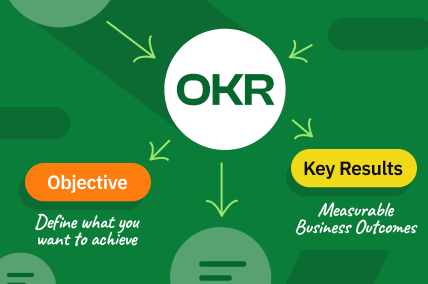
What Are OKRs for Operations Teams?
OKRs (Objectives and Key Results) give operations teams a framework to pursue transformational efficiency gains instead of incremental process tweaks. Instead of measuring success by how many tasks were completed on time, operations OKRs focus on systemic improvements — reducing cycle times by 50%, eliminating defect categories entirely, or building automation that scales throughput without adding headcount.
For operations organizations, OKRs bridge the gap between daily execution and strategic transformation. An on-time delivery rate is a KPI. The OKR is the strategic plan to transform the delivery system: redesigning the fulfillment workflow to cut cycle time from 5 days to 2 days, implementing predictive inventory that reduces stockouts by 80%, or building a quality management system that achieves Six Sigma defect rates. This shift from maintaining operations to reinventing them is what separates world-class operations teams from ones that simply keep the lights on.
Whether you manage operations for a 20-person startup or lead a global operations function spanning warehouses, supply chains, and service delivery, the examples below cover every dimension of operational excellence. Each objective is outcome-oriented, each key result is measurable, and every example includes context to help you adapt it to your industry, scale, and operational maturity.
Interactive OKR Examples
Map and standardize all core operational workflows reducing process variation by 60%
Document and standardize the ad-hoc processes that have grown organically at the startup, creating repeatable workflows that any team member can follow.
Reduce order-to-delivery cycle time from 7 days to 3 days through workflow optimization
Eliminate bottlenecks in the fulfillment process that cause unnecessary delays between order placement and customer delivery.
Implement enterprise process mining covering 80% of transactional workflows to identify optimization opportunities
Deploy process mining technology that analyzes actual workflow execution data to uncover hidden inefficiencies, rework loops, and compliance deviations at scale.
Build a real-time operational dashboard giving leadership visibility into all key process metrics
Create a centralized operations dashboard that replaces manual status reports with real-time visibility into process performance, bottlenecks, and throughput.
Automate 50% of repetitive operational tasks freeing 200 hours per month of team capacity
Identify and automate the most time-consuming manual processes using RPA, workflow automation, and system integrations to dramatically increase team throughput.
Implement a continuous improvement program delivering $5M in annual operational savings
Build a structured CI program with Lean Six Sigma methodology, improvement sprints, and cross-functional project teams that systematically eliminate waste.
Reduce handoff delays between departments from 48 hours to 4 hours through cross-functional workflow integration
Eliminate the dead time that occurs when work moves between teams by implementing integrated workflows with automated handoffs and clear SLAs.
Build a scalable operations playbook that enables 3x throughput growth without proportional headcount increase
Create operational documentation, training, and automation that allows the operations team to handle 3x current volume with less than 50% headcount growth.
Deploy an AI-powered process optimization engine that identifies and implements efficiency improvements in real time
Implement AI that continuously monitors process execution, identifies emerging bottlenecks, and recommends or automatically implements optimizations.
Build a zero-touch operations pipeline where 80% of standard transactions require no human intervention
Create an end-to-end automated operations pipeline for standard transactions that processes orders, updates systems, and communicates with customers without human involvement.
Implement a global process harmonization program standardizing operations across 8 regions
Eliminate operational fragmentation across international offices by deploying unified processes, shared metrics, and common technology platforms.
Build a digital twin of the entire operations system enabling simulation-based decision making
Create a digital replica of the operational environment that allows leadership to simulate changes, predict outcomes, and optimize decisions before implementing them.
Build Your Own OKR
Select a focus area for your OKR:
#RecruitingPartner
Join as freelance recruiter.
Get clients, AI tools & 65% of commissions


OKR Scoring Calculator
Use Google's 0.0 to 1.0 scoring scale to evaluate your operations OKRs at the end of each quarter. A score of 0.7-1.0 means the key result was delivered, 0.3-0.7 means meaningful progress was made, and 0.0-0.3 signals a miss that needs root cause analysis. The sweet spot is landing between 0.6 and 0.7 on average — if you consistently score 1.0, your OKRs are not ambitious enough.
Overall Score
Top 5 OKR Mistakes Operations Teams Make
Don't do this:
Objective: Maintain 95% on-time delivery rate and keep defect rate under 2%
Do this instead:
Objective: Reduce delivery cycle time from 5 days to 2 days while improving defect rate from 2% to 0.5% through process redesign
Maintaining current performance levels is a KPI, not an OKR. Operations OKRs should focus on transformational improvements that change how operations work, not just keep the current system running. If you are already hitting 95% delivery, the OKR should be about the improvement that makes 99% possible.
Don't do this:
KR: Reduce operational expenses by 25% across all functions
Do this instead:
KR: Reduce operational expenses by 15% while maintaining quality scores above 95% and on-time delivery above 98%
Cost reduction OKRs without quality and service guardrails invite dangerous shortcuts. The cheapest operation is one that does nothing. Always pair cost targets with quality and service constraints to ensure savings come from genuine efficiency, not from degrading the customer experience.
Don't do this:
8 objectives covering every operational function with 24 key results total
Do this instead:
2-3 objectives with 3 key results each focused on the operational improvements with the highest strategic impact
Operations teams already manage hundreds of daily tasks. Adding 24 key results on top of daily operations guarantees that improvement work gets deprioritized whenever operational fires arise. Limiting to 2-3 objectives forces the COO to choose the improvements that will create the most leverage.
Don't do this:
KR: Automate 50 operational processes this quarter
Do this instead:
KR: Automate the 15 highest-volume processes freeing 200 hours per month and reducing error rates by 80%
Automating 50 trivial processes with low volume creates minimal impact. Automating the 15 processes that consume the most time and produce the most errors creates transformational value. Operations OKRs should prioritize impact per automation, not number of automations.
Don't do this:
KR: Deploy new warehouse management system across all 5 facilities
Do this instead:
KR: Deploy new WMS across all 5 facilities with 90% user adoption, 100% staff training completion, and maintained productivity within 2 weeks of go-live
Technology deployments fail not because the software does not work but because people do not use it correctly. Operations OKRs that involve process changes should include adoption, training, and productivity maintenance metrics to ensure the improvement actually sticks.
OKRs vs KPIs for Operations: What's the Difference?
| Dimension | OKR | KPI | Operations Example |
|---|---|---|---|
| Purpose | Drive ambitious change and strategic improvement | Monitor ongoing operational health | OKR: Redesign fulfillment to cut cycle time from 5 to 2 days. KPI: Track daily on-time delivery rate. |
| Time Horizon | Quarterly, with defined start and end dates | Ongoing and continuously measured | OKR: Deploy automated quality inspection by end of Q2. KPI: Daily defect rate monitoring. |
| Ambition Level | Stretch goals — 70% completion is often considered successful | Targets are meant to be hit 100% of the time | OKR: Achieve zero-defect production (stretch). KPI: Defect rate must stay under 2% every month. |
| Scope | Focused on the few priorities that move the needle most | Comprehensive coverage of all key metrics | OKR: 2-3 objectives per quarter. KPI: Dashboard tracking 30+ metrics (throughput, quality, cost, delivery, safety, etc.). |
| Ownership | Shared across team with individual accountability for key results | Typically assigned to individuals or departments to track | OKR: Team owns 'transform fulfillment' with KRs for process, automation, and quality. KPI: Each shift supervisor tracks their SLA metrics. |
| Flexibility | Can be adjusted mid-quarter based on new learning or market shifts | Generally fixed for the measurement period | OKR: Pivot from cost reduction to capacity building after demand surge. KPI: Monthly cost-per-unit target stays fixed. |
| Measurement | Progress scored on a 0.0-1.0 scale with 0.7 considered strong | Measured as absolute numbers, percentages, or pass/fail | OKR: Score 0.7 on 'automate warehouse operations' = success. KPI: Throughput either hits target or it doesn't. |
| Alignment | Cascades from company to team to individual to ensure strategic coherence | Often siloed within departments with limited cross-functional visibility | OKR: Company efficiency goal cascades to ops OKR to team KRs. KPI: Warehouse tracks throughput; logistics tracks delivery separately. |
Purpose
OKR: Redesign fulfillment to cut cycle time from 5 to 2 days. KPI: Track daily on-time delivery rate.
Time Horizon
OKR: Deploy automated quality inspection by end of Q2. KPI: Daily defect rate monitoring.
Ambition Level
OKR: Achieve zero-defect production (stretch). KPI: Defect rate must stay under 2% every month.
Scope
OKR: 2-3 objectives per quarter. KPI: Dashboard tracking 30+ metrics (throughput, quality, cost, delivery, safety, etc.).
Ownership
OKR: Team owns 'transform fulfillment' with KRs for process, automation, and quality. KPI: Each shift supervisor tracks their SLA metrics.
Flexibility
OKR: Pivot from cost reduction to capacity building after demand surge. KPI: Monthly cost-per-unit target stays fixed.
Measurement
OKR: Score 0.7 on 'automate warehouse operations' = success. KPI: Throughput either hits target or it doesn't.
Alignment
OKR: Company efficiency goal cascades to ops OKR to team KRs. KPI: Warehouse tracks throughput; logistics tracks delivery separately.
How to Track Operations OKRs Effectively
Weekly Check-in
A focused 15-20 minute sync to review progress on each key result, flag blockers early, and adjust tactics while the quarter is still young enough to course-correct.
- •Score each key result on the 0.0-1.0 scale based on current operational data and project milestones
- •Review operational dashboards for any metrics trending in the wrong direction that could affect OKR progress
- •Identify equipment, technology, or cross-team blockers and assign resolution owners with deadlines
- •Confirm next week's top 3 operational improvement actions that will advance lagging key results
Monthly Review
A deeper review to assess trajectory, determine if any OKRs need rescoping, and share learnings across the operations team.
- •Analyze month-over-month operational trends including throughput, quality, cost, and delivery metrics
- •Review completed improvement projects for actual versus expected impact and document lessons learned
- •Align with leadership on any changes to demand forecasts or strategic priorities affecting operational OKRs
- •Celebrate operational wins and share successful improvement techniques across teams for replication
Quarterly Retrospective
A comprehensive end-of-quarter review where the team scores all OKRs, conducts root cause analysis on misses, and drafts next quarter's OKRs.
- •Final-score every key result with supporting data from operational systems and project tracking
- •Conduct structured retrospective: which improvements delivered value, which stalled, what external factors intervened
- •Review total savings, efficiency gains, and quality improvements achieved versus targets
- •Draft next quarter's operations OKRs incorporating lessons learned and updated business priorities
Frequently Asked Questions About Operations OKRs
How many OKRs should an operations team set per quarter?
Should on-time delivery rate be an OKR or a KPI?
How do you set stretch goals in operations without risking service quality?
What is the best way to measure operational improvement ROI?
Can operations teams use OKRs for safety objectives?
How should operations OKRs account for seasonal demand variability?
When should operations invest in automation versus process improvement?
Is it okay to have operations OKRs that require capital investment approval?

Adithyan RK is the Co-Founder and CEO of Hyring, an AI-native recruitment platform that has run over 900,000 AI interviews for companies ranging from early-stage startups to the Fortune 500. He has spent 18 years building technology businesses, starting with a digital consultancy in 2008 and a staff augmentation firm in 2017, before founding Hyring in 2022 to rebuild hiring around evidence instead of guesswork.
Expertise

Surya N is the Co-Founder and CTO of Hyring, where he architected the AI interviewing engine that has now conducted over 900,000 interviews for companies ranging from early-stage startups to the Fortune 500. A mechanical engineer who moved into artificial intelligence, he spent 6 years building AI applications inside a technology consultancy before co-founding Hyring, and wrote the first version of its AI interviewer from scratch: a system that listens, adapts its questioning in real time, and flags fraud rather than following a fixed script.
Expertise
Need the Right People to Hit These OKRs?
The best OKRs mean nothing without the right team. Hyring helps you find, assess, and hire top operations talent faster — so your ambitious objectives actually get met.
See How Hyring Works