Three Pricing Models You'll Actually Encounter
Contingency Search
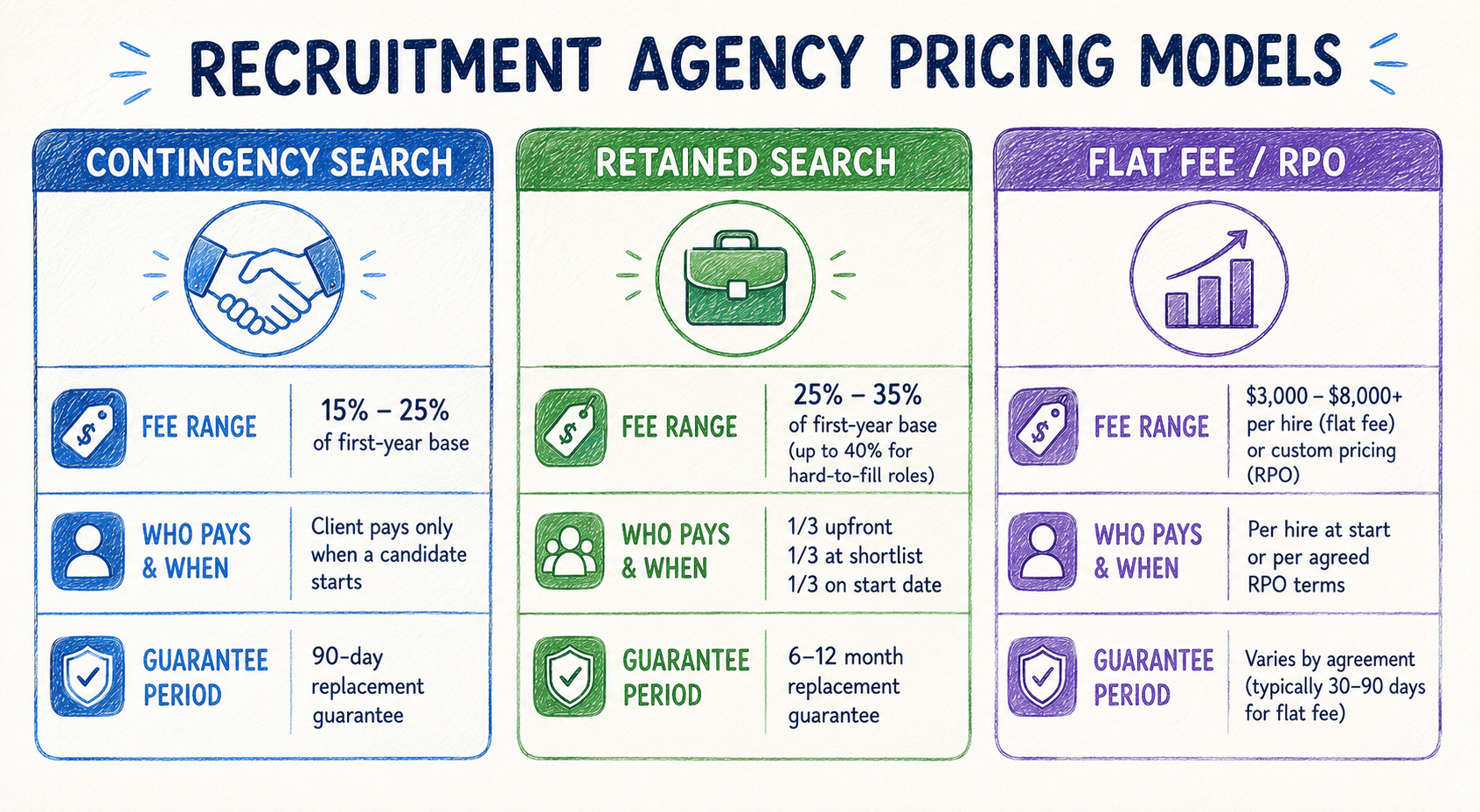
No hire, no invoice. The agency only collects if they successfully place a candidate.
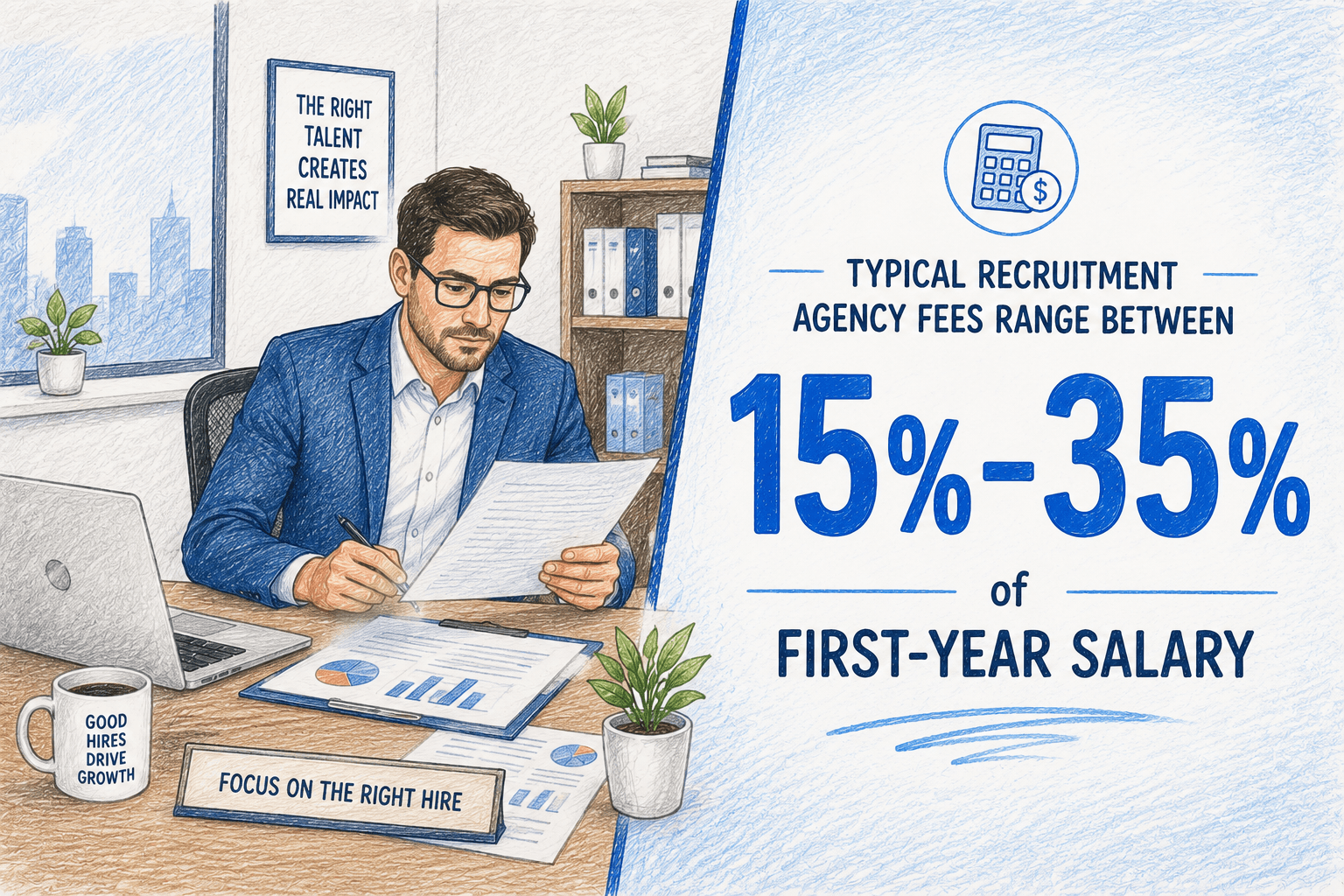
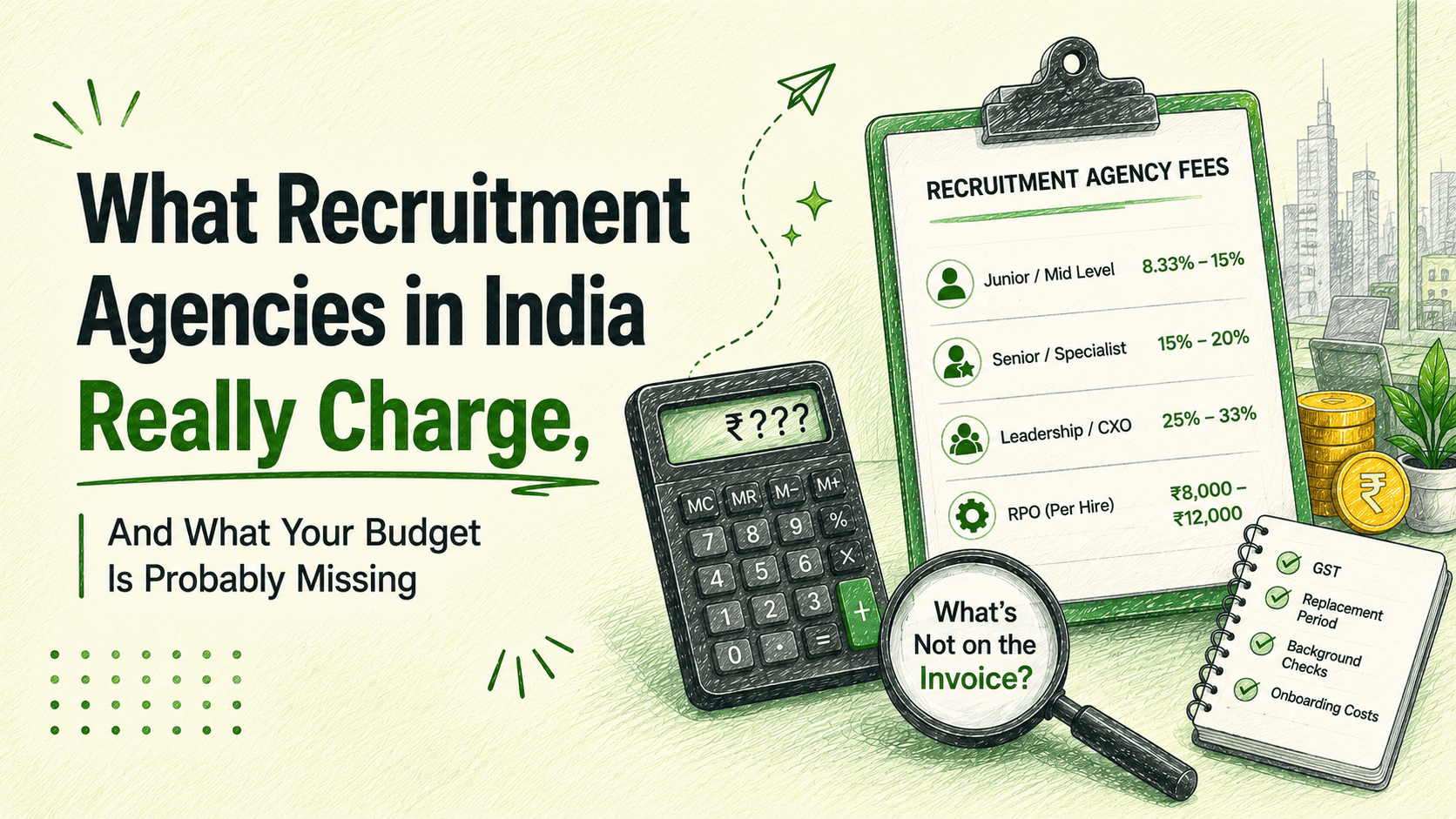
For standard professional roles, fees range between 15% and 25% of the first-year base. But try filling an AI or cybersecurity position right now, and that ceiling moves; 30% is fairly common for those searches. A senior ML engineer at $120,000 can generate a $36,000 agency fee. Yes, really.
Most contingency agreements include a 90-day replacement guarantee. If the hire doesn't stick within that window, the agency goes back to work at no extra charge.
One thing worth knowing: contingency agencies are often working your role alongside several others at the same time. They're incentivized by speed, not necessarily depth. That's not a criticism; it's just how the model works, and it matters when you're deciding which structure fits your hiring situation.
Retained Search
This is how executive hiring gets done. The agency works exclusively on your search, no competing firms, no split attention, and fees reflect that arrangement: 25%–35% of the first-year base, occasionally stretching to 40% for genuinely hard-to-fill leadership roles.
Payment is split into thirds. A third upfront, a third at shortlist, a third on day one. Replacement guarantees run six months to a year, compared to the 90-day standard on contingency work.
On a $250,000 VP base, you're looking at a total fee somewhere between $62,500 and $87,500. It sounds steep. It is steep. It also comes with a very different level of accountability than contingency work, and when a VP mis-hires can cost north of $100,000 to unwind, the math starts looking a little less alarming.
Flat Fees and RPO
Not every role justifies a percentage model. For high-volume, lower-salary positions, admin, entry-level ops, retail, agencies will often charge a flat $3,000–$8,000 per hire regardless of salary. Simpler. More predictable.
RPO (Recruitment Process Outsourcing) is different again. An RPO provider embeds recruiters inside your company and takes over the hiring function entirely. The per-hire markup goes away, sourcing gets consolidated under one contract, and industry analysts generally put the resulting savings somewhere in the 20% to 35% range against traditional per-placement models. Makes sense at scale. Less so if you're hiring two or three people a year.
What Are Companies Actually Paying Now?
SHRM's benchmarking data puts the average cost-per-hire across all U.S. roles at nearly $4,700. That number is technically accurate and almost entirely useless for this conversation; it's blending cheap internal moves, $300 job board posts, and employee referrals alongside every agency-assisted search. It's an average that describes almost no actual situation.
Here's a more useful breakdown:
| Role Level | Typical Agency Fee | Average Time-to-Fill |
|---|
| Entry-Level / Administrative | $3,000 – $8,000 | 25–30 days |
| Mid-Level Professional | $15,000 – $25,000 | 38–42 days |
| Specialized Tech (AI/ML/Cybersecurity) | $25,000 – $45,000 | 50+ days |
| Executive (VP / C-Suite) | $28,000 – $100,000+ | 90–120 days |
Tech roles sit at the top of that range for a structural reason. A senior ML engineer with two competing offers on the table isn't scrolling job boards. Getting to that person requires a recruiter who has been in that candidate's network for years. That relationship is what the fee is actually buying.
The Number Finance Actually Cares About
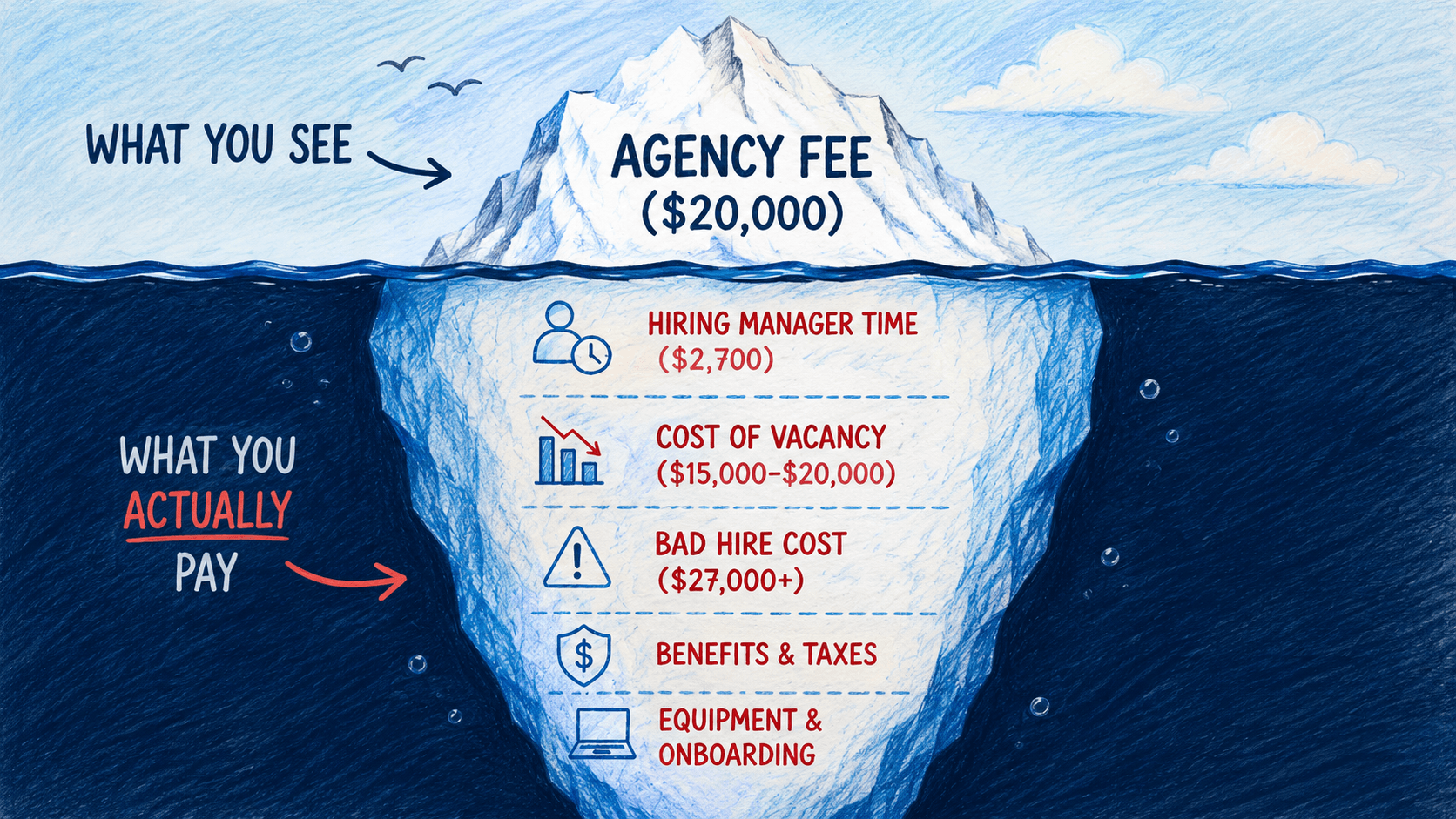
The agency fee is the first invoice. It's rarely the last cost.
A new U.S. employee typically costs the business 1.25–1.4 times their base salary in year one, counting only the hard costs. Employer contributions to Social Security, Medicare, and unemployment (FUTA/SUTA) add roughly 7–10% on top of base. Health insurance, 401(k) matching, and PTO stack another 20–30%. A standard new-hire tech setup, laptop, software, and SaaS access, runs $2,500–$5,000 at most mid-size companies. Estimates that also price in soft costs, hiring manager time, leadership hours, and lost productivity during onboarding, run considerably higher.
That $100,000 hire with a $20,000 agency fee is a $145,000–$160,000 first-year commitment. Worth knowing before the offer letter goes out.
What It Costs to Skip the Agency
This is where the conversation usually gets uncomfortable.
Companies that go internal to avoid agency fees don't eliminate the cost. They just move it to line items nobody tracks as closely: hiring manager time, project delays, and the occasional catastrophic mis-hire.
Managers spend 20–27 hours per hire on sourcing and interviewing on average. At a loaded rate of $100 an hour, that's $2,000–$2,700 of leadership time per open role, hours pulled directly from strategy work and team management.
Open roles bleed money, too. A critical engineering seat sitting vacant for 45 days can cost a company $15,000–$20,000 in delayed output. Sales roles are worse; an empty quota is revenue that simply doesn't exist.
And then there are bad hires. Pennep found that 74% of U.S. companies made a bad hire last year. 4 Corner Resources estimates those mistakes cost at least 30% of first-year salary each time, $27,000 on a $90,000 hire, covering wasted comp, retraining, management drag, and starting the search over. None of that shows up on an agency invoice. It leaves the business anyway.
When Does the Fee Actually Make Sense?
Three situations where it almost always does, whichever US staffing partner you end up shortlisting.
When the vacancy is already expensive. An open role bleeding $15,000 in lost productivity over 45 days makes a $20,000 placement fee look different. Fill it in 15 days instead, and the fee is largely offset before the person's second paycheck.
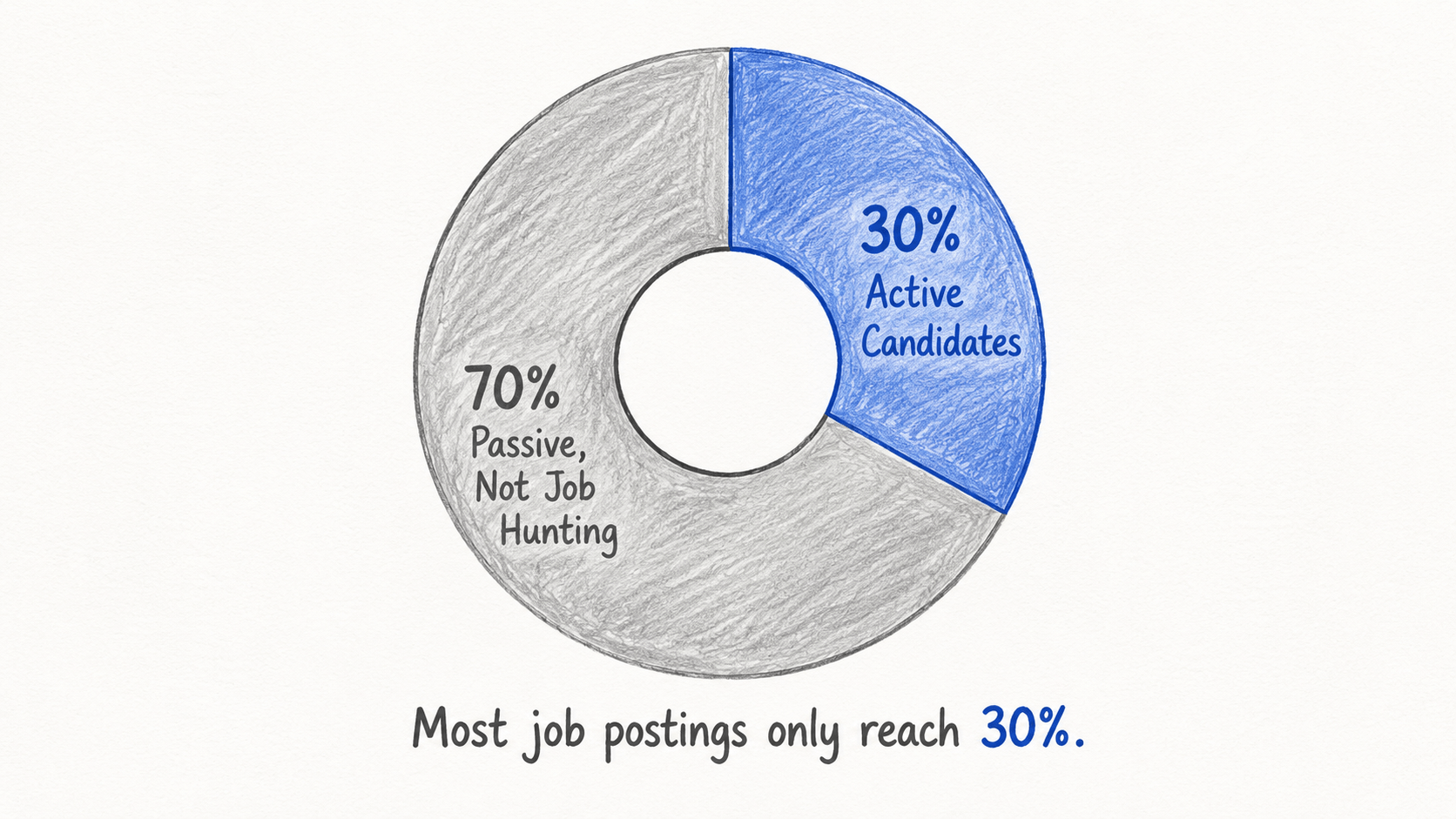
When the right candidate isn't searching. About 70% of the U.S. workforce is passive, not job hunting, not reading your post, not clicking apply. Agencies maintain relationships with this segment continuously. Job listings don't reach them. Recruiters do.
When you genuinely can't afford to be wrong. That 74% bad-hire rate is survivable at the individual-contributor level. At the VP level, a mis-hire can easily run past $100,000 in total losses. A retained search with a six-month replacement guarantee is a lot less scary once you've done that math.
Where AI Actually Fits
Something worth sitting with: AI has moved into nearly every stage of the U.S. hiring process. Agency fees haven't moved. That seems contradictory.
It isn't, really. AI is genuinely good at mechanics, filtering resumes at scale, scheduling, and flagging skills gaps. What it doesn't do is call a passive candidate who's comfortable in her current job and make a persuasive case for why she should hear you out. That's still a human job. And it's still the part that commands a premium.
Where AI shifts outcomes is upstream, in the quality of who makes it past the initial cut. Platforms like Hyring use AI-driven screening and structured video interviewing to evaluate candidates on demonstrated competencies rather than keyword proximity to a job description. That changes what reaches the shortlist. Better upstream filtering means fewer mismatches reaching the final stages. Fewer mismatches mean lower bad-hire costs. Over time, that quietly offsets a real slice of whatever agency fee got paid months earlier.
Key Takeaways
- Recruitment agency fees in the USA run 15%–35% of the first-year base; mid-level contingency placements average around 20%
- SHRM's $4,700 average CPH blends all hiring types; agency-assisted professional searches start at $15,000
- The true first-year cost of a hire is 1.25–1.4x base salary, once taxes, benefits, and equipment are included
- Bypassing an agency moves cost into hiring manager time, vacancy losses, and bad-hire risk; it doesn't eliminate them
- AI improves upstream filtering significantly, but relationship-driven headhunting for passive talent still commands a premium
Frequently Asked Questions
1. What is the average recruitment agency fee in the USA?
For mid-level roles, 20% of the first-year base salary is the working benchmark. The full range runs from 15% on simpler contingency placements to 35% on retained executive searches. Entry-level flat fees typically run $3,000–$8,000.
2. What's the difference between contingency and retained search?
Contingency is pay-on-results; the agency collects only after a successful hire. Retained search involves staged payments across three milestones and gives the agency exclusive rights to the search. Standard for VP and C-suite hiring.
3. Are recruitment agency fees negotiable?
Yes. Volume commitments and repeat business regularly bring fees down; dropping from 25% to 20% is a common outcome for clients with multiple roles. Retained search milestone structures are also open to negotiation.
4. How long do placement guarantees typically last?
Contingency placements carry a 90-day standard replacement guarantee. Retained executive searches typically extend this to six months or longer.
5. Is a recruitment agency worth it for every role?
Not every role. Entry-level and easily sourced positions are often better handled through flat-fee or direct sourcing approaches. For specialized, senior, or time-sensitive hires, though, yes, the fee typically costs less than the alternative once vacancy cost and bad-hire risk are on the table.