
Blog Header Background

Recruitment

Fresher Hiring at Scale: How AI Agencies Screen 10,000+ Campus Candidates

Published on: 18 May 2026

Last updated: 20 May 2026

Clock8 mins read

Share now:

logo

Written by

Adithyan RK

fact checker avatar

Fact Checked by

Surya N

Employer

Job Seeker

Here’s how it works: The campus hiring season starts, and by the second week, you get 12,000 applicants from 40 universities.

You only have two weeks to shortlist them. This is common for recruitment agencies during busy times. Using Artificial Intelligence (AI) in campus hiring has become necessary.

This article will explain how the screening process works, where AI saves time, and the challenges of using this technology.

Why Does Fresher Screening Break Down at Scale?

The numbers are clear.

To screen 10,000 candidates at a rate of 20 per day, it takes 500 days. No number of hires can change that.

Campus recruitment is hard because you have to repeat tasks: check grades, coursework, and do basic tests. You ask the same questions and filter the same things over and over for weeks. This can lead to mistakes.

One recruiter may become stricter while another is more lenient, changing your selection criteria without meaning to. This is where AI bulk screening solves these problems, especially for high-volume recruiting where manual methods simply cannot keep pace.

The Screening Pipeline, Stage by Stage

AI doesn’t screen 10,000 people all at once. It happens in steps, each one narrowing down the candidates until the human recruiter focuses on the best ones.

Stage 1: Resume Screening

Natural language processing helps AI resume screening tools analyze thousands of resumes.

They pull out important details like academic scores, coursework relevance, internship projects, and certifications comparing each candidate to the job requirements.

Good AI understands the context, while average tools just match keywords. If there is bias in your job requirements, the AI will carry that bias through the hiring process. The difference between the two is what separates an AI-powered resume screening platform from a basic ATS filter.

Stage 2: AI Phone Screening

After the CV filter, AI Phone Screeners take over.

They are tools that call candidates, ask standard questions, and check the answers right away.

The evaluation is simple: Can the candidate express themselves well? Are their answers clear? Do they have the basic info needed for the job? All calls are reviewed, noted if anything stands out, and recorded. These recordings will be helpful later if clients question your choices or if candidates ask why they were not selected.

Make sure to tell candidates early that they are talking to an AI tool. It’s free and helps avoid problems later.

Stage 3: AI Video Interviews

Here is the difference between the two platforms. 

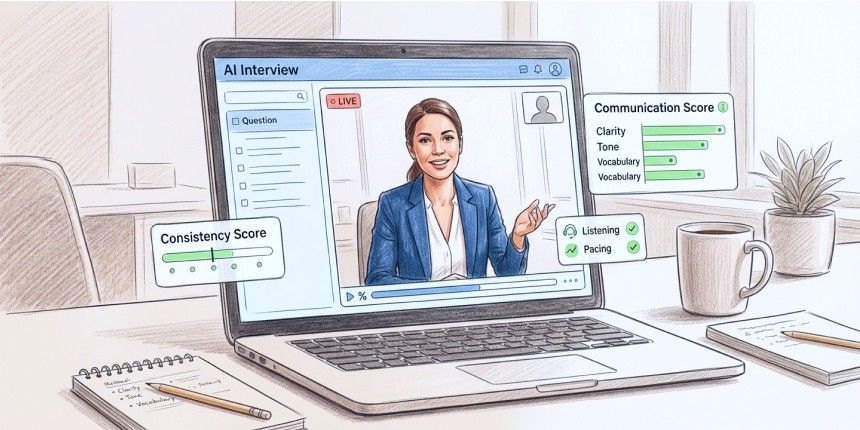
The basic platform gives candidates a list of questions to answer on video. They record their answers, submit them, and the AI checks their responses. This works well for many candidates, but it has limits. If a candidate answers vaguely, the AI just moves on. On the other hand, conversational AI interviewing tools are more flexible. For example, if a candidate says, “I have experience with data analysis,” the AI will ask them to explain more, like, “Can you give a specific example?”

These follow-up questions lead to better answers, similar to how human interviewers work. Remote proctoring and liveness checks are also important.

In a college placement drive with over 200 locations, it’s hard to know who is on the other end of the video call without this tech. Also, CEFR-aligned language scoring is needed for jobs that require good English. This gives clients an objective score instead of relying on recruiters' opinions.


Stage 4: The Shortlist Lands on Your Desk

AI doesn't decide who gets hired. What it produces is a ranked shortlist, scores, recordings, evaluation summaries, and from there it's over to your recruiters. That's intentional. Automating the final hire/reject call introduces legal and reputational risk that isn't worth the efficiency gain. The technology narrows the field. Humans close it.

Consistency Is the Underrated Win

The speed of the operation is a big advantage, and it should be. But for large teams, the real benefit is how consistent the process is.

Every candidate in the AI system gets the same questions and is scored the same way. Keeping this consistent with a team of over 20 people in different cities for two weeks is hard. It’s more about keeping things the same than about the people’s ability.

Also, it needs to be legally correct. A clear and repeatable process is better and easier to defend than something that changes and was made up on the spot, especially if there are claims of unfair treatment.

Research shows that processes with high repetition and volume benefit more from automation.

What Goes Wrong (And How to Avoid It)

Bias Doesn't Disappear, It Gets Faster

Amazon's AI hiring software gave low scores to resumes from women who went to women’s colleges. No one made it discriminate; it just followed trends from past data until The Guardian reported it in 2018.

The main point is to keep using AI, but check your data for bias. If your hiring rules unfairly affect women or certain groups, you should change them.

Candidate Experience Can Erode Quietly

A confusing or robotic process will frustrate applicants and spread negative feedback.

To prevent this, there should be better communication between applicants and recruiters about the process. It should be clear what technology is used, how candidate data is handled, and how to make complaints.

In Europe, Article 22 of the GDPR gives people the right not to be judged only by automated systems.

Data Security Gets Skipped in Vendor Conversations

Before starting any AI recruitment platform, make sure it has SOC 2 and ISO 27001 certifications.

These show that the software has been checked for how it handles candidate data. Skipping this step can lead to problems later.

For agencies running campus drives across 40+ universities, Hyring's AI recruitment agency helps configure screening criteria per client and per role, so the AI isn't running the same filter for a banking trainee as it is for a software engineer.

Technology helps it grow, but account managers make sure it works well.

Frequently Asked Questions

1. How accurate is AI screening for fresher candidates?

Accuracy relies on regular checks and updates of the system. AI works best when it processes a lot of information, with human input at the end.

2. Can AI replace campus recruiters entirely?

No, because it can't build relationships or assess soft skills. Without campus recruiters, the process would fail.

3. Which roles suit AI campus hiring best?

AI screening is good for high-volume, clear roles like software engineer, banker, customer service, and retail management.

4. How do you keep the process fair?

We need regular checks on screening rates for different groups and fair use of criteria. Human judgment is still needed for decisions.

5. Is AI screening legally compliant?

Legal compliance depends on the platform and country rules. It's important to protect data privacy and be clear about decisions.

Hyring Logo

Adithyan RK

18 May 2026

Related  Articles

AI Recruitment: Reshaping the $500B Global Hiring Industry

Adithyan RK

8 mins read

25 May 2026

AI Recruitment: Reshaping the $500B Global Hiring Industry

AI Recruitment for E-Commerce and D2C Brands: A Complete Guide

Adithyan RK

8 mins read

25 May 2026

AI Recruitment for E-Commerce and D2C Brands: A Complete Guide

Top 5 AI-Native Recruitment Agencies in Hyderabad for GCC Hiring in 2026

Adithyan RK

7 mins read

25 May 2026

Top 5 AI-Native Recruitment Agencies in Hyderabad for GCC Hiring in 2026

How AI Coding Interviews Are Changing Tech Hiring for AI-Recruitment Agencies

Adithyan RK

8 mins read

25 May 2026

How AI Coding Interviews Are Changing Tech Hiring for AI-Recruitment Agencies
Experience-AI