TL;DR:
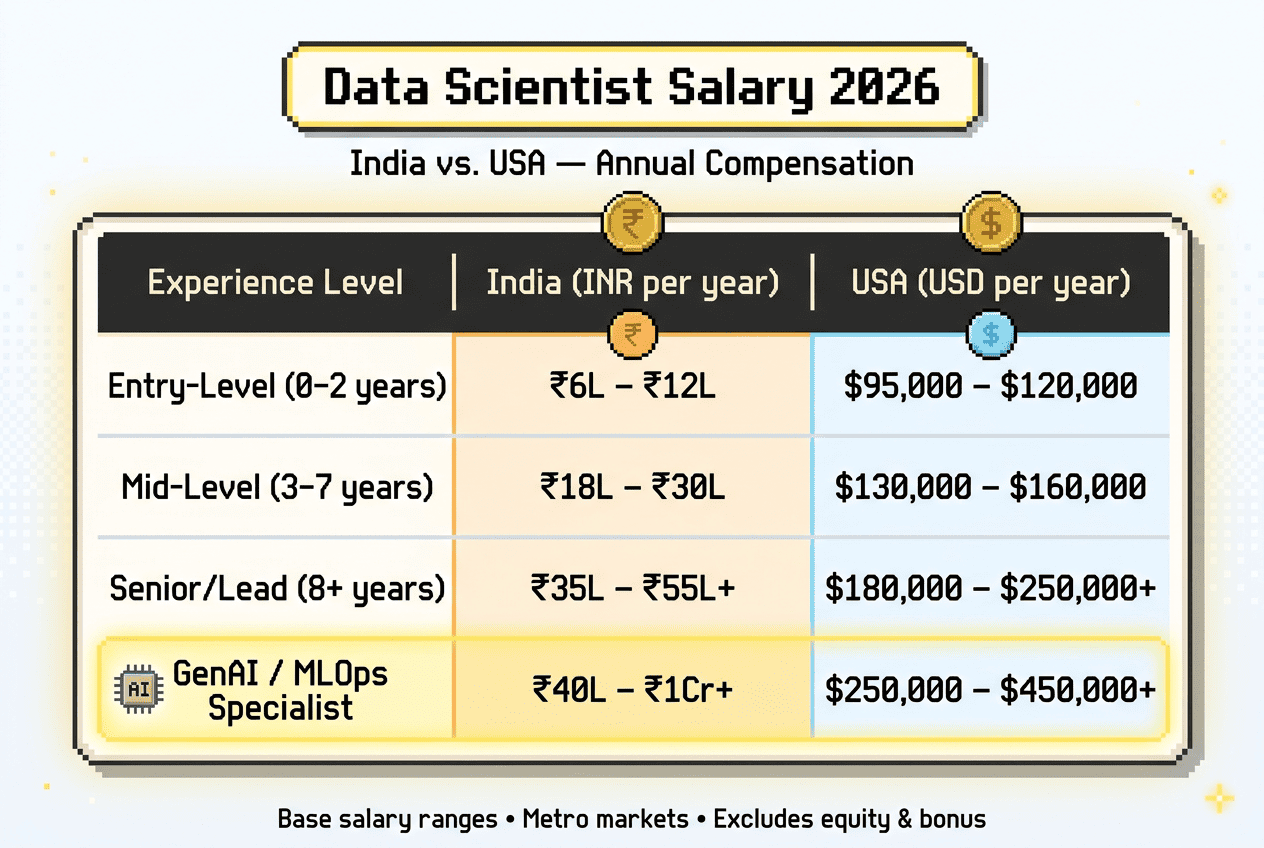
Data scientist salaries have surged in both markets, but the bigger story in 2026 is the split forming within the profession itself. Generalists and AI specialists are no longer in the same pay bracket. In the US, entry-level roles start at $95,000–$120,000.
In India, a GenAI-specialized data scientist can now command ₹40L–₹1Cr+ annually. Raw pay comparisons between countries matter less than most people think. Purchasing power, specialization, and the skills you bring to the table matter a lot more.
The data scientist salary debate used to be easy. The US pays more. Done. That was the whole argument.
In 2026, that framing still holds in raw numbers, but it misses what's actually happening inside the profession. A sharp divide is forming between generalists and specialists, and that gap is widening faster than any India-US differential. Two people with the same job title, the same years of experience, can now sit in completely different salary brackets depending on one thing: whether they've moved into AI specialization or stayed put.
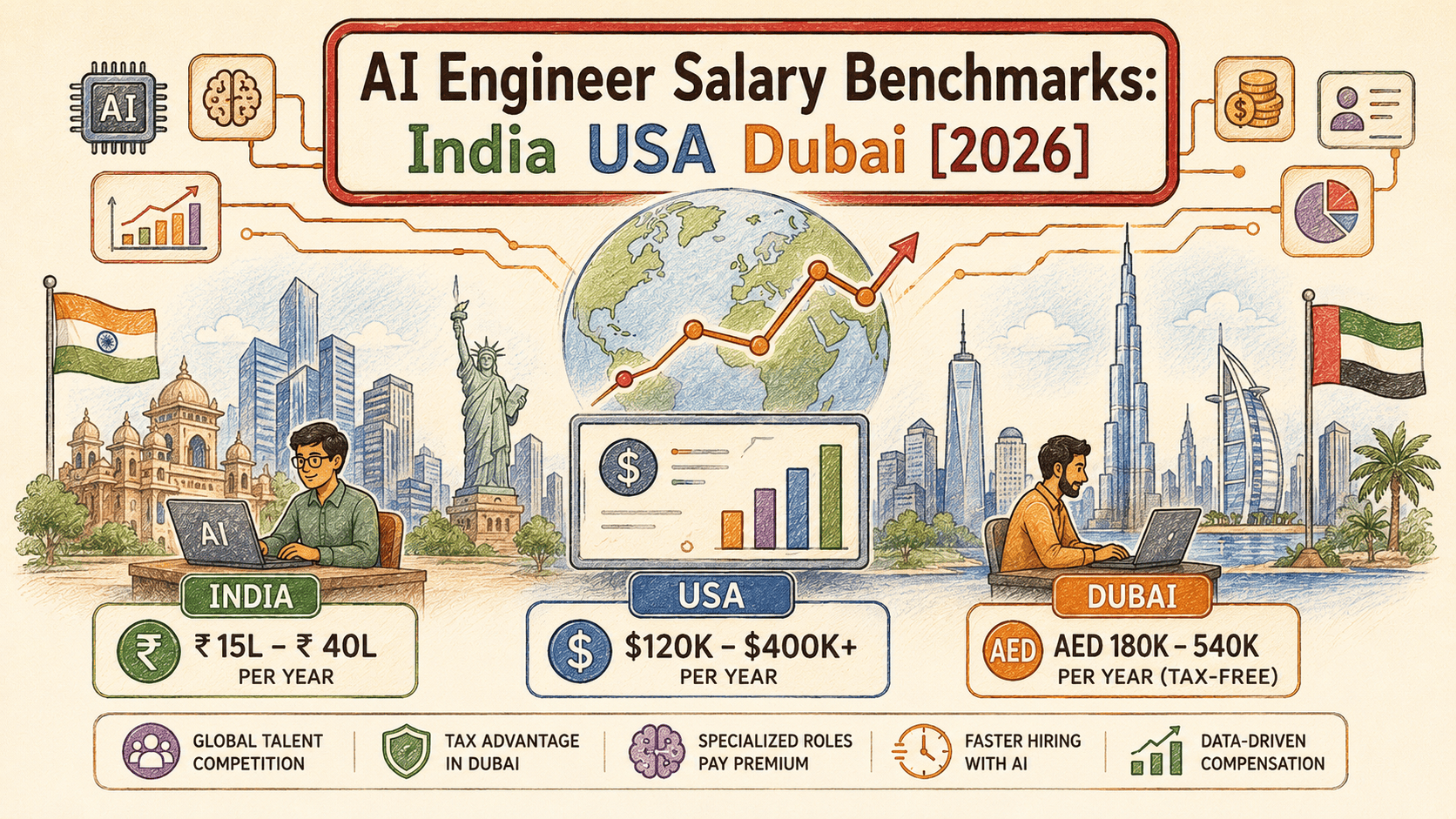
A mid-level data scientist in San Francisco earns around $130,000–$160,000. Their counterpart in Bangalore earns ₹18L–₹30L. That looks like a massive gap. Factor in purchasing power, taxes, and housing costs, though, and the picture shifts considerably.
Here's what the 2026 numbers actually look like, and what they mean.
What Is the Data Scientist Salary in India and the USA in 2026?
The table below reflects current salary benchmarks across experience levels in both markets.
That bottom row is where the real action is. AI-specialized data scientists in India are now earning 25–40% more than generalist peers at the same experience level. On the US side, top-tier firms like Netflix and Meta are reporting total compensation for specialized roles reaching up to $600,000, equity and bonuses included, but the number reflects how aggressively this talent is being chased.
The profession is splitting. You're either a generalist earning a solid but competitive salary, or you're an AI specialist in a market that can't hire fast enough.
What Does Your Salary Actually Buy You?
Gross pay is probably the least useful metric for this comparison.
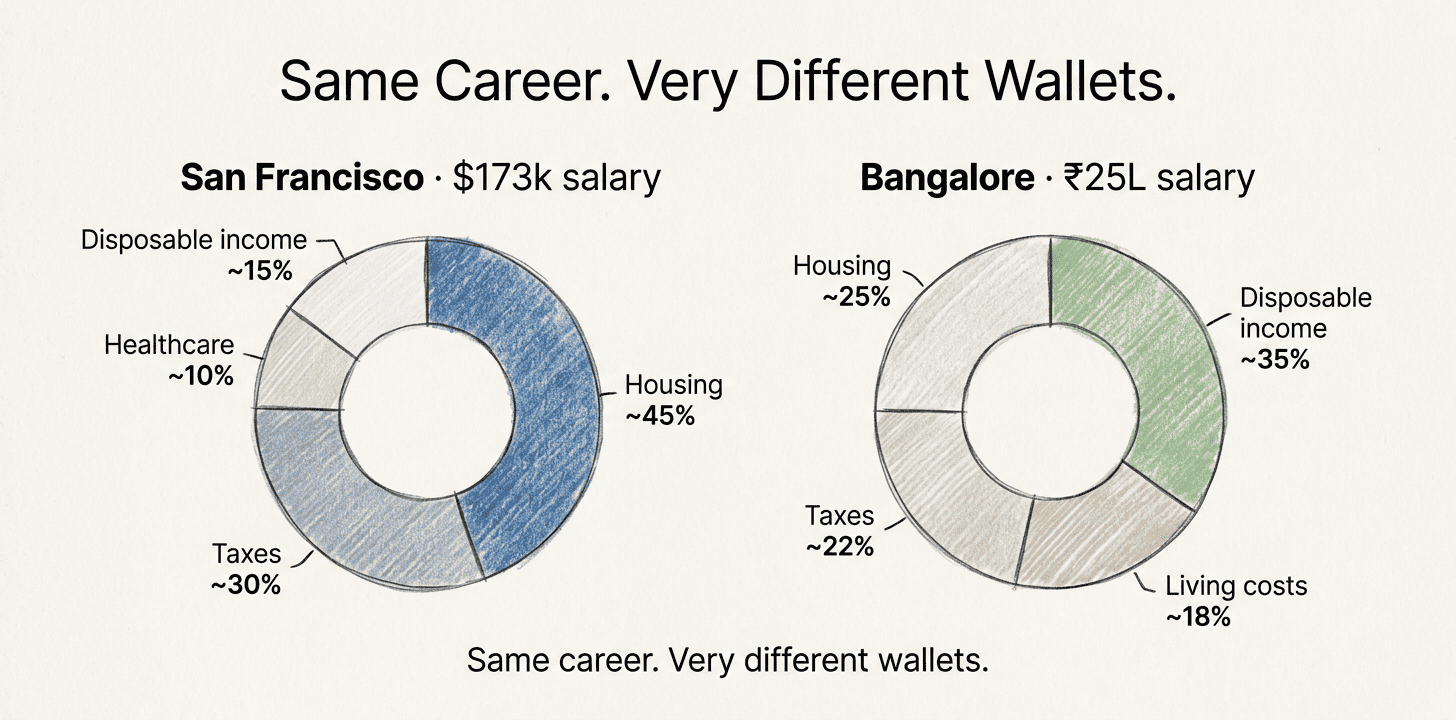
A $140,000 salary in New York City, after federal taxes, state taxes, city taxes, rent, and healthcare, can leave you with less disposable income than a ₹25L salary in Hyderabad. That's not a dramatic claim. It's just math.
In San Francisco, where data scientists earn an average of $173,000, housing alone can take 40–50% of take-home pay. Seattle ($153,000 average) and New York ($137,000 average) follow the same pattern. The salaries are real. The cost of living in those cities is equally real.
Indian metros look different. Bangalore sits around 15% above the national salary average for data scientists, with Hyderabad and Pune close behind. Costs are rising, nobody's pretending otherwise, but they haven't reached the level where a year's savings disappear into rent. A mid-level professional in Bangalore earning ₹25L can live well and still put money away each month. That purchasing power advantage is real, even if it doesn't appear in a headline number.
None of this makes India the 'better' market. It makes the comparison impossible to reduce to a single figure. If you're comparing two offers side by side, a job offer comparison calculator can help you stress-test the real numbers.
The Skills That Separate the Top 10% from Everyone Else
The 'data scientist' title is doing a lot of heavy lifting in 2026. Two people sharing that title can earn salaries that are miles apart. The difference almost always comes down to three things.
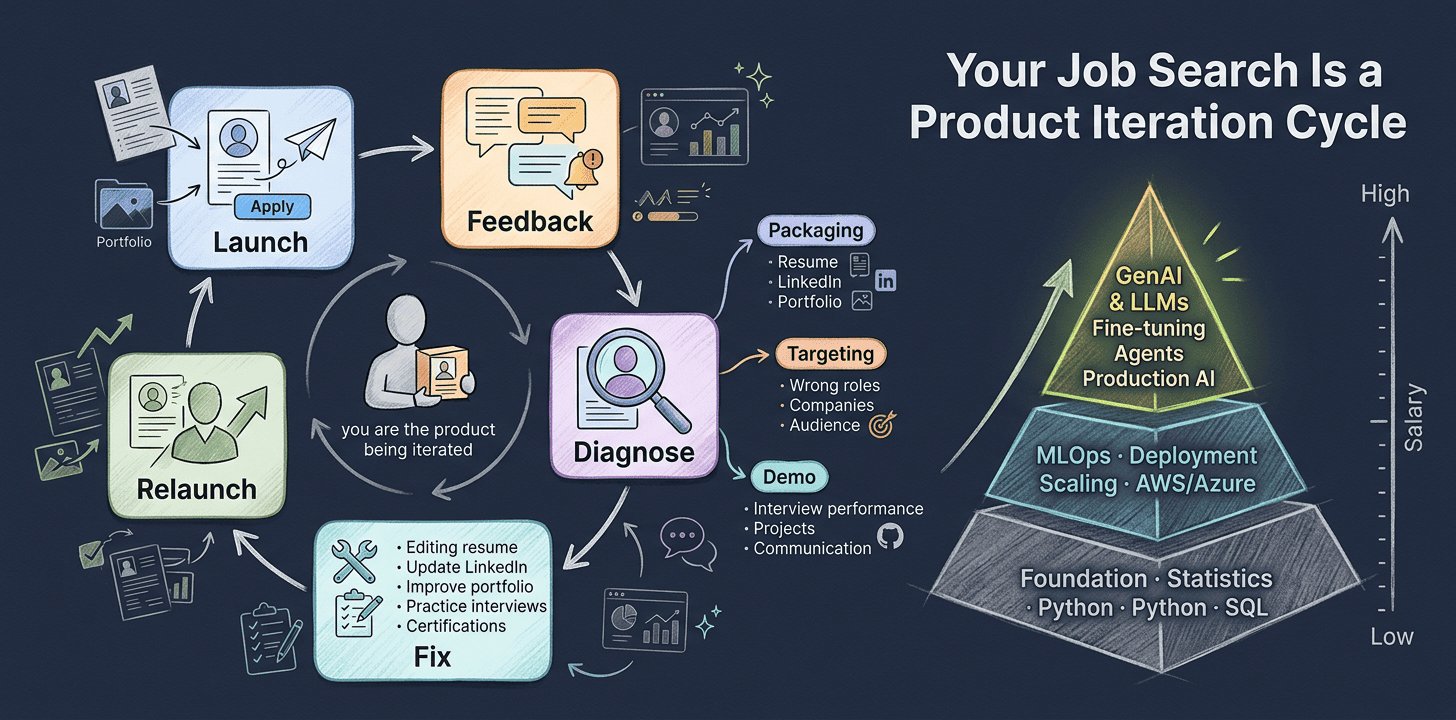
Generative AI and LLMs sit at the top. Knowing how to deploy agents, fine-tune large language models, and build production-grade AI pipelines is the single biggest salary driver in both markets. Boutique AI-first startups are actively outbidding legacy tech companies to lock down this talent, something that would have seemed unlikely just a few years ago.
MLOps is the second lever. Building a model was once enough to earn a senior title. Not anymore. What commands that designation, and the pay attached to it, is the ability to deploy, monitor, and scale that model on AWS or Azure. MLOps is what separates engineers who build things in notebooks from engineers who run systems that actually hold up in production.
Domain expertise rounds it out. Data scientists with deep knowledge in finance or healthcare consistently earn more because they understand what the numbers mean in context, not just how to model them. A fraud detection system built by someone who understands financial instruments will outperform one built by someone who doesn't. Hiring managers know this, and the pay reflects it.
Top Cities and Employers Setting the Benchmark
Where you work still determines the ceiling on what you can earn.
In the US, San Francisco, Seattle, and New York dominate. San Francisco leads in average pay but also leads in cost. Seattle has emerged as a strong alternative, with solid salaries, no state income tax, and a dense cluster of major tech employers. New York is the obvious choice for anyone targeting financial services.
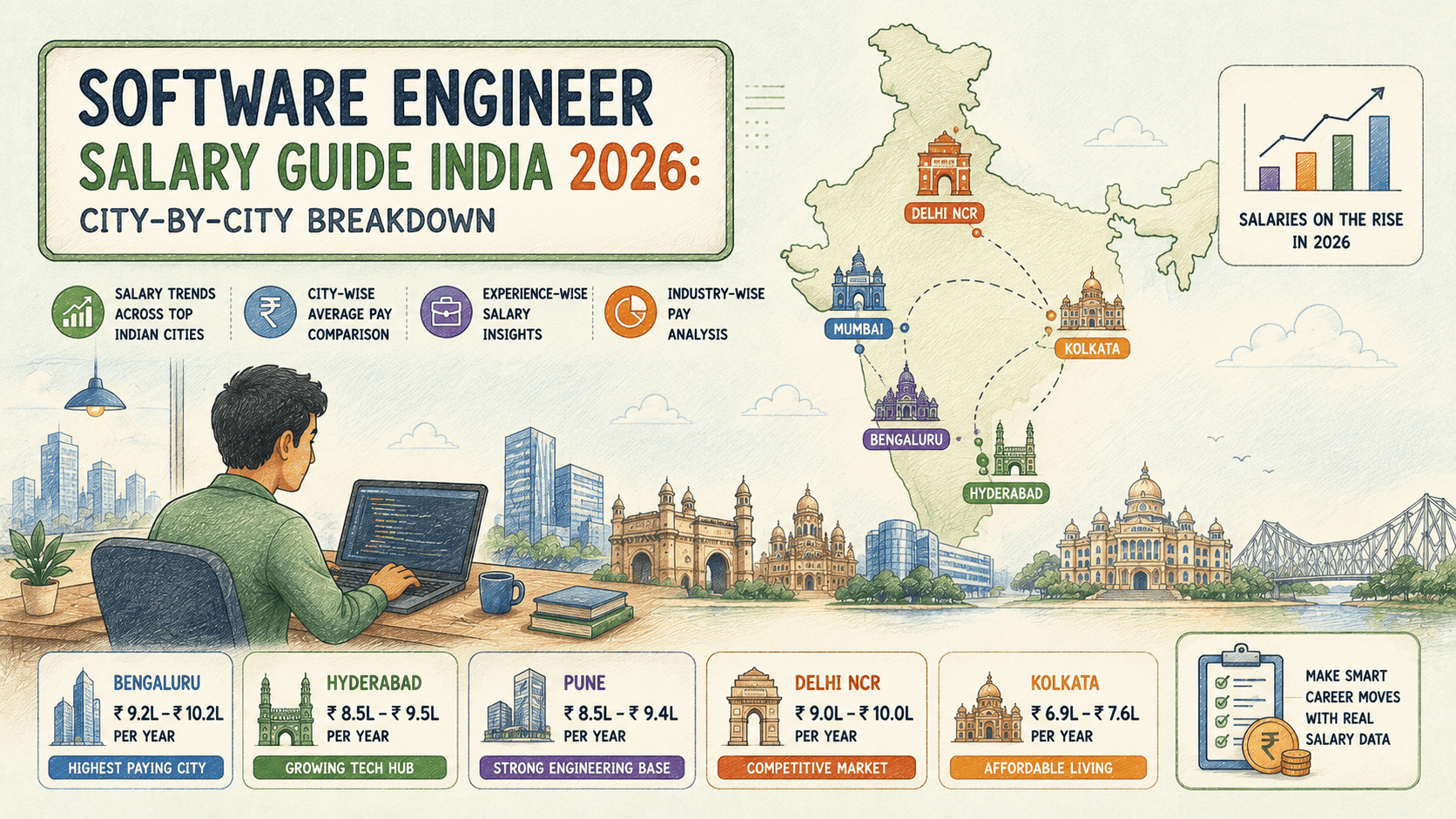
In India, Bangalore holds the top spot. Hyderabad is closing the gap, with lower costs, a growing fintech and global tech presence, and noticeably less competition for senior talent than Bangalore's saturated market. Pune is quieter but financially solid for mid-level professionals who'd rather not deal with Bangalore's rent prices.
Google, Amazon, and Microsoft continue to set the compensation benchmark in both regions. JPMorgan Chase and Goldman Sachs are aggressively building out data science teams for fraud detection, algorithmic trading, and risk modeling. Financial services have been one of the steadier hiring pockets over the past couple of years. AI-first startups are the wildcard. Several are offering packages that rival big tech, especially for LLM and MLOps roles. The trade-off is risk; early-stage equity is not a guaranteed payday, but the ceiling is genuinely high.
Where the Data Science Job Market Is Headed
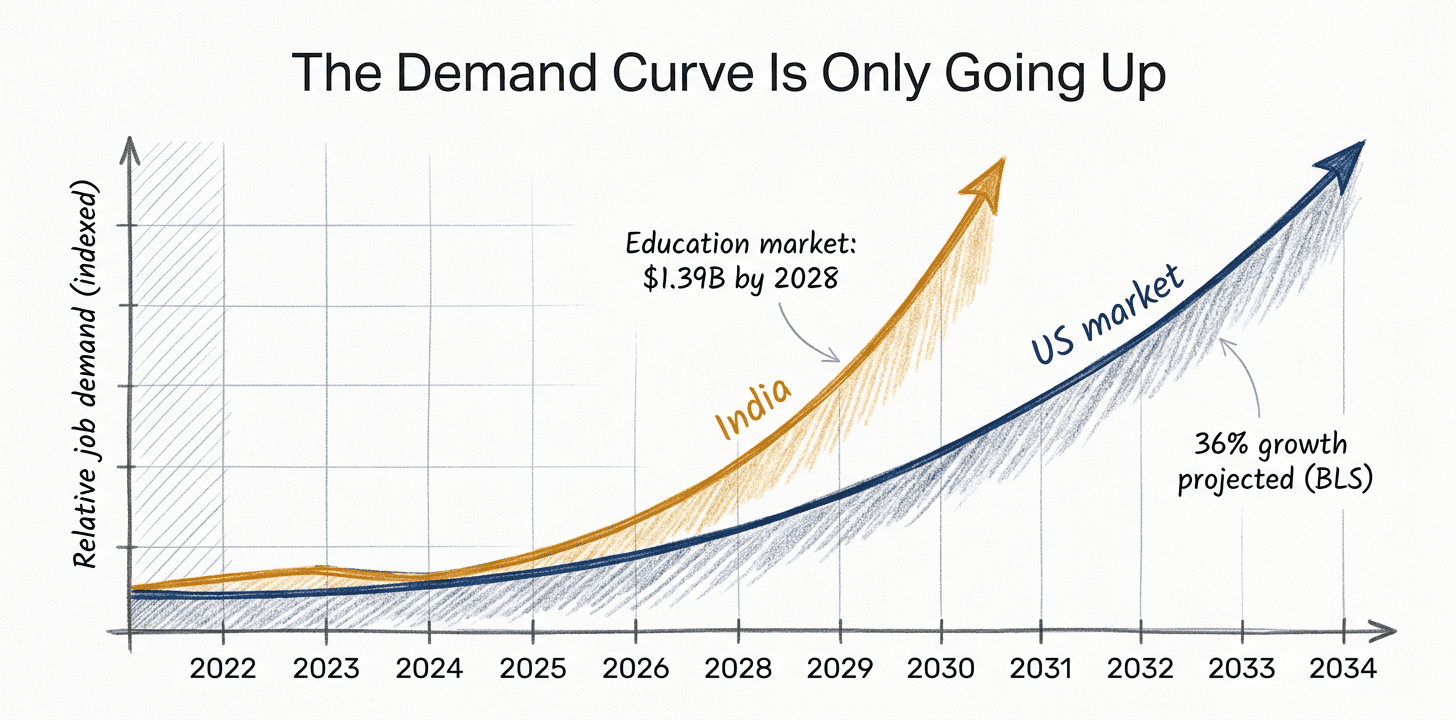
The long-term outlook is strong. The US Bureau of Labor Statistics projects 36% job growth for data science roles through 2033, well above average for any occupation. That growth is real, but it's also becoming more selective about what kind of data scientist it wants.
India's domestic market is building fast to meet demand. The Indian data science education sector is projected to reach $1.39 billion by 2028. As that talent pipeline grows, pressure on mid-level generalist salaries will increase. Specialization is shifting from a competitive advantage to a baseline expectation.
For companies hiring in this market, the harder problem is telling apart candidates who actually have these skills from those who've learned to describe them well on a resume. That's a real operational challenge, and it's exactly the kind of problem AI-powered hiring platforms are being built to address. Hyring, which has earned recognition through the ETHR Award and holds strong ratings on both G2 and Product Hunt, focuses specifically on surfacing specialized technical talent at scale. The platform's CEO is a member of the Forbes Technology Council and the Human Resources Council, a signal of how seriously top organizations are approaching technical hiring right now. For a closer look at how this screening challenge plays out for data science roles specifically, our guide to AI recruiting for data scientists breaks it down in more detail.
The data scientist salary ceiling is still moving up. Those who specialize in GenAI, MLOps, or domain-specific applications will find the market increasingly in their corner.
Key Takeaways
- A generalist data scientist in the US earns $95,000–$160,000 depending on experience. In India, ₹6L–₹30L.
- AI and MLOps specialists sit in a different bracket, up to ₹1Cr+ in India, and $450,000+ in the US for the right profile.
- Purchasing power closes the gap significantly. High-cost US cities consume a large share of gross income; Indian metro salaries stretch further in real terms.
- The three skills driving salary premiums in 2026: GenAI/LLM expertise, MLOps proficiency, and domain knowledge in finance or healthcare.
- The BLS projects 36% growth in data science jobs through 2033. The market is growing, but it's rewarding specialists.
FAQs
1. What is the average data scientist salary in India in 2026?
Entry-level roles range from ₹6L to ₹12L annually. Mid-level professionals earn ₹18L–₹30L. Senior data scientists in specialized roles can command ₹35L–₹55L or more, and GenAI/MLOps specialists at top companies are reaching ₹40L–₹1Cr+.
2. What does a data scientist earn in the USA in 2026?
Mid-level US data scientist salaries sit between $130,000 and $160,000. Entry-level roles start around $95,000–$120,000. Senior and specialized positions regularly exceed $250,000 in total compensation.
3. Which market is better for data scientists, India or the USA?
The US offers higher absolute salaries. India offers stronger purchasing power relative to the cost of living. The better market depends on career stage, specialization, and what you prioritize financially.
4. Which skills increase a data scientist's salary the most in 2026?
The biggest drivers are Generative AI and LLM expertise, MLOps capabilities for deploying and scaling models, and deep domain knowledge in finance or healthcare.
5. Is data science still a strong career in 2026?
Yes. The BLS projects 36% job growth through 2033. India's market is expanding rapidly, too, with the education sector alone projected to hit $1.39 billion by 2028. The growth is real, so is the premium on specialized skills.