An Overview:
If you have ever advertised an open position and seen the volume of applications that flood your inbox, then you understand the pain. Hundreds of resumes come in, most of which aren't even remotely right for the job, but in there somewhere, lost in the crowd, is the perfect candidate.
Recruiters have been going through the same cycle for a long time. The only problem is that the way organizations have been screening resumes is going through some serious changes, and artificial intelligence has become the centre of it.
That said, be it a streamlined team handling recruitment at a rapidly expanding start-up or someone in charge of mass recruitment in bulk, one should definitely know how AI resume screening works, and where its strengths and limitations lie.
What Exactly Is Resume Screening?
Resume screening is just the process of going through job applications and figuring out which candidates are worth moving forward with. For the longest time, that meant someone on the hiring team sitting down and reading through stacks of resumes manually. Checking education, scanning work history, looking for red flags, and making calls on who gets an interview.
The issue is that it consumes a huge chunk of time. Glassdoor puts the average number of resumes per corporate job posting at around 250. Only out of all of those, 4 to 6 candidates are interviewed. This is quite a huge process, but when one does it manually, it’s not always that accurate. Bias is introduced in the process, and excellent candidates might be overlooked.
This has always been the bottleneck in hiring, where recruiters burn out, and where promising candidates fall through the cracks without anyone noticing.
How AI Is Changing the Screening Game
Why is it any different from having a sophisticated search filter?
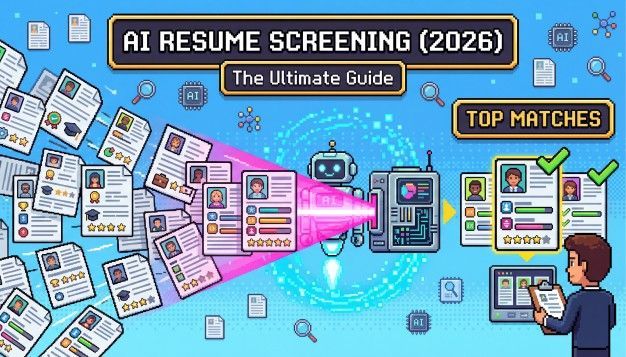
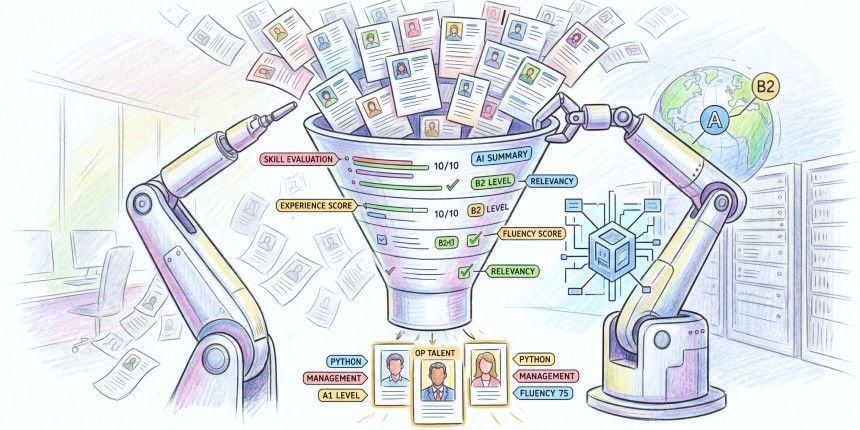
They use natural language processing and machine learning to achieve their objective. In other words, they scan resumes, comprehend what candidates intend to convey, and compare their claims to those expected for the position in question. This is done within minutes, not hours, even with tens or hundreds of applicants in mind.
Moreover, the modern versions of these tools are far better than the previous ones when it comes to identifying relevant experience. Unlike older systems that would simply disregard applications if certain keywords were missing, today's software is capable of recognizing the contextual meaning of statements.
When an individual is reviewing applications at 9 AM on Monday, he or she may be more open-minded compared to the same person doing the same job at 4 PM on Friday. In contrast, AI algorithms apply the same criteria to each application without fail.
What Makes AI Resume Screening Actually Useful
- Volume management is the first big win. If you are hiring for five roles at once and each one is pulling in a couple of hundred applications, no recruiter can give every resume real attention. AI takes on the initial sort so that your team can focus on what they are actually good at. Talking to people, reading the room in interviews, and making judgment calls that require a human touch.
- Reducing bias matters too, and it is more nuanced than people think. You can set these tools up to strip out names, photos, ages, and other demographic details before evaluation. But here is the honest part. The platforms doing well in 2026 have bias auditing built in.
- Candidate experience is the one that quietly makes a huge difference. When screening is faster, people hear back sooner. And in a job market where top candidates often have multiple options, speed matters. Nobody wants to apply and then sit in silence for three weeks. Faster screening means faster responses, and that alone improves how candidates feel about your company.
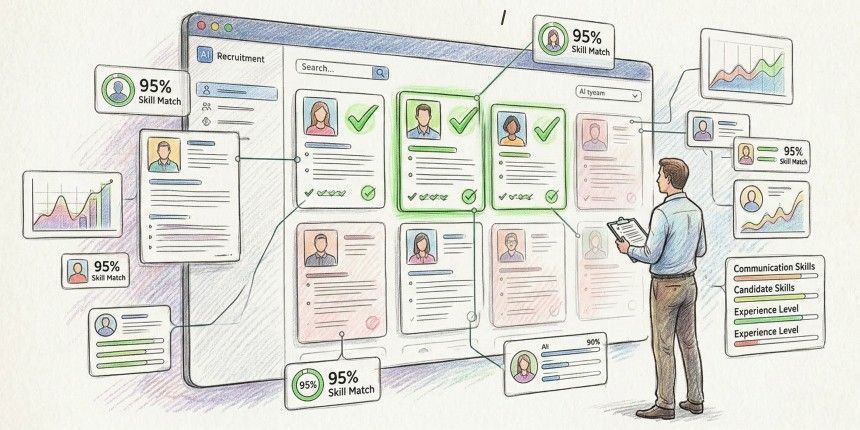
- Shortlist quality pulls it all together. Because AI can weigh multiple factors at once, things like career progression, skills match, gaps, transitions, and lateral moves, the shortlists tend to be tighter and more relevant. You are not just getting the resumes with the right keywords. You are getting the candidates with the right fit.
Where Human Judgment Still Matters
AI is a tool. A really good one, but still a tool. And it does not replace the recruiter, which is not even close.
What AI does well is process information fast and stay consistent. It can tell you who meets the technical requirements. What it cannot do, at least not yet, is pick up on the subtleties. The candidate whose career pivot shows resilience and curiosity. The person whose way of describing their work hints at real leadership ability. The gut feeling a good recruiter gets when something about an application just clicks.
The best hiring setups right now are the ones using AI for the first pass and then handing things over to real people for everything after that. You get speed and consistency up front. You get nuance and judgment where it counts.
Starting Without Overcomplicating It
You don't need a six-month implementation plan to get going with AI screening. Most modern platforms, including Hyring, have it built right into the workflow. It plugs into what you are already doing.
Figure out where your hiring process drags. If it is volume, AI screening makes an immediate difference. If the issue is that different hiring managers are evaluating candidates in completely different ways, AI gives you a consistent baseline to work from.
And get your recruiters involved from day one. When the people using the tool understand how it works and feel like they can adjust and shape the criteria, they actually trust it. That is when adoption sticks.
Conclusion: What's Ahead for AI in Recruitment
This is not an idle technology, as the tools for AI resume screening become increasingly proficient at taking into account the context of the application, predicting success in the long run, and even offering support when it comes to skills assessment and personalized candidate engagement.
It is not necessarily the largest firms that will be hiring the most efficiently during the next few years, but rather those who learn to combine clever technologies with skilled personnel.
Thanks to AI, the process of resume screening has been turned into something effective.
Frequently Asked Questions
1. Is AI resume screening accurate enough to trust?
It has come a long way. Today's tools go well beyond keyword matching and actually understand the context behind what candidates write. They catch qualified people that older systems would have filtered out. That said, they work best as a first step. You still want human eyes on the shortlist before making decisions.
2. What is the success rate of AI hires?
The numbers are encouraging. Data suggests that candidates matched through AI resume screening tend to have higher retention rates over the first two years compared to those hired through purely manual processes. The reason? The initial match is built on deeper, more consistent data points rather than a quick scan.
3. Does AI resume screening work for all types of roles?
AI resume screening can be set up easily across industries such as finance, healthcare, operations, and technical positions. For roles that lean heavily on creativity, leadership style, or cultural fit, AI screening works best as one part of a broader evaluation rather than the whole picture.
4. What is the duration for setting up AI-powered screening?
Faster than one might think. Once your software has the capability, it will be measured in days, not weeks or months. Essentially, all you need to do is define the competencies for that particular position, design your scoring system, and tie it into your applicant tracking system.
Keyword stuffing was once effective when working with outdated systems. There are still some applicants who will use it. However, consider the relevance, the depth, and consistency of the experience listed in the application. In other words, it is more difficult today to try to game the system.