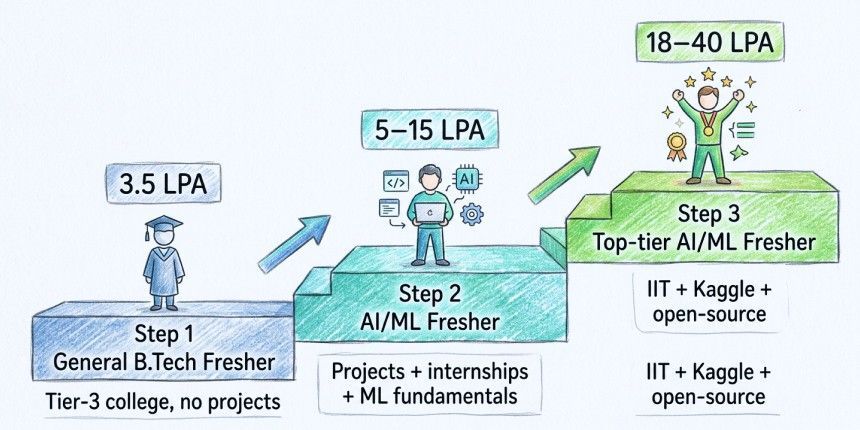
Salaries for freshers in India in 2026 vary from 3.5 LPA for generic IT roles (which may even be lower in some Tier 2 locations) to over 40 LPA for artificial intelligence/machine learning roles at leading product companies. No mistake there; that’s the biggest gap we’ve seen, and it’s getting bigger each quarter.
Fortunately, we have had the privilege over the past few months of seeing data on hires at multiple firms in Bangalore, Chennai, Hyderabad, Mumbai, and Pune. While going through all of that data, one thing that was surprising was the fact that it wasn't about salaries going up – they’re actually staying the same - but that a rather small handful of freshers are outshining everybody else.
What Do Freshers Earn in India in 2026?
The average fresher salary in India sits around 3.5 to 4.5 LPA for a standard engineering graduate entering IT services. That number has barely moved in a decade. According to an Economic Times report from May 2025, most fresher hires in services companies still land in the 3.5 LPA bracket, and the difference between what someone earned in 2014 versus 2024 is almost negligible after adjusting for inflation.
Here is where things get interesting though. The top 10% of freshers in 2026 are pulling in 15 to 21 LPA, sometimes more. The median number hides an enormous spread. A computer science graduate from a Tier-1 college with an internship at a product company and strong Data Structures and Algorithms (DSA) skills might receive three or four offers above 12 LPA. A graduate from a Tier-3 college with the same degree, same year, and no demonstrable project work? They are automatically competing for roles that pay a third of that.
India Inc. as a whole is planning average pay hikes of 9.1% for 2026 according to Aon's annual survey, up slightly from 8.9% the year before. Global Capability Centers (GCCs) are leading that charge at 10.4% average increases. But these hikes apply to existing employees, not new hires. For freshers, the real lever is not increments. It is which door you walk through first.
Engineering Fresher Salaries: City-by-City Reality
Engineering fresher salaries lie between 4 and 6 LPA for a general software developer role. For those who have technical skills that are evident (competitive programming, open-source contributions on GitHub, etc.), the range increased to between 7-10 LPA. Two HR honchos from Chennai, from mid-size IT firms, were asked the same question on how much they pay freshers in 2026. The answers were prompt and very similar - confirming that the assumptions are grounded in reality.
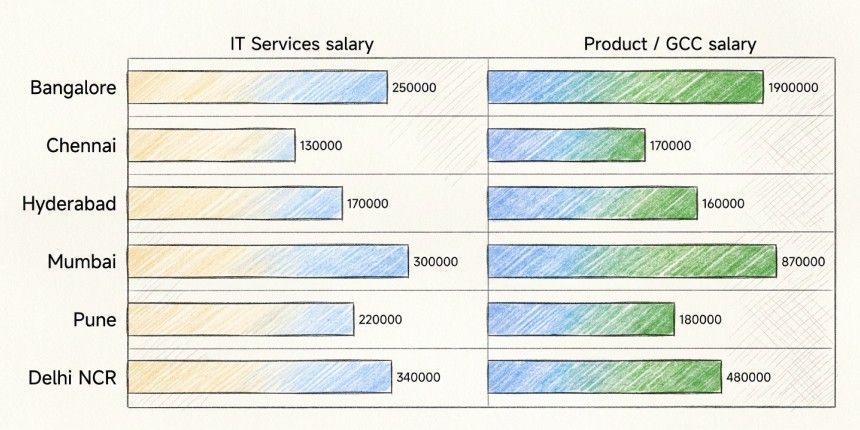
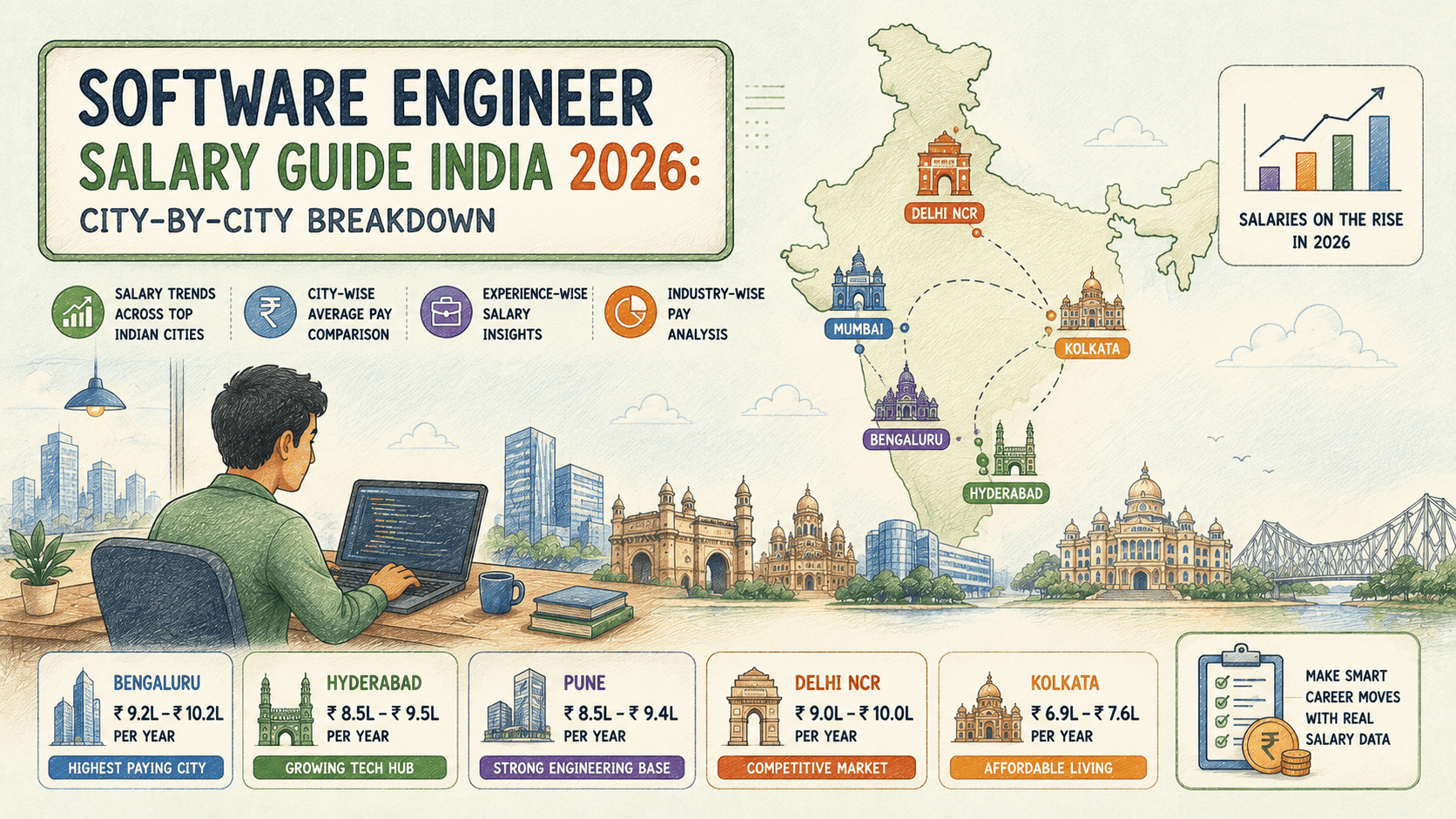
Obviously, the city that you work in changes your compensation more commonly than you actually give credit for. Bangalore remains the highest paying metro for techie freshers with starting offers at product companies typically between 8 and 15 LPA.
Chennai and Hyderabad come in lower in the 4 to 10 LPA band, though GCC offices in both cities have pushed their fresher packages closer to 8 to 12 LPA similar to Bangalore. Mumbai and Pune sit somewhere in between, with Pune's growing SaaS ecosystem pulling some offers upward.
Here is a rough snapshot of engineer salary India benchmarks for 2026 by city, based on data from AmbitionBox and Michael Page's India Salary Guide:
B.Tech freshers in Bangalore earn between 6LPA and 15LPA. Service-based companies offer less, while product-based ones offer more. In Chennai, salaries for engineers are between 4 and 10 LPA. Roles in GCC companies are compensated far better. Hyderabad twins Chennai in this regard, however, GCC companies in and around Gachibowli pay upwards of 8LPA. In Delhi NCR, salaries overlap in the 5 to 12LPA range. The number varies a lot because of the mix of startups and old established firms. Pune comes in at the lower end with 4-9 LPA on average, with SaaS product companies leading the higher end of the salary spectrum.
There’s a clear trend here - having AI-aligned skills leads to a default higher pay. A recent graduate with hands-on experience in LLMs’ fine-tuning pipelines can earn 30-50% more than a colleague who has on-par academic qualifications but only traditional abilities. Companies are very upfront about this, and they mention it in job postings.
MBA Fresher Salaries: Why Your Tier Changes Everything
The salary levels for the MBA fresher in India are more stratified than the average engineering candidate. The Tier-1 B-schools in India, which include the IIMs, ISB, XLRI, and FMS, can command packages in the 12-20 LPA bracket.
The finance and consulting streams may even go up to 25 LPA. However, if we move to the Tier-2 schools, the packages drop to the 6-10 LPA bracket. By the time you reach Tier-3 colleges, the typical starting salary is 3 to 6 LPA, per Coursera's 2026 MBA salary guide.
These figures paint the usual picture. But what has changed in 2026 is the premium attached to specializations.
An MBA candidate with a specialization in analytics, AI strategy, or product management can ask for 15-25% more than a general management or HR candidate from the same school. The answer to this phenomenon is quite obvious - businesses look for MBAs to lead AI adoption efforts, handle AI recruitment software implementations, and guide digital transformation plans. A person who understands both business and technical terms is more valuable.
The geography of MBA placements is changing. More MBA graduates now choose Bangalore and Hyderabad over the traditional Mumbai corridor. This shift happens because GCCs and tech-focused companies in these cities provide more high-paying jobs above 12 LPA to business grads.
A placement officer from a top-20 B-school shared that their Bangalore placements increased from 22% to 37% of the batch within two years.
AI and ML Roles Are Rewriting Pay Scales
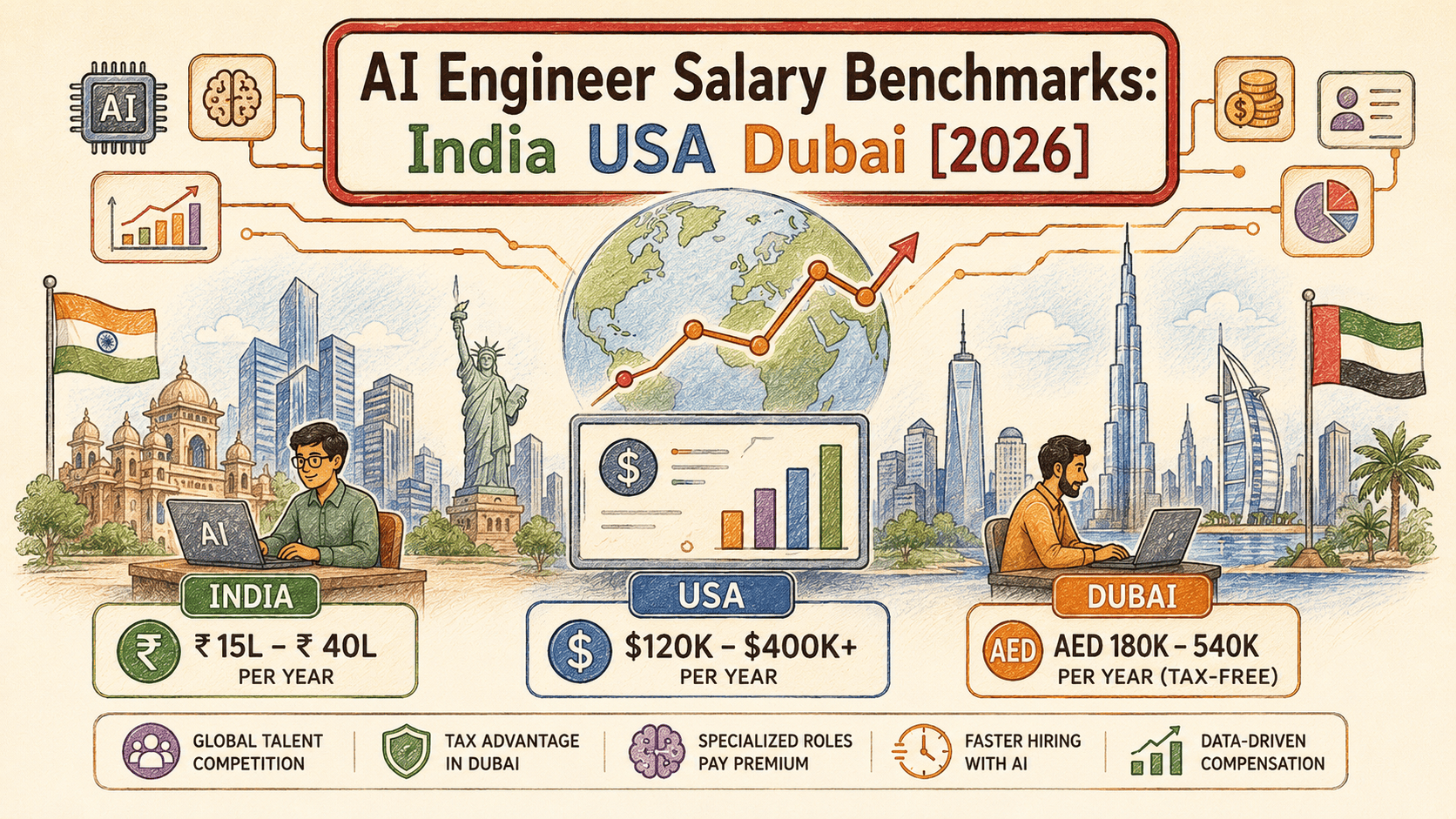
In 2026, freshers joining the AI/ML workforce in India may confidently look forward to offers between 5 and 15 LPA. This upper limit applies to those who secure jobs through campus placements at IITs, IIITs, and BITS.
An 18-25 LPA salary range is not that uncommon if you consider product-based or heavily funded startups.
Specialists (even freshers) in Gen AI, LLMs, and MLOps have received even higher salary packages of 25-40 LPA at a handful of firms, according to data obtained by Build Fast with AI.
This extreme variation is incredibly surprising.
How do these high salaries happen?
Companies have started to feel the heat compelling them to build strong AI teams quickly, in the GPT age. However, the number of skilled freshers with hands-on experience is a needle in a large haystack of freshers. This creates a demand-supply gap.
According to NASSCOM, India’s IT sector might hit $315 billion in earnings by FY26, with AI driving a big part of that growth.
Companies that act quickly in hiring often succeed. Those that stick with sluggish manual hiring processes miss out because quicker rivals grab good talent within days, instead of weeks.
AI recruiting tools are changing the game in hiring. An AI interviewer can go through 500 engineering applicants in the same time it takes a human team to evaluate just 30.
This huge time-saving helps companies secure top talent faster. High-demand candidates, those earning 15 LPA or more, get snapped up within 72 hours of entering the job market.
Hyring is a good example - it has run more than 200,000 AI-driven interviews. Their AI video Interviewer and coding interview tool help cut down the time between applying and getting an offer to less than a week.
How AI Recruiting Software Is Deciding Who Gets The Best Offers
Most salary guides won’t tell you this - the screening process itself is now a salary determinant. The use of AI recruitment software to assess campus hires means quicker, data-fied decisions, and, yes, higher salaries because the quality bar is elevated at the hiring gate.
A human recruiter resorting to manual sifting will default to the college brand as a quality proxy. A recruiter powered by AI with structured scoring can sift out a Tier-2 college grad with superlative coding skills and automatically push them up a band.
We saw this happen firsthand. A mid-sized SaaS company in Pune used recruitment automation software during their campus hiring process last year. Their fresher offer rate at non-IIT and non-NIT colleges jumped to 19% from just 8%.
The average starting salary for these hires rose to 7.2 LPA, compared to 5.1 LPA the year before. The AI recruitment tools didn’t compromise on standards. They shifted the focus from “What college are you from?” to “Can you solve this problem?”
The resume screening software is able to scan hundreds of resumes very quickly, putting forward candidates who have projects and skills matching the needs of the job, regardless of which university they graduated from.
The phone interview software will conduct interviews, while the English proficiency assessment test will enable firms to gauge candidates who want to apply for jobs such as client-facing jobs and GCC jobs requiring proficiency in communication.
For hiring in bulk, such as recruiting 100+ freshers within three months, firms today use the help of AI interviewers, deciding whether to hire in a week or to drag out the process for as long as two months. This does not influence salaries but does make an impact as it allows hiring firms to get the best talent before other firms can hire them.
The Gap Between What Companies Promise and What They Pay
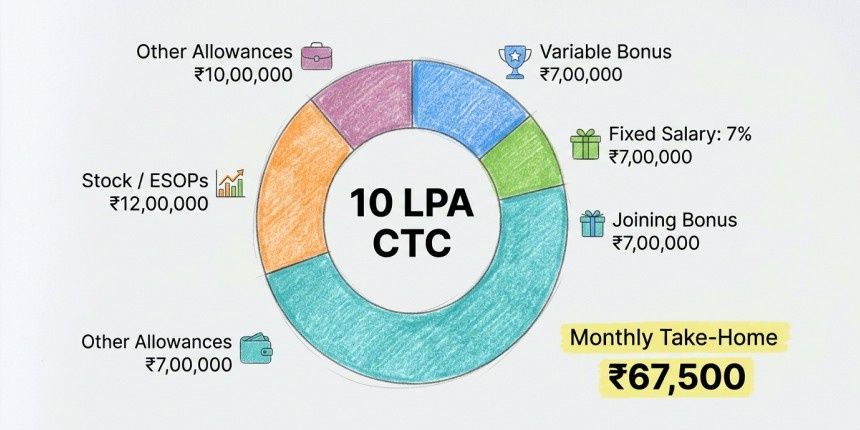
A well-known, but oft-omitted reality of the fresher salary in India is the delta between the CTC on your offer letter and the actual take-home salary. A CTC of 8 lakhs may include a variable bonus (of 10-20%), a joining bonus, eSOPS that extend over four years, and other miscellaneous allowances that don’t end up in your bank account in the first week of every month.
The fixed part of your pay, which is your monthly salary, makes up about 60% to 70% of your CTC. If you're offered an annual package of 10 LPA, this means you bring home 55,000 to 60,000 each month instead of 83,000 as the CTC number might suggest. This detail matters more than most fresh graduates realize in expensive cities like Bangalore or Mumbai, where rent costs a lot. Use our salary calculator for India to get a clearer picture of your actual monthly take-home based on your offered CTC.
Pay differences are largest in consulting and investment banking because bonuses make up a big chunk which is around 25% to 40%, of the total package.
On the other hand, IT services show the smallest differences since fixed pay accounts for about 85% to 90% of the overall salary.
What Hiring Managers Are Screening For (Before They Even Call You)
The fresher salary you can expect in 2026 is more and more determined before the first human interaction. If companies are using AI tools for all parts of the hiring process, then it is at the application stage. And what is being measured is evolving.
Three years ago, it was sufficient to have a CGPA over 7.0 and to come from a college with a decent reputation to clear the first filter. Today, if companies are using AI tools for recruitment, then it is portfolio, GitHub, Kaggle, published projects, and even the quality of the code for take-home tests. The AI Coding Interviewer doesn't just look at correctness, but at structure, efficiency, and how well edge cases are handled. That is a very different bar than "Did you solve the question?"
For freshers, the implication is clear. Your resume gets you into the funnel. Your demonstrable skills, tested by AI recruiting software, determine whether you come out the other end with a 5 LPA offer or a 15 LPA one.
Frequently Asked Questions
1. What will freshers in India earn on average in 2026?
Freshers in general IT services can expect salaries between 3.5 and 4.5 LPA on average. For those joining product companies or working in fields like AI, data science, or cloud computing, salaries range from 8 to 15 LPA.
2. Do engineering freshers earn more in Bangalore or Chennai?
Engineering graduates in Bangalore make between 6 and 15 LPA, depending on the type of company, with product firms paying on the higher side. In Chennai, pay ranges from 4 to 10 LPA, but roles in GCCs can offer about 8 to 12 LPA.
3. What is the starting salary of graduates from tier-1 MBAs in India as freshers?
Students who graduate from top-tier MBA institutions, including IIMs, ISB, and XLRI, make salaries in the range of 12-20 LPA. In some instances, even finance and consulting roles may earn over 25 LPA.
4. How much will an AI/ML fresher earn in India by 2026?
The salary range for AI and ML freshers ranges from 5 to 15 LPA. Freshers from the best colleges may earn 18-40 LPA, especially from product-based firms or AI startup organizations.
5. Does college tier matter regarding freshers' salaries?
Yes, very much in the context of securing the first employment opportunity. However, firms with AI hiring systems today care less about the degree from which candidates come and emphasize the skills they have instead. This shift has made the playing field level for highly skilled freshers who graduated from Tier-2 or Tier-3 colleges.
6. How does AI-based interview technology affect the recruitment of freshers?
Using AI-based interview systems helps organizations conduct their screening process of many candidates, and this too in a much more consistent manner. In the case of freshers, there is an increase in the number of opportunities where one can be assessed based on actual merit rather than just their college education or resume keywords.
7. What is the difference between CTC and take-home salary for freshers?
Take-home monthly income ranges between 60-70 percent of your CTC when variable incentives, tax exemptions, and non-monetary elements are deducted. A 10 LPA CTC equals around 55,000-60,000 per month income.
8. How can freshers maximize their starting salary in 2026?
Create a public portfolio (GitHub, Kaggle, etc.), acquire a specialized skill in the field of AI or cloud technology, and target companies using a results-oriented hiring process. If you partner up with a results-driven recruiter such as Hyring, you can reach employers who hire based on skills.