
A Gist
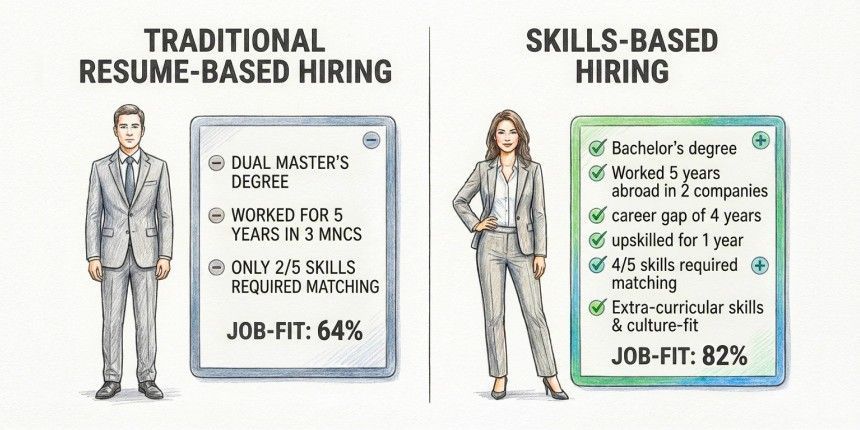
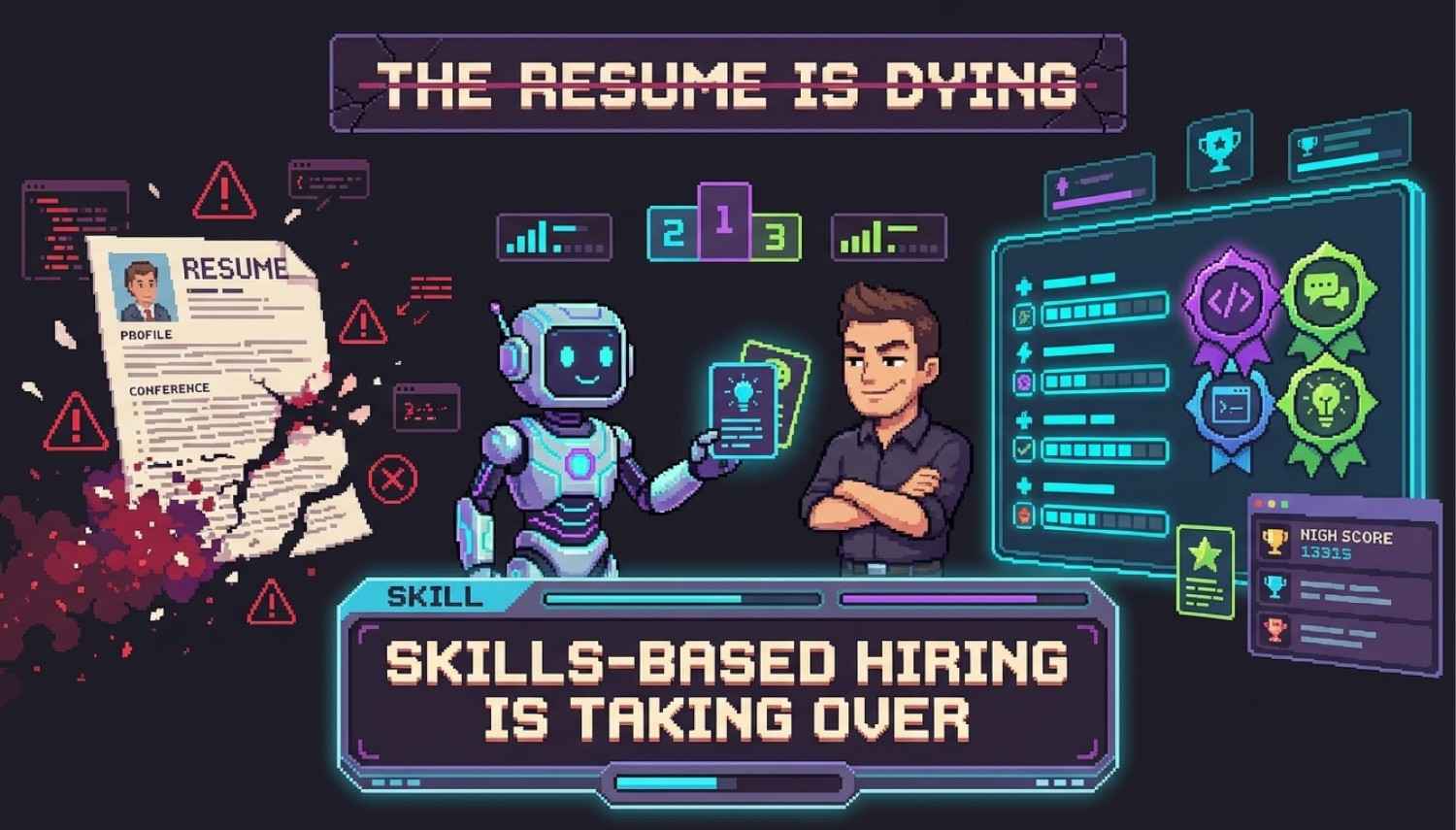
Resumes are showing their age. In a fast-moving job market, what matters now is what people can do, not what their CVs say they have once done or were capable of. More companies are shifting to skills-based hiring where assessing candidates by actual competencies, and not degrees or past roles, takes precedence. This approach uncovers hidden talent, often lost to the vagaries of bad hiring practices, and also a lack of knowledge of jobs that are available that are a right fit for them.
Resumes: Relics of the Past
For decades, resumes have been the foundation for the pyramid of hiring; page after page of job titles, chronology of study, certifications, extra-curricular skills, and bulleted extras. Undeniably, work has changed, though.
Career paths are no longer linear. You could have a 10-year gap and then resume as a senior manager if the job fit is just right or if you have recently reskilled. Either way, the roles and the recruiters who hire for them have evolved.
Resumes are too quick. They tend to favor candidate credentials over their capabilities, which means that real potential is simply filtered out because they lack a preferred degree, certification, or job history. On the other hand, clever candidates who have mastered the art of “resume-optimization” often slip through the cracks, even if the real skills are absent in their profiles.
In 2025, analysts at Harvard Business School pointed out that traditional job-matching systems are becoming obsolete due to their inefficiency. They generally use outdated credentials and rigid classifications rather than actual competencies to judge candidates. This definitely leads to missing out on the real talents, as the process never leaves chasing those on-paper potentials.
What Skills-Based Hiring Actually Means
Skills-based hiring (sometimes called skills-first or competency-based hiring) flips the recruiting process 180 degrees. Instead of asking “Does this candidate look good on paper?”, it asks “Can this candidate actually perform for us in the long run?”
It means designing job descriptions around specific skills and competency levels- and then evaluating applicants through:
- Practical assessments or examinations (like coding tasks, writing-samples, role-plays, sims)
- Work samples or trial jobs, rather than just plain interview answers
- Structured skills-based rubrics, not guesswork based on tuition
Even those from a non-traditional background get a fair shot at getting hired. This includes those like freelancers, who have upskilled online, self-taught candidates and even those who have taken long career gaps for personal reasons.
However, one thing to keep in mind is that skills based hiring doesn’t reject credentials outright. It simply de-emphasizes them in favor of what candidates can actually do in the real world.
Data & Diversity Are Real Advantages
Switching to skills-first hiring brings real, measurable benefits for organizations:
- Better performance & retention: The same Harvard study shows skills based hiring can outperform legacy hiring in predicting job success. In some cases, it was even observed that those employees hired via a skills-first approach stayed on 9–10 percentage points longer than degree-based hires.
- Faster hiring timelines and reduced mis-hires: Companies that practice skills-based hiring and use related assessments often report shorter time-to-hires. They also have lower turnarounds/mis-hires as the funnel proceeds.
- More diversity in talent pools: According to Deloitte, dropping degree filters opens up opportunities for unconventional and unexpected candidates. This actually increases inclusive representation and brings fresh perspectives to the company and the workplace.
- Better alignment with actual job needs: Rather than over-qualifying with degrees that don’t fit the job that one is interested in, skills based hiring maps to job-specific criteria. This improves fit, agility of on-boarding and employee satisfaction - making it almost revolutionary.
In short, skills-first approach helps companies build a workforce that’s capable, diverse, and future-proof, not just credentialed.
What’s Changing Behind-the-Scenes
There are three tectonic shifts that are accelerating the switch to skills based hiring
- Talent paucity & increased upskilling - As industries are evolving fast (IT, green energy, digital services), what really matters and remains is agility and skills, not pedigree. Employers cannot sit and wait for degrees and are done with the pedantic monotony.
- Better assessment tech - Tools such as Hyring’s Agentic AI for testing and simulations, and even requesting work samples, make it easier to evaluate real capabilities instead of relying on on-paper credentiality.
- Focus on inclusion and equality- Skills based hiring reduces bias related to education, cultural background or sketchy career history. Hiring is now seen by companies as a talent-matching exercise, not just a colorless job filter.
Even governments and public-sector hiring guidelines are starting to shift toward competency hiring. This has ultimately signalled a structural change in how work and workforce are viewed in the echelons of recruitment.