Recruitment in 2026 is no longer about filling vacant roles fast. It's about ensuring that candidates have a great interview experience.
For Gen Z specifically, the hiring process is the company's brand. Every delayed response, an AI-generated feedback, or a very long application form tells them the company's culture. Gen Z is no longer putting up with the bare minimum, and they notice everything.
This wave has forced companies to change their hiring process entirely. The changes are not replacing recruiters with AI but rather equipping recruiters with AI to fasten the hiring process and enhance the candidate experience.
The Deloitte Global Gen Z and Millennial Survey states that young workers joining the workforce are now preferring to pick employment based on flexibility, growth, and purpose rather than pay alone.
Speed isn’t a perk anymore; it's the baseline
Unlike millennials, Gen Z grew up with instant everything. From messaging and content to deliveries. So when a hiring process takes three weeks to respond to a resume, they are less than impressed.
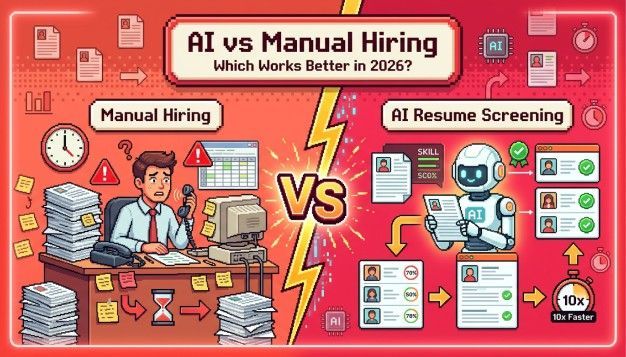
Most traditional hiring processes remain unchanged since the 1900’s and are still slow by design. With manual screening, scheduling, and the radio silence between interviews, candidates drop out like flies.
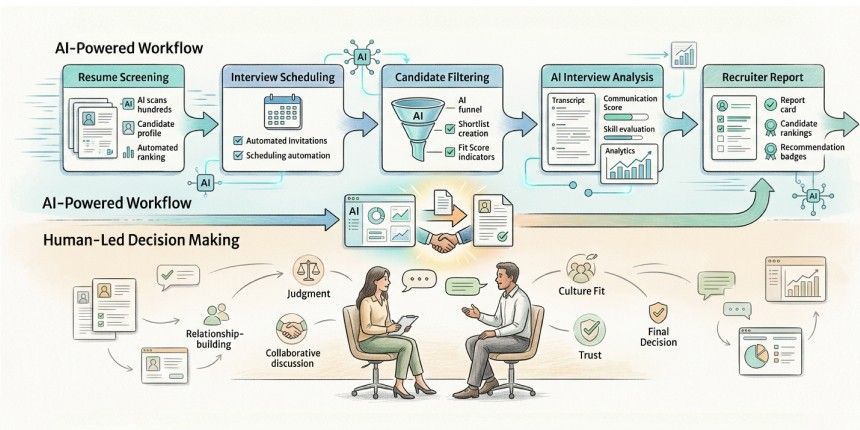
Over time, what has changed is the integration of AI into the workflow itself. Companies use resume screeners, automated scheduling, real-time updates, and AI-generated reports.
Speed used to be the main priority, but now it is one of the factors.
Skills are replacing credentials as the real filter
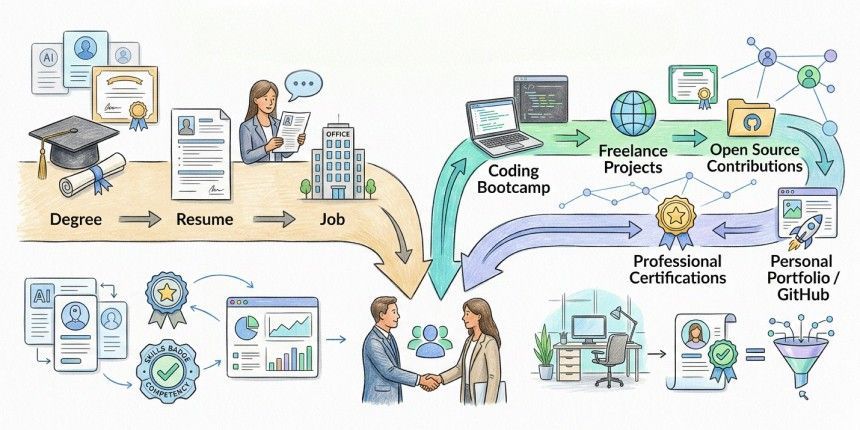
The bigger shift in skill is what companies are actually looking for now. The World Economic Forum's Future of Jobs Report points out that skill adaptability is what employers look for, not degrees, as AI continues to reshape job roles.
This matters a lot for Gen Z, because a huge share of them didn't come up through the traditional pipeline. They're learning through online certifications, freelance work, bootcamps, open-source contributions, paths that don't show up cleanly on a resume built for 2010-style filtering.
This becomes vital for Gen Z, as most of them didn't do the traditional route. They rely on online certification, freelance work, bootcamps, and other paths that people don't usually put on their resumes.
Candidates are people, not leads
Gen Z values individuality to the point where they've managed to personalize everything. Spotify functions based on their mood, Amazon knows their size, Instagram knows their likes and dislikes. Generic job postings and copy-paste cold messages no longer excite them.
The LinkedIn Economic Graph is proof that this isn't a spur-of-the-moment decision. The way recruitment is done has changed, with recruiters and candidates leaning towards skill-based matching and personalized discovery. AI can help recommend roles based on actual skill alignment, personalized outreach messages, and improving match quality.
The shift here is from "funnel" to "experience." Candidates can tell the difference, and they reward the companies that get it right with actually showing up to the interview.
Trust matters more than the tech itself
Here's the part companies sometimes get wrong: Gen Z isn't anti-AI in hiring. They're pretty comfortable with it. What they're not comfortable with is opacity.
The Microsoft Work Trend Index found that younger workers are actually leading AI adoption at work, but they expect that use to be responsible and explainable, not a black box deciding their future with no visibility into how.
In hiring specifically, candidates want to know how they're being evaluated, whether AI is involved in screening, and what's actually driving progression to the next round. That's pushing companies toward more structured, explainable systems, with AI supporting the decision, not making it unilaterally. AI video interviews, for instance, work best when they standardize the evaluation process while keeping the final call human.
Trust isn't a nice-to-have layered on top of hiring anymore. It's part of the product.
Growth potential is now a deciding factor, not a bonus
Gen Z isn't just asking "is this a good job." They're asking "where does this job take me?" The PwC Global Workforce Hopes and Fears Survey found that access to upskilling and clear development paths is one of the biggest factors in whether someone accepts or stays.
What they're actually weighing: continuous learning opportunities, internal mobility, exposure to new tools and technologies, and a visible path forward rather than a vague "we'll see." Hiring someone in 2026 isn't about filling a seat. It's about convincing them this is where their next few years should go.
The future of hiring is AI doing the repetitive part, humans doing the rest
None of this means hiring is becoming fully automated, and that's not really the goal. AI is good at absorbing the repetitive load: screening, scheduling, filtering, keeping workflows moving. That frees up recruiters for the parts that actually need a human: real conversations, reading for cultural fit, building the relationship that gets someone to say yes.
The hiring systems that work best right now aren't the most automated ones. They're the ones that get the split right: AI handles the volume, humans handle the judgment calls.
Hiring is a product experience now, whether companies treat it that way or not
Recruitment in 2026 doesn't function like an HR process anymore; it functions like a product, and candidates judge it the same way they'd judge any other product: is it fast, is it relevant, does it feel personal, is it transparent, can I trust it.
Gen Z didn't just nudge these expectations into existence. They built them, because it's the only version of hiring they've ever known. AI is the infrastructure that makes meeting those expectations possible at scale, but the advantage isn't in having the tech. It's in how thoughtfully it gets used.
Companies pairing genuinely human-centered hiring with tools like AI recruitment software are the ones who'll actually win this generation of talent, not because the tech is flashy, but because the experience doesn't feel like a chore.
Because hiring someone well in 2026 isn't about closing a requirement. It's about building something candidates actually want to walk into.
FAQs
1. What does Gen Z actually expect from the hiring process?
Speed, transparency, and personalization. They want fast responses, clear communication about how they're being evaluated, and outreach that feels relevant to them, not copy-pasted.
2. Are Gen Z candidates okay with AI being used in hiring?
Yes, but they want to know it's happening. What puts them off isn't AI itself; it's when it's a black box making decisions with no explanation.
3. Why are companies moving away from degree-based hiring?
Because Gen Z often builds skills outside traditional education through bootcamps, freelance work, and certifications. Filtering by degree means missing strong candidates whose paths just look different on paper.
4. How does AI actually help in recruiting Gen Z?
It handles the repetitive work: screening resumes, scheduling interviews, sending updates. That frees recruiters to focus on conversations and relationship-building, which is what actually gets candidates to say yes.
5. What makes a Gen Z candidate choose one company over another?
Beyond the role itself, they're looking at growth. Clear learning paths, internal mobility, and access to new tools matter as much as the job description.