
On average, a recruiter begins their Monday morning, opening their inboxes to find 200 applications for a job role that has been open for a day. The hiring manager, on the other hand, needs the shortlist by Friday.
In this case, the recruiter has two options.
One: spend the week, dedicating time to read through every resume and pick out candidates who are qualified and fit the job role. Then they talk to them and schedule interviews, accounting for the fact that several candidates may not show, the budget may not align with the candidate, or their notice period will be way off.
Or two: conduct structured phone screening interviews with the most qualified candidates to better the talent pool.
An experienced recruiter wouldn't think between the options. They know how overwhelming and monotonous the process is when phone screening is skipped.
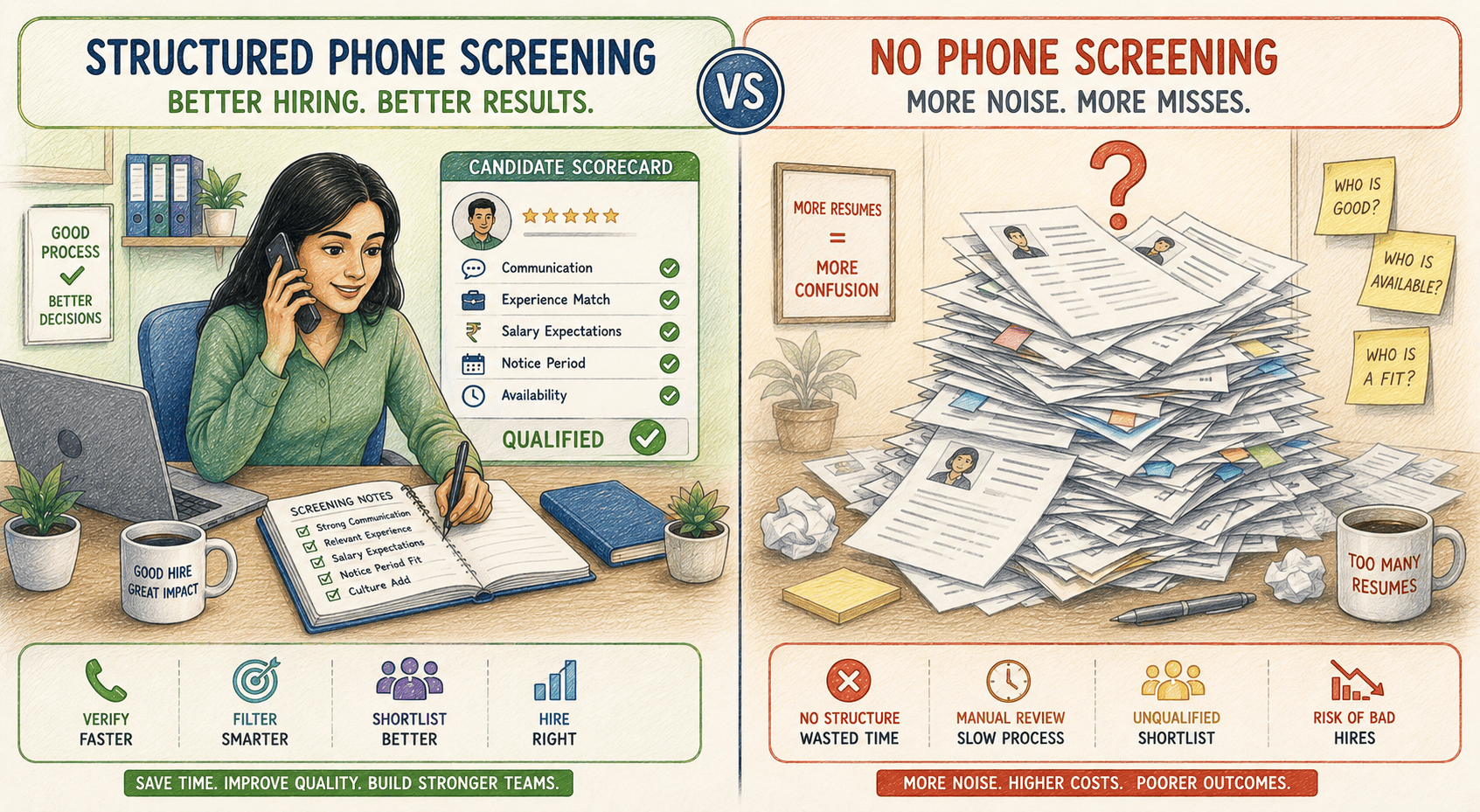
The entire purpose of a phone screening round is not just another interview check. It helps further filter candidates based on their communication, their salary expectations, and notice period. Several recruiters use it to make sure candidates are actually qualified and haven't exaggerated on their resumes. The process saves everyone time, money, and energy.
But the expectation is that recruiters call every candidate personally and ask the same questions to each of them, log the answers, and make a decision. However, with the overflowing applications that jobs now get, this is simply impossible now.
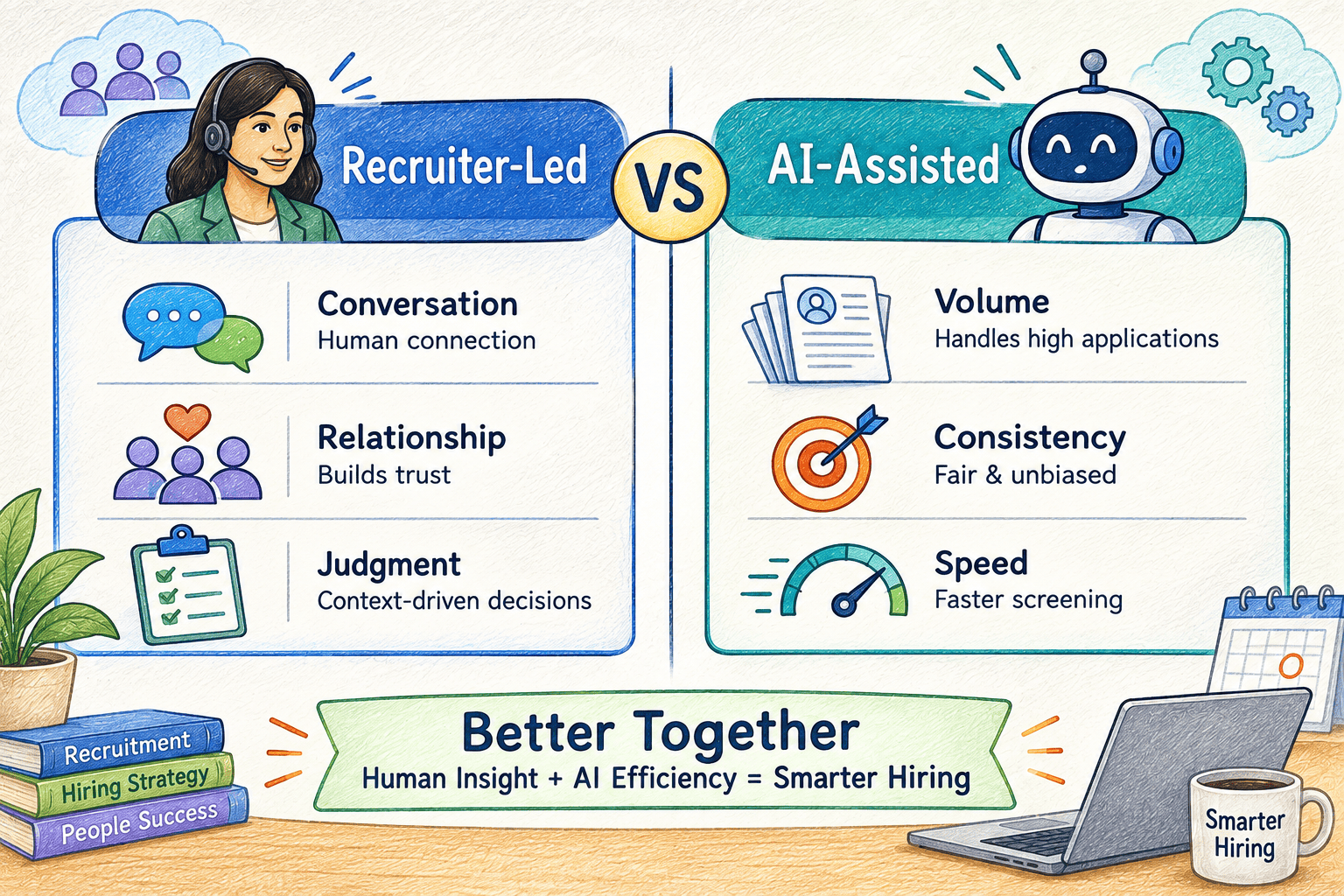
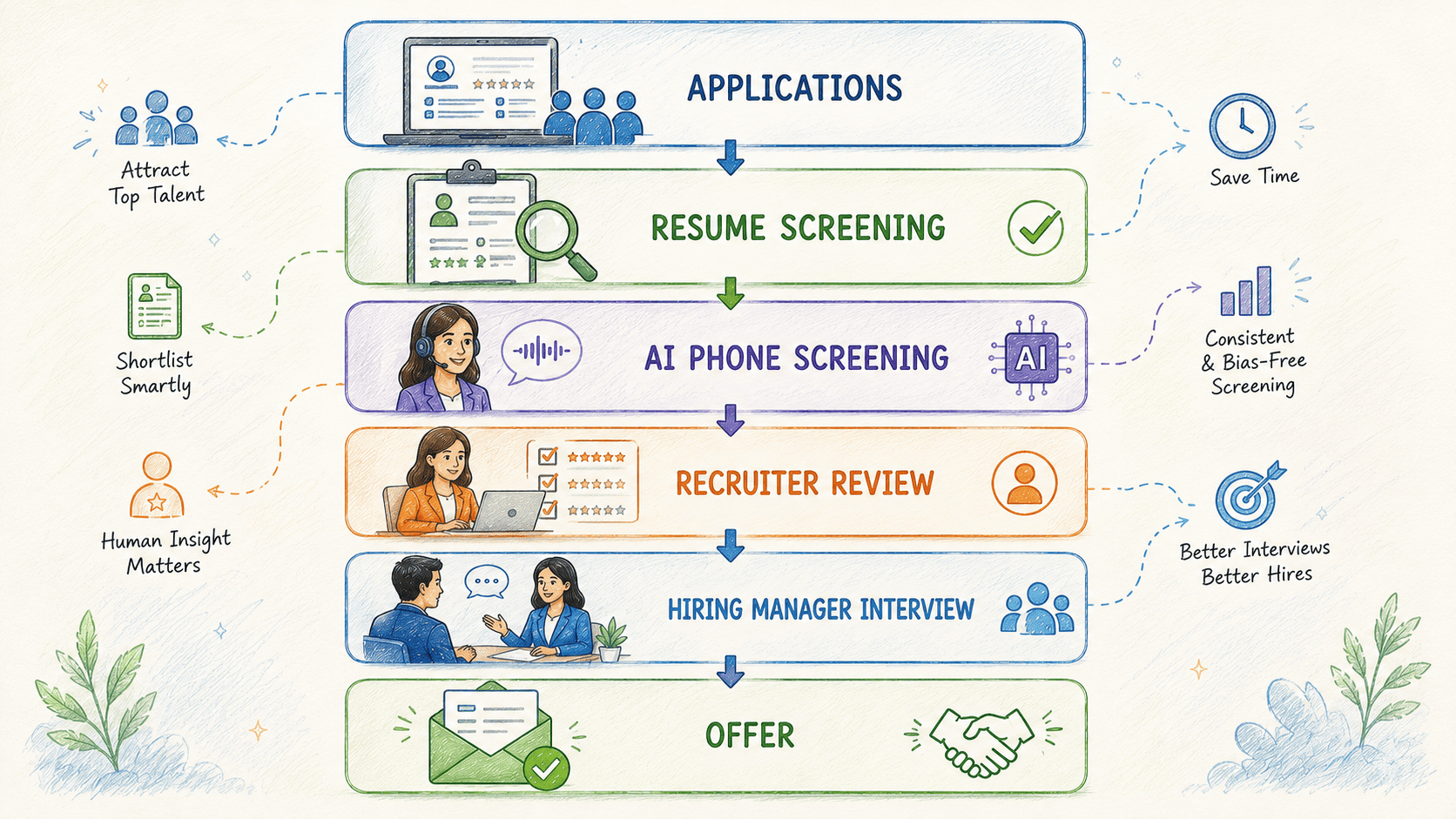
Companies need to get a better practice for phone screening their candidates to ensure candidates don't drop out, and recruiters don't miss qualified candidates. Especially in the AI era, where phone screening can be automated.
What is a Phone Screening Interview?
A phone screening interview is a short conversation between the recruiter and the candidate, conducted before any interviews are scheduled.
Its primary purpose is to check a candidate's qualifications, not evaluate them. At this stage, recruiters shouldn't try to determine if the candidate is the right hire; they should try to figure out if this candidate is worth moving to the next level. Based on this decision, they invest their time and more people in the process.
Phone screens are typically 15 to 30 minutes and are conducted by a recruiter or someone part of the HR team. The hiring manager usually does not get involved at this stage. The screening covers their experience, fitment to the role, availability, salary expectations, and tests basic communication skills.
The outcome of this is a quick yes, we can move ahead with this candidate, or no.
According to LinkedIn Talent Solutions, a phone screen is a standard early-stage hiring step taken across industries. It is a seamless way to verify the candidate and their resume before any deep investment is made.
Why Phone Screening Matters in Modern Recruitment
A resume tells a recruiter a candidate's skills, their expertise, and what they have done. A phone screening tells a recruiter how the candidate is willing to grow.
These are fundamentally two different questions.
A resume can show three years of relevant experience, but it won't tell you if the candidate is serving a 90-day notice period, if they are expecting a 40% raise above budget, or if they are offer shopping.
Phone screening can pick up issues like this before they can become a problem.
Research cited by LinkedIn Talent Solutions suggests that a single job opening can get around 250-plus applications on average. Without a slightly deeper probe, recruiters will have to deal with candidates who are not qualified and waste the interview panel's time along with the candidates.
A hiring manager's time is also something recruiters must take into account. A panel will take around 60 minutes to interview a candidate, and that time spent on an unqualified candidate is time lost. This loss is also easily preventable, but making sure candidates are appropriately filtered can prevent it.
The SHRM guidelines on effective recruiting state that early screening is the best practice mainly because it protects the integrity of later-stage interviews by ensuring only candidates who are the best fit get there.
The Goals of a Phone Screening Interview
Phone screening has just one goal: Qualification. But in that short conversation, recruiters try to fish for way more information to ensure that the candidate is a good fit for the role and the company.
They verify the candidate's resume
Does the candidate's self-reported experience match what they have mentioned on the resume? Can they back what was written, and can they explain what they have worked on over the years?
They assess basic communication skills
Recruiters aren't testing a candidate's eloquence. They are testing whether a candidate can properly articulate their skills and experience clearly and if they respond to the questions asked coherently.
They confirm if the candidate is a logistical fit
Recruiters need to ensure that the candidate's salary expectations, notice period, location, availability, and their legal work authorization all align with the company before they allow the candidate to go further.
They look at the candidate's motivation
They look to determine whether the candidate is actively looking or if they are just testing the market. They also look to see if the candidate understands what the company does and what the role demands. With the phone screener, recruiters can also see how committed the candidate is to the interview process; this can help prevent late-stage dropouts and no-shows.
Set expectations
A phone screen is often a candidate's first live touchpoint with the organization. How it's conducted shapes their impression of the hiring process and, by extension, the employer brand.
None of this requires a deep dive into competencies or culture fit. That's what the rest of the interview process is for.
How Recruiters Conduct Phone Screening Interviews
Effective phone screening is structured but conversational. It follows a clear format without feeling like an interrogation.
Most recruiters open with a brief introduction: who they are, what the role is, and how long the call will take. This sets the candidate at ease and signals that the recruiter is organized and respectful of their time.
From there, the recruiter moves through a consistent set of questions, not improvised, not based on gut instinct, but prepared in advance and applied to every candidate for that role. The SHRM guide on conducting effective phone screens specifically emphasizes consistency here: asking the same core questions to every candidate makes it easier to compare responses fairly and reduces the risk of bias creeping into early-stage decisions.
Notes are taken throughout. At the end, the recruiter explains next steps and allows the candidate to ask questions.
The whole thing should take no more than 30 minutes. If it's running longer, it's likely drifting from screening into evaluating, which means the recruiter is doing work that belongs in the next interview stage.
Step-by-Step Phone Screening Process
Step 1: Prepare before the call
Review the resume against the job requirements. Note any gaps. Know the non-negotiables, the salary band, required skills, work arrangement, and timeline.
Step 2: Introduce yourself and frame the call
Tell the candidate your name, your role, how long the call will take, and what you'll cover. This reduces candidate anxiety and focuses the conversation.
Step 3: Run through your structured questions
Cover all key qualification criteria. Don't improvise or skip questions because a candidate seems strong early. Consistency matters across every candidate you screen.
Step 4: Leave space for the candidate's questions
What candidates ask tells you something about how engaged and prepared they are.
Step 5: Close with clarity
Tell the candidate what happens next and when they can expect to hear back. Vague closings generate follow-up emails that clog a recruiter's calendar.
Step 6: Document immediately
Notes get unreliable fast. Score the candidate against your criteria while the call is fresh. Use a consistent scorecard structure so evaluations are comparable across candidates.
Essential Phone Screening Questions Recruiters Should Ask
The specific questions will vary by role, but a solid phone screening covers the same core categories every time.
- Role and background: "Can you walk me through your current or most recent role and what you were responsible for?" "What drew you to apply for this particular position?"
- Logistical fit: "What's your current notice period?" "Are you currently interviewing with other companies?" "What are your salary expectations for this role?" "Is this role fully on-site/hybrid/remote? Does that work for you?"
- Motivation and intent: "What's prompting you to look for a new opportunity right now?" "What do you know about our company, and what's attracted you to us specifically?"
- Role-specific qualification: Two or three questions tied directly to the must-have requirements. If the role requires experience with a specific tool, methodology, or industry, this is where you verify it.
- Candidate's questions: "Do you have any questions for me before we close?"
The goal isn't to conduct a mini-interview. It's to get enough information to make a confident advance or decline decision.
Phone Screening Best Practices
- Standardize before you scale: Build a question set for every role type before screening begins. Ad-hoc questions produce inconsistent evaluations.
- Score as you go: Don't rely on memory or general impressions. Use a scorecard tied to specific criteria, role fit, communication, logistical alignment, and motivation, and score each candidate during the call.
- Keep the conversation two-directional: A phone screen that feels like an interrogation hurts candidate experience and can cause strong candidates to disengage. Ask, listen, then respond.
- Respect the candidate's time: If you know within the first few minutes that the candidate isn't a fit, on salary, on notice period, or on a hard requirement, it's more professional to acknowledge it early and close the call respectfully than to run through the full script anyway.
- Document consistently: Your notes are the record of your decision-making. If a hiring decision is ever questioned, documented evaluations show that the process was fair and criteria-based. According to the EEOC, consistent documentation is part of running a legally defensible hiring process.
- Don't oversell: Recruiters sometimes talk too much during phone screens in an effort to generate interest. The purpose of this call is qualification, not conversion. There will be time to sell the role if the candidate advances.
Common Phone Screening Mistakes Recruiters Should Avoid
- Going in without preparation: Reviewing a resume mid-call, or worse, asking a candidate questions their resume already answers, signals disorganization and wastes time.
- Skipping the salary conversation: Many recruiters avoid compensation discussions because they feel awkward. This is how candidates make it to the offer stage before anyone realizes there's a 30% gap between expectations and the band.
- Asking inconsistent questions: If you ask different questions to different candidates, you can't fairly compare them. Inconsistency also creates legal exposure.
- Taking no notes, or too few: "Strong communicator, seemed motivated" is not an evaluation. It's a gut feeling. Structured notes make decisions defensible and repeatable.
- Letting the call drift: Phone screens work when they stay focused. Once a recruiter starts exploring competencies, probing for cultural fit, or getting into scenario-based questions, the call has stopped being a screen and started being an interview, without the structure of one.
- Failing to close clearly: A vague "we'll be in touch" leaves candidates uncertain and generates follow-up calls that clog a recruiter's calendar. Be specific about timeline.