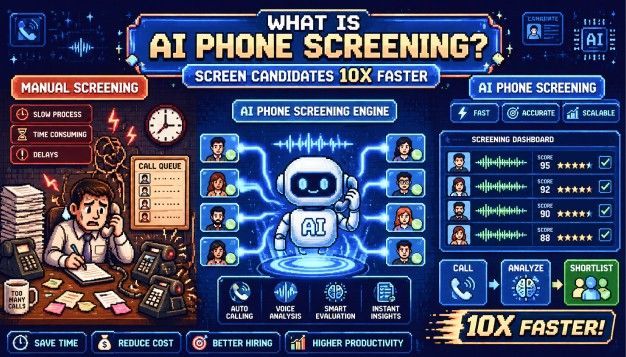
AI phone screening is the use of AI to conduct initial candidate interviews over phone calls. It replaces the slow, manual phone screen with something faster, more consistent, and far easier to scale. Agencies running AI-first workflows like Hyring are cutting screening time by up to 97%. They are moving through thousands of candidates in the time it once took to speak with five.
Let's be real. Speed decides everything in the 2026 talent market. That is not a slogan. The data backs it up. AI-powered hiring tools reduce time-to-hire by up to 50%. Agencies and platforms like Hyring are outperforming traditional firms across every metric that counts. This guide walks through what AI phone screening looks like in practice. What the numbers say. How agencies are putting it to work. And why Hyring's approach is built differently.
How Does AI Phone Screening Work?
Here is the scenario. A candidate makes an application for the position. In no time at all, they receive a call. However, it is not from the recruitment officer. The call comes from an AI system that engages in real dialogue. They listen. They pick up on the context. They make queries based on the information provided by the candidate.
This is the catch. Every call is unique. The algorithm uses information from the job listing and the resume of the candidate to conduct the interview. This process will differ completely for a cloud engineer versus a retail store manager.
But then, what exactly does the AI do during every call?
Dynamic Questioning: The questions posed are directly taken from the job description and the candidate’s profile. In case the job requires practical knowledge of certain tools, the AI dives into the same. There is no generic question template here.
Soft Skills Evaluation: The AI analyzes the tone of the voice. It does not just analyze what the person is saying. It looks at clarity, tone, and confidence, which you cannot gauge from the resume.
Instant Scoring: The conversation ends, and a scoring metric appears instantly. An HR representative can review the transcript and score within two minutes. Do that manually in a 20-minute telephone interview.
Why Are Agencies Making the Switch? The Numbers Say It All
This is not some kind of phenomenon that agencies are exploring just to be curious. The outcomes are compelling them to do this. Statistics from 2025 and 2026 speak volumes on this matter. The agencies employing artificial intelligence for first screening are outpacing their competitors. And what about those who still employ the traditional way?
Screening Time Drops by 97%
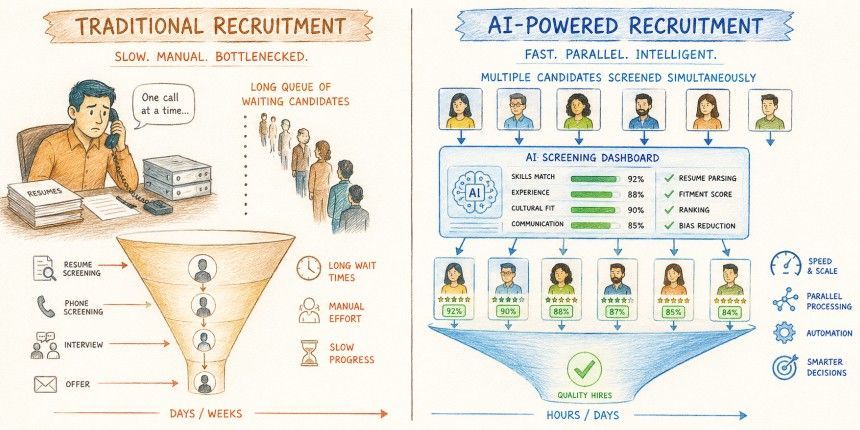
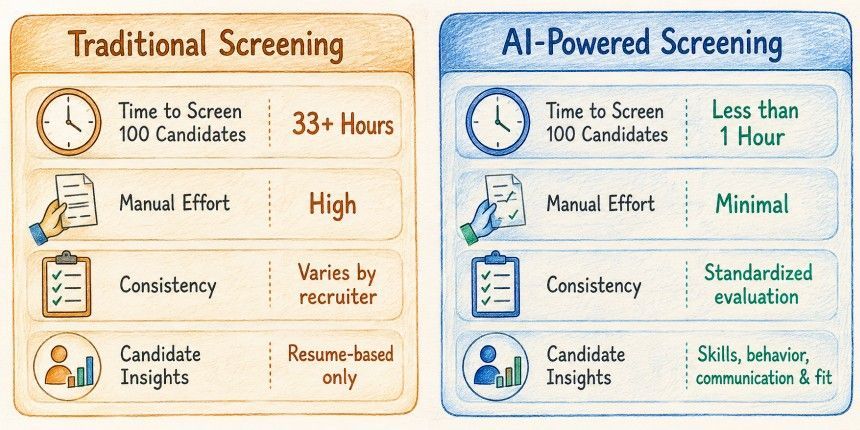
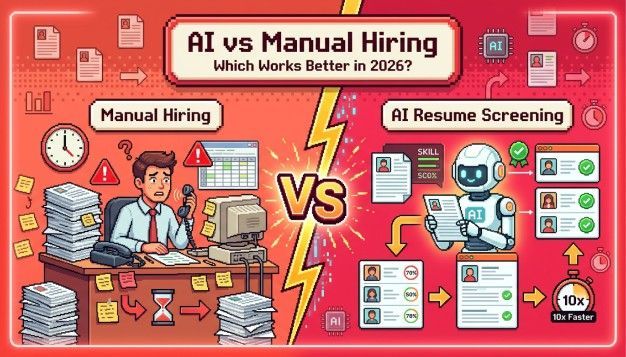
Here is some quick math. One recruiter screening 50-100 candidates the traditional way needs over 12-50 hours of phone time for a week. That is almost an entire work week. With AI handling the initial call and a recruiter reviewing the output, that same batch takes under 1 hour. Read that again. Under 1 hour. That is not an upgrade. That is a totally different way of working.
Hiring Costs Fall by 30% to 40%
Traditional hiring runs about $4,700 per hire on average. Automating the screening stage knocks 30% to 40% off that number. For agencies, this hits right where it matters. Lower screening costs mean more clients, more placements, and better margins. All without adding headcount.
Better Candidates Make It Through
You have probably heard someone say AI cannot match human judgment. The data disagrees. Candidates who clear an AI-led screening are 53% more likely to do well in the next round of human interviews. For candidates picked through old-school resume filtering? That number drops to just 28%. AI also reduces unconscious bias by 40%. Everyone gets measured on the same criteria. No gut calls. No off days swinging a decision.
Recruiters Get 60% More Done
Agencies using AI screening report 1.6x more recruiter capacity. That is a 60% jump. Nobody is working longer hours. They are just spending their time where it counts. Real conversations with real contenders. Not dead-end calls with people who were never going to fit.
Candidates Hear Back in Less Than 24 Hours
The old average for getting back to a candidate after they apply: 7 days. With AI screening? Less than 24 hours. That is 85% faster. And when the best people on the market are gone within 48 hours, that kind of speed is not a nice-to-have. It is the whole game.
How Agencies Put AI Screening to Work
Step 1: Instant-Action Calls
An application is submitted. The AI detects it and sends out an interview invitation. Quick. With AI, it takes less than 24 hours for an applicant to progress from “Applied” to “Screened.” Without it? The industry standard is seven days. This is a whole week during which your top talent is already being interviewed elsewhere.
Step 2: The Knockout Round
There are certain things that cannot be negotiated in any role. These include obtaining a particular license, having a particular number of years of experience, and being immediately available. The AI makes sure that all these requirements are met during the phone call. If they are not, the candidate is immediately disqualified. This saves recruiters the time of talking to candidates who were not meant to qualify.
Step 3: Parallel Processing
Here is where it really clicks. A recruiter can talk to one person at a time. That is just how phones work. AI does not have that problem. It interviews hundreds of candidates at the same time. Day and night. Weekdays and weekends. This is huge for high-volume recruiting roles, retail, healthcare, and tech. Big talent pools where people are applying to five jobs at once and taking the first offer that comes through.
What Makes Hyring Different?
A lot of tools provide AI screening capabilities. Most of them give you the software and leave you alone with it. Hyring is different from the crowd.
Each agency working with Hyring receives an account manager. There is no ticket system, no help articles. Your own person who gets familiar with how your agency works and stays by your side.
Your personal manager does three important things.
Firstly, he customizes your AI workflows. Hyring's digital twin becomes adjusted to your needs to focus on the things that are crucial to your client's job description – technical skills, cultural fit, and industry-related scenarios.
Secondly, they analyze the results obtained through Hyring. They see where candidates are dropping off and where changes should be introduced. But they don't just show you the statistics. They guide you through the process of making necessary decisions based on this data.
Over people pass through Hyring's AI per month. Such massive volume, along with human assistance, makes AI recruitment agency growth possible without harming its distinctive features.
Do Candidates Prefer AI Phone Screening?
This is always raised as a valid concern. The problem here is understandable, as no one likes to talk to a blank wall.
The idea here is to expedite the hiring process. That is the point that goes unnoticed. Candidates don't mind who the first call comes from. Candidates mind the absence of contact. They mind the lack of communication for a week after sending in their applications.
Candidates would rather have an AI call than wait in anticipation.
Where Recruitment Goes from Here
The success of agencies in 2026 goes beyond recruitment. They are operating more efficiently. The use of AI for telephone interviews is the reason. AI helps handle the most labor-intensive stage of recruiting from AI resume screening to final shortlisting. This leaves the recruiters free to undertake the tasks that can grow their agencies. Tasks like negotiating employment offers. Developing strong relationships with clients. Offering strategic insights.
It would be wrong to automate everything or resist changes entirely. The truth lies between the two extremes. While AI manages volumes, humans manage decisions. Those who have managed to find that balance are thriving. But those who have not are beginning to struggle.
Frequently Asked Questions
1. How does AI phone screening happen?
The AI makes a voice call to the candidate and holds an instant live conversation with him or her. The AI asks questions based on the requirements of the job role and the resume of the candidate. The AI gauges their non-verbal cues, including tonality and language proficiency. The AI also verifies their certifications and technical expertise. After concluding the voice call, a fit score becomes instantly available. The recruiter spends only around two minutes reviewing the transcript and fit score.
2. Do candidates prefer being screened by AI?
Most of them are. What really bothers people is the waiting. Not the format. Since 79% of candidates also want honesty about AI being involved, agencies that are upfront about it tend to build stronger trust in AI hiring. Hyring's Account Managers help agencies get that communication right from day one.
3. Do AI screenings lead to better hires or just faster ones?
Both. Candidates who pass an AI screen are 53% more likely to succeed in the next human interview round. Compare that to 28% for those picked through traditional resume filtering alone. AI also cuts unconscious bias by 40%. Every candidate gets evaluated against the same set of criteria. No subjective calls. No inconsistency between interviewers.
Hyring distinguishes itself from the rest by using conversational AI technology instead of inflexible bots to create conversations via voice, video through AI video interview software, and coding in real time through AI coding interview tool. While other systems rely on self-service, each recruitment company is assigned an Account Manager who designs processes and achieves 89% evaluation accuracy.
5. Which industries and roles benefit the most?
High-volume hiring sees the biggest gains. Retail, healthcare, and tech lead the pack because the talent pools are large and candidates move fast. But really, any role where agencies get a flood of applications and need to check basics like availability, salary expectations, certifications, and communication skills is a strong fit. Screening hundreds of people at the same time, around the clock, is what gives AI-powered agencies the edge.