
The Long & Short of It
When you consider the normal way to screen candidates using dial-up, it involves a physical dialling process that gobbles nearly 63% of your hiring timeline. This means that recruiters can end up spending anywhere between 30 minutes and 2 hours, just to fix a single interview.
AI phone screening is akin to a godsend in this aspect. Companies that deploy Agentic AI to automate screening have reported an increase in time savings by up to 70% on a wide variety of tasks including initial Level 1 screenings, so on and so forth. This also leads to better response times and lesser burnout in HR teams.
With just legacy screening taking up most of your hiring time, automation isn’t just a convenient option anymore but more of a necessity at this point. This blog outlines how AI Phone Screening works, and what the data actually says, comparing it in detail with the old-school protracted approach.
The Phone Screening Problem Nobody Talks About
Here's something surprising - 63 per cent of HR managers conduct phone screen interviews as part of their hiring process, yet most recruiting teams are literally drowning in the chaos that ensues. Research shows that 67 per cent of respondents say it takes between 30 minutes and 2 hours to schedule a single interview. That's not even the interview itself, just the coordination part.
Screening alone can take up 63 per cent of the hiring time. This depends on your process complexity. Imagine this - you could have the perfect candidate in your pipeline, but they're stuck playing ‘tag, you’re it’ on the phone, which isn’t really efficient or conducive.
And the worst part, you ask? 60 per cent of recruiters say they regularly lose candidates before they're able to schedule an interview, even! That’s losing talent even before the recruiting process begins, not because they lacked qualification or couldn’t agree on the compensation. It's just because the scheduling is broken!
What Makes AI Phone Screening Different
This isn't your chatbot from 2017 that sends monotonous and robotic responses that are neither helpful nor useful. Conversational AI phone screening actually talks to candidates, and adapts the conversation in real-time. It can even be made to respond to a few questions that candidates may commonly ask.
So, candidates get a call (or a link to join one) at their convenience. The AI introduces itself, and then runs through the custom question set designed by the recruiter. It will pick up on verbal cues and wrap up the process by asking if it can answer any questions for the candidate.
This, of course, depends on whether the AI has been previously trained to answer certain frequently asked questions that candidates may have. Every word gets transcribed during the phone interview. Every answer gets scored against the preset criteria. Recruiters get a neat summary with timestamps, red flags, and green lights highlighted, including the candidate-fit against ‘must-haves’ and ‘nice-to-haves’.
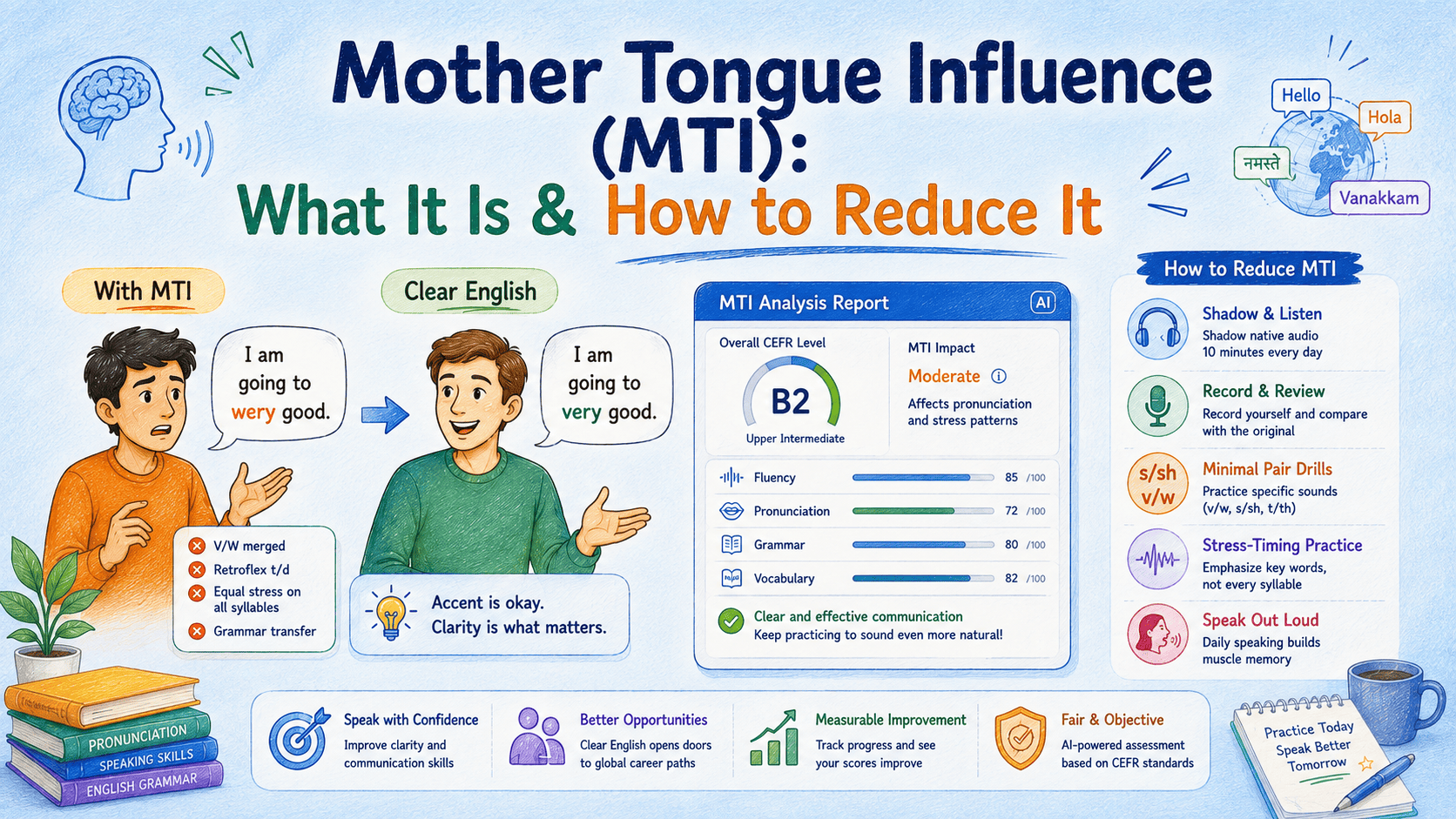
What changed the game? Natural language processing (NLP) has finally gotten good enough over the years to handle the messy reality of how humans actually converse. Regional accents, filler words, speech tangents, candidates who ramble or go quiet to think - modern AI recruitment software are designed to process all of it without making candidates feel like they're talking to a glorified robot.
The real magic happens in the scoring post after each interview. The AI Agent yields a timestamped transcript, a percentage score based on NLP and sentiment analysis, and a short reasoning summary explaining the score. No more subjective opinions like "I liked their vibe" or "something felt off" that will cloud judgments and affect candidate career paths.
The Numbers Don't Lie (And They're Wild)
Now, let’s come to the numbers, and honestly speaking, they are serendipitous.
Time savings: When using phone screening, companies reported up to 70 percent reduction in the time spent on manual screening. What this actually means is that a team of 10 recruiters can save nearly 3-5 recruiter-days per week by incorporating Agentic AI. The key word here is days!
Speed-to-hire: As a result of AI Phone Screening, hiring time compresses by a commendable 25 per cent or thereabouts. This matters because top talent accepts offers significantly faster when the screening process is streamlined - around 10 days faster. This matters in a restricted talent market, where those many days can make a significant difference.
Cost per hire: AI-based recruitment can shrink costs by up to 30% per hire on an average. That too when you consider that a company can spend between $4000 to a whopping $28000 per hire! This is of course, role-dependent, however, reconcile those numbers and you’ll find that you are saving more than just pocket change!
Volume & upscaling: Recently a Fortune 500 staffing firm reported a 40 percent increase in applicants after they introduced AI Phone Screening. This isn't to be looked at as a 40 percent increase in workload though, but a 40 percent increase in the number of candidates they could push to the next stages of the hiring funnel. One Fortune 500 staffing firm reported a 40 per cent increase in applicants after introducing AI phone screening.
The market clearly reads into this global shift in hiring too. The global AI recruitment market size was valued at $617.56 million in 2024, and was expected to grow to around $1,125.84 million by 2033. This is a steady annual growth rate of around 7.2% which would only be possible with innovative AI hiring platforms. The numbers don’t lie, and the fast pace of tech adoption helps keep them that way.
Why Traditional Phone Screens Fall Apart at Scale
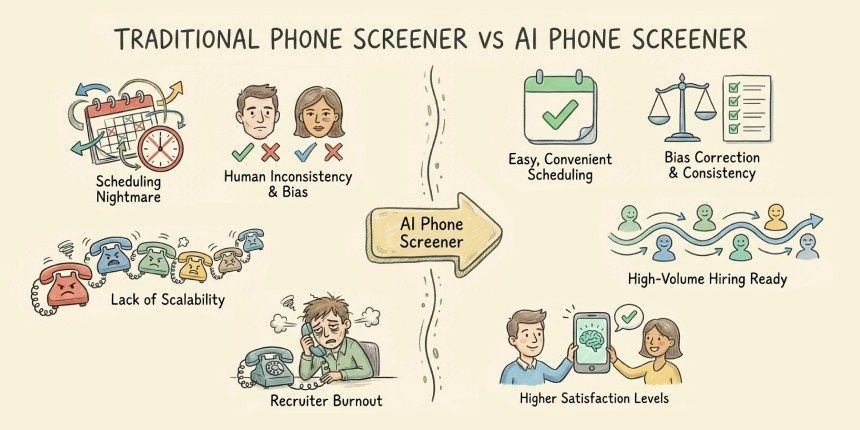
Traditional phone screening has three fundamental problems that don't go away with better process or more headcount -
The scheduling nightmare: Americans only answer about half the phone calls they receive, and email response rates sit at an abysmal 20-30 per cent. So before you even get to interview someone, you're playing guessing games and probability wars with the pipeline. Meanwhile, 42 per cent of recruiting teams' time is spent scheduling and rescheduling alone.
Human variability: Even the best recruiters have bad days, post a streak of good days. They get tired after the nth identical conversation. They remember the confident candidate better than the qualified-but-nervous one. They ask slightly different follow-up questions depending on their mood and subjective opinions. 83 per cent of talent say a negative experience during the interview can change their mind about a role or company they once liked. This kind of inconsistency breeds negative reviews, and candidate experience plummets.
The high-volume impossibility: When recruiters spend over 100 hours to make a single hire, scaling becomes mathematically as well as humanly impossible. You can't 10x your hiring without 10x-ing your recruiting team. This automatically means quality hires become a luxury only big companies can afford.
Enter AI phone screening, which doesn't get tired, doesn't get mood swings, and can handle 1,000 candidates aplomb with ease!