TL;DR
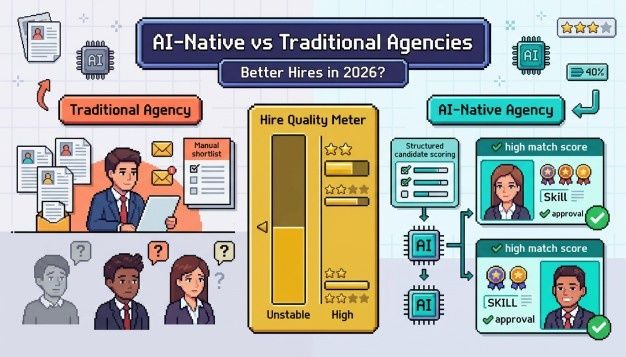
Traditional agencies take 44+ days to fill one role. They charge 15% to 30% of the candidate's salary. This system is breaking down. AI-centric firms halve the time frame. But relying only on AI also won’t work. The true winners are those who follow a hybrid model. The AI works to filter out candidates and carry out other tasks, such as assessment and interviewing. Then there’s the human account manager whose job is to ensure that the candidate fits into the organizational culture and quality standards. Hyring is based on this very premise.
What Is an AI-Native Recruitment Agency?
The traditional agency recruited intelligent recruiters. Equipped them with phones, equipped them with LinkedIn, and asked them to go out there and find people.
An AI-first agency began with technology. The AI is not an add-on; it is driving the entire machine.
Most traditional agencies today continue to work as they did a decade ago. The recruitment agencies will screen CVs individually. They will schedule phone calls, schedule interviews, and rely on gut feeling, which, to be fair, served them well for years.
However, times changed.
The talent pool is everywhere. Time is precious. Average time to hire with a traditional agency? Approximately 44 days. Hyring has shortened that period down to days.
This is no small feat. This is another ball game altogether.
Speed: Why 44 Days Is Killing Your Hiring
A traditional recruitment agency receives a job description. A recruitment expert begins to read CVs. One after another. After that, recruiters make calls to the candidates who might be potentially right for this role. Then comes scheduling interviews, receiving feedback, and creating a shortlist of candidates.
Every process waits until the previous one finishes. This is how processes can be stretched to months.
AI-based recruitment agencies do everything all at once, in parallel. CV screening, candidate assessment, and interviews. A position that normally took six weeks can now be filled in two weeks.
This is not just about comfort but actual money. You lose three weeks of work on every vacant position, and your team is stretched thin because of that. Your project suffers, and somewhere, your competitor hired the very candidate you could not even get to have a second interview with.
Screening, Assessments, and AI Interviews
There is no other place where there would be such an obvious mismatch between traditional and AI-based agencies than in this area.
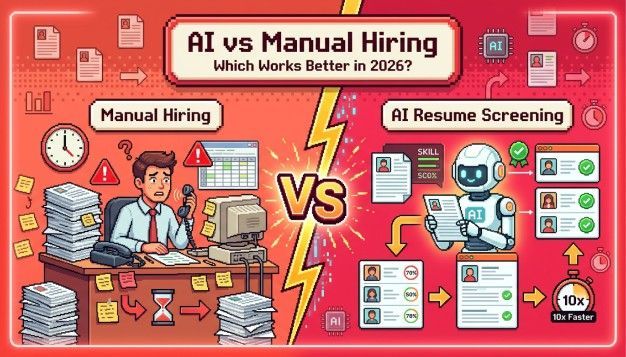
Here’s how traditional screening works
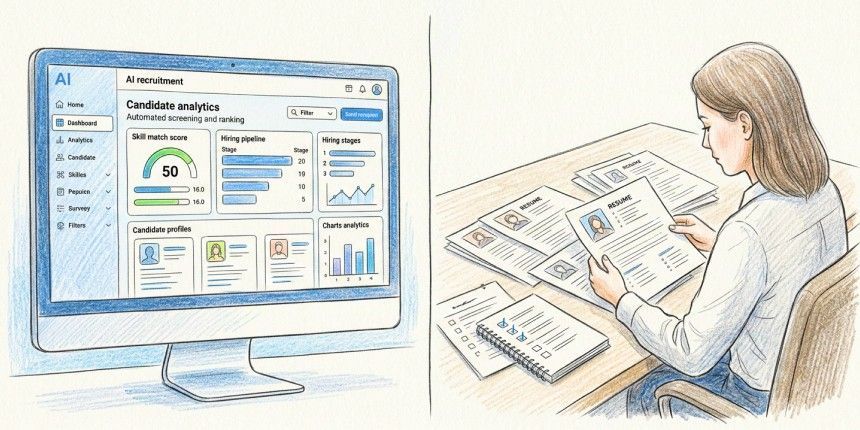
A recruiter opens a resume, skims it. Maybe spends 30 seconds on it, looks for a few keywords, and makes a call and has a quick chat. Decides yes or no and moves on.
It works, sort of. But it is slow. It can be inconsistent. It depends entirely on who happens to be reading that morning.
How does AI-native screening work?
It is an entirely different ballgame. The AI resume screener reads every sentence from the resumes. This system does not scan resumes; rather, it rates individuals by their actual expertise level and relevance to the position they apply for. No tricks of stuffing keywords or fancy presentation techniques are applicable. One hundred resumes have been received? Sorted before you begin to look at them!
Assessments baked right into the flow
Traditional agencies rarely test skills before the interview. AI-native platforms do. Candidates complete tasks that mirror the actual job. Developers get coding challenges. Strategists get one-way and two-way AI video interviews to assess respective skills. These are not cookie-cutter aptitude tests. They are built for the role you are hiring for.
AI video and phone interviews
In this case, we have a true revolution. The AI recruiting tool created by Hyring actually talks to candidates. Anytime, in any language you want. This AI doesn’t just capture their words. It analyses their emotions. It measures their domain knowledge. It detects clarity and stress tolerance.
The HR person can do about six interviews in a day. The AI can do dozens, no matter what time of day it is.
Anti-cheat for technical roles
Remote assessments have a trust problem. How do you know the person on screen is the one solving the problem? Hyring built advanced proctoring and cheat detection into the platform. If someone lands at the top of your shortlist, you can trust they earned it.
Stack all of this together, and you get a screening process that is faster, deeper, and way more consistent. The AI does not rush through the last batch of resumes on a Friday afternoon. It does not have favourites. It just does the work.
Cost: The Numbers Are Hard to Ignore
Traditional agency fees have barely changed in 20 years. Most charge 15% to 30% of a candidate's first-year salary. One hire at $100,000 costs you $20,000 or more in fees alone. Five hires? You are into six figures.
AI-native platforms run on different economies and subscription models. Pick your flavour. Either way, the gap is massive. Those savings come from cutting out manual hours and removing middleman fees. Automating the steps that used to eat up the most time and budget.
For a startup making its first ten hires, this changes what is possible. For a large company filling 50 roles a quarter, it changes the bottom line.
Bias: Gut Feeling Has a Blind Spot
Recruiters are human. Humans may carry bias. The most common one is affinity bias. A recruiter leans toward someone from a familiar school or a company they respect. None of it is deliberate. All of it shrinks the talent pool.
AI-native agencies deal with this differently. They use a skills-first model. The AI does not care where you went to school ten years ago. It looks at what you can do today. Your coding ability, how clearly you explain your thinking and how you solve problems under pressure.
The data backs it up. 2026 talent reports show companies using AI-driven skills assessments saw a 16% jump in workforce diversity. Not from quotas, but from removing the filters that were quietly screening people out.
Hyring's tools are built on this principle. Candidates get ranked on skill depth and role fit, nothing else.
Full Automation Is Not the Answer Either
Handing everything to the machines is not the move. A lot of AI hiring tools dump a thousand scored profiles on your desk and call it a day. That is not helpful. That is just a different kind of mess. It cannot feel whether a candidate's energy fits the role. Some things still need a person.
The Hybrid Model: Where It All Comes Together
The best AI-native agencies figured this out early. You need both. Hyring runs with a designated Account Manager model. Here is how it actually works.
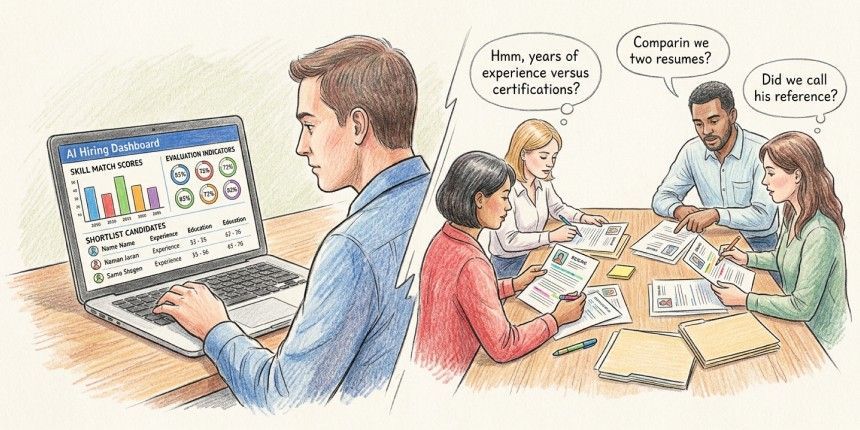
You post a role. The AI gets to work. It screens resumes, runs assessments and conducts interviews. All of it, around the clock. Your team does not lift a finger. Then the human shows up.
Your account manager goes through the shortlist. They already know your company. They understand your team. They have talked with you about what a good hire actually looks like in your world.
They cut the list down to three to five people. Not a hundred, not fifty. Three to five candidates who are skilled, available, interested, and a real cultural match.
You get machine speed and human judgment. Working together. That is the model that keeps winning.
So What Should You Actually Do?
If your hiring still runs through a traditional agency, you are likely paying more than you need to. Waiting longer than you should. Also, getting a less rigorous screening process than what exists today.
That does not mean recruiters are finished. It means their job is evolving. The best ones in 2026 are not buried in resume stacks. They are using AI insights to make better calls, faster.
Hiring is moving toward augmented agencies. AI does the heavy lifting. Humans think better with the given data. Together, they get results neither could pull off alone.
Hyring was built for exactly this. Not to replace recruiters, but to make them sharper. To free them up for the work that actually needs a human brain.
If you want to grow your team without the massive agency fees or the six-week wait, an AI-native partner is worth a serious look.
Frequently Asked Questions
1. Will AI-native recruitment fully replace human recruiters?
No. AI picks up the repetitive work. Screening, scheduling and first-round interviews. Humans focus on strategy, negotiation, and relationships. At Hyring, account managers use AI data to make sharper calls. They do not get replaced. They get upgraded.
2. How does Hyring keep bias out of AI screening?
The AI evaluates skills, response quality, and technical ability. It ignores names, ages, and locations. This skills-first method produces fairer results than traditional resume reviews. Unconscious bias does not get a seat at the table.
3. Does AI recruitment work for executive-level roles?
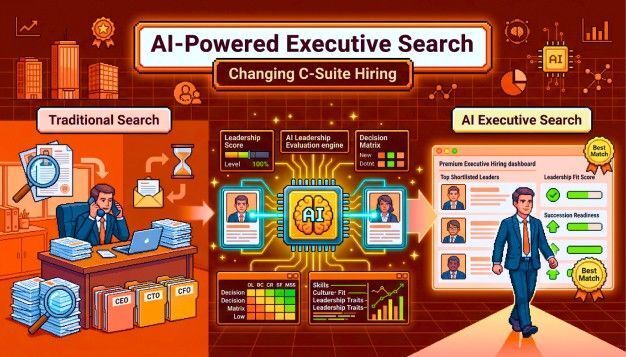
Yes. The AI maps the talent landscape fast and surfaces candidates that a traditional recruiter might never find. The account manager then handles the latter part of it.
4. How quickly can an AI-native agency fill a role compared to a traditional one?
Traditional agencies average 40 to 50 days per hire. AI-native platforms like Hyring close roles in one-fourth number of days. The difference comes from running screening, assessments, and interviews in parallel instead of one step at a time. Less waiting. Fewer bottlenecks. Faster offers.
Yes. Hyring plugs into whatever Applicant Tracking System you already run. No need to rip anything out. It adds a layer of AI intelligence on top of your current setup. Your team keeps their workflow. They just get better data and faster results.