
TL;DR
The most preventable yet commonly expensive mistake that a business makes is bad hiring. Unfortunately, this is also one of the most unacknowledged mistakes that happens in the early stages of an employee’s life cycle within the company.
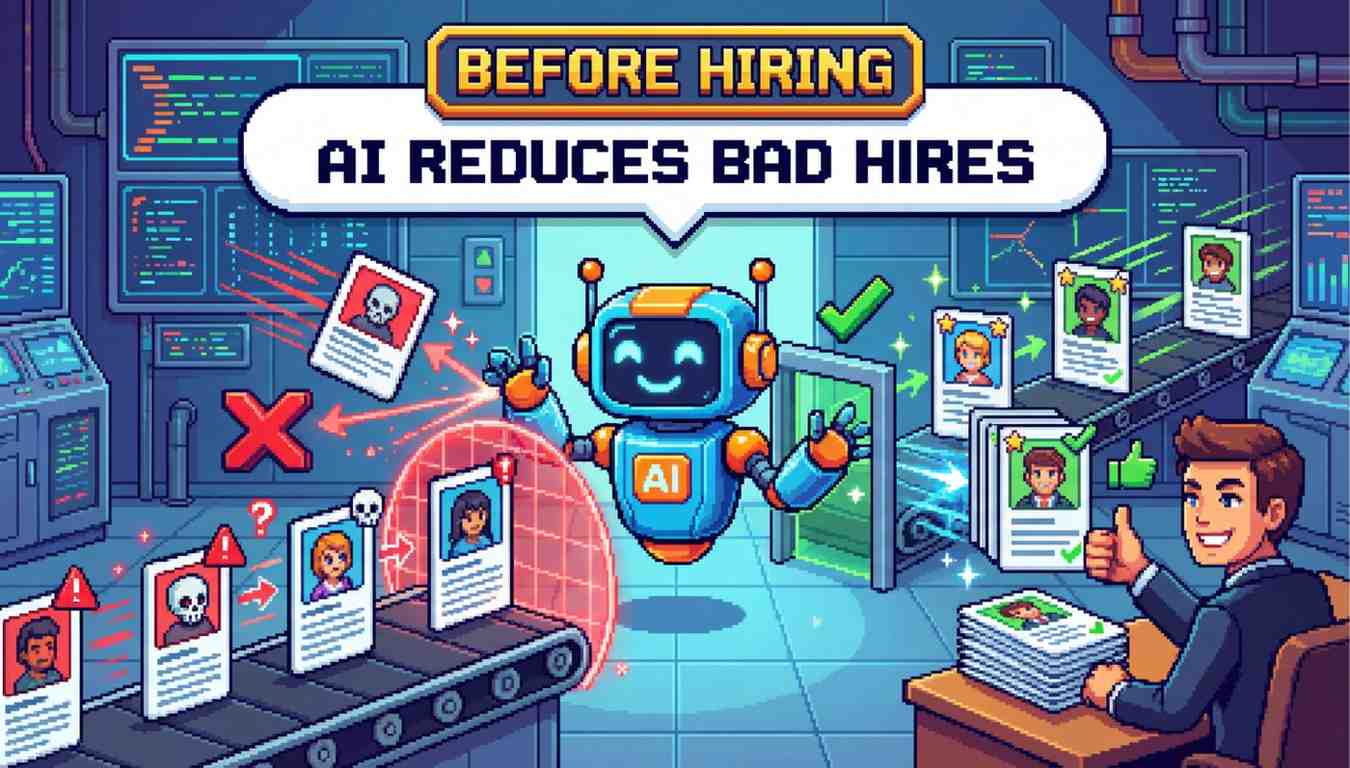
Bad hiring can cost companies at least 30% of the employee's salary. AI in recruiting acts as the ultimate preventative tool by automatically flagging dishonesty, poor skill matches, and weak cultural fit, early on.
Hyring and other AI recruiting platforms move beyond legacy screening to more predictive hiring, ensuring only high-worth candidates advance to the next stage, protecting your bottom line and dramatically boosting hire quality.
How Mistakes Can Be Costly: The Bad Hire Problem
An underperforming employee alone does not count as a bad hire, but it is also the added burden of them being a financial and cultural liability that disrupts the entire workflow and morale of office workers. This can often lead to a drain on management resources that also results in these risks magnifying when the hiring is high-volume. AI in recruiting hopes to mitigate the same considering some of the challenges faced below:
The True Financial Cost
The stakes are ginormous. According to estimates from the U.S. Department of Labor, the estimated cost of a single bad hire can be at least 30% of that employee's first-year earnings. That single mistake can be the difference between a company reaching financial viability too if it were a high-level position.
Even for mid-level positions, it can easily cost tens of thousands of dollars in wasted recruitment, training, and lost productivity. It is quite concerning that over 95% of companies admit to recruiting the wrong people each year, which represents a serious systemic flaw in traditional talent acquisition.
The Integrity Gap
One study found that 64.2% of Americans have admitted to lying, which is alarmingly high, considering the moral considerations of the job market and the ethics involved, would assume that the probability of this happening and being acceptable is low to nil.
When an application is submitted, traditionally, the ennui of screening relies more on the candidates’ honesty, which is a tad frivolous and problematic if and when the above study were to be taken at face value. AI in recruiting is the only reliable way to combat this problem at scale.
The Gatekeeper: How the AI Resume Screener Fights Dishonesty
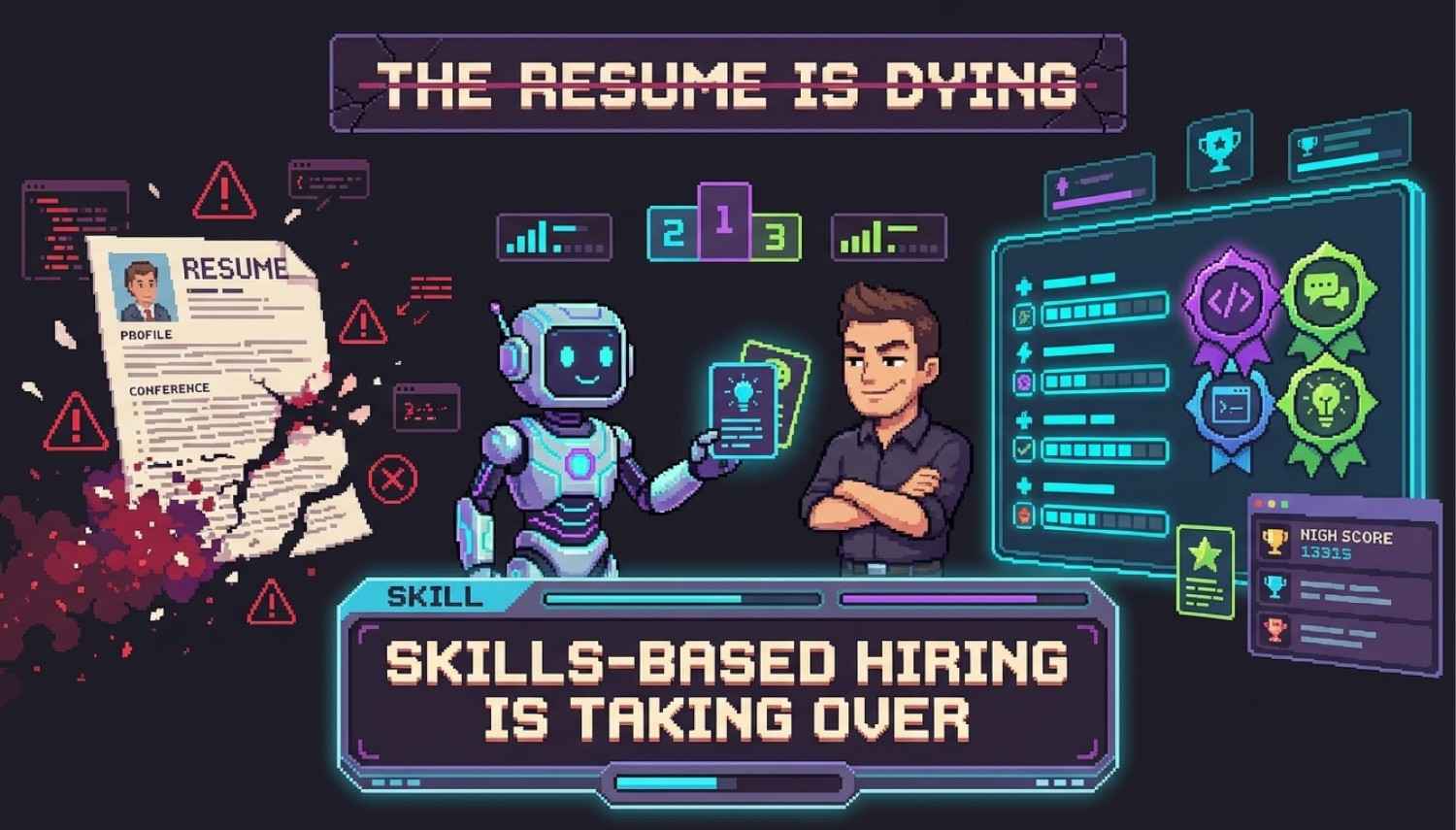
The simple, yet critical first step that companies can take to prevent bad hires is weeding out candidates whose claims do not align with the job requirements or their verified background. The AI resume screener automates this entirely.
Unlike simple Applicant Tracking Systems (ATS) that only organize data into recognizable clusters, a true AI-powered recruitment platform like Hyring's AI Recruiting Software applies advanced machine learning to every application that comes in:
- Flagging Inconsistencies: Human recruiters need to adhere to the demands of their work, and hence they tend to overlook padding in resumes that AI systems can analyze, scrutinize, and eliminate immediately. The anomalies are rarely skipped.
- Objective Scoring: There's a certain degree of objectivity that comes with the system when it compares candidate documentation to the ideal profile that the company is looking to match against. The scores are delivered consistently, and the human error factor, diminished, removing recruiter fatigue and distractions from the equation.
- Eliminating Bias: By reducing hiring bias and ensuring no candidate is incorrectly overlooked (or advanced) due to subjective human factors remains important. Hence, AI acts as the filter of neutrality, by focusing solely on data relevance and job match criteria.
Preventing Poor Fit with AI Video Interviewing
A candidate can have a perfect resume and still be a poor hire. This is due to soft skill deficits or a lack of cultural fit within the company itself. This is the second critical point of failure that AI in recruiting is designed to prevent.
When we go one step further, we can employ the AI video interview software that takes over where the screener left off.
AI Video Interviewers prevent a bad hire by:
- Structured Assessment: Every candidate undergoes the same structured interview experience. The AI asks pre-defined questions and uses consistent follow-ups. This eliminates inconsistent questioning that leads to poor comparative data.
- Behavioral & Communication Analysis: Tone, clarity, communication patterns, and confidence markers are all evaluated by the AI system. This goes beyond transcribing answers to provide actual, usable, objective data on critical skills that are impossible to extract from a paper resume.
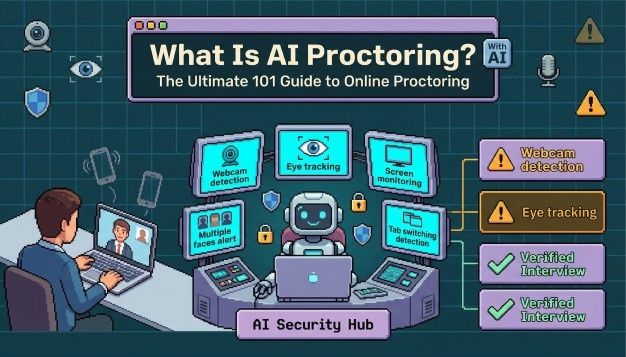
- Integrity Checks: Proctoring features to detect cheating have become imperative. Whether it be tab-switching or the presence of multiple people in the room, or even multiple devices out of the camera’s view– the skills demonstrated in an interview are ensured to be genuine.
The Iron Curtain: Predictive Hiring and the ROI of Prevention
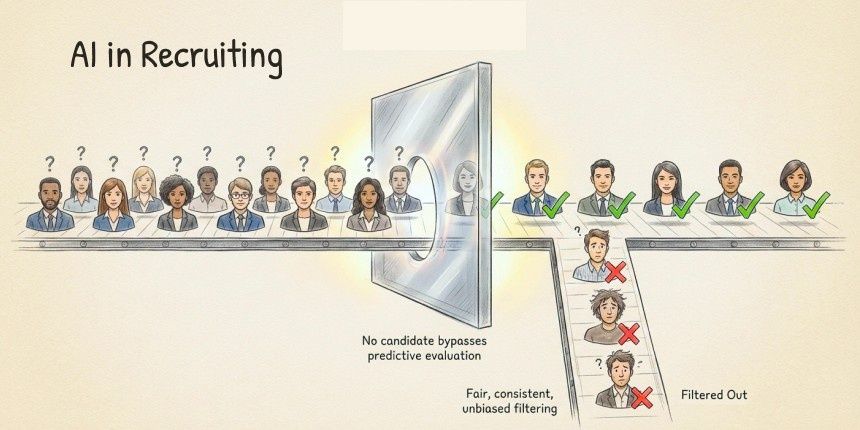
The most interesting and upcoming innovation in the field of AI in recruiting is the iron curtain of defense that is predictive hiring. It is the ability to forecast future job success in a company. And yes, this is tech level wizardry.
After gathering structured and objective data from the AI-driven resume screening and video interviewing stages, the system can build a predictive model. The model uses deep learning and neural networks to identify characteristics and scores that align with your company’s existing high-performing and high-retention employees.
Essentially, you will be replacing guesswork with a statistically validated forecast of which candidate is the most probable keeper for your company in the hiring stage itself. This gives you a sort of indicator on how costs to the company can be minimised, and how recruiters can discover new future top performers who are qualified. This, in turn, ensures the highest quality of hire and automatically delivers a return on the investment made.
This strategic shift transforms the recruiter’s job from merely screening out the unqualified to confidently selecting the most likely hires that will positively impact the company’s future.
Key Takeaways
Stopping the Bleed: Preventing bad hires, automatically protects company profit. Hence, the primary role of AI is to aid in achieving the same.
Integrity Enforcement: AI Resume Screeners flag inconsistencies and combat the widespread problem of resume dishonesty.
Fit Assessment: AI Video Interviewers further provide objective data on cognitive and emotional insights, which help in matching the fit to the recruiting organization.
Data-Driven Decisions: Predictive hiring, with the help of LLMs and deep learning, uses structured data to replace instinct. This gives recruiters reasonable confidence to hire for long-term success in contravention to the fact that 95 per cent admit to making bad hires annually- a statistical defense, if you must.
FAQs
1. How does AI prevent a bad hire due to "cultural mismatch"?
AI helps standardize assessment protocols while allowing recruiters to compare candidates against definitive profile markers and job fit requirements. Furthermore, cultural indicators beyond subjective first impressions (and objective AI insights) can also be surmised.
2. Can the AI interview software be fooled by a candidate?
While no system is “fool-proof”, AI is designed to look past superficiality. It focuses on the substance of answers, consistency of communication, and objective scoring. It makes it significantly harder for an unqualified or low-integrity candidate to advance compared to other traditional forms of interviewing.
3. Does using AI in recruitment slow down the hiring process?
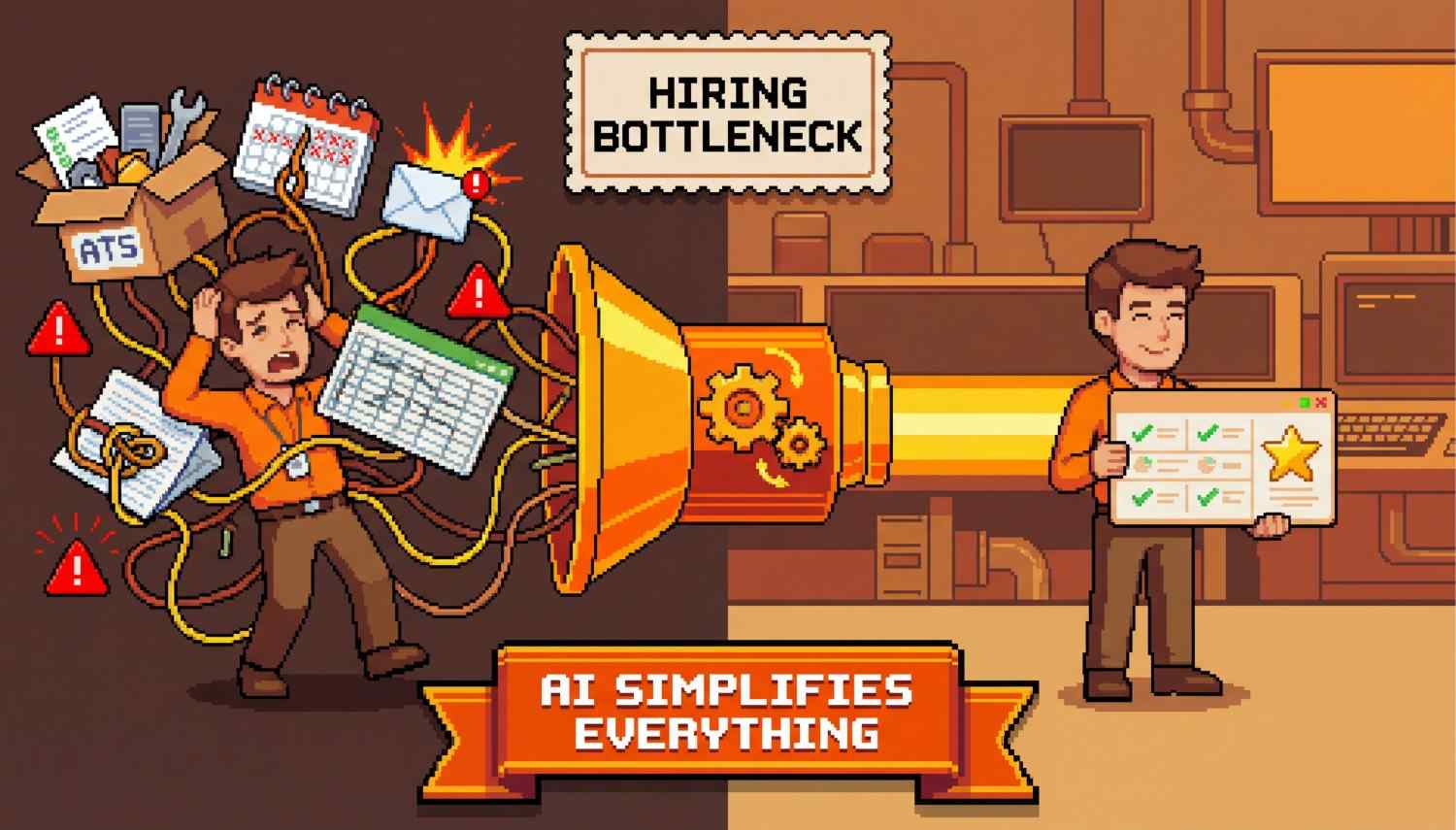
Au contraire, AI in recruiting drastically speeds up the process. The system is available and can process candidates 24x7 in a few minutes - not days nor weeks!
This allows human recruiters to focus their time only on the final, most impactful hiring conversations that will reduce cost per hire and bad hiring ultimately.
4. What is predictive hiring?
Predictive hiring uses large language models and neural networks to analyse structured data, designed to replace instinct. Employing this, recruiters can gain reasonable confidence to hire for long-term success based on their learnings.