You know that moment in a budget review when someone pulls up the full HR software list, and the room just shifts? Nobody says anything, but it's more of a collective ‘hmm’ in the room. The ATS, the engagement survey tool, the LMS, the performance platform, the onboarding module: all sitting there, all renewing every year. And then someone asks the question everyone's been quietly avoiding: 'Which of these are we actually getting something out of?'
Crickets.
It's not a unique situation. It plays out constantly, across companies of all sizes. The spending is real. The returns? Genuinely hard to account for in a lot of cases.
A $40 Billion Market With a Credibility Gap
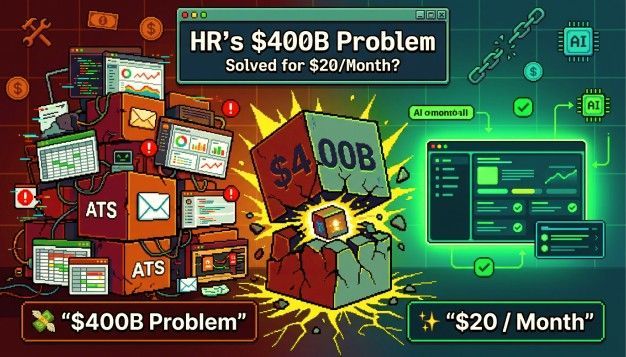
The HR tech market made over $40 billion in 2025 and is expected to exceed $50 billion soon. When you add payroll and staffing costs, the total is in the hundreds of billions each year. The issue isn’t that the products don’t work; it’s something else.
The Utilization Problem Nobody Wants to Talk About
One important fact to consider is that companies often use only 20% of the features in their HR software. This means they pay for a lot of unused capabilities. Many HR systems offer many features, but once companies sign up, they get charged automatically, even if they don’t use the system.
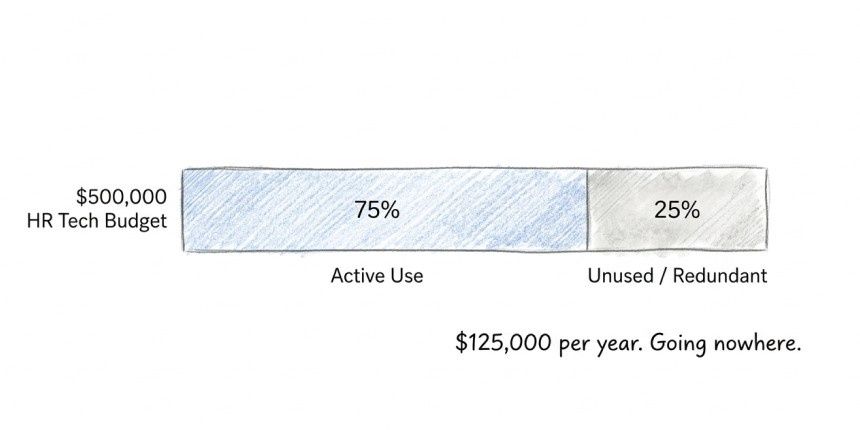
A mid-size company with 1,500-2,000 employees spends about $500,000 a year on HR systems. If they only use 75% of that, they waste $125,000 each year.
Wait, Didn't Tech Solve This Already?
The idea behind spending a lot on software is to reduce routine work. Studies show that many HR tasks can be automated, like scheduling and onboarding. However, that does not mean that AI alone is enough for the initial filtration process. Someone still needs to set up the system, monitor it, and process the filtered candidates. This is why having the right software plays a vital part in efficient recruitment in a company.
People Feel Underpaid Even When They're Not. Here's Why.
This genuinely surprises many people. Employees often feel underpaid, even if they earn enough. A report from PayScale shows many workers think they are underpaid because they don’t understand how their pay is decided. Companies usually respond by buying expensive software instead of talking to employees about their salaries. Workers need clear guides about how pay works in their company.
A good conversation between a supervisor and an employee can help, and no software can replace that.
What's Genuinely Worth the Investment
Some HR technology is essential and cannot be skipped. Payroll systems must stay because they deal with many rules. Benefits administration also needs special tools due to regulations. High-volume hiring tools are important too, especially those that use assessments. Other tools, like survey tools and onboarding modules, are also valuable but often stay because it’s hard to change them.
Something Shifted, and Most Vendors Haven't Caught Up Yet
AI recruiting tools have changed, but many vendors don’t realize it. In the past, getting custom workflows or reports meant waiting a long time. Now, HR managers can often get what they need quickly if they explain their needs well. Tasks like creating offer letters or interview score sheets can be done faster than before.
A study by Deloitte shows that companies want HR leaders to focus more on creating processes rather than just doing admin tasks.
A Simple Exercise Before Your Next Renewal
Before your next software renewal, check all HR tools you pay for that aren’t part of your main systems. Ask three questions: What problem does this solve? Who uses it? When did we last check if it works well?
Go through the list, and you’ll find something that doesn’t make sense. This isn’t about bad choices when buying, but about how the software industry has always said, ‘if you can’t make it yourself, you have to buy it’. Now is the time to question that idea because it’s less true than ever.
The Bottom Line
Solutions that really help with HR, like hiring, payroll, and benefits management, are worth the money. They provide value, and you shouldn’t think about getting rid of them. But does everything else on the bill offer the same value? Many businesses can find savings by looking closely at their extra tech tools. Start by checking the oldest item that renews each year without review. What does it really do?
Frequently Asked Questions
What percentage of HR tech budgets are typically wasted?
Most audits and surveys say it’s around 25-40 percent: money spent on tools that are not needed, poorly set up, or rarely used.
It is advisable to use tools for HR infrastructure, HRIS, payroll, benefits, and compliance. Question extra survey tools, standalone analytics, onboarding tools that aren’t used much, and workflow systems for problems that no longer exist.
Why do employees feel underpaid even when compensation is competitive?
According to PayScale, it’s about transparency, not the pay itself. If employees don’t understand how their pay is decided, they will assume the worst. Clear communication is key.
What does administrative overload really cost HR teams?
A McKinsey report shows that HR has many repetitive tasks. This leads to delays in hiring, poor onboarding, and not enough time for keeping employees.
The WEF's Future of Jobs Report 2025 shows that important AI skills like communication and problem-solving are common in HR. So, making a useful internal tool is easier than many teams think.
How often should you audit your HR tech stack?
At least once a year and before any big renewal. The check will see if the software works as it should, if the right people are using it, and if there’s a simpler, cheaper way to do the same thing. Very few companies do this unless they have to cut costs.