
An overview
The hiring game has changed completely. The days of candidates running across companies for an interview session are fading fast. Remote assessments now drive much of the hiring process. With the emerging remote interview sessions, maintaining a foolproof proctoring system is crucial to seal any chances for cheating.
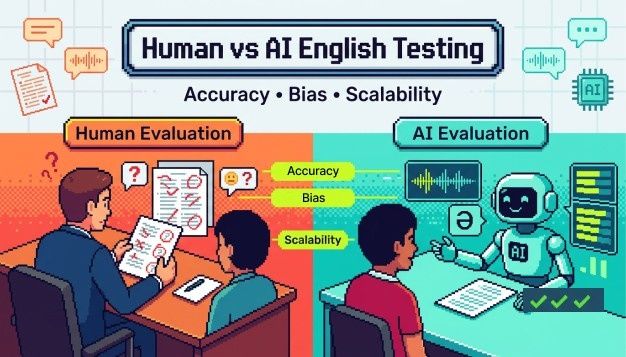
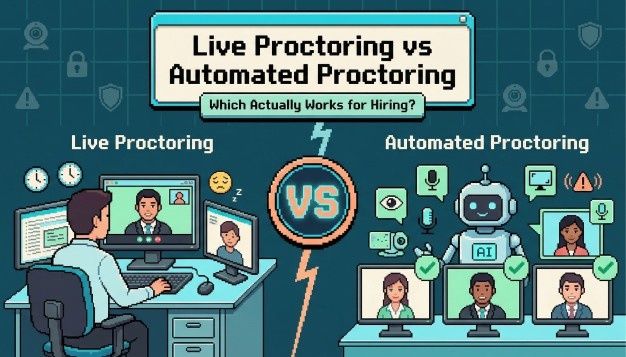
That’s where proctoring steps in. But not all proctoring is built the same. Some companies still rely on a human sitting behind a screen, watching every candidate in real time. Others have moved toward AI-driven systems that monitor assessments automatically. Both approaches aim to protect assessment integrity, yet they work in fundamentally different ways.
Let’s break down what each method brings to the table, where they fall short, and why the industry is leaning heavily toward one over the other.
What Is Live Proctoring?
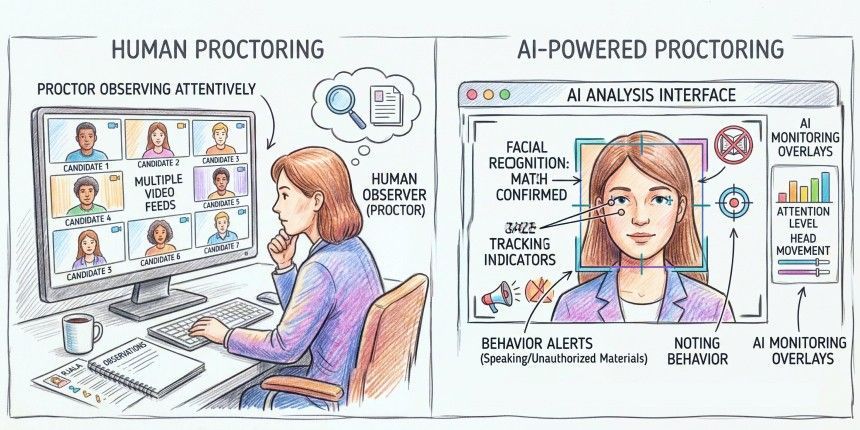
A human proctor joins the assessment session, typically through a webcam feed, and watches the candidate throughout the test. The proctor can flag suspicious activity, pause the exam, or intervene directly if something seems off.
This model has been around for years. Universities and certification bodies have used it extensively, and some hiring platforms still offer this as a feature.
Where Live Proctoring Works Well
A level of judgment that human proctors bring, the software may fall short in capturing the nuances. A live proctor can read context. If a candidate glances away briefly because a door slammed, a human understands that. They can also communicate with the candidate in real time, resolving confusion about test instructions without delay.
For small-batch, high-stakes assessments and final-round evaluations for senior roles, live proctoring can feel thorough and personal.
Where It Breaks Down
Scale is the biggest problem. If you’re hiring for twenty positions and screening two hundred candidates, you now need proctors for every single session. That means scheduling, rising costs, and time zone complications for global hiring.
Human burnout is another real concern. A proctor watching their eighth consecutive session may not catch everything they noticed in their first. Attention may drift, which is much expected with the monotonous nature of the proctoring task, over and over. Consistency across sessions becomes nearly impossible when different proctors bring different thresholds for what counts as suspicious.
For companies scaling their tech hiring pipeline, this model gets expensive fast, with the number of hours spent and the number of candidates to be interviewed.
What Is Automated Proctoring?
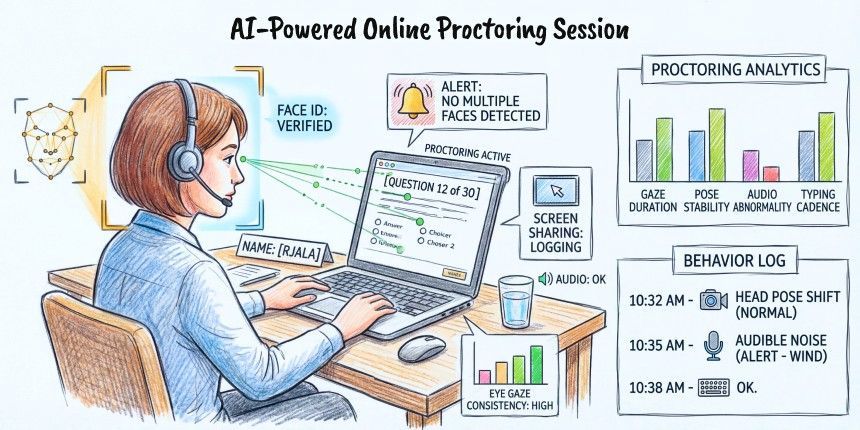
Automated proctoring uses AI and software-based monitoring to oversee assessments without a human present during the session. The system typically tracks browser activity, flags tab switches, detects unusual behavior patterns, and records sessions for review if needed.
More advanced automated hiring platforms like Hyring go further. They can monitor coding environments in real time, detect copy-paste activity from external sources, and flag patterns that suggest a candidate’s activities.
Where Automated Proctoring Excels
The advantages are hard to ignore once you’re hiring at any meaningful volume.
Scalability stands out first. Automated proctoring handles ten candidates the same way it handles ten thousand. There’s no scheduling, no staffing, no per-session cost escalation. The system runs consistently regardless of volume. The recruiters can spend their time reviewing the reports generated by AI.
Consistency is the second major win. Every candidate faces the same monitoring criteria. There’s no variance based on which proctor happened to be assigned. The rules are uniform, and the flags are standardized.
Cost efficiency follows naturally. Without the overhead of human proctors, the per-assessment cost drops significantly. For companies running continuous hiring pipelines, this translates to meaningful savings over time.
Speed matters too. Automated systems generate reports and flags immediately. Hiring teams don’t wait for a proctor’s manual observation, and the data is available as soon as the assessment wraps up.
Where It Has Limitations
Early versions of these systems earned criticism for high false-positive rates, flagging candidates for looking away from the screen or for background noise that had nothing to do with cheating. But hiring platforms like Hyring, with their AI video interview sessions, offer time-stamped data that can convey the exact moment of suspicious activity.
That said, the technology is improving rapidly. Modern AI proctoring systems are far more accurate than their predecessors, and the gap between automated and human judgment continues to narrow with every iteration.
How AI Proctoring Is Evolving
The current generation of AI proctoring tools has moved well beyond simple screen recording. Machine learning models now analyze behavioral patterns across thousands of sessions, getting better at distinguishing genuine red flags from harmless actions.
Some platforms have integrated proctoring directly into their assessment environments rather than layering it on top. This approach creates a smoother candidate experience while still maintaining strong monitoring. When proctoring is built into the fabric of an AI coding interviewer or an AI video interviewer, it feels less like surveillance and more like a natural part of the process.
The broader trend is clear: companies want assessment integrity without friction. They want systems that protect the process without making candidates feel like they’re under a constant watch.
How Hyring Approaches Automated Proctoring
Hyring has built automated proctoring directly into its assessment platform rather than treating it as an add-on. When candidates take assessments through Hyring, whether it’s a coding challenge through the AI coding interviewer or a behavioral round via the AI video interviewer, the proctoring runs seamlessly in the background.
The system monitors for tab switches, usage of external devices, and other activity that might suggest a candidate isn’t completing the assessment independently. Everything is logged and made available to hiring teams for review, so decisions are backed by data rather than guesswork.
What Hyring doesn’t do is equally important. The platform focuses on assessment behavior monitoring rather than intrusive surveillance. The goal is protecting the integrity of the evaluation while keeping the candidate experience clean and respectful.
For hiring teams running high-volume technical assessments, this kind of built-in, automated approach removes the operational burden of organizing live proctoring while maintaining the reliability that the process demands.
Conclusion
Live proctoring served its purpose when remote assessments were the exception. Now that they are the norm, the model struggles to keep up with the pace and scale of modern tech hiring. Automated proctoring offers consistency, cost savings, and scalability. The AI behind it gets sharper every year.
The question for hiring teams is not whether to adopt automated proctoring anymore. It’s about choosing a platform that is built thoughtfully, works reliably, and respects both the company’s need for integrity and the candidate’s experience.
FAQs
1. Is automated proctoring as reliable as live proctoring?
Yes, modern automated proctoring tools are very reliable for detecting assessment irregularities. Although live proctoring involves real-time human judgment, automated tools ensure consistent monitoring of every session, without the fatigue of human proctors.
2. How does automated proctoring work during a coding assessment?
Automated proctoring monitors the candidate’s activities within the coding environment, including tab changes, use of external devices/extensions, etc. Some tools, such as Hyring, incorporate this into their AI coding interviewer, allowing for smooth, uninterrupted monitoring of the candidate’s activities.
3. Does automated proctoring create a negative experience for candidates?
Automated proctoring is a completely behind-the-scenes process, and it is a positive experience for the candidate because they are not made to feel conscious of the fact that they are being proctored.
4. Can automated proctoring handle video interviews, too?
Yes, if the automated proctoring service has a feature that allows for AI video interviewers, then there is a feature that allows for proctoring in a video interview too, so that there is consistency in the evaluation process for both coding and video interviews.
5. Why are companies moving away from live proctoring for hiring?
Companies are shifting away from live proctoring because it is expensive, and automated proctoring is a more scalable solution, providing consistency in the evaluation process, too.