
Overview
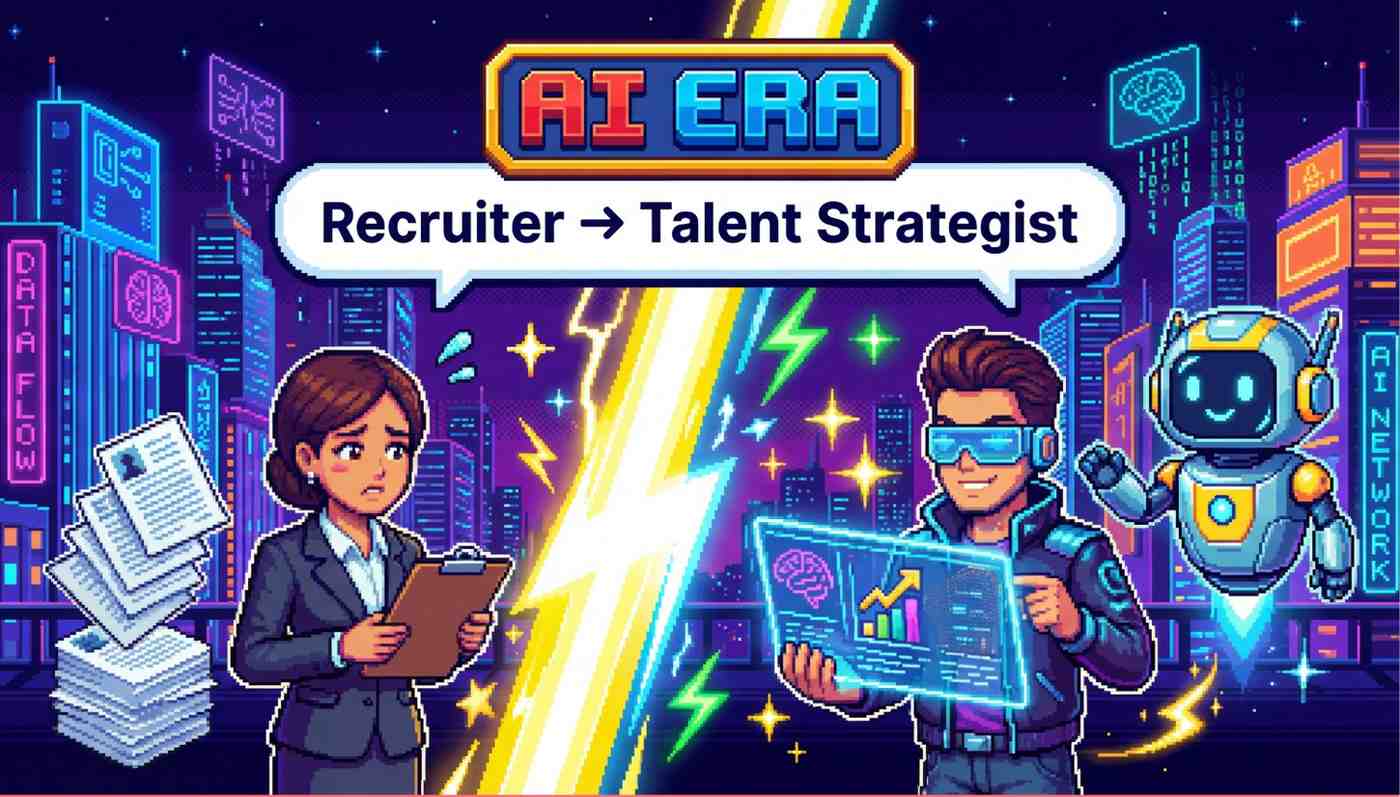
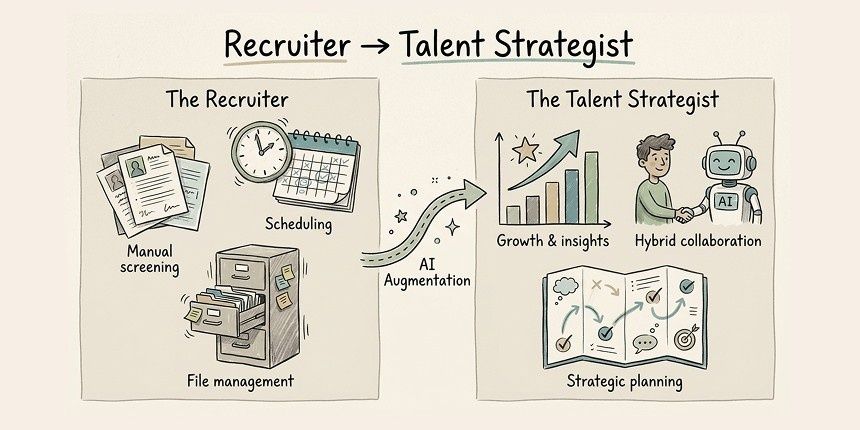
AI is not replacing recruiters; it's actually upgrading them to the role of “Talent Strategists”, who possess critical AI recruiting skills that are heralding a generational shift in the industry. The foundational shift involves moving away from manual tasks like resume-screening, scheduling, and prolific interviews toward strategic functions.
- The essential talent strategist skills required in this new era involve mastering talent intelligence and candidate analytics, familiarizing oneself with patterns in data, designing superior candidate interactions, serving as a trusted business partner, and engaging in authentic brand strategising.
- Recruiters must embrace AI tools to free up time to focus on human connection and long-term organizational strategy.
The Recruiting Role Is Being Rewritten
The rise of artificial intelligence has sparked many a conversation about job displacement, but in Talent Acquisition (TA), the story is one of transformation, not termination. AI isn’t replacing recruiters - it’s upgrading their role. For years, the core of recruiting has been confined to just agility and quantity, often bogging down professionals with tedious and repetitive administrative tasks. Now, AI is eliminating that burden, forcing a natural, necessary evolution of the recruiter into a true, multi-pronged Talent Strategist.
This new paradigm shift demands a diverse, different skillset. The value of an HR professional is no longer measured against the number of candidates they review, but by the quality of the strategic insight that they provide to the business with their hiring.
Recruiters must acquire and master new AI recruiting skills that complement technological capabilities to continue thriving and cementing their role as indispensable partners in talent strategy overall.
From Recruiters to Talent Strategists
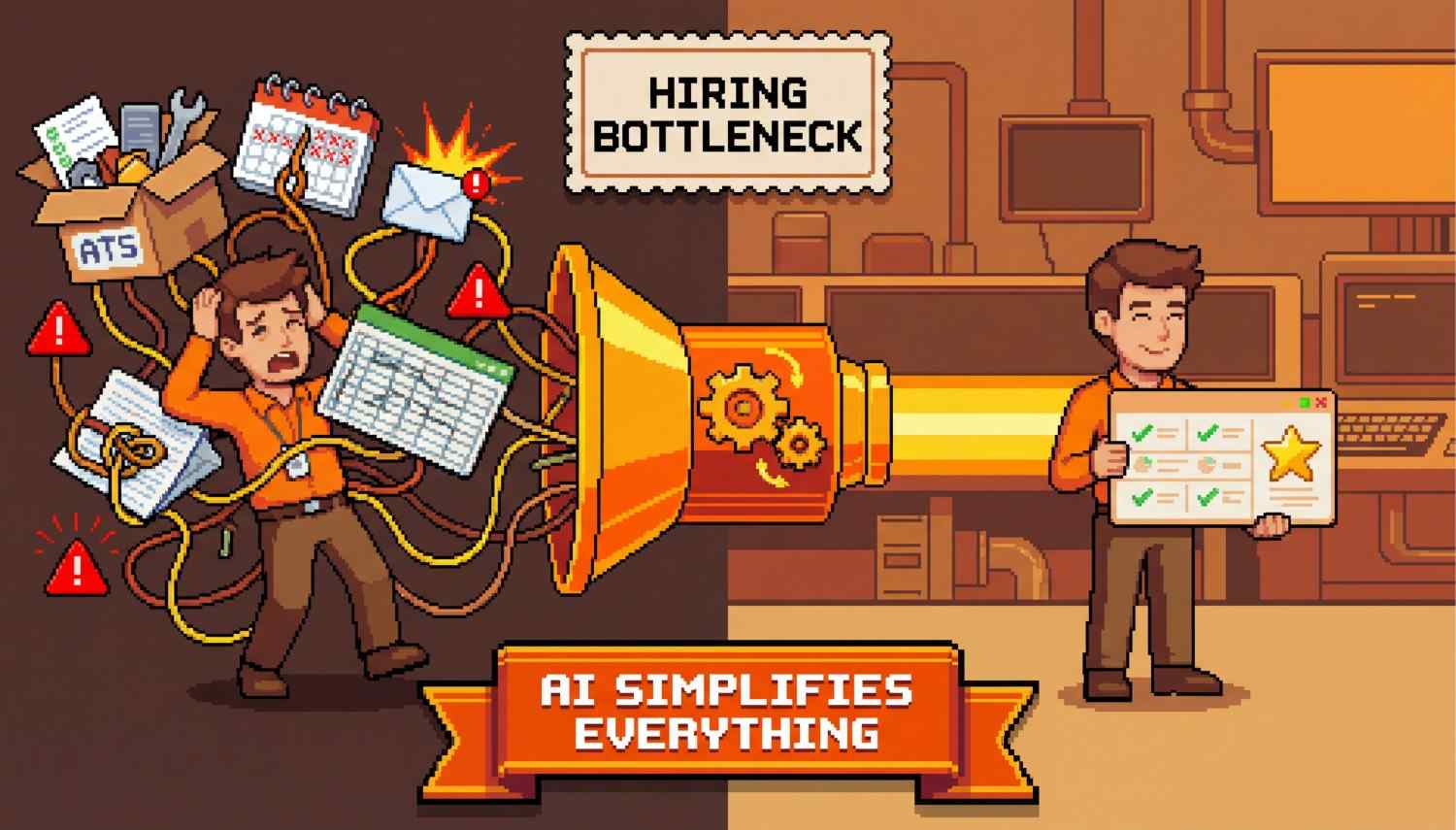
The most significant rapid evolution seen is in the transition from the grunt work of manual screenings and extraction of insights to Agentic AI-powered automation. AI excels at tasks that are repeatable, data-intensive, and require absolute dispassionate consistency. This gain is why organizations switching over to AI tools report reducing time-to-hire by up to 40 per cent.
AI (and Hyring) now takes care of:
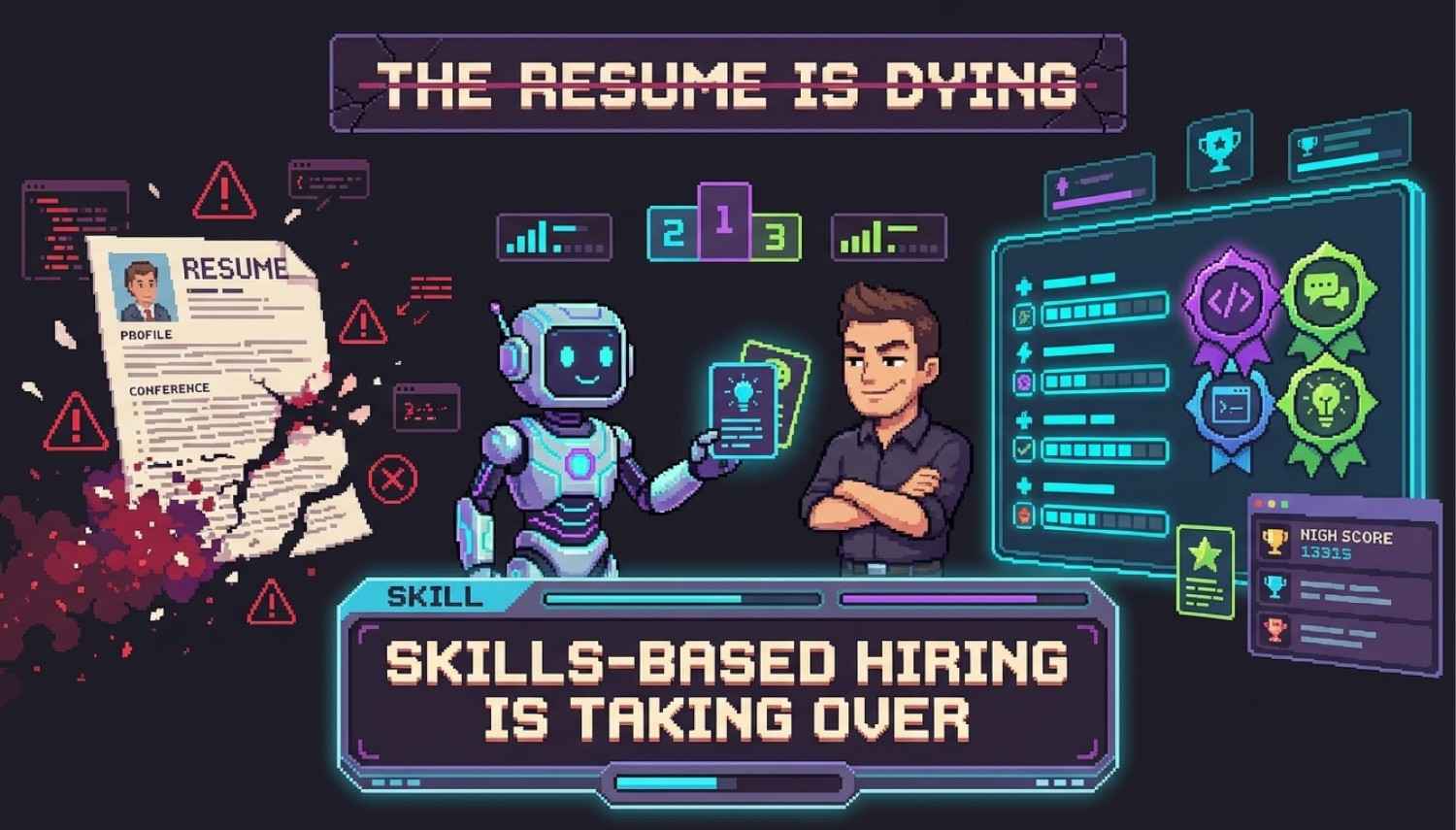
- Resume screening: Algorithms instantly filter, analyze, and rank resumes against the description of the job they have applied for, saving hours of review time. According to some industry studies, up to 30-40% of resumes may be rejected before a human ever sees them due to technical parsing failures, underscoring the shift toward automated initial screening, which reduces the same appreciably.
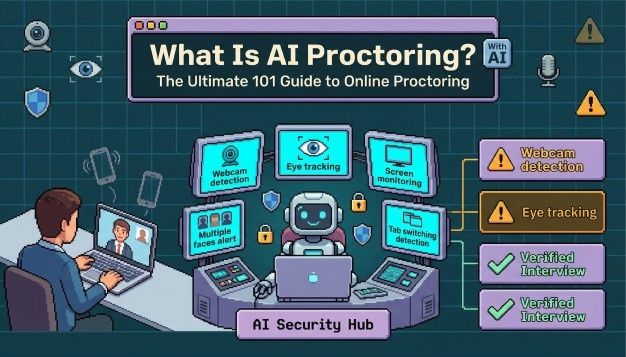
- Prolific interviews: AI-powered video and phone screeners, like those offered by Hyring, can conduct interviews for hundreds of candidates simultaneously, ensuring consistency and gathering key data points.
- Smart Scheduling: The hassles of haphazard interview scheduling is mitigated by the integration of AI, providing real-time availability and reducing friction in the entire TA process. Candidate satisfaction also sees a general rise due to this.
- Candidate scoring and data analysis: Sophisticated algorithms analyze performance metrics to generate data-driven reports, providing objective scores that provide insights into a wide variety of semantics and predict a candidate's likelihood of success much more effectively.
With these essential, time-consuming tasks automated, recruiters are freed to shift into an actual talent strategy that requires the following focus areas:
- Workforce planning and talent advisory
- Humanising the process and relationship-building
- Strategic alignment with business objectives
This perceptible change in alignment is what defines the transition from a process-driven recruiter to a goal-oriented Talent Strategist.
The 5 New Skills Every Recruiter Needs
The future of recruiting relies on human professionals honing their emotional intelligence and strategic foresight - areas where AI cannot compete (at least for now). These are the core talent strategist skills needed now:
1) Talent Intelligence & Market Analytics
The talent strategist today must view talent acquisition not simply as a hiring pipeline, but as a broad market problem- labor trends, compensation data, and market availability are what recruiters should grasp to advise the business effectively.
This is why data analytics becomes crucial, for example, in learning why a particular skill set is scarce or where a competitive salary benchmark exists in a rapidly changing economy. When equipped with this, a recruiter can stop flailing in the dark and plan more proactively, leading to better decisions ultimately.
2) Data Fluency & AI Literacy
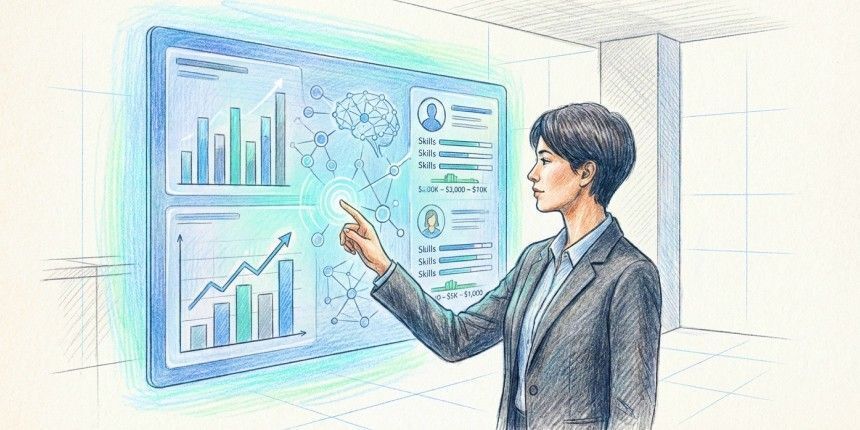
Contrary to what most people assume, it is not about learning to code but about actually understanding and analyzing trends better with datasets in hand. Data fluency encompasses an understanding of AI-generated insights, reading visualization dashboards, interpreting candidate scoring engines, and spotting patterns in application drop-off/retention rates.
Recruiters must be able to recognize when AI is ineffectively mitigating inherent human biases that are part of the existing system, which leads to oversight in an artificially intelligent environment. Mastering AI literacy allows the recruiter to leverage tech and train it better.
3) Candidate UX Design
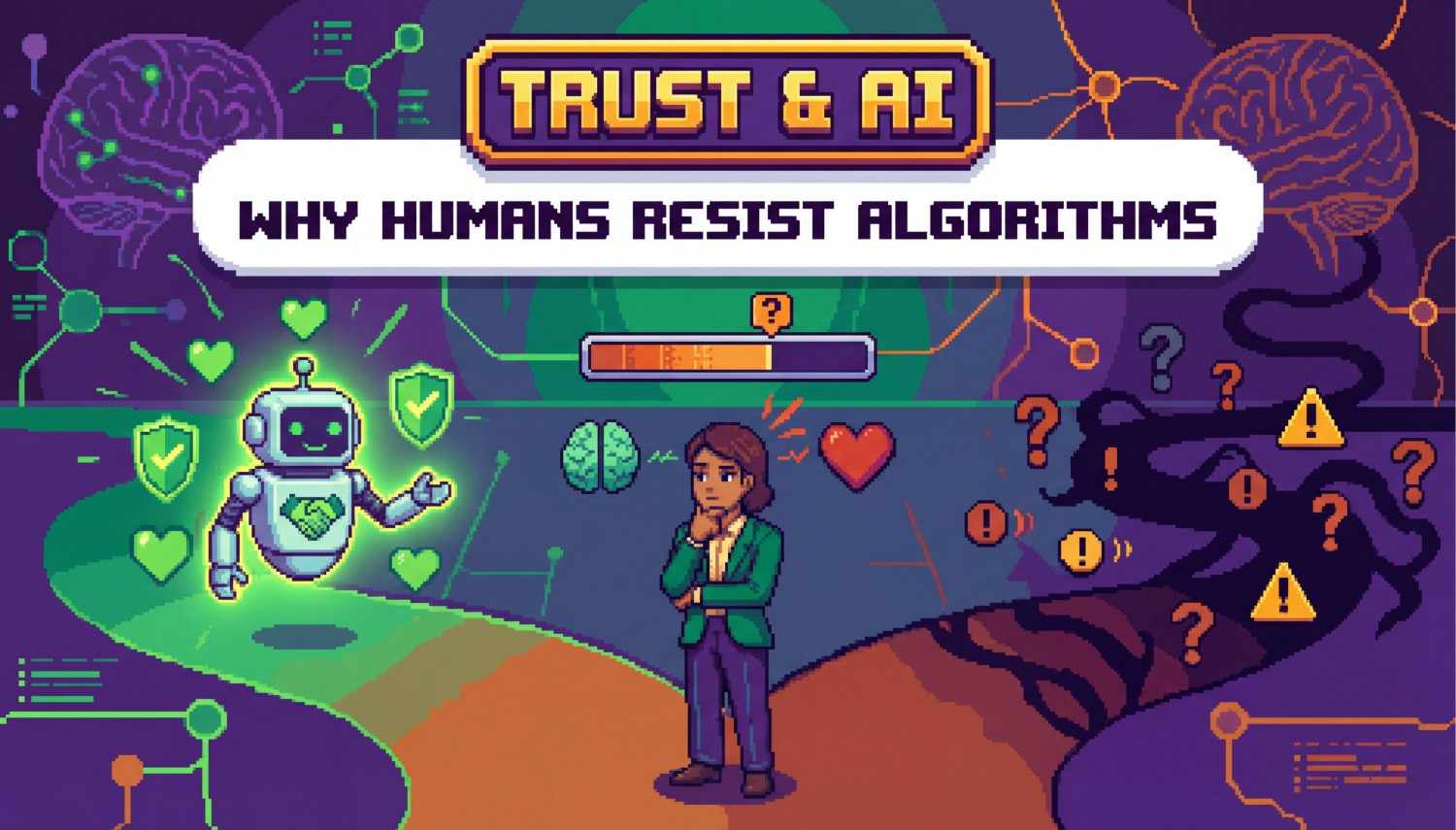
While AI handles the incoming volume of applicants, the recruiter is responsible for designing the overall flow of the candidate’s journey. Incorporation of transparency and empathy is critical in this aspect. Research shows that disclosing AI's role in hiring processes can actually increase trust levels.
The recruiter’s role is to ensure the process, whether automated by a platform like Hyring or managed personally, is problem-free, engaging, and sensitive to the candidate's time and energy. By automating screening and scheduling, Hyring allows the human team to spend more time on personalized interactions and offering detailed feedback to top candidates, transforming the high-volume into a high-value process.
4) Business Partnering & Internal Consulting
The trend for recruiters is the move from simply filling requisitions to actually consulting with hiring managers. This means that they have deeply understood team goals, future skill gaps, and the strategic direction of human resources, which was the primary aim. A true talent strategist advises on realistic job scopes, provides data-backed salary advice, and helps managers define success before the job is even posted - that shows their alacrity in analyses and knowledge base. This partnership requires listening, negotiation, and influence, which AI obviously cannot do.
5) Brand Storytelling
Sourcing has indeed become commoditized by technology, making a compelling employer brand the new differentiating factor. Recruiters must become expert salesmen, selling not just a job, but the company’s mission, culture, and career growth opportunities to prospective candidates that offer something unique to the organization. This authenticity remains a uniquely human edge, essential for attracting the “red diamond” candidates who are often accessible only through trusted personal relationships and referrals.
What TA Leaders Must Do
The shift to this new era is not just about buying new AI-enabled software; it requires a deeply ingrained commitment to an overhaul from leadership. Talent Acquisition (TA) leaders must focus on upskilling, providing the right tools, and driving a profound mindset shift within their teams.
- Provide Targeted Training: Introduce learning programs focusing on the basics and compliance (like EEOC guidelines for algorithmic hiring); change management. Recruiters need to understand how to interpret selection rates and escalate issues when (and where) necessary.
- Invest in Collaborative Tools: Equip teams with platforms that seamlessly automate the administrative burden while providing the data needed for strategic decision-making. The goal is to free up time to focus on the human part of the equation.
- Foster a Cultural Shift: Leaders must clearly define the new role, encourage and celebrate strategic metric improvements (like reducing internal skill gaps) over simple volume metrics (like number of calls made). A culture that embraces AI as a collaborative ally, rather than a threat, is crucial for giving a leg up to skill enablement and thereafter closing the gap in the recruiting race.
How AI Platforms Like Hyring Enable the Talent Strategist
The base of the Talent Strategist’s new role is time. Time that is consciously and deliberately freed up by automation. AI interviewing software like Hyring is specifically designed to facilitate this shift without being coercive.
Hyring automates the repetitive parts of the funnel (for want of sounding mildly repetitive myself, but you see its potency?), which include initial screening and interview coordination, through its AI Video Interviewer and Phone Screener features. This eliminates the need for recruiters to spend hours manually sifting through applications or playing phone tag for scheduling.
For example, for high-volume tech hiring, Hyring's dedicated AI coding assessor conducts early-round technical screens with automated scoring and plagiarism checks. This means engineers aren’t blocked for initial interviews, and the recruiter gets actionable data instead of only subjective notes.
The platform delivers detailed, consistent, data-driven reports with skill ratings and interview intelligence for every candidate. By outsourcing consistency and efficiency to Hyring, the recruiter gains the capacity to engage in a smarter talent strategy that truly moves the business forward.
Also Read: How Hyring is Changing the Game As An AI Hiring Platform
The Recruiter of Today Won’t Be the Recruiter of 2027
And that’s a really good thing- allow me to elucidate. The future of talent acquisition is one where the human element is prized, where empathy and strategy take precedence over robotic administration. The next generation of HR professionals will no longer be mere gatekeepers; they will be highly valued talent strategists to the fullest of their inherent meaning.
Embracing the necessary talent strategist skills like data fluency, market intelligence, and deep human connection is incontrovertibly essential. By leveraging Agentic AI to handle the disorganization, the modern recruiter metamorphoses into a strategist, ensuring that the biggest assets of any company - its people - are secured with the clairvoyance and clarity that is required of them. Your journey to becoming a Talent Strategist starts now.
FAQs
1. What is a Talent Strategist, and where do they fit in an AI-driven workplace?
A Talent Strategist is an elevated HR role that uses AI to automate transactional tasks (like screening and scheduling) and focuses instead on strategic activities such as workforce planning, market analytics, and advising business leaders on talent needs.
2. How does AI impact the demand for human relationship-building skills in recruiting?
AI automates initial interactions, freeing up the human recruiter’s time, which is more valuable. This free time must be used to deepen human connections, build rapport, and foster trusted long-term relationships, as these interactions remain the competitive advantage for any company.
3. What is Data Fluency for a non-technical recruiter?
Data fluency is the ability to interpret and use the insights generated by AI recruiting software efficiently and to one’s advantage. It involves understanding scoring models, identifying trends in drop-off or retention rates, and translating recruiting metrics into actionable recommendations, without the need to be a coder.
4. Can AI help reduce bias in the hiring process?
Of course it does! When properly configured, AI systems can mitigate unconscious bias by focusing purely on skills, qualifications, and standardized criteria objectively, ensuring consistent assessment across the board.
5. Why is Employer Brand Storytelling a critical skill for the modern recruiter?
Since AI has made sourcing more efficient, the key challenge is converting top talent. Employer brand storytelling is a uniquely human skill used to articulate the company’s mission, culture, and value proposition, which helps differentiate the organization from its competitors and passive hiring.
6. Where should leaders in TA invest to support this transition?
Leaders should invest in targeted upskilling programs concertedly for data literacy and AI compliance, while simultaneously procuring modern and integrative AI platforms (like Hyring) that automate repetitive tasks and provide the necessary strategic data.