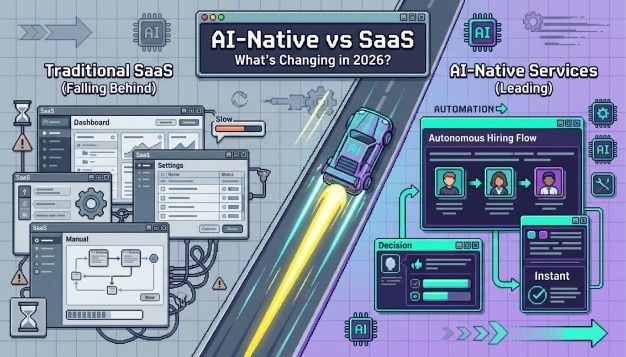
Traditional SaaS and product-based businesses are being surpassed by AI-native service companies out there. The speed, the cost, and the ability to customise it according to client needs are far beyond software products and their output.
The Shift Nobody Saw Coming
SaaS was the king, at the top, for a decade. Investors loved the revenue the tools consistently made. The entire tech ecosystem was built around the idea that software products, sold as subscriptions, became the ultimate business model.
Eventually, AI changed it entirely. AI did not just become a feature of an existing product. It became the foundation for an entirely new product. One that delivers outcomes, not licenses. Results, not dashboards.
McKinsey's 2025 Global Survey on AI shows that over 88% of organizations now use AI in some form of their business. This was a shift from last year’s 78% to 88%. But in this scenario, SaaS platforms are not making the best out of it. AI-native service firms are making the best out of this hardest wave. It solves problems by blending human expertise with intelligent automation.
This is our foundation at Hyring. The recruitment industry is being reshaped by companies that pair AI-driven candidate matching with human judgment. It is not just a chatbot feature added to an existing ATS.
What Does "AI-Native" Actually Mean?
An AI-native service company does not have AI later added. It is a product with built-in AI as its core operating component.
A SaaS business develops a tool and offers it to users. On the other hand, an AI-native service company includes intelligence in how it operates. Instead of purchasing software, the client gets a problem solved.
Here’s how it works in reality:
SaaS example: You purchase a recruitment platform. You are still responsible for creating job descriptions, reviewing resumes, setting up interviews, and managing candidate pipelines. The tool provides support, but you handle the tasks yourself.
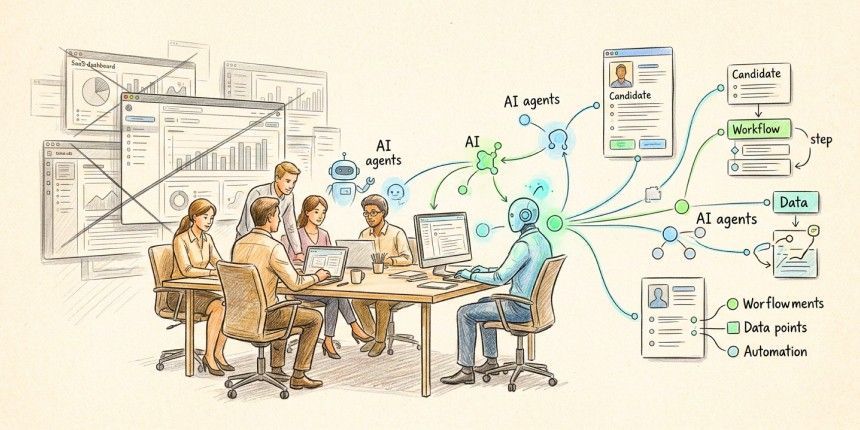
AI-native service model: A recruitment partner like Hyring takes the extra step. AI handles screening and shortlisting. The parts of relationship building, cultural fit assessment, and negotiation are handled by HR. A list of qualified candidates is handed to you. Not a login. That difference matters more than most people realize.
Why SaaS Is Losing Its Edge
It is not the end of SaaS. But the constant growth that seemed like a golden era ends.
Customer Fatigue Is Real
Organizations are drowning in an average of 342 SaaS applications. This gets worse when individual departments now maintain 60-80 apps stacked. In which around 55% go completely unused. It is not opened and used at all. The hefty premium that companies pay for platforms delivers only a fragment of their promised value.
Margins Are Getting Squeezed
A SaaS product can become expensive to build and maintain. They are built once, sell forever promise never quite worked out that way. The constant requirement for updates, bug fixes, and feature requests never stops.
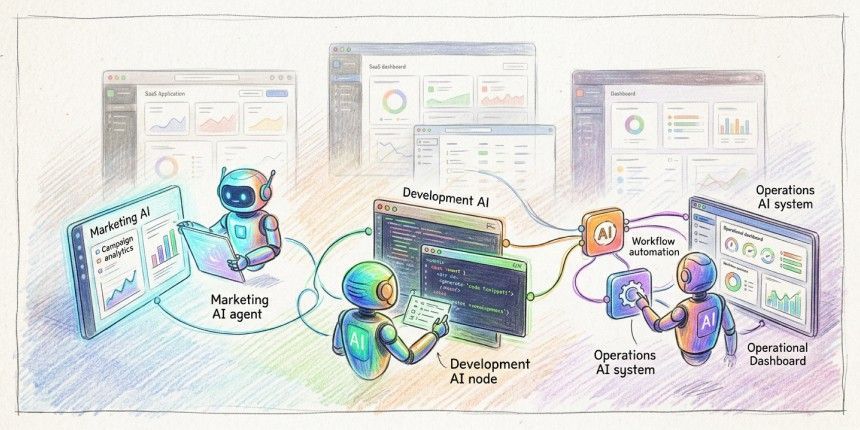
AI-native service companies skip most of that. They do not need to maintain a massive product. They use existing AI models, APIs, and tools as infrastructure. Their value is in the process, the expertise, and the outcome, not in the code.
One-Size-Fits-All Does Not Work Anymore
SaaS tools are made to fit general users. Yet, no business is "general." Each organization operates with its own processes, values, and requirements. Tweaking a SaaS product often requires lengthy negotiations and hefty professional service costs.
Firms driven by AI handle things more. They mix AI with human expertise, which allows them to tailor their services to each client without needing to rework their entire product.
Where AI-Native Services Are Winning Right Now
Here are aspects that are worth mentioning:
Recruitment and Talent Acquisition
Traditional recruitment software gives you a database and some filters. AI-native recruitment services do not stop there. They go further. The real candidate's behavior is analyzed against the job requirements. The time-to-hire is in weeks, not days.
Companies fill roles faster with better retention rates, which is the result. They spend less time managing tools and more time building teams.
Financial Services and Advisory
AI-native accounting and financial advisory firms are replacing spreadsheet-heavy SaaS tools. Instead of giving clients software to manage their own books, these firms use AI to handle data entry, anomaly detection, and forecasting. Then human advisors step in for strategy and compliance.
Marketing and Content
The content marketing space has exploded with AI-native agencies. They do not sell a content calendar tool. They deliver finished campaigns. AI handles research, first drafts, and performance analysis. Human strategists handle brand voice, creative direction, and client communication.
Legal and Compliance
AI-native legal service firms are disrupting traditional legal tech SaaS. Contract review, regulatory monitoring, and due diligence now run through AI pipelines. Lawyers focus on interpretation, negotiation, and judgment calls.
The Talent Problem That Proves the Point
AI-native service companies are opening up a whole new kind of talent gap. Businesses now need workers who can team up with AI systems. They don’t just need people to run software. They need people to work with smart machines.
It’s about combining problem-solving skills, adaptability, and subject-area knowledge with an ability to understand and use AI.
That’s why recruitment platforms like Hyring are more important than ever. It’s simple to find someone who knows how to use Salesforce. But finding someone who can design and fine-tune an AI-driven sales process? That takes a recruiter who gets both the tech and the human side of the job hunt.
What Investors Are Saying
The money is following this trend. Venture capital funding for AI-native service businesses grew 30% year over year. Investors are catching on to something simple. Outcomes sell better than access. When a company can say "we will reduce your hiring time by 50%" instead of "here is a platform that might help," the sales cycle gets shorter and retention gets longer.
The Hybrid Advantage
The real secret behind AI-native service companies is not the AI. It is the combination.
Pure AI solutions without human oversight produce errors, miss context, and frustrate users. Pure human services without AI are slow, expensive, and hard to scale.
The hybrid model gets both right. AI handles volume, speed, and pattern recognition. Humans handle nuance, relationships, and judgment.
In recruitment, that means AI can scan thousands of profiles in minutes. But a human recruiter still picks up the conversation to understand why a candidate left their last role. That conversation cannot be automated. And it should not be.
Frequently Asked Questions
1. What is an AI-native service company?
AI-native service companies are fundamentally different from traditional businesses that simply add artificial intelligence as a feature. Instead of layering AI on top of existing systems, these companies are built from the ground up with artificial intelligence at their core.
2. Why are AI-native companies growing faster than SaaS in 2026?
The AI-native services companies provide services instead of software licenses. This means that the clients are not required to pay for software licenses but for problems being solved. This will help to alleviate customer fatigue, hasten the sales process, and boost retention. The venture capital industry is also embracing this trend, as seen in the rise of funding for AI-native services up to 2025.
Traditional platforms give you a database and filters. AI-native recruitment services like Hyring combine intelligent candidate matching with experienced human recruiters. AI handles screening and shortlisting at scale. Recruiters handle cultural fit, relationship building, and negotiation. The result is faster hires and better long-term retention.
4. Will SaaS companies disappear because of AI-native services?
No. SaaS is not going away. But its dominance as the default business model is fading. Many SaaS companies are already pivoting to include AI-native service elements. The ones that survive will likely evolve into hybrid models that blend product access with outcome-driven delivery.
5. How can businesses prepare for the shift toward AI-native services?
Start by auditing your current software stack. Identify areas where you are paying for tools but still doing most of the work manually. Then look for AI-native service partners who can deliver results in those areas. Recruitment, content, finance, and legal are the most common starting points. Focus on partners, not platforms.