
An overview:
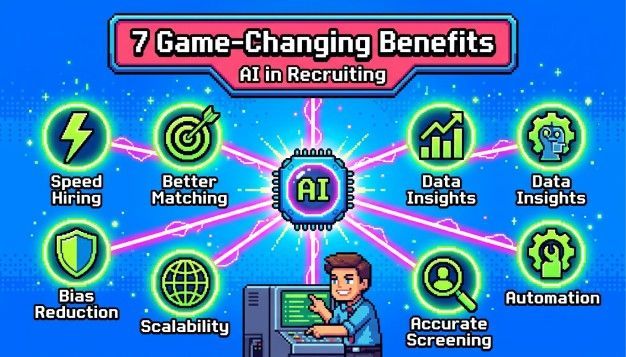
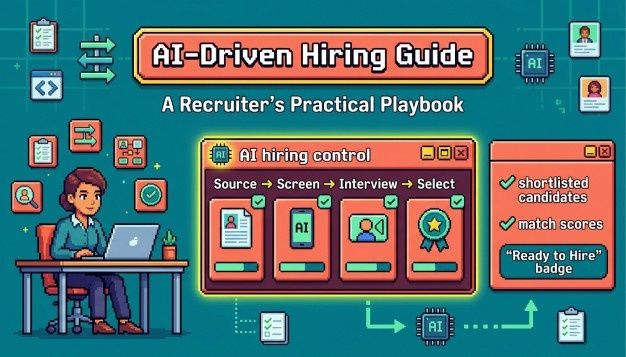
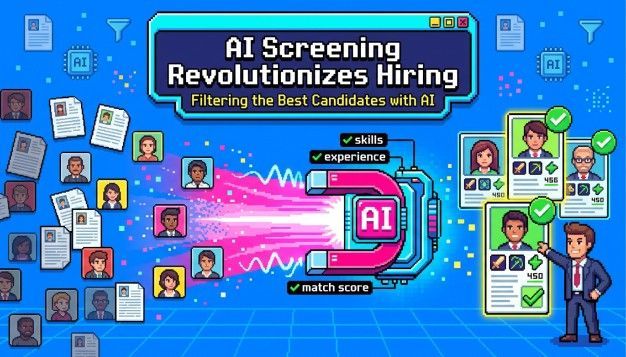
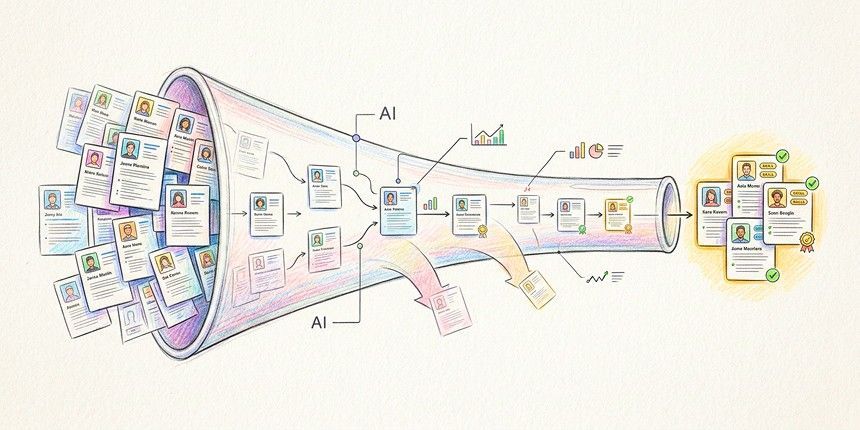
Hiring is not a single step. It is a layered process. Multiple stages, multiple requirements, and a lot of filtering before you find the right person for the seat. As application volumes keep rising, just figuring out who deserves an initial conversation can eat up most of a recruiter's week. That is where AI is starting to make a real difference. AI-powered resume screeners, AI phone screeners, and AI-led conversational interviews are helping hiring teams screen smarter and move faster. Without sacrificing thoughtful decision-making.
Here is how each of these tools is creating a measurable shift.
The Reality of Traditional Hiring
Before getting into what AI does, it helps to look at what recruiters have been up against for years.
Ladders Inc. found that recruiters spend an average of 7.4 seconds on an initial resume scan. Even if you stretch that to six minutes per resume, screening 300 applications adds up to about 30 hours. That is nearly a full workweek. For one role. Before a single conversation has happened.
AI is not trying to replace the recruiter here. It is trying to remove the bottleneck. So recruiters can put their time where it actually counts.
AI Resume Screening: The First Filter
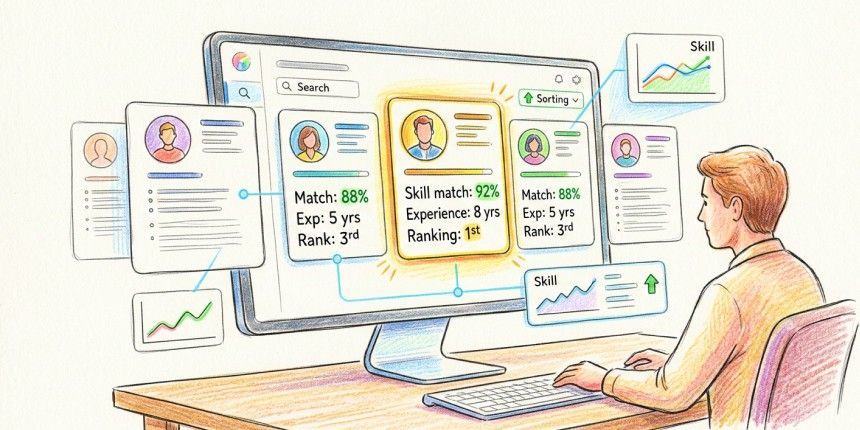
AI Resume screening is the most natural entry point for AI in hiring. An AI-powered screener can process hundreds of applications in minutes. It evaluates candidates against the job requirements based on skills, qualifications, and experience.
What separates modern AI screeners from older automated filters is context. These tools use natural language processing. They go beyond rigid keyword matching. If a role calls for "project management experience," the AI can recognise that a candidate who coordinated cross-functional teams and shipped a product launch probably has the relevant background. Even if those exact words never appear on the resume.
Hyring integrates AI resume screening directly into the hiring workflow. Recruiters go from hundreds of applicants to a reliable shortlist. No manual grind required.
AI Phone Screening: The Second Layer
Once you have a shortlist, phone screens usually come next. Short conversations to check, verify interest, and confirm the basics line up, which is necessary work. But time-intensive when you have dozens of candidates to get through.
AI phone screening automates this step. These tools conduct structured conversations with candidates. They ask role-specific qualifying questions and evaluate responses based on relevance, clarity, and depth, and assess them.
There is a practical upside for candidates, too. The data backs this up. LinkedIn's Global Talent Trends report found that 67% of hiring managers and recruiters say AI saves them time. Screening was identified as the area of greatest impact. When you think about how many hours phone screening normally takes, that tracks.
Narrowing With One-Way Interview
One format gaining real traction is the one-way interview. Candidates record their responses to a set of predefined questions on video, on their own time, without a live interviewer on the other end. Recruiters and hiring managers review the recordings when it suits them. It removes the scheduling entirely. For candidates, there is less pressure than a live call. For hiring teams, it means evaluating 20 or 30 responses in the time it would normally take to conduct five live calls. It also creates a consistent record. Every candidate answers the same prompts, which makes comparison fairer and much easier.
AI Conversational Interviews: Going Deeper
AI-led conversational interviews take things a step further. These are not static question sets. They are interactive. The AI adapts its follow-up questions based on what the candidate says. It probes deeper where needed. Much like an experienced interviewer would.
These tools assess a range of things. Problem-solving. Communication, domain expertise, and cultural alignment. Some also analyse response patterns and confidence indicators to build a fuller picture of each candidate.
There is a fairness angle here, too. Every candidate faces the same questions. Every response is measured against the same criteria. That kind of consistency is hard to achieve with human-only interviews.
To be clear, AI conversational interviews are not here to replace the final sit-down with a hiring manager. They make sure that by the time a candidate reaches that stage, they have been meaningfully evaluated. The hiring manager's time goes to the people who have genuinely earned it.
Hyring's AI conversational interview tools are built around this idea. Structured evaluation handled by AI. High-value conversations are handled by people.
Efficiency and the Human Element
When recruiters are drowning in hundreds of applications, the candidate experience suffers. Response times drag. Qualified people get overlooked. Many applicants never hear back at all. AI helps reverse that. It takes over the high-volume, repetitive stages. Recruiters get freed up to engage more meaningfully with the people who make it through.
The strongest hiring outcomes come from pairing what AI does well, speed, volume, and consistency, with what humans do well. Judgment. Relationship-building. Nuanced evaluation. One does not work as well without the other.
Looking Ahead
AI-powered screening is not something on the horizon. It is already part of how companies hire today. And the tools keep getting sharper. Better bias detection. More refined skill assessments. Smoother candidate experiences. All of it is moving forward.
For recruiters and hiring managers facing growing application volumes, the opportunity is straightforward. The technology to screen more effectively already exists. The question is whether your current process can keep up.
Hyring brings AI resume screening, phone screening, and conversational interviews together into one connected hiring pipeline. If the way you screen today still feels like it was built for a smaller applicant pool, it might be worth seeing what a smarter setup looks like.
Frequently Asked Questions
1. Does AI resume screening miss qualified candidates?
Older keyword-based systems had this problem, and it was a fair criticism. Modern AI screeners work differently. They use natural language processing to interpret context rather than matching exact phrases.
2. How does AI phone screening work in practice?
Candidates receive a call that is led by an AI agent. They answer structured questions tailored to the role. The AI evaluates each response for relevance, clarity, and completeness. Then it compiles a summary for the recruiter. It removes the need for recruiters to personally handle every preliminary call while still capturing the information they need.
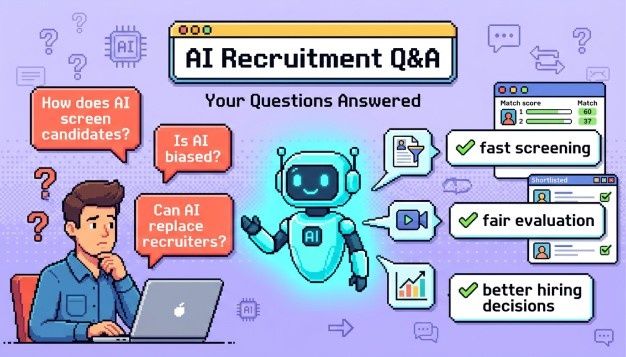
3. Can AI reduce hiring bias?
It can play a real role. When every candidate faces the same questions and gets scored against the same criteria, a lot of the inconsistency from human-led screening drops away.
4. Will AI replace human recruiters?
No. And that is not the goal. AI is built to manage the repetitive, high-volume stages. Final decisions, candidate relationships, and nuanced evaluation stay with the recruiter. AI makes recruiters more effective by clearing the path so they can focus on what they do best.
5. How much time does AI screening realistically save?
AI-led hiring can save up weeks of manual labor and screening from going through piles of resumes, calling out candidates, and checking and conducting interviews. The automated hiring process can make it easier for candidates and hiring managers, saving a lot of time.