
An overview
Hiring has always been about people finding the right people. Convincing them to join and building teams that actually work together.
But somewhere along the way, the process got in the way of the purpose. Recruiters stopped spending time on people and started spending it on spreadsheets, on inbox management, on chasing interview confirmations that should not be taking days.
The job was supposed to be about talent, but it turned out into a logistics exercise.
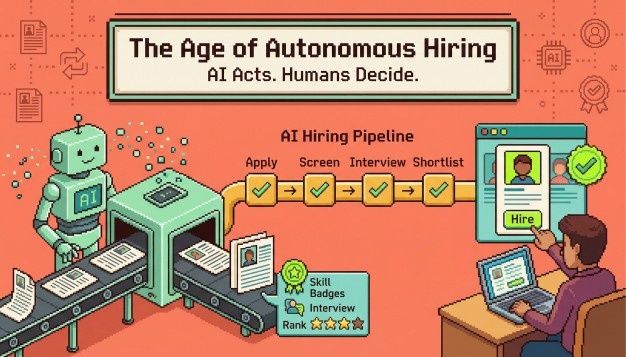
That's starting to change now. A new model is taking shape. It has been termed as autonomous hiring, which is not because machines are replacing recruiters. But because technology is finally picking up the work that was slowing them down.
The decisions still belong to people. The busywork doesn't have to.
What Does Autonomous Hiring Actually Mean?
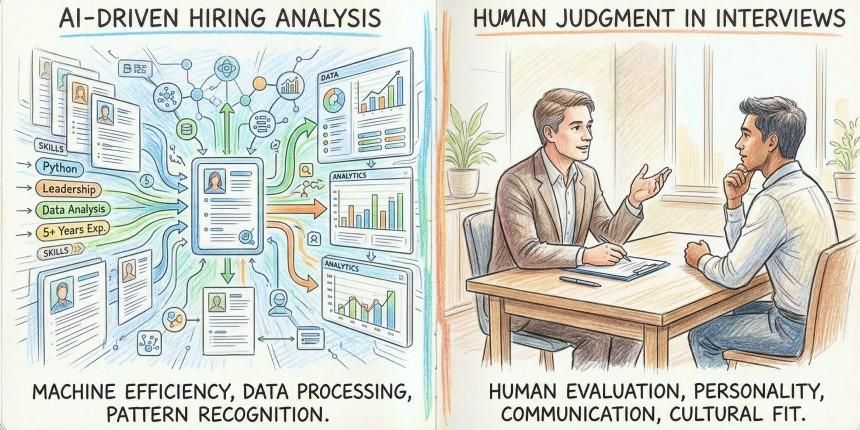
Some hiring tasks follow a pattern, which includes screening resumes, matching skills to job descriptions, scheduling interview slots, and sending updates. These don't need creative thinking; they need speed, consistency, and accuracy, which technology handles well.
But choosing who joins your team is completely different. That takes someone who understands the role, who knows the team, who can read between the lines on a resume.
Autonomous hiring splits the work this way on purpose. Machines run the process, and people make the calls.
What Technology Takes Care Of
Not every hiring task needs a recruiter's brain. Here is where technology can take the lead and take care of.
Scheduling interviews
Anyone who's tried to line up five calendars across time zones knows the pain. Scheduling tools handle it on their own now. Conflicts, reschedules, and time zone differences are all sorted without a single email thread.
Running skill checks
Automated assessments test for technical ability and role-specific knowledge. The same criteria apply to every candidate. The person who interviews on Monday morning gets evaluated the same way as someone on Friday evening. No tired eyes and no shortcuts.
Keeping candidates in the loop
Applying for a job and hearing nothing back is frustrating. We've all been there. Automated messages now send confirmations, reminders, and updates at each stage. Sounds basic? Yes, but most companies still drop the ball on this when it's done manually.
What Still Needs a Human
There's a line technology shouldn't cross. Hiring has plenty of those.
Getting a read on someone
A resume shows you what a person has done. A conversation shows you who they are. How they handle pressure, and whether they would work well with the existing team. Recruiters pick up on this within minutes. No software can replicate that.
Understanding why someone wants the job
Two candidates can look identical on paper. Their reasons for applying can be worlds apart. One's chasing growth. The other just needs to leave a toxic workplace. You figure that out by asking good questions and actually listening.
Handling the unexpected
Hiring rarely goes according to plan. A top candidate backs out. The role changes mid-search. Someone who applies doesn't tick every box but brings something you didn't know you needed. These moments need a person behind the wheel, not just a formula.
Saying yes or no
Extending an offer changes things. For the candidate, for the team, and for the company's direction. That kind of decision deserves a human behind it. Every single time.
What Changes for Recruiters
When the admin work disappears, recruiters don't lose their purpose. They find it again.
They show up to interviews more equipped. They have had the time to review a candidate's background properly. They are not rushing between scheduling fires and inbox chaos.
The role shifts, with less paper pushing. More people are reading. Less process management. More team shaping.
Candidates notice this too. Replies come faster. Updates are clearer. Conversations feel real instead of rushed. It changes the whole hiring experience from both sides.
How Hyring Gets This Right
Hyring was built around this exact balance.
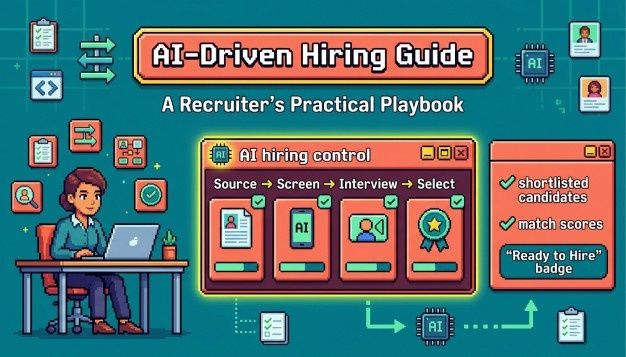
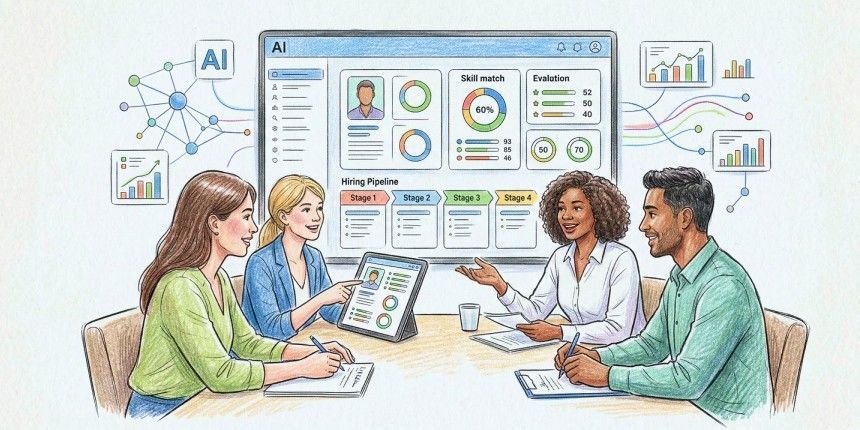
The platform handles screening with an AI resume screener, scheduling, and assessments with an AI coding interviewer. Your recruiting team doesn't waste hours on work that a system can do faster and more consistently. That part runs on its own. They also have an AI video interviewer that has one-way and two-way interviews with a conversational AI.
But Hyring never makes decisions for you. It brings the strongest candidates forward. Organises the data cleanly and takes the job of being an AI recruiting software, taking care of the initial heavy lifting. Shows you exactly why someone stood out. Then it steps back.
Your recruiter reviews the shortlist. Your hiring manager gives the final nod. Nobody moves through the pipeline unless a real person approves it.
No black box and no mystery. Every recommendation has reasoning behind it. Every action is visible and trackable.
Teams that want to hire fast without losing the human side of things? That's who Hyring was made for. Speed and structure on one side. Human judgment and control, on the other hand. Nothing falls through the cracks.
Wrapping Up
Autonomous hiring isn't here to replace recruiters. It's here to give them their time back.
Technology runs the process. People make the decisions. Get that balance right, and hiring becomes what it should have been all along. Faster. Fairer. And genuinely human.
Frequently Asked Questions
1. What is autonomous hiring?
It's a recruitment approach where smart tools independently manage the repetitive stuff. Screening, scheduling, and assessments. But every meaningful decision stays with a person. Recruiters and hiring managers remain fully in charge of who gets hired.
2. Does this make recruiters less important?
Not at all. It makes them more focused. They spend less time on admin and more time on what actually matters. Talking to candidates, assessing fit, and advising hiring managers. The role becomes more strategic, not less relevant.
3. How do candidates benefit from this?
They get a smoother experience overall. Faster replies, regular updates, and no radio silence after applying. When they finally talk to a recruiter, that person is prepared and present. Not juggling ten things at once. It makes the whole process feel more respectful.
4. Can this work for senior or specialised roles?
Yes. The tasks being automated are the same regardless of seniority. For harder-to-fill roles, the human evaluation piece matters even more. This model gives recruiters the bandwidth to spend real time on those high-stakes hires instead of drowning in logistics.
5. How does Hyring keep humans in control?
Every important decision in Hyring passes through a real person. The AI recruitment platform handles the groundwork. Finding candidates, organising data, running assessments. But no one advances or gets removed without a recruiter or hiring manager reviewing it first. Full visibility with full control, at every step.