
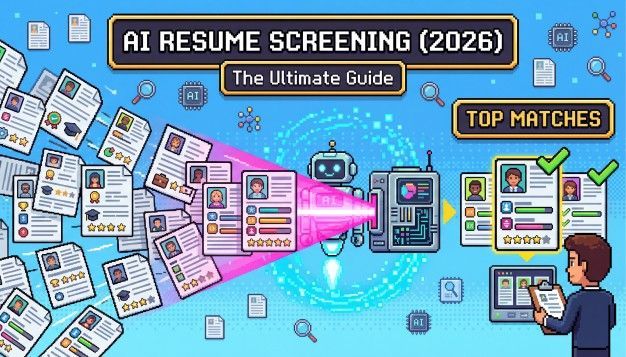
An Overview:
If you have ever posted a job opening and watched your inbox explode overnight, you already know the pain. Hundreds of applications pour in. Most of them miss the mark entirely, and buried somewhere in that chaos is the one person who would actually be great for the role. You just have to find them first.
Recruiters have been living this cycle for years. But here is the thing. The way companies screen resumes is going through a real shift right now, and AI is at the centre of it.
So whether you run a lean hiring team at a growing startup or you are managing volume recruitment at scale, it is worth understanding what AI resume screening actually does, where it helps, and where it still falls short.
What Exactly Is Resume Screening?
Resume screening is just the process of going through job applications and figuring out which candidates are worth moving forward with. For the longest time, that meant someone on the hiring team sitting down and reading through stacks of resumes manually. Checking education, scanning work history, looking for red flags, and making calls on who gets an interview.
The issue is that it consumes a huge chunk of time. Glassdoor puts the average number of resumes per corporate job posting at around 250. Out of those, only about 4 to 6 candidates actually get invited for an interview. That is a massive filtering job, and when you are doing it by hand, shortcuts happen. Bias creeps in, and good people can be missed.
This has always been the bottleneck in hiring, where recruiters burn out, and where promising candidates fall through the cracks without anyone noticing.
How AI Is Changing the Screening Game
What makes AI screening different from just using a fancy search filter?
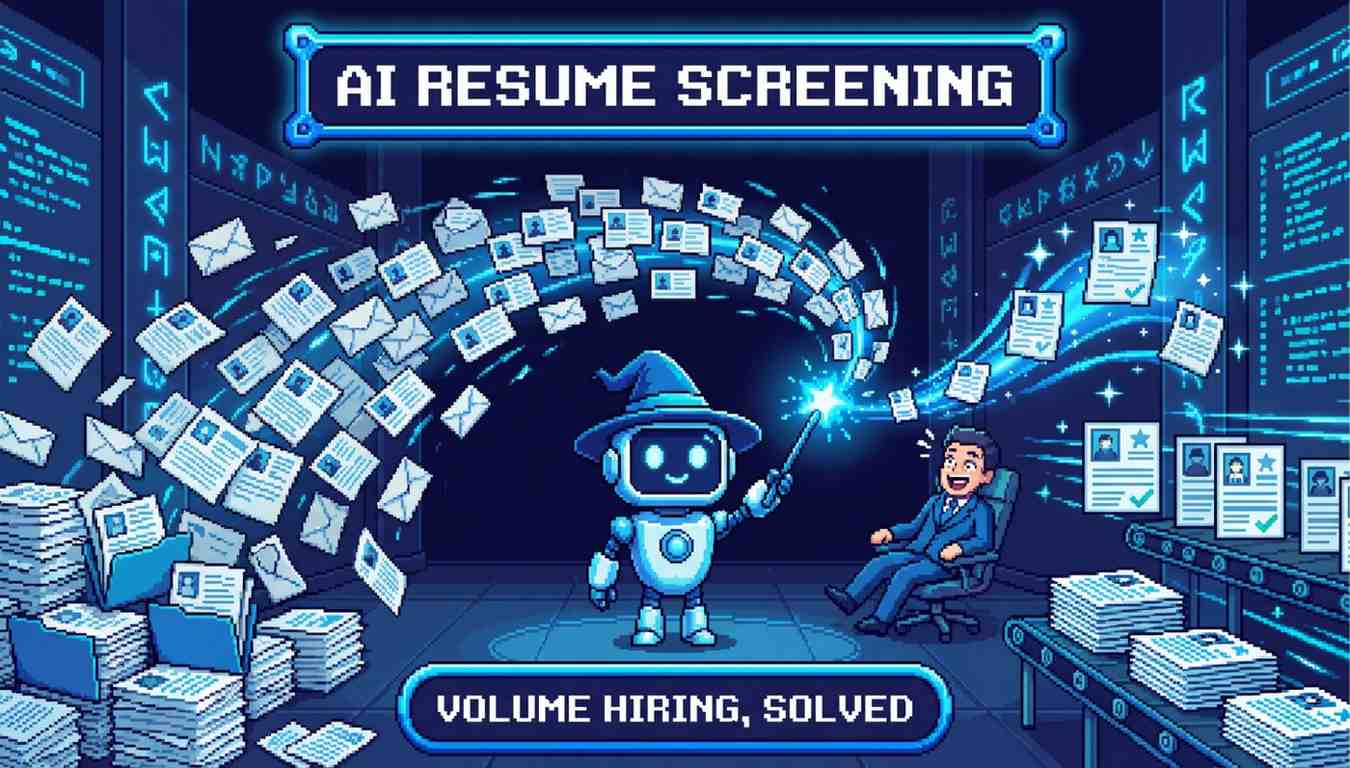
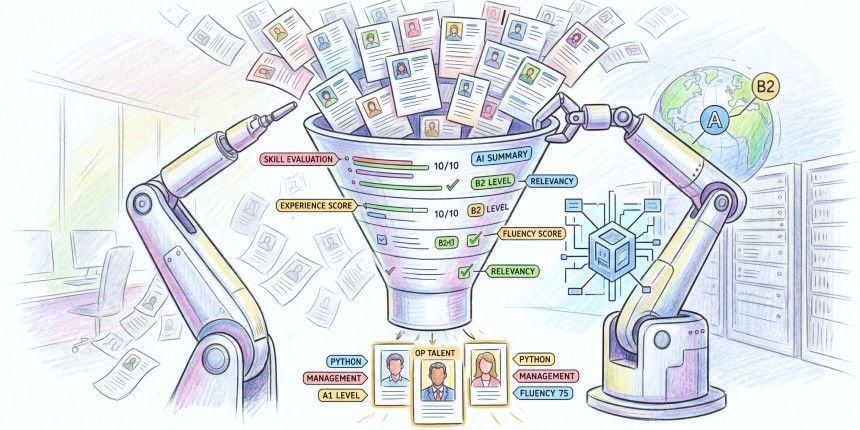
These tools run on natural language processing and machine learning. In plain terms, they can read a resume the way a person would, understand what the candidate is actually saying, and then compare that against what the role requires. They do this across hundreds or thousands of applications in very little time. Not hours. Minutes.
And unlike the old applicant tracking systems that would toss out a resume just because it didn't include a specific keyword, today's AI tools are smarter than that. They understand context. AI recognises similar experiences, which older systems would have missed completely.
A recruiter screening resumes at 9 AM on a Monday is in a very different headspace than the same recruiter at 4 PM on a Friday. The AI doesn't have that problem. It evaluates every single application against the same set of criteria, every time.
What Makes AI Resume Screening Actually Useful
- Volume management is the first big win. If you are hiring for five roles at once and each one is pulling in a couple of hundred applications, no recruiter can give every resume real attention. AI takes on the initial sort so that your team can focus on what they are actually good at. Talking to people, reading the room in interviews, and making judgment calls that require a human touch.
- Reducing bias matters too, and it is more nuanced than people think. You can set these tools up to strip out names, photos, ages, and other demographic details before evaluation. But here is the honest part. The platforms doing well in 2026 have bias auditing built in.
- Candidate experience is the one that quietly makes a huge difference. When screening is faster, people hear back sooner. And in a job market where top candidates often have multiple options, speed matters. Nobody wants to apply and then sit in silence for three weeks. Faster screening means faster responses, and that alone improves how candidates feel about your company.
- Shortlist quality pulls it all together. Because AI can weigh multiple factors at once, things like career progression, skills match, gaps, transitions, and lateral moves, the shortlists tend to be tighter and more relevant. You are not just getting the resumes with the right keywords. You are getting the candidates with the right fit.
Where Human Judgment Still Matters
AI is a tool. A really good one, but still a tool. And it does not replace the recruiter, which is not even close.
What AI does well is process information fast and stay consistent. It can tell you who meets the technical requirements. What it cannot do, at least not yet, is pick up on the subtleties. The candidate whose career pivot shows resilience and curiosity. The person whose way of describing their work hints at real leadership ability. The gut feeling a good recruiter gets when something about an application just clicks.
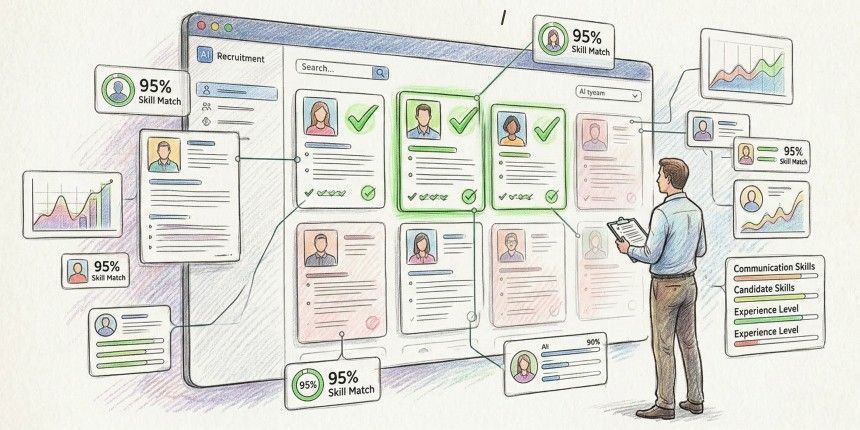
The best hiring setups right now are the ones using AI for the first pass and then handing things over to real people for everything after that. You get speed and consistency up front. You get nuance and judgment where it counts.
Starting Without Overcomplicating It
You don't need a six-month implementation plan to get going with AI screening. Most modern platforms, including Hyring, have it built right into the workflow. It plugs into what you are already doing.
Figure out where your hiring process drags. If it is volume, AI screening makes an immediate difference. If the issue is that different hiring managers are evaluating candidates in completely different ways, AI gives you a consistent baseline to work from.
And get your recruiters involved from day one. When the people using the tool understand how it works and feel like they can adjust and shape the criteria, they actually trust it. That is when adoption sticks.
Conclusion: What's Ahead for AI in Recruitment
This technology is not standing still. AI screening tools are getting better at understanding context, predicting which candidates are likely to succeed long term, and even helping with skills assessments and personalised candidate outreach.
The companies that will hire best in the next few years won't necessarily be the ones with the biggest teams. They will be the ones who figure out how to pair smart technology with experienced people.
AI is turning resume screening into something that actually works well.
Frequently Asked Questions
1. Is AI resume screening accurate enough to trust?
It has come a long way. Today's tools go well beyond keyword matching and actually understand the context behind what candidates write. They catch qualified people that older systems would have filtered out. That said, they work best as a first step. You still want human eyes on the shortlist before making decisions.
2. What is the success rate of AI hires?
The numbers are encouraging. Data suggests that candidates matched through AI resume screening tend to have higher retention rates over the first two years compared to those hired through purely manual processes. The reason? The initial match is built on deeper, more consistent data points rather than a quick scan.
3. Does AI resume screening work for all types of roles?
It shines brightest when the role has clearly defined requirements. Technical positions, finance, healthcare, operations. For roles that lean heavily on creativity, leadership style, or cultural fit, AI screening works best as one part of a broader evaluation rather than the whole picture.
4. How long does it take to set up AI-powered screening?
Faster than most people expect. If your platform has it built in, you are looking at days, not months. The main steps are defining what the role needs, setting up the scoring criteria, and connecting it to your applicant tracking system. It is not the major overhaul people sometimes imagine.
5. Can candidates trick AI resume screening tools?
Keyword stuffing used to work on older systems, and some candidates still attempt it. But current tools look at context, consistency, and depth. They evaluate whether the experience behind the keywords actually holds up. Gaming a modern system is significantly harder than it used to be.