TL;DR
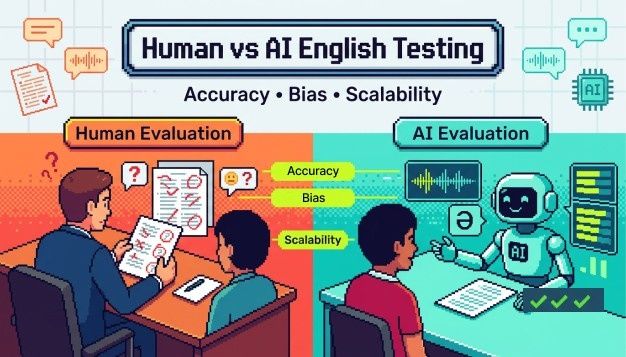
For the English assessment used for hiring, it should show how well candidates can communicate at work. The test should be easy for everyone to understand, but results can change depending on who is around. When AI is used for the English test, the results are the same no matter the situation.
What Does ‘Accuracy’ Mean in Hiring-Focused English Evaluation?
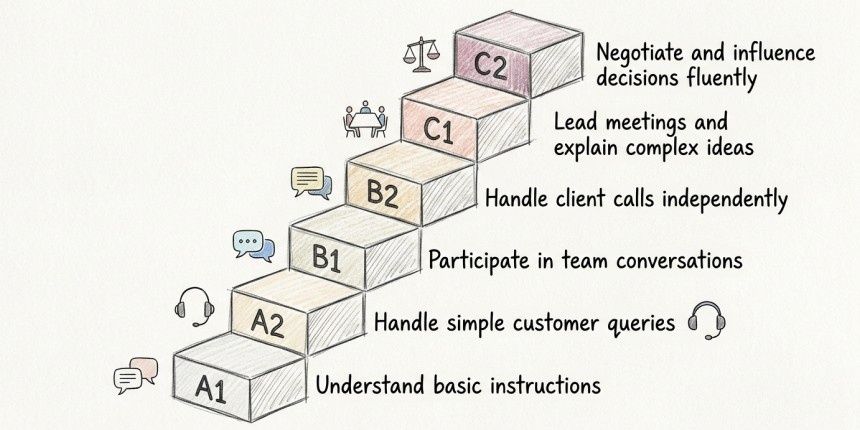
The support worker should stay calm and clear when talking to an upset client. The sales worker should be brief and focused when sharing their opinion. A worker must write clear reports that do not need more emails for questions. But what kind of English test can check these skills? It is not a grammar test or a standard test. This is where CEFR is useful. There are six CEFR levels, A1 to C2, each with descriptions of what you can do. No matter who is interviewing or where it is, passing the CEFR test follows the same rules. First, find out what skills the job needs. In this case, these include staying calm, being clear, and finishing tasks without needing more questions. Then, see how CEFR helps with the rest using 'can-do' descriptions.If a company wants to use a CEFR test to hire workers, it will set clear rules that are fair and not based on the examiner's opinion. The next thing to think about is which levels of English should be used to see if the candidate is right for the job. Finally, the key point to remember is that this principle does not change.
Where Do Human Scores Drift, and Why Does It Matter?
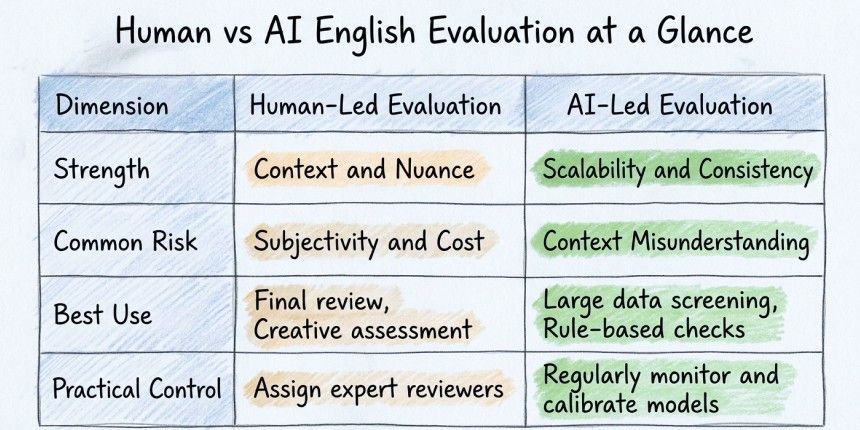
Having a human recruiter has many benefits. They get that when someone apologizes, it means 'Sorry, let me say that again.' They understand things like tone and professionalism. They know when to ask good questions.
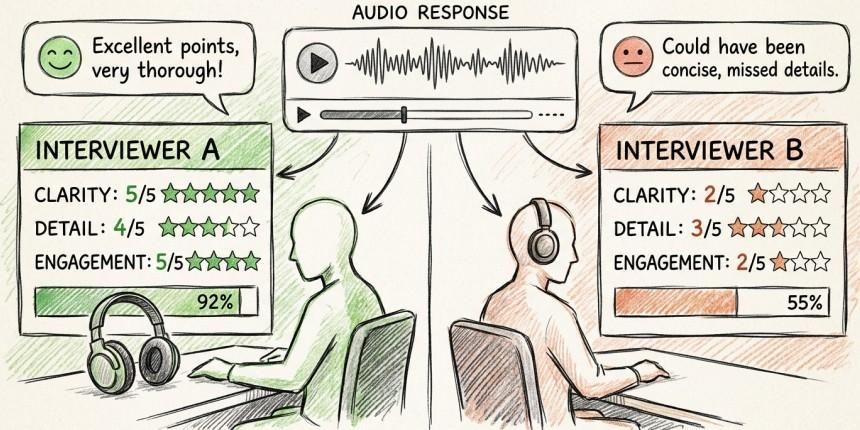
But there is a big problem with human reviews: A study showed that ratings of spoken English can vary a lot. If a speaker has an accent that is unfamiliar, they get lower scores.
This is a big problem in English tests during interviews. Two candidates with the same skills can get different scores based on the interviewer. This issue can't be fixed with just one training session.
How Does the AI English Evaluation Scale Work, and What Breaks at Volume?
A good thing about AI-based English tests is that they are consistent in grading. This is helpful when many candidates apply for the same job. But there are also problems with this system. First, general questions may only help candidates who speak well. Second, not all scenarios fit every job. Also, depending on the training data, AI might prefer a certain accent. We don't need to stop using AI completely, but we should know when to use it correctly.
Why Choose Hyring's English Proficiency Test?
There are many AI tools available. So what's the issue?
Is it fast enough, and does it give you good candidates?
The Hyring English Proficiency Test is made for this. It is an AI scoring system based on CEFR standards for international hiring. Over 5,000 HR teams use it worldwide.
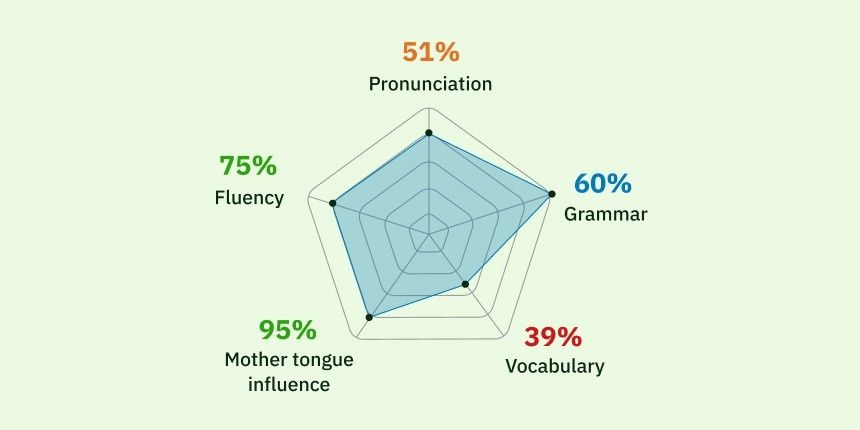
Its strength is in the rubric. Hyring looks at five important factors for jobs: fluency, vocabulary, mother tongue influence, grammar, and pronunciation.
The mother tongue influence factor helps decide if a candidate is unclear or just has an accent. Hyring uses simple work-related language to define CEFR levels.
For example, B2 means a person can work confidently in most situations without needing constant help. This makes it easy for your team to understand and agree.
Use Cases You Can Run This Week
For candidates who will work with clients, start with the English test.
Focus on the top-scoring applicants and save your interview time for important details. Use CEFR scales and a five-factor score as common terms for your team.
Don’t assume anyone’s English skills. Set a minimum level of B1 for internal jobs and B2 or higher for external jobs.
Check applicants who are close to the cut-off. An English test can help you make decisions. The test will take 4, 10, or 15 minutes, depending on your plan.
More advanced plans offer accent analysis, cognitive metrics, and criteria weightings. The test results include an AI analysis and transcripts.
If you are guessing candidates' English skills, Hyring’s EPT is a good place to start. Test one job role, set one cut-off score, and create a review process.
How Do You Reduce Bias in Human vs AI Scoring?
To fix biases, you need to measure them. Keep track of the scores. Ask relevant questions for the job.
Make sure interviewers speak at the same level as the AI software. Check the pass rates for candidates based on job position, location, and qualifications. Investigate any differences that come up.
Here's a quick checklist:
- Keep all scores recorded.
- Include job-related questions and tasks when needed.
- Train interviewers well.
- Review all scoring decisions every month.
- Allow for human override and briefly note each one.
According to Hyring, data bias can happen during automated testing. The company sees this issue as a way to ensure fast and accurate evaluations. Every technology has its problems, but not all are equally serious.
Key Takeaways
- An English test for hiring should focus on being able to communicate well for the job, not just on grammar.
- Human scorers can catch details but may be biased by accents.
- Automated tests are consistent but need human checks.
- Hyring’s English Proficiency Test is unique because it aligns with CEFR, uses a five-point rating, and has different testing times
Frequently Asked Questions (FAQs)
1. Is CEFR actually useful for hiring thresholds?
Yes, the A1 to C2 scale has clear examples that help in assessing job performance. This gives a clear standard for what English proficiency means, reducing confusion in hiring
2. When should a human override an AI score?
If a candidate is close to the passing mark, if the job needs strong communication, or if there are mixed signals about their language skills.
3. What's the fastest way to get this running?
Pick one job role and one passing score. Give the English test during the interview as the first step. Review candidates who are close to passing manually.
4. What's the biggest fairness risk to watch for?
Accent bias. Track pass rates for different groups and check the results regularly. No system is fair until proven otherwise.