MakiPeople VS HyrinG
MakiPeople vs Hyring:
A Hiring-First Comparison
Written on: 12 Mar 2026
Last updated: 26 Aug 2026

Written by
Team Hyring

Fact Checked by
Adithyan RK

Table of Contents
- An Overview
- Why Hiring Teams Migrate From MakiPeople To Hyring
- MakiPeople vs Hyring - Metrics Comparison
- Ecosystem: Products & Hiring Workflow
- MakiPeople vs Hyring: Feature Comparison At A Glance
- MakiPeople vs Hyring: Detailed Feature Comparison
- Conversational AI Interviewing
- Candidate Authenticity & Proctoring
- Scoring, Fairness & Bias Reduction
- Assessment Types & Role Coverage
- Scheduling & Automation
- Reporting & Hiring Analytics
- Global Hiring & Accessibility
- The Human Touch: MakiPeople vs Hyring
- UI UX Experience
- Security & Compliance
- Cost & Pricing Structure
- Conclusion: Which is the Best AI Interviewer – MakiPeople or Hyring?
- Frequently Asked Questions
An Overview
Teams looking for an alternative to MakiPeople often want the same few things: clear pricing, interview-level proctoring in their reports, and fast setup with no long onboarding process.
MakiPeople works well for large enterprise programs. But pricing is not public, and there is no confirmed free trial. For teams that need to move fast, those gaps are a problem.
Hyring covers all of that. Pricing starts at $1 to $5 per interview. Proctoring signals show up directly in candidate reports. ATS integration runs through a documented public API.
Why Hiring Teams Migrate From MakiPeople To Hyring
MakiPeople is an AI recruitment tool. Its Capgemini case study shows time-to-hire under 10 days and 95% candidate satisfaction.
However, a gap shows up when a lean team tries to evaluate it. No public pricing per interview. No confirmed platform-wide free trial. SOC2 is not clearly confirmed on their public security page. A documented public API was not found in the materials reviewed.
Hyring addresses those gaps upfront. Pricing is clear. The API is documented. Proctoring events show in recruiter reports without any extra setup. That is why teams comparing Hyring vs MakiPeople tend to land on Hyring for day-to-day recruitment automation.
MakiPeople vs Hyring - Metrics Comparison


Ratings change over time. Review live pages for the latest updates.
Ecosystem: Products & Hiring Workflow
This section covers how each platform structures its products and what a candidate's journey looks like inside each one, based on publicly available product pages and documentation.
Hyring Review
Product Ecosystem
Hyring's ecosystem is built around end-to-end recruiting and screening workflows. Its core products and modules include:
AI Video Interviewer
Asynchronous and live two-way video interviews are conducted with the video interview software, which also offers dynamic follow-ups.
AI Phone Screener
AI Coding Interviewer
Resume Screening
English Proficiency Test

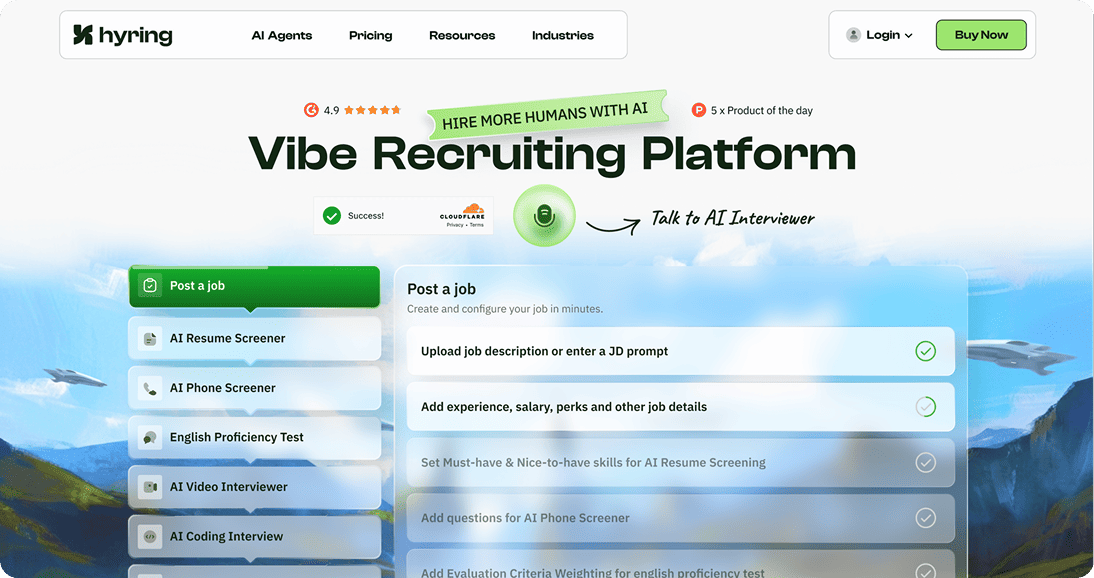
Together, these products form a unified screening-to-hire system focused on operational recruiting teams.
Brief
Hyring is an AI interviewing platform built for teams that hire at scale. Users on G2 and Capterra describe fewer hours spent on early-stage screening and better candidate comparison across large pools.
PROS
- Quick to set up
- Structured interviews with visible integrity signals
- Reports built for fast hiring decisions
- Usage-based pricing
- Documented public API for ATS integration
CONS
- Works best at moderate to high volume
- Not an ATS replacement
- Less suited to very small teams
TAKEAWAY
Hyring is best for larger recruiting teams and MNCs running regular, high-volume pipelines where speed and audit trails both matter.
MakiPeople Review
Product Ecosystem
MakiPeople uses a set of AI agents. Each agent handles a different part of the candidate journey. It targets enterprise programs across frontline, early-career, corporate, and digital hiring.
Mochi
A conversational AI screener that runs phone or web interviews. It adapts questions based on how candidates respond and is built to replace the recruiter's phone screen.
Ken
Kumi
Shiro
Proctoring & ATS Layer
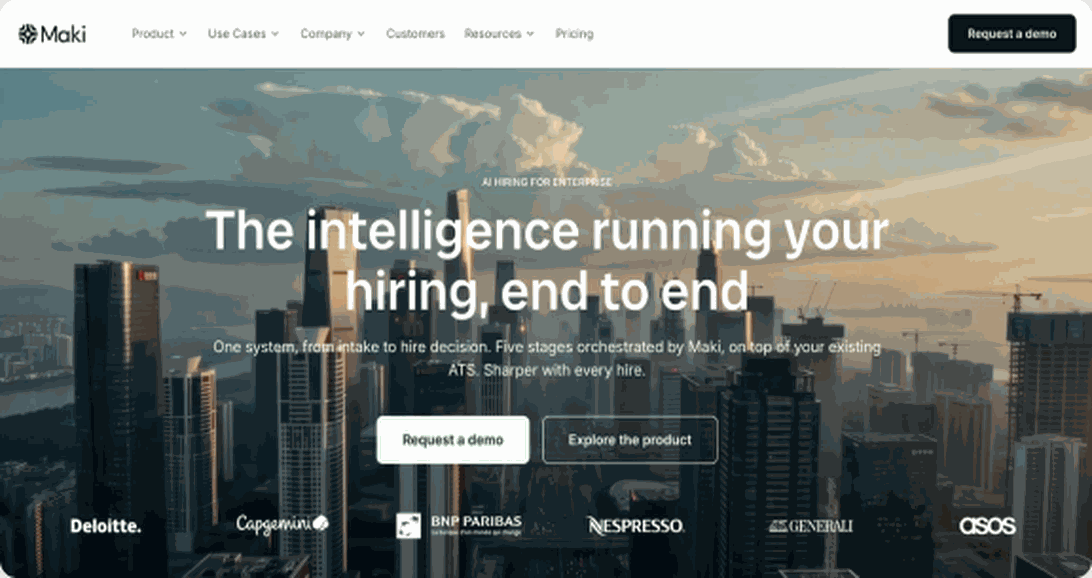
The agent-based structure works well inside a fully deployed enterprise program with dedicated configuration time.
Brief
MakiPeople is an enterprise AI hiring platform. Its Capgemini case study shows time-to-hire cut to under 10 days, 95% candidate satisfaction, and a 94% improvement in brand perception.
PROS
- Adaptive conversational screening via Mochi
- 25+ language and accent support
- Detailed proctoring controls
- 30+ ATS integrations
- White-labeled candidate experience
CONS
- No public pricing per interview
- No confirmed platform-wide free trial
- Public API not confirmed in public materials
- SOC2 is not clearly confirmed on public pages
- Requires enterprise onboarding, not a quick-start tool
TAKEAWAY
MakiPeople is a strong fit for enterprise teams running multilingual programs with dedicated onboarding resources. For smaller or faster-moving teams, the lack of public documentation is a real barrier.
Bottom Line
Hyring is built around recruiter-facing tools. From invite to ATS handoff, every step is visible and documented.
MakiPeople is built around an enterprise candidate journey. Its agents handle screening, assessment, and scheduling within one structured flow.
Hyring excels at: High-volume screening with clear pricing, transparent proctoring, and fast ATS integration

MakiPeople excels at: Multilingual enterprise programs with branded candidate journeys at scale
For most teams comparing MakiPeople alternatives for day-to-day recruiting, Hyring is the more practical choice.
MakiPeople vs Hyring: Feature Comparison At A Glance
Feature / Capability
MakiPeople
Conversational AI interviewing (dynamic, two-way)
Dynamic follow-up questions
Candidate authenticity & remote proctoring
Liveness checks & proctoring
Coding & role-based assessments
Language & communication testing
Automated scheduling / calendar sync
Yes (via Kumi)
Hiring analytics & reports
ATS / HRIS integrations & public API
Partial (30+ ATS; public API not confirmed)
SOC2 & ISO 27001 enterprise security
Yes (both)
Partial (ISO 27001 confirmed; SOC2 not confirmed)
Custom branding & candidate experience
Accessibility & global support
Support & onboarding
Video Interviewer
Partial
Phone Screener
Resume Screener
Partial
Coding Interviewer
Partial
Proctoring module
Audited from publicly available sources. Check live pages for current status.
How Hyring Outperforms MakiPeople
Both platforms are capable AI hiring tools. The differences that matter show up in how quickly a team can get live, how pricing is published, and where proctoring signals land.
Conversational AI Interviewing

Hyring
Hyring runs both two-way video and phone interviews. Questions are adjusted based on what each candidate says. Scoring looks at content, communication, and role fit, not just keywords. This helps recruiters shortlist faster without losing quality.

MakiPeople
MakiPeople's Mochi does similar work. It adapts questions, probes deeper where needed, and replaces the phone screen. It is designed for enterprise candidate journeys. Hyring's output, by contrast, lands directly in a recruiter-facing report.
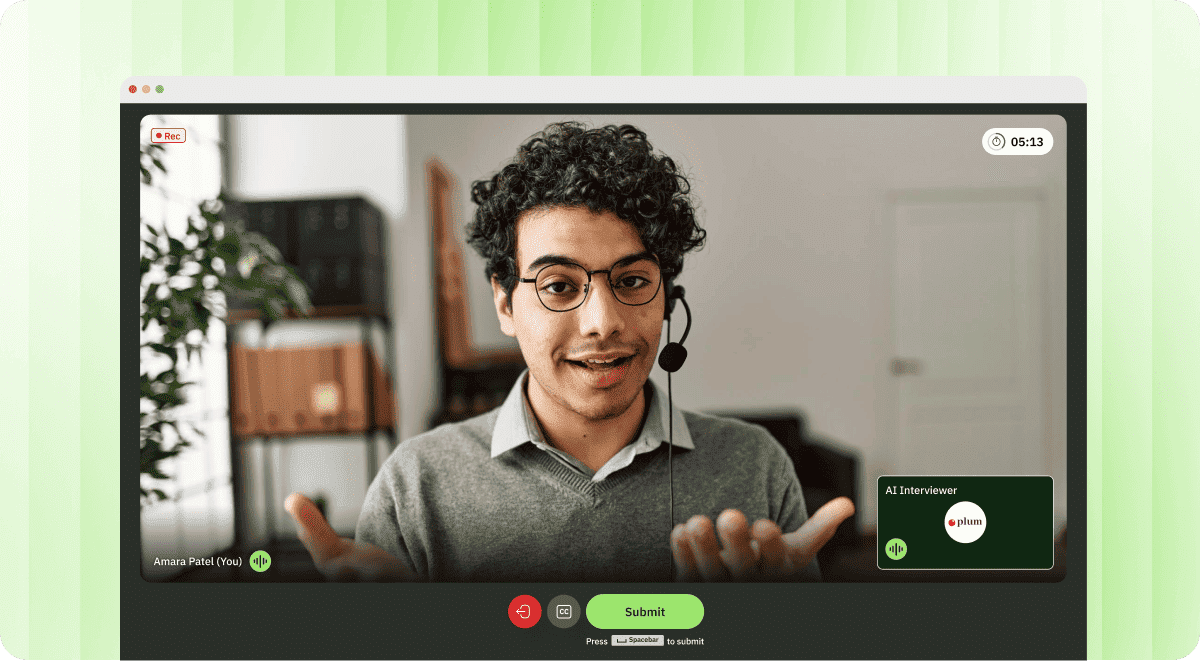

For high-volume screening where results need to reach a recruiter fast, Hyring fits better.
Candidate Authenticity & Proctoring
Hyring
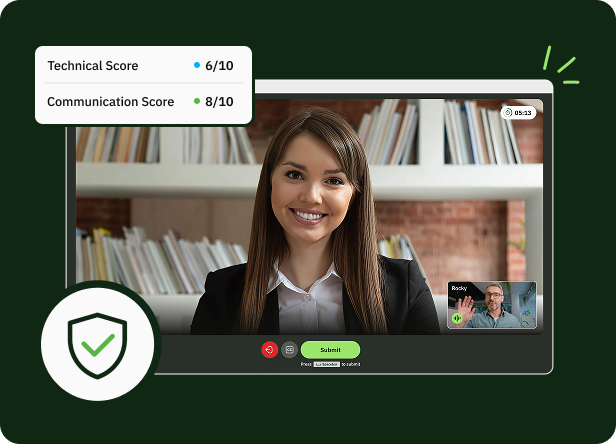
Hyring flags specific events during each interview. Tab changes. External monitors. Face out of frame. Multiple faces or voices, and plagiarism. Each flag appears in the candidate's report. Recruiters can spot issues without reviewing every interview manually.
MakiPeople
MakiPeople's proctoring is thorough. It covers face detection, device fingerprinting, IP checks, AI-answer detection, focus-out events, fullscreen enforcement, country whitelisting, and object detection. These controls sit within the candidate journey layer rather than a standalone recruiter dashboard.
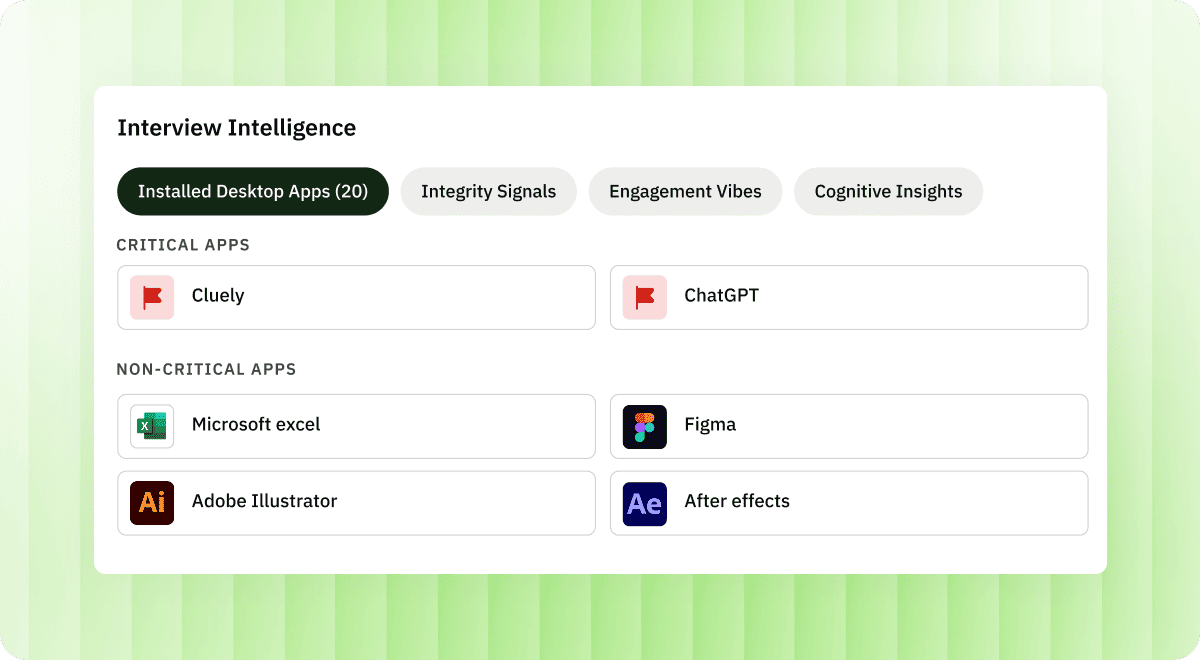
Both platforms detect well. Hyring puts those signals directly in front of the recruiter, at the interview level. For teams that need that visibility without extra setup, Hyring is the clearer option.
Scoring, Fairness & Bias Reduction
Hyring
Hyring scores by competency. Recruiters get full transcripts, weighted question scoring, and the ability to override scores with a reason. Every decision is easily traceable.
MakiPeople
MakiPeople scores candidates against defined role competencies via Mochi and Ken. The scoring layer is part of the candidate journey and feeds into ATS outputs. Recruiter-level configuration of scoring is not described in public materials.
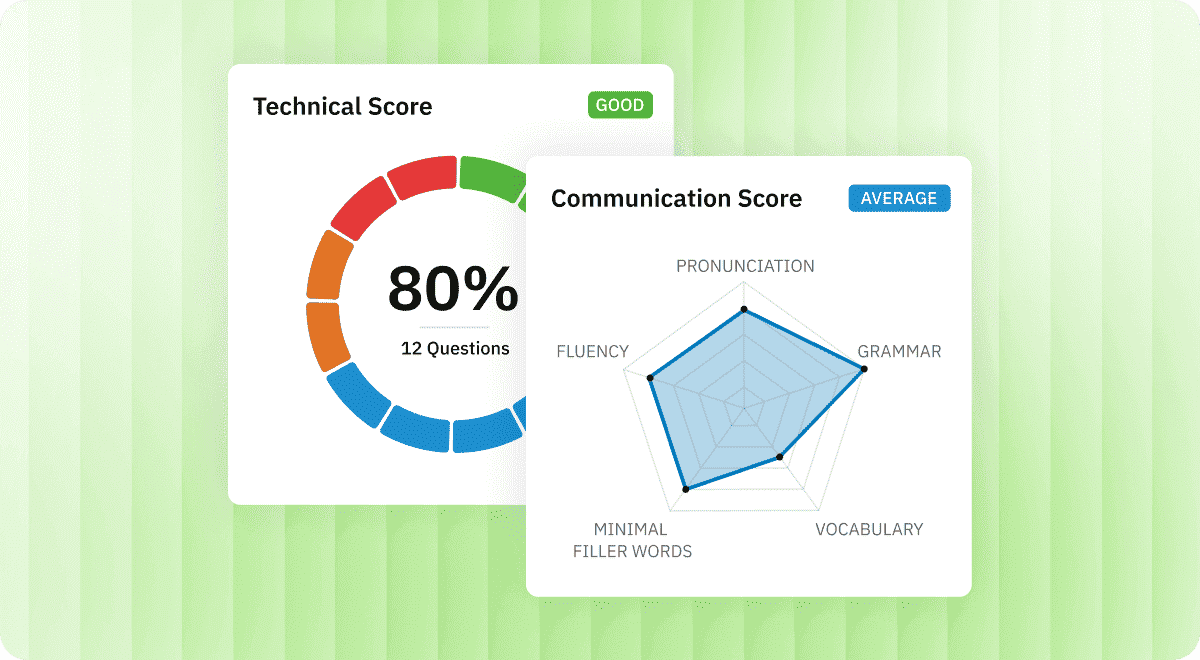
For auditable, recruiter-controlled scoring, Hyring gives more direct access.
Assessment Types & Role Coverage
Hyring
Hyring covers developers via the Coding Interviewer, customer-facing roles via the English Proficiency Test, and operational roles via skill-based formats. Templates are ready from entry to senior level with no custom setup needed.
MakiPeople
MakiPeople's Ken covers coding, reasoning, simulations, and structured communication for technical and leadership roles. It works well inside enterprise programs with dedicated configuration time.
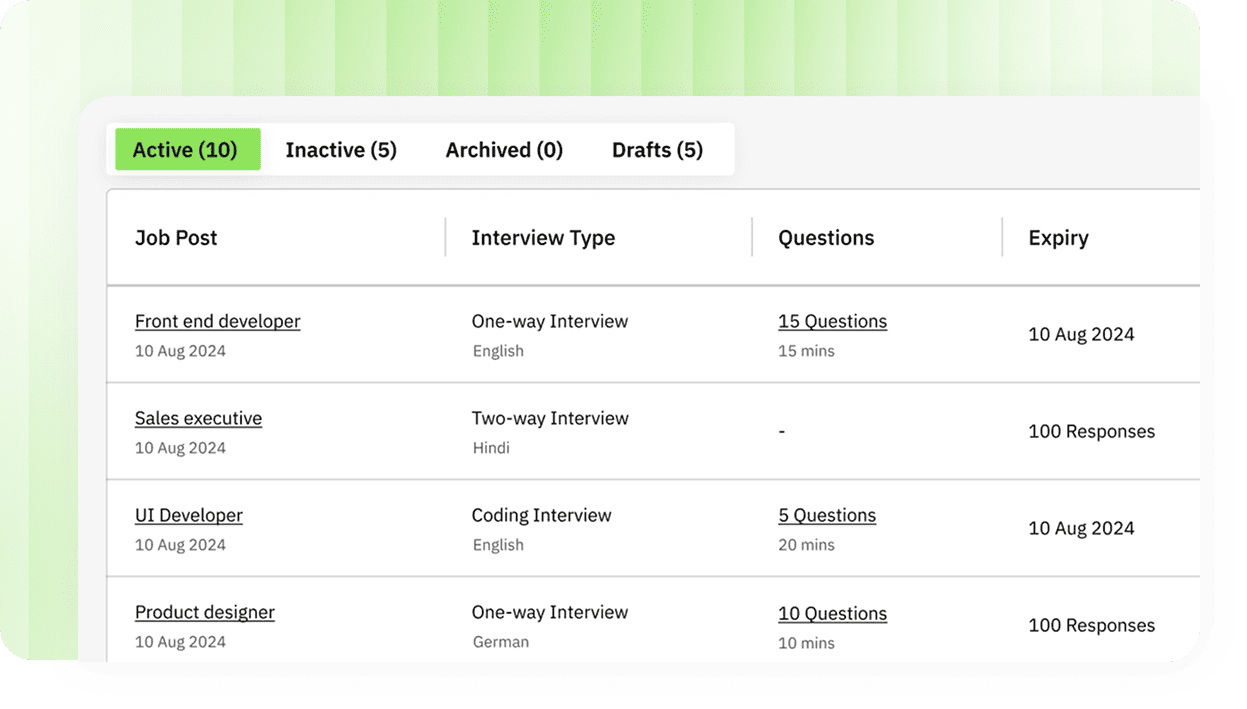
For varied roles without complex onboarding, Hyring has more ready-to-use formats.
Scheduling & Automation
Hyring
Hyring includes built-in scheduling, bulk invites, automated reminders, and a public API for ATS syncing. All available from the dashboard without enterprise setup.
MakiPeople
MakiPeople's Kumi handles scheduling through calendar integrations within its candidate journey. It works well inside that flow. As a standalone tool for lean teams, it requires more configuration.
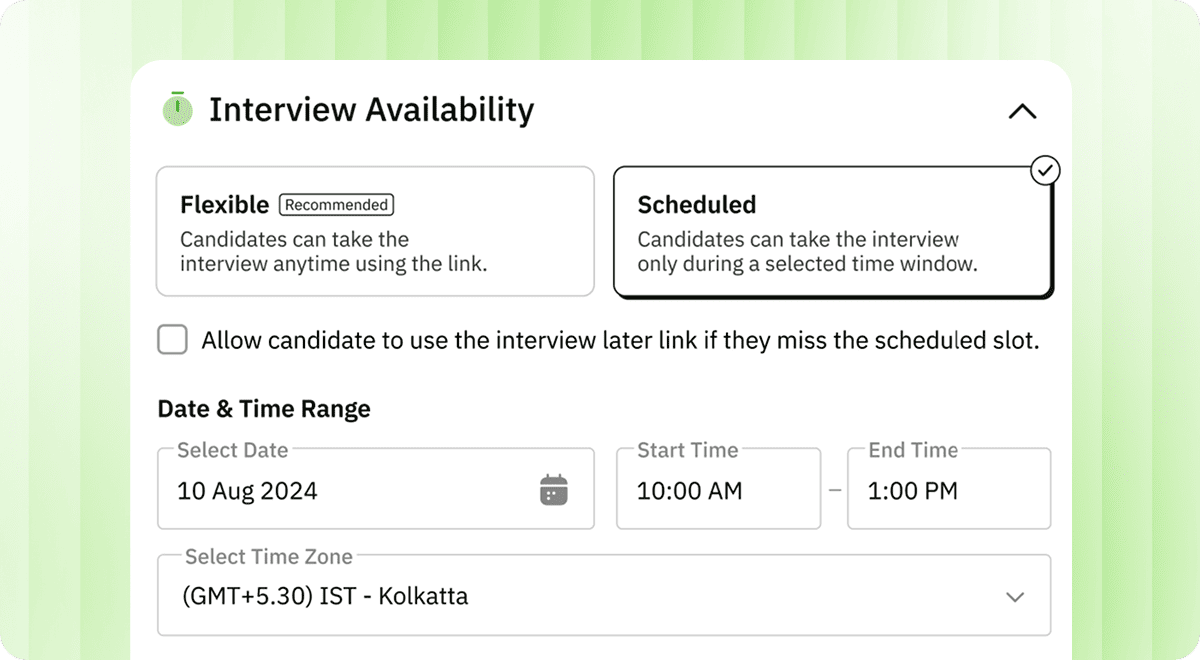
For scheduling that works out of the box, Hyring is more direct.
Reporting & Hiring Analytics
Hyring
A Hyring report covers transcripts, role-based scores, proctoring flags, video recordings, sentiment signals, cognitive insights, and fraud indicators, all in one view.
MakiPeople
MakiPeople surfaces score bands, structured results, ATS-synced progress, and recruiter insights. The Capgemini program showed that this works well at enterprise scale when the journey is properly configured.
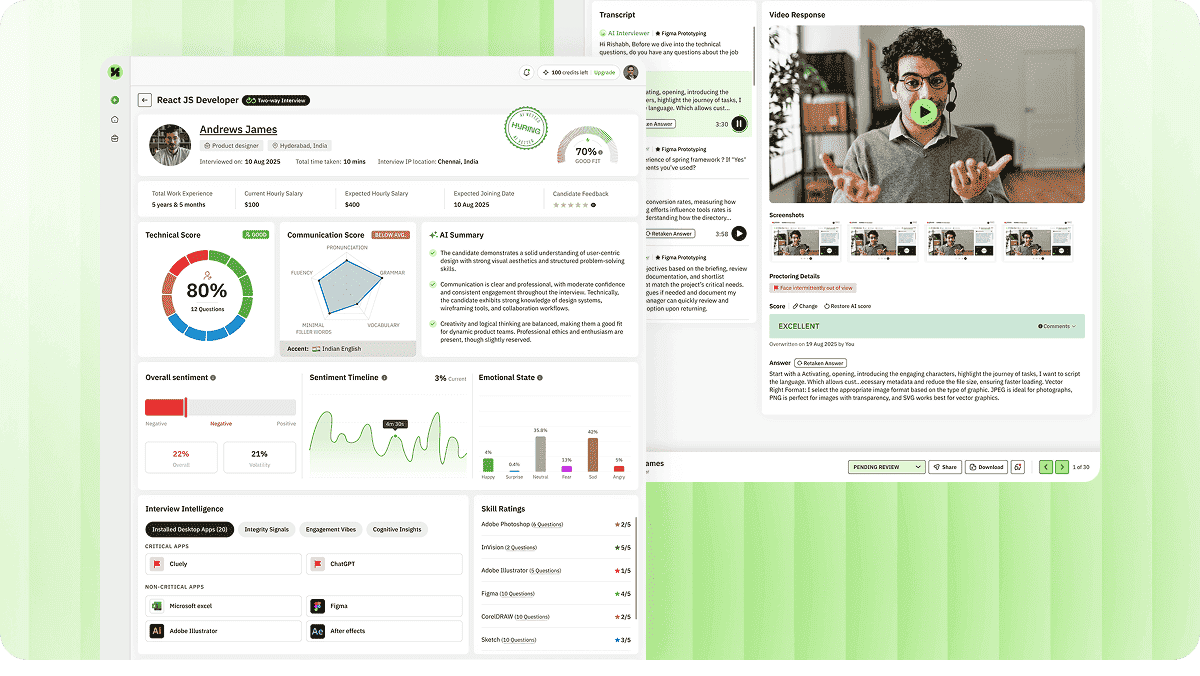
For fast hiring decisions, Hyring's reports are easier to read and act on.
Global Hiring & Accessibility
Hyring
Hyring supports multilingual interviews and candidate flows for global teams.
MakiPeople
MakiPeople documents 25+ languages, accents, and cultural contexts. WCAG-compliant. Mobile-first design. A multilingual help center.
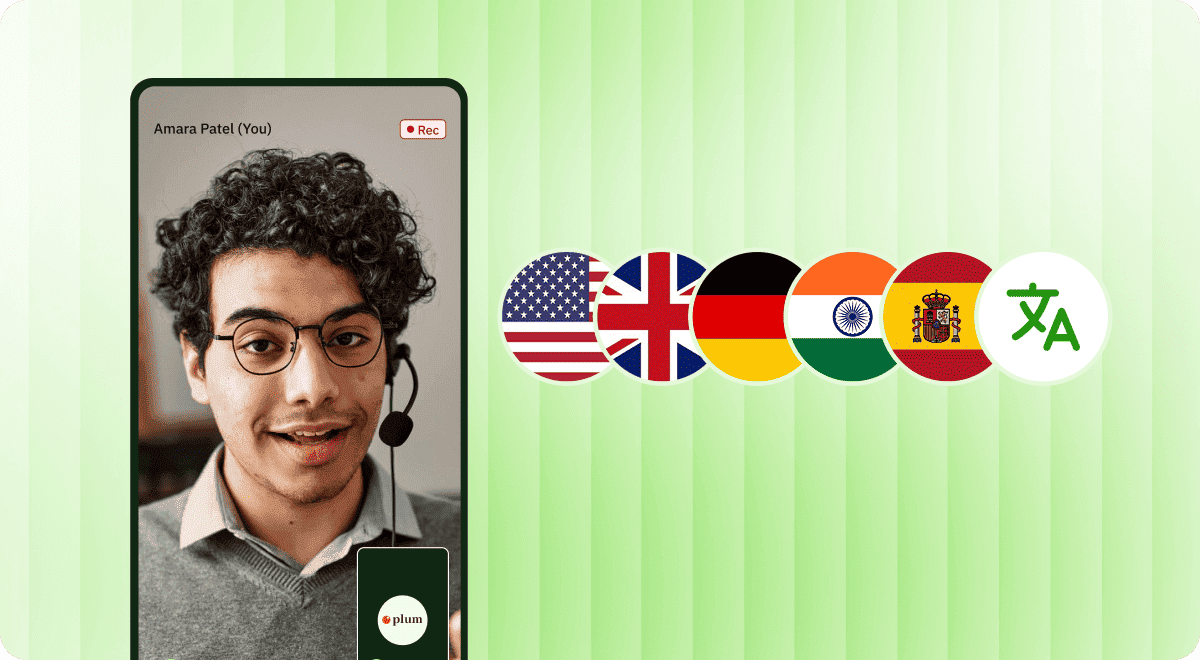
Both platforms support global hiring and are capable for most international teams. Hyring covers everything the majority of global organizations need, efficiently and without unnecessary complexity. MakiPeople goes deeper on multilingual features, but only if you're running a highly specialized, enterprise-scale program.
The Human Touch: MakiPeople vs Hyring
Hyring
Hyring flags proctoring events for manual review. Scores can be overridden. Hiring managers see full reports before any decision is made. The AI screens. The recruiter decides.
MakiPeople
MakiPeople runs a structured journey end-to-end. The recruiter reviews outputs after the process completes.
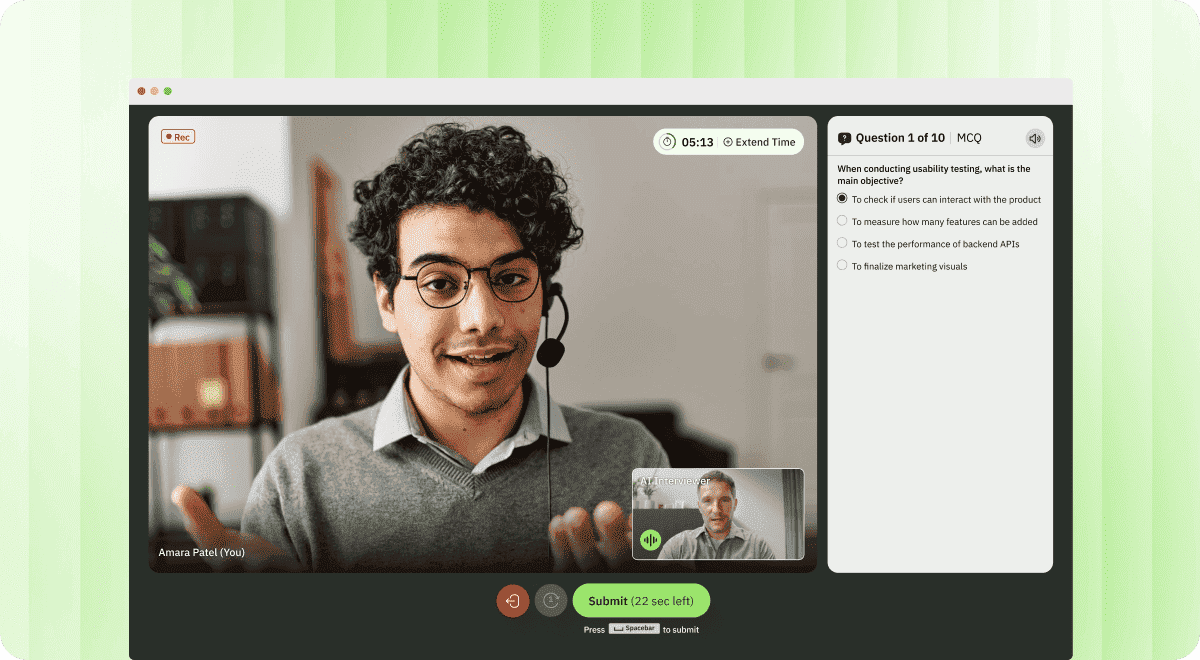
Hyring keeps human judgment visible at each step. For hiring decisions that carry legal or reputational weight, that matters.
UI UX Experience
Recruiter Experience
Hyring
Hyring's dashboard is built for speed. From setting up an interview, sending invites, and reviewing results, it follows a simple sequence.
MakiPeople
MakiPeople includes guided onboarding, a Customer Success Manager, and integration workshops. For large deployments, that structure is useful. For teams that need to go live quickly, it is a longer process than most can plan for.
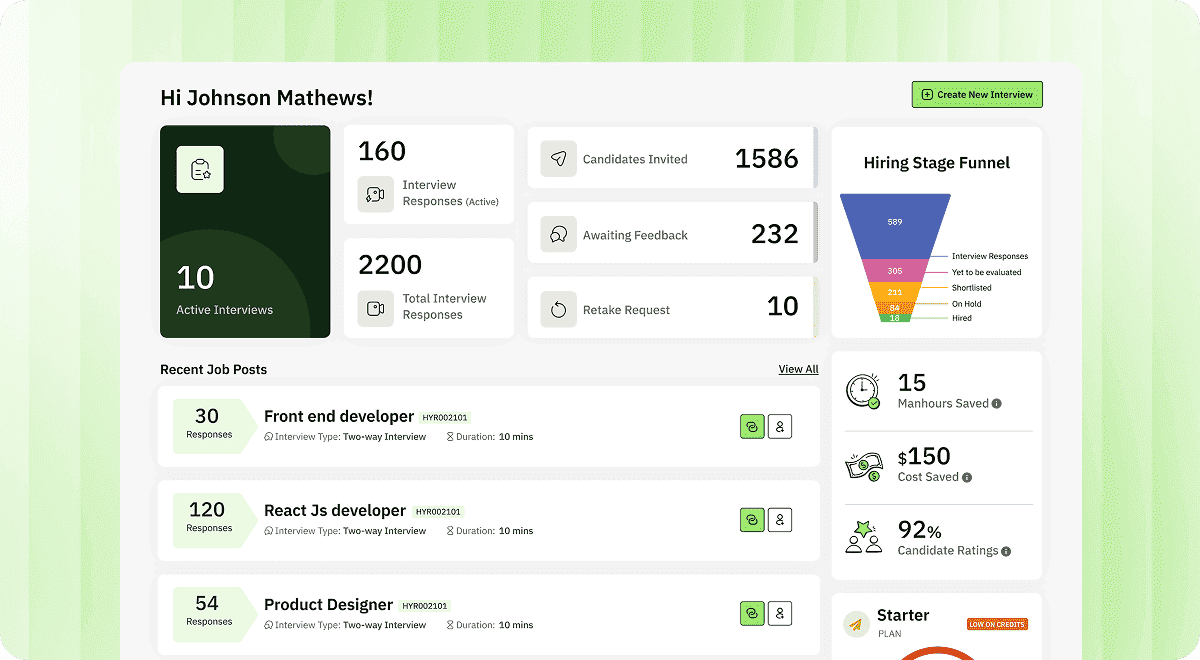
Hyring is faster to set up and easier to use daily. MakiPeople's support is built for enterprise clients with time to use it.
Candidate Experience
Hyring
Hyring gives candidates clear instructions and a consistent format. Proctoring is present but balanced to avoid unnecessary friction.
MakiPeople
MakiPeople's Mochi is conversational and adaptive. The Capgemini program hit 95% candidate satisfaction. MakiPeople also offers white-labeled, branded journeys throughout the hiring process.
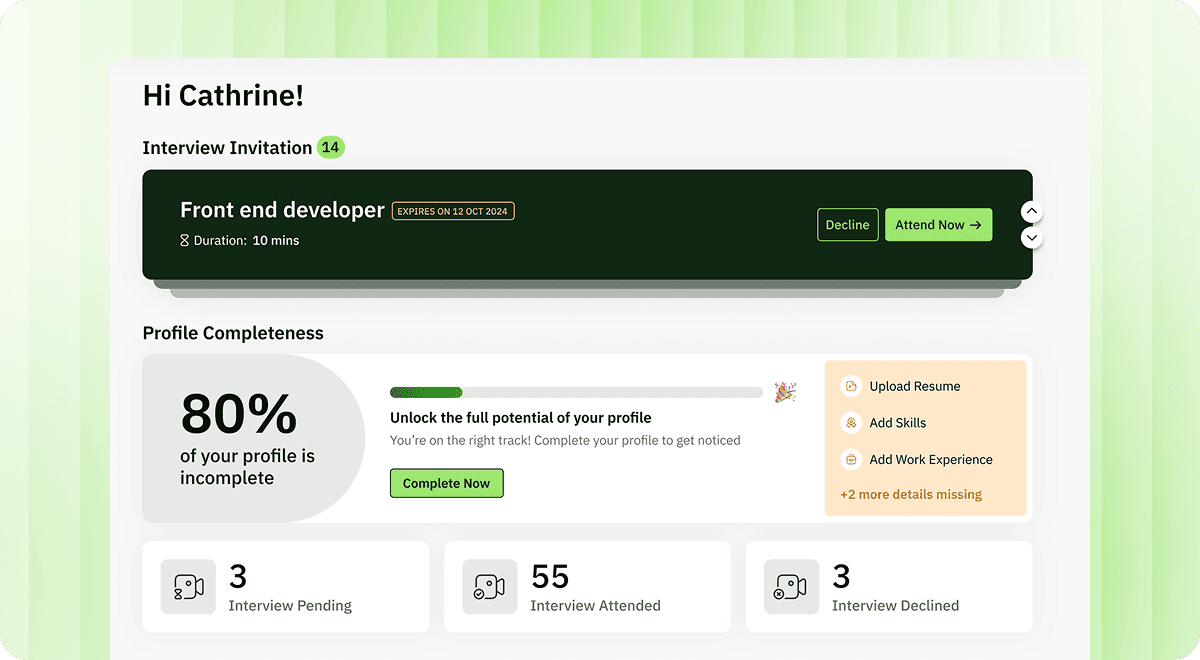
MakiPeople's branded journeys suit enterprise programs where employer brand is a priority. For standard hiring, Hyring's experience is more familiar and straightforward.
Security & Compliance
Data Protection
Hyring covers GDPR, SOC 2, and ISO-level security, with monitored interviews and secure data handling. MakiPeople matches up with GDPR compliance, encryption, auditability, and documented security controls. Always verify data residency, encryption, and access controls with your own security team before committing to a vendor.
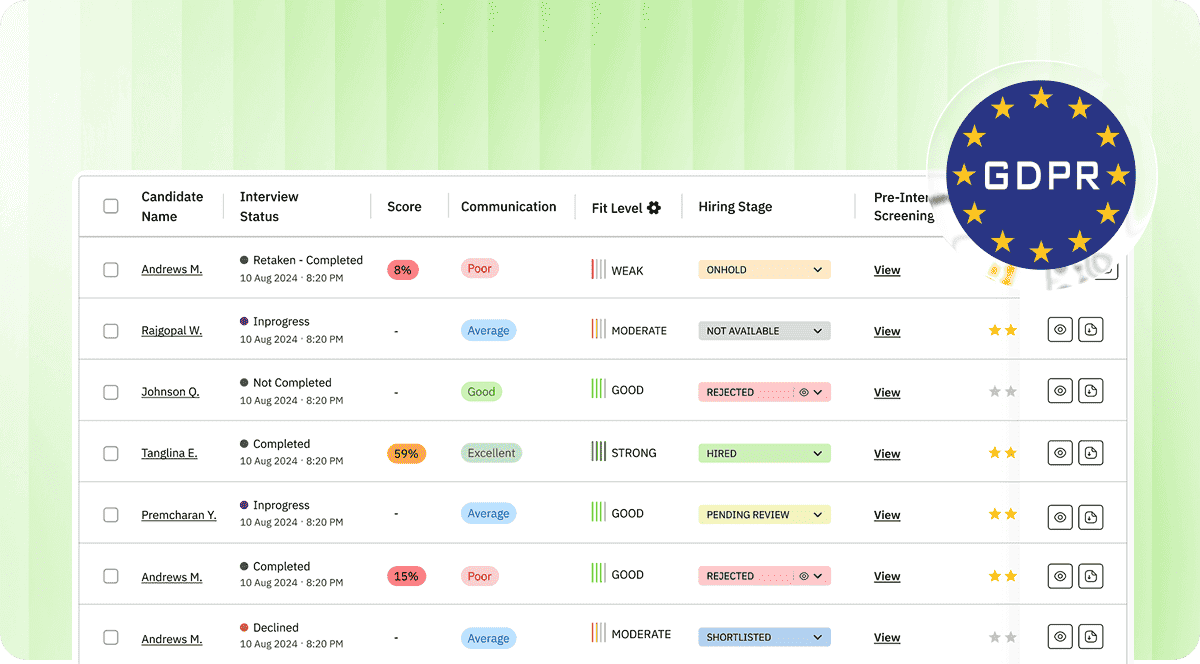
Compliance & Certifications
Hyring
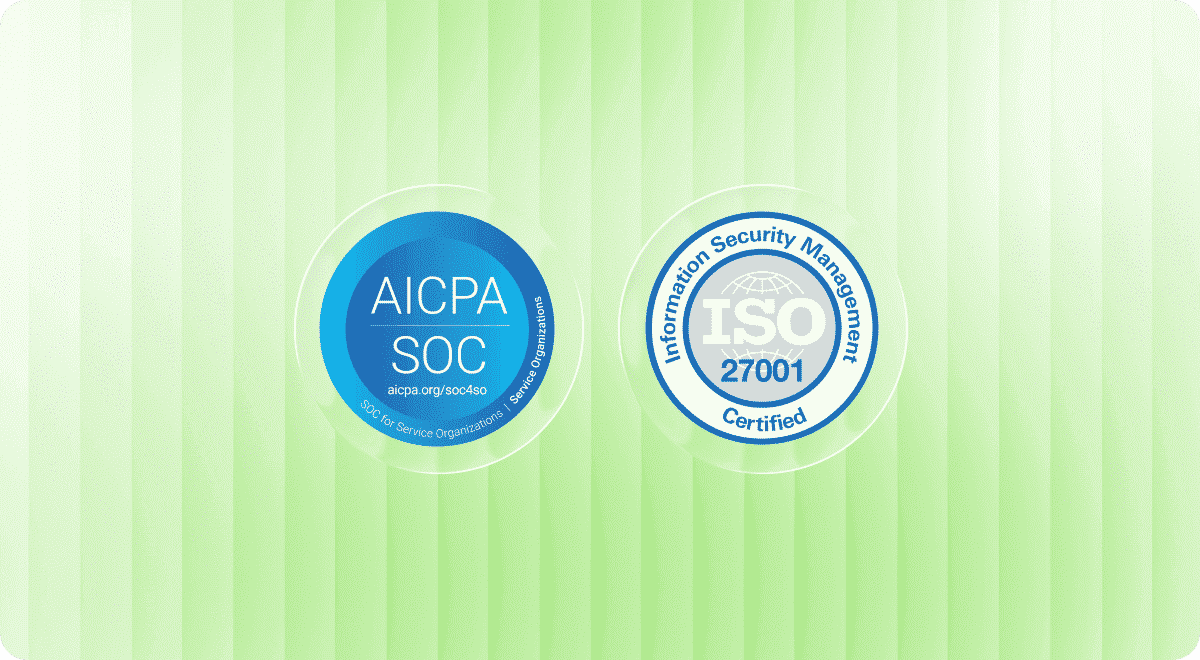
Hyring holds both SOC2 and ISO 27001, documented at the Trust Center. For regulated hiring, dual certification gives compliance teams a cleaner baseline.
MakiPeople
MakiPeople holds ISO 27001. SOC2 is not clearly surfaced on its public pages based on available materials.
Candidate Privacy
Hyring's help documentation covers candidate data retention and interview-level data handling. MakiPeople's privacy details are in its help center and enterprise contracts.
Both are enterprise-compliant. For teams evaluating security in a hiring context, Hyring's documentation is more directly relevant.
Cost & Pricing Structure
Pricing model
Hyring charges based on interview volume. You pay for what you use, not a fixed seat count, regardless of activity. Pricing starts at around $1 to $5 per interview for standard volumes. Finance teams can estimate the cost per hire from that number.
MakiPeople charges based on candidate interactions, not licences. But no per-interaction figure is published. Pricing is scoped around deployment size and integration complexity.
Transparency
The rate is published, so hiring spend can be forecast against pipeline volume before a contract is signed.
For teams that need to forecast hiring spend, the lack of published rates makes planning harder. Scope has to be agreed with sales before a number exists.
Pricing model
Hyring charges based on interview volume. You pay for what you use, not a fixed seat count, regardless of activity. Pricing starts at around $1 to $5 per interview for standard volumes. Finance teams can estimate the cost per hire from that number.
MakiPeople charges based on candidate interactions, not licences. But no per-interaction figure is published. Pricing is scoped around deployment size and integration complexity.
Transparency
The rate is published, so hiring spend can be forecast against pipeline volume before a contract is signed.
For teams that need to forecast hiring spend, the lack of published rates makes planning harder. Scope has to be agreed with sales before a number exists.
You can check out Hyring's full pricing structure and even book a consultation at Hyring Subscription Plans. For teams looking at MakiPeople alternatives with clear interview-level pricing, Hyring is one of the few that publishes real numbers.
Conclusion: Which is the Best AI Interviewer – MakiPeople or Hyring?
Hyring is the stronger fit for most recruiting teams. Clear pricing. A documented public API. Proctoring signals in recruiter reports. Role-specific templates ready to use. Fast to get live.

Why Hyring is stronger for recruiting teams
High-volume screening with clear pricing, transparent proctoring, and fast ATS integration. From invite to ATS handoff, every step is visible and documented.
Choose Hyring if
You run moderate to high-volume hiring, need pricing you can plan around, and want proctoring your team can act on without extra setup.

Where MakiPeople holds its ground
Multilingual enterprise programs with branded candidate journeys at scale. Its agents handle screening, assessment, and scheduling within one structured flow.
Choose MakiPeople if
You run enterprise-scale multilingual programs and have the resources for a full deployment.
MakiPeople is a strong platform for enterprise programs. Multilingual hiring at scale, white-labeled candidate journeys, and a structured agent-based flow. The Capgemini results show what it can do when fully deployed.
Disclaimer: All information is from publicly available sources and may change. This comparison does not guarantee current service offerings or specs.
Frequently Asked Questions
Can Hyring or MakiPeople replace human recruiters?
No.
Hyring automates screening. Humans control scoring, review, and final decisions. MakiPeople automates the candidate journey, but recruiters decide on the outputs.
Will Hyring or MakiPeople work with my ATS?
Hyring connects to Greenhouse, Workday, Lever, Zoho Recruit, iCIMS, Workable, Ashby, SmartRecruiters, BambooHR, JazzHR, Bullhorn, and SAP through a documented public API.
MakiPeople lists 30+ ATS integrations. A public API was not found in publicly available materials at the time of this audit.
Which integrates better with LinkedIn Recruiter: Hyring or MakiPeople?
Hyring fits LinkedIn Recruiter workflows well. Candidates sourced on LinkedIn enter the Hyring interview flow directly after applying. No manual scheduling needed. MakiPeople focuses on its own candidate journey structure.
MakiPeople vs Hyring: Which supports non-English interviews?
Both do.
MakiPeople documents 25+ languages, accents, and cultural contexts as a core feature. Hyring supports multilingual interviews for global teams. For large enterprise multilingual programs, MakiPeople's coverage is more extensive.
Is Hyring or MakiPeople better for screening engineers vs sales roles?
Hyring covers both. Coding Interviewer for technical roles. English Proficiency Test for customer-facing and sales roles. Templates run from entry to senior level. MakiPeople's Ken covers coding and communication within enterprise programs. For standard roles without complex configuration, Hyring is faster to deploy.
Stop Screening Manually.
Start Hiring Smarter with Hyring.
If this comparison has shown you anything, it's that Hyring is built for the way recruiting teams actually work — fast-paced, high-volume, and demanding real accountability at every step. From AI video and phone screening to built-in proctoring and ATS sync, Hyring gives your team the tools to move faster without cutting corners.
See why hiring teams at scaling companies choose Hyring over MakiPeople.
Compare with other platforms