Panasonic Hiring Process: Where Hyring's AI Agents Fit
The Panasonic hiring process supports a workforce of approximately 233,391 employees globally as of March 2024, spread across divisions ranging from automotive batteries to home appliances. Annual hiring volume, factoring in attrition and growth across Panasonic Holdings' operating companies, runs into tens of thousands of positions each year.
This blueprint maps where Hyring's AI agents can absorb manual workload across the Panasonic recruitment process, what outputs they produce for hiring teams, and which KPIs keep the model measurable.
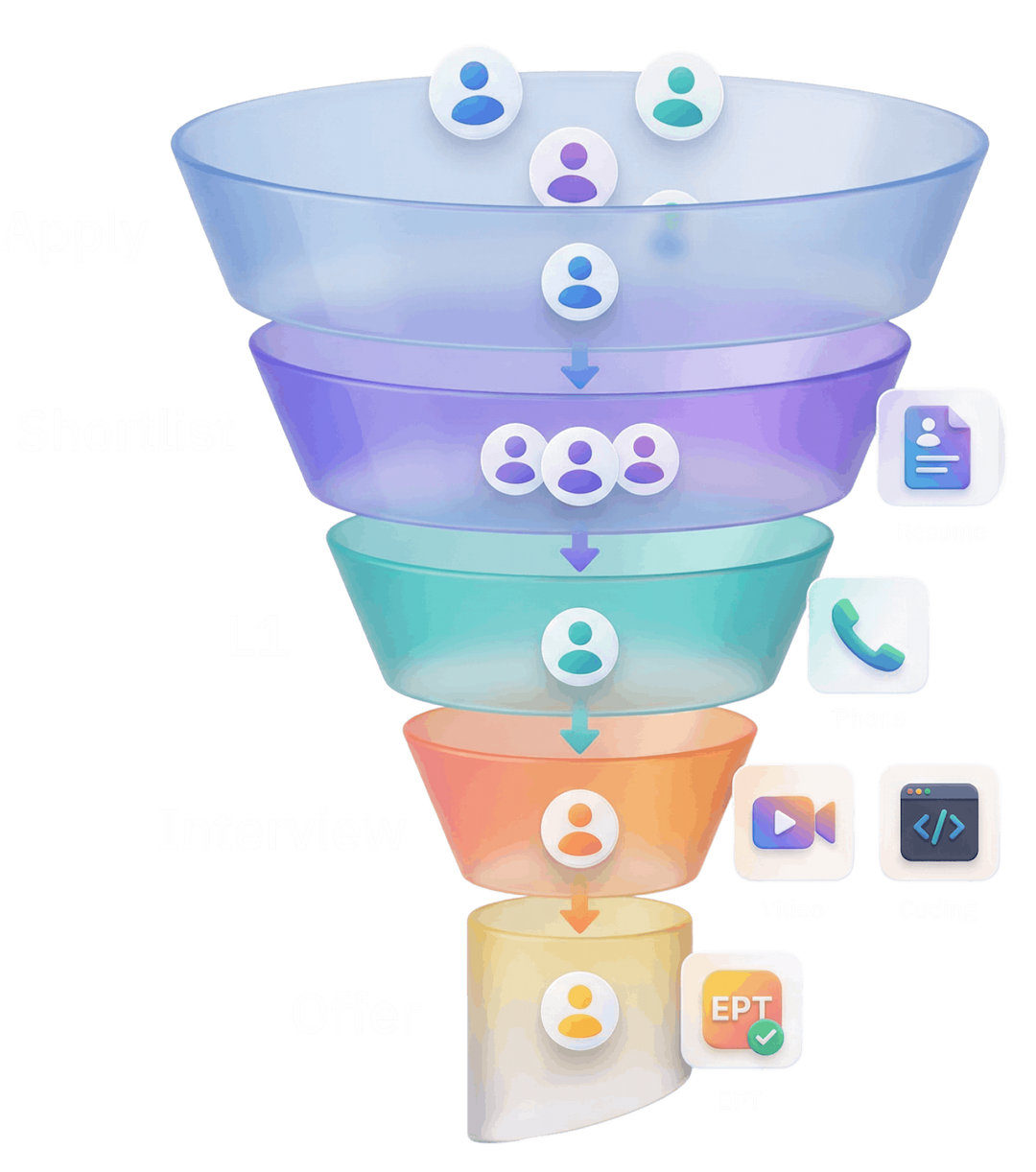
This article is a planning framework showing where AI can reduce manual effort across the funnel. It does not indicate an existing client relationship between Hyring and Panasonic.
The Roadmap
A hiring model is only real if someone on the team can point to a metric that changed this week. Otherwise it is a slide deck that no one reopened after the quarterly review.
This blueprint was built for the Panasonic recruitment process running across global manufacturing, R&D, and corporate functions. It contains four parts:
- A funnel map built for multi-divisional, geographically dispersed hiring workflows.
- A phased deployment plan.
- A KPI scoreboard with risk signals for each metric.
- An ROI module with adjustable inputs.
Panasonic Holdings has transitioned to an operating company system, where the company has been divided into operating companies such as Panasonic Automotive Systems, Panasonic Energy, and Panasonic Connect, among others, since April 2022.
Each of these companies has its own talent acquisition process. A battery gigafactory in Kansas, in partnership with Panasonic Energy, has been engaged in the onboarding of thousands of manufacturing technicians, while Panasonic Connect has been recruiting software engineers in Japan and Europe under different paradigms altogether.
Operational clashes are found in the initial three stages of the funnel, where automation has some importance but not at the expense of human judgment.
Current State
Panasonic Holdings reported consolidated headcount of approximately 233,391 employees as of its FY2024 annual report (fiscal year ending March 2024), per its investor relations filings. Revenue for FY2024 stood at approximately 8.5 trillion yen.
Voluntary attrition data is not published at the group level, but Glassdoor reviews and Japanese labour market reporting suggest turnover in Panasonic's Japan operations sits around 5–7% annually, while North American operations (particularly manufacturing) run higher, estimated at 12–18% based on sector averages reported by the Bureau of Labor Statistics for electronics and battery manufacturing.
The Kansas gigafactory alone was expected to employ over 4,000 workers at full capacity, per media reporting on the De Soto facility. Panasonic Energy has announced additional capacity expansions that will push hiring volume further.
Across all operating companies, Panasonic likely processes 80,000 to 120,000 applications per year globally (estimated from headcount, published attrition ranges, and growth hiring for new facilities). A single manufacturing ramp targeting 2,000 hires can generate 15,000 to 20,000 applications within a quarter. That volume lands on recruiter teams already managing ongoing backfill.
~233391
80k-120k
4000+
What Ails the Panasonic Recruitment Process
At this scale, a slowdown at one stage does not stay isolated. A five-day slowdown in shortlisting at one facility translates into a three-week backlog before candidates are presented to a technical panel. Three weeks is long enough, in battery manufacturing recruiting, to lose candidates to Tesla, Samsung SDI, and LG Energy Solution, all competing for the same talent pools in Kansas, Nevada, and the Southeast US.
Manufacturing hiring surges overwhelm recruiter bandwidth in weeks
Battery plant ramp-ups do not arrive as steady trickles through the year. When Panasonic Energy's Kansas facility moves from Phase 1 to Phase 2 production, hiring demand jumps by hundreds of positions in a compressed window since manufacturing demands the same.
Recruiters who managed 30 requisitions in a steady state suddenly face 120. The screening queue grows daily, and candidates further back wait two weeks longer than those at the front for the same role. That timing gap creates bias in who gets processed first, not who is most qualified.
L1 phone screens consume thousands of hours on repeatable questions
First-round phone screens for manufacturing technicians follow a set script around shift availability, safety certification status, relocation readiness, and basic technical background. Each call runs 12–15 minutes.
At an estimated 25,000 L1 screens per year across all entities, that is roughly 5,200 to 6,250 person-hours of conversations where the questions, grading logic, and pass/fail criteria are identical every time.
Engineering panels lose billable project hours to unfiltered candidate pipelines
Panasonic Connect and Panasonic Automotive Systems deploy R&D engineers on client-facing product development projects. When a senior embedded systems engineer spends four hours a day interviewing candidates during a hiring sprint, that is four hours of unbilled or unallocated project time.
The cost does not appear in the recruitment budget. It shows up in project margin erosion, and delivery managers rarely flag it until deadlines slip.
Candidate drop-off accelerates between screening and interview scheduling
Manufacturing candidates in the US typically hold two to three offers simultaneously. A candidate who clears a phone screen on Wednesday and does not receive an interview slot until the following week is actively progressing through Samsung SDI's or Tesla's pipelines.
The drop-off is invisible in recruiter dashboards because the candidate simply stops responding rather than formally declining.
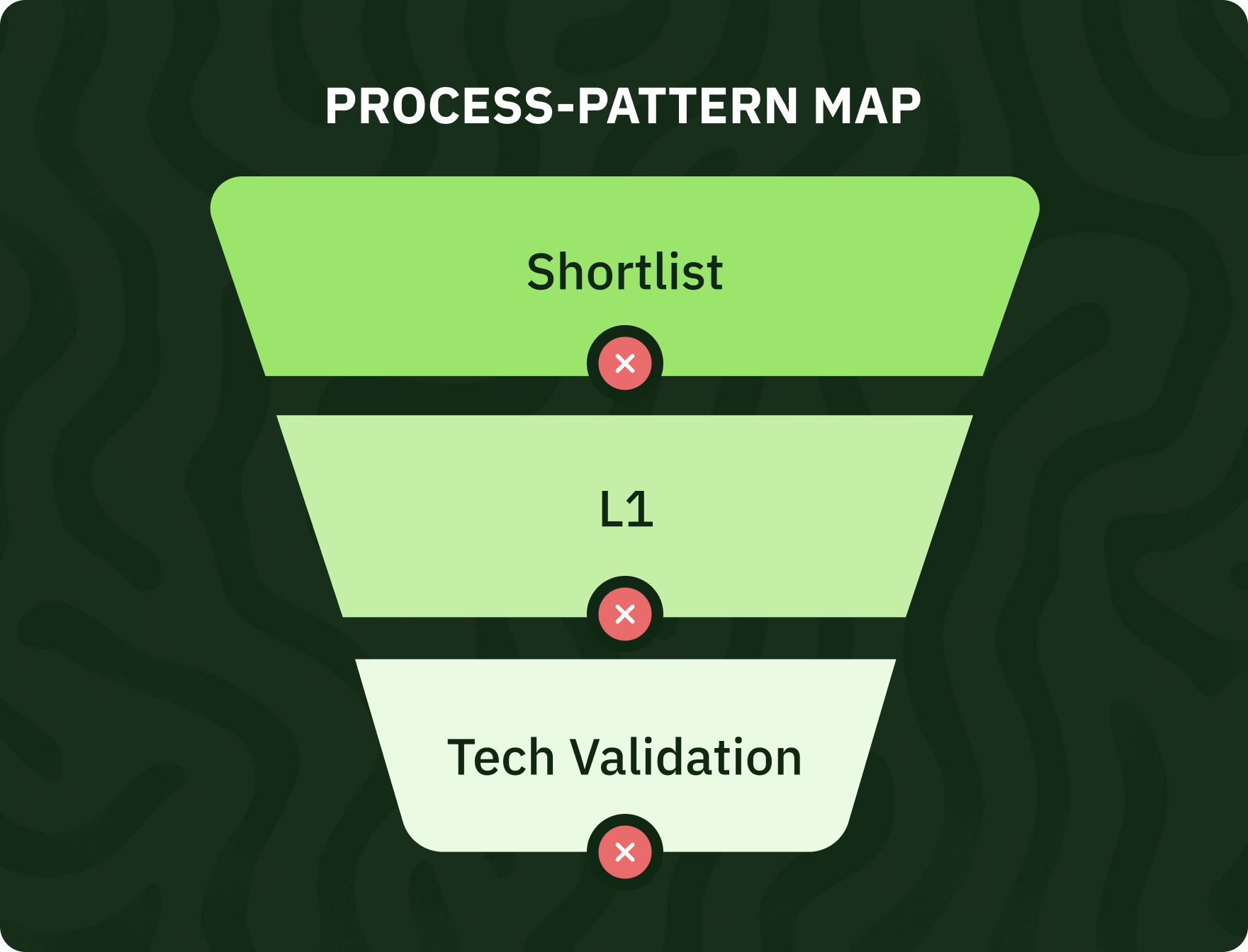
Hyring AI Agents
The stages where Hyring's agents operate are those where manual repetition burns time without requiring human judgment. If a task involves a repeatable rubric with a scored or binary output, the agent handles it. If the task involves nuanced evaluation, a human handles it. Human sign-off at the final decision stage is non-negotiable.
The AI Resume Screener
Instantly parse and rank resumes based on job-fit signals and technical requirements.
- Rapid high-volume parsing
- Objective skill ranking
- Bias-reduced shortlisting
The AI Phone Screener
Automated L1 verification calls to ensure basic qualifications and interest levels.
- 24/7 automated screening
- Consistent evaluation metrics
- Instant shortlist generation
The AI Coding Interviewer
Technical assessment with live coding environments and real-time logic evaluation.
- Real-time code analysis
- Plagiarism detection
- Automated logical scoring
English Proficiency Test
Standardized evaluation of communication skills, fluency, and professional vocabulary.
- Automated fluency scoring
- Grammar and clarity analysis
- CEFR aligned reporting
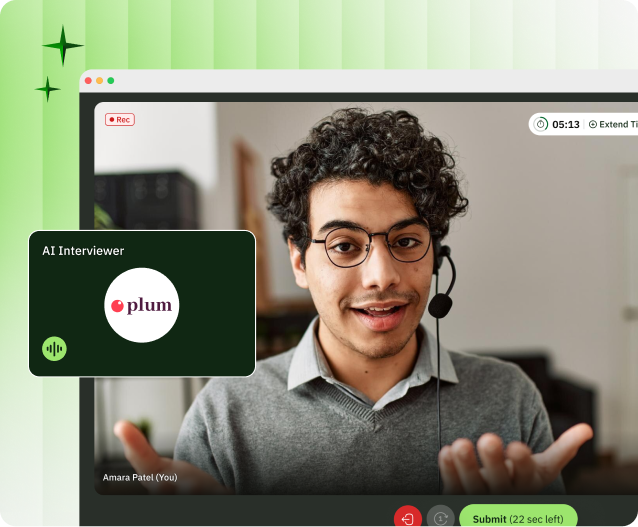
Funnel-to-agent
| HIRING STAGE | HYRING PRODUCT | WHAT IT DOES | OUTPUT (WHAT THE TEAM SEES) |
|---|---|---|---|
| SHORTLIST | AI resume screener | Shortlists candidates using resume-based role-fit indicators. | Ranked shortlist + job fit signals. |
| L1 SCREENING | AI phone screener | Runs first-round phone screens and supports shortlisting. | Call summary + score + shortlist. |
| STRUCTURED INTERVIEW | AI video interviewer | Runs structured video interviews and generates candidate reports. | Interview process automation + structured scoring. |
| TECH VALIDATION | AI coding interviewer | Conducts coding interviews for engineering roles. | Coding evaluation report. |
| COMMUNICATION | English proficiency test | Adds an English assessment step where roles require it. | Level + skill breakdown. |
HYRING PRODUCT
AI resume screener
WHAT IT DOES
Shortlists candidates using resume-based role-fit indicators.
OUTPUT (WHAT THE TEAM SEES)
Ranked shortlist + job fit signals.
HYRING PRODUCT
AI phone screener
WHAT IT DOES
Runs first-round phone screens and supports shortlisting.
OUTPUT (WHAT THE TEAM SEES)
Call summary + score + shortlist.
HYRING PRODUCT
AI video interviewer
WHAT IT DOES
Runs structured video interviews and generates candidate reports.
OUTPUT (WHAT THE TEAM SEES)
Interview process automation + structured scoring.
HYRING PRODUCT
AI coding interviewer
WHAT IT DOES
Conducts coding interviews for engineering roles.
OUTPUT (WHAT THE TEAM SEES)
Coding evaluation report.
HYRING PRODUCT
English proficiency test
WHAT IT DOES
Adds an English assessment step where roles require it.
OUTPUT (WHAT THE TEAM SEES)
Level + skill breakdown.
KPI Scoreboard — Panasonic Hiring Model
Time to Screen
Definition: The time taken between receiving the application and the L1 decision.
Risk indicator: Getting this done below 2 days is a win, but notice the panel-stage rejection rate. If it spikes, the early filter trades speed for accuracy.
Screening Throughput
Definition: Volume of initial screens completed per recruiter per week.
Risk indicator: Throughput rising while the next-stage advance rate drops means the filter is too loose. Tighten criteria before increasing scale further.
Interview Completion Rate
Definition: Percentage of candidates who receive an interview invite and finish the full assessment.
Risk indicator: Below 60% completion usually traces to one of three causes: unclear invite instructions, broken access links, or assessment length past 40 minutes.
Early Stage Drop-offs
Definition: The specific process step where candidates stop involving themselves.
Risk indicator: A sizable drop-off at the evaluation stage (not the scheduling stage) usually means it feels too long or too difficult relative to the role. Manufacturing candidates abandon faster than lateral R&D hires.
Panel Hours per Hire
Definition: Total human interviewer hours consumed per finalized hire.
Risk indicator: Track alongside 3-month retention. If panel hours drop and retention drops with them, the AI filter may be too invasive on soft-skill signals panels would have caught.
Pass-through Rate
Definition: Percentage of candidates advancing from one stage to the next.
Risk indicator: A 15-point variance in pass-through rates between two facilities recruiting for the same role means the rubric needs site-level calibration, not a single uniform threshold.
Shortlist-to-Offer Ratio
Definition: How many shortlisted candidates does it take to produce one accepted offer?
Risk indicator: Improving from 8:1 to 4:1 is strong. Improving from 8:1 to 3:2 suggests the model is pruning candidates who may have succeeded and that's not ideal.
Integrity Flag Rate
Definition: Percentage of AI interviews triggering fraud or cheating alerts during proctoring.
Risk indicator: A baseline around 4% is normal. A sudden jump above 10% from a single facility or region warrants manual review before drawing conclusions about candidate quality.
Time to First Touch
Definition: Lag between application submission and first outreach.
Risk indicator: Automating the first touch is straightforward. The more difficult question is whether touches two and three (assessment invite, status update) also arrive on schedule. Fast first touch followed by a week of silence creates worse perception than a consistently moderate pace.
SLA Adherence
Definition: Percentage of hiring stages completed within target timelines.
Risk indicator: Missing SLAs in one operating company while meeting them in another points to a process gap, not a technology gap. Compare configurations before adding resources.
Model ROI for High-Volume Scenario
All numbers used in this section are projections. The calculations are based on publicly available figures for Panasonic's employee count and estimated recruitment volumes; however, the cost model used is not publicly available.
Annual Savings Potential
$1.8M+
in operational and hiring costs.
Reduction in Time-to-Hire
60%
faster from application to accepted offer.
Faster Interview Process
48%
acceleration in scheduling and evaluation throughput.
5-Year ROI Projection
~311%
with a 7-month payback period.
Note: ROI figures below are an illustrative model of potential savings in this specific scenario. Actual results vary by internal workflow costs.
Recovered Hours Across the Funnel
Three stages consume the bulk of manual effort in the Panasonic interview process:- resume screening, L1 phone screens, and early technical panels.
- Resume screening: 100,000 applications, average time per resume 7 minutes, total time 11,667 person-hours. AI resume screening reduces this to approximately 1,200 person-hours (recruiter time reviewing AI-generated shortlists).
- Level 1 Phone screens: 30,000 candidates remaining after shortlisting, 15 minutes per candidate, total time 7,500 person-hours. AI phone screening produces scored results, leaving approximately 850 person-hours of recruiter review time.
- Early tech panels: 12,000 candidates remaining after L1, 30 minutes per candidate, 1.3 panel members on average, total time 7,800 person-hours. AI coding and video screening reduces candidates reaching this stage by 50%, saving approximately 3,900 person-hours.
Total estimated hours recovered annually: ~24,800.
Hours by Stage (Manual vs. AI-Assisted)
Source: Hyring Hiring Model (Illustrative)
Manual cost vs. target cost with AI agents
At roughly a 7:1 application-to-hire ratio, every efficiency gain at the top of the funnel reduces cost and effort at every stage below it.
| Metric | Current manual process | Target with Hyring AI agents |
|---|---|---|
| L1 screening cost | ~$825K (recruiter hours at $22/hr loaded, coordinator time, telephony) | ~$115K (at ~$1 per AI-conducted screen, plus ~$30K in recruiter review hours) |
| Engineering panel load | Heavy: engineers conduct early technical screens across facilities, averaging 3–4 interviews per day during hiring sprints | Light: panels receive only candidates who cleared AI resume, phone, and coding gates. Interview load drops to 1–2 candidates per day with higher relevance |
| Interview scalability | Capped by interviewer calendars, timezone coordination across US/Japan/Europe, and slot availability | Concurrent and asynchronous: candidates complete AI assessments on their own schedule within a defined window |
| Candidate verification | Interviewer observation during live video, inconsistent across fatigue levels and experience | Automated proctoring monitors face presence, voice matching, screen activity, gaze direction, and clipboard behaviour simultaneously |
| Funnel completion rate | ~30% of candidates who enter the shortlist stage reach offer (estimated from manufacturing and tech sector benchmarks) | >68% projected, driven by reduced wait times, self-scheduling, and faster status updates |
Where the $1.8M+ Savings Come From
The largest cost recovery sits outside the recruitment department: engineering delivery margins and candidate acquisition overhead.
- L1 volume handled by AI agents: At 100,000 applications and a 15-minute average screen, the manual L1 stage costs roughly $825K in loaded recruiter time. AI phone and video agents conducting 90% of those screens at ~$1 each bring that figure to approximately $115K. Net recovery: ~$710K.
- Engineering hours returned to project work: Panasonic bills senior engineering talent internally at rates varying by division and geography. Mid-level engineers across US and Japan operations typically carry loaded costs of $40 to $60 per hour. Recovering 3,900 panel hours translates to roughly $155K to $235K in project capacity restored. Midpoint: ~$195K.
- Scheduling and coordination overhead narrowed: The multi-entity, multi-timezone coordination effort for slot management, candidate communication, rescheduling, and no-show follow-ups requires an estimated 5,000 to 7,000 coordinator hours annually for this scale of Panasonic. Self-scheduling via AI assessment linking reduces this effort by 55%. Estimated savings: $110,000.
- Re-screening and integrity costs: Current manual fraud detection methods detect issues too late in the process. This disqualifies candidates, invalidating all previous process time. AI proctoring catching issues in the first stage of AI interviews saves an estimated $65,000 in wasted process time.
Total estimated annual savings: ~$1.8M (rounded conservatively, combining direct and secondary-cycle effects).
Where the Savings Come From
Source: Hyring Hiring Model (Illustrative)
Cumulative Savings vs Cost
The investment in the platform occurs upfront, and savings build over each hiring cycle. In the model, the break-even point is approximately month seven. This payback period will be shorter if the volumes of lateral hiring across additional operating companies are stacked onto the same Hyring platform, as the marginal cost of each additional AI interview is essentially zero. What makes the Panasonic hiring model responsive to AI deployment is the nature of the first three stages — they are high volume, rubric-based, and scored. They are not creative or relationship-based decision-making processes.
Cumulative Savings vs Investment (12-Month Model)
Month
Source: Hyring Hiring Model (Illustrative)
Panasonic Hiring Process Implementation
A deployment attempt to support 100,000 applications on day one is going to fail. Staged rollouts protect existing workflows, provide comparison data, and allow hiring panels to trust AI outputs before relying on them.
Week 2: Activate AI Phone Screener and AI Video Interviewer for pilot roles only
Run them alongside your existing manual process for the first 72 hours. Compare outputs — score distributions, time-to-decision, candidate completion rates. Track daily. Surface discrepancies between AI recommendations and manual decisions immediately so rubrics can be calibrated before volume increases.
Week 3: Layer in AI Coding Interviewer and English Proficiency Test
Add the coding interviewer for the Panasonic Connect engineering track. Add the English Proficiency Test for any role where cross-regional communication is a first-year requirement (common in Panasonic's matrix structure between Japan and overseas entities).
Begin monitoring integrity flag rates. Compare against whatever baseline exists from manual fraud detection. Flag rate spikes from specific facilities should trigger a threshold review, not automatic rejection.
Week 4: Aggregate pilot results and calibrate
Key questions for review: Did pass-through rates improve without panel satisfaction declining? Did candidate NPS hold steady or improve? Did time-to-offer compress measurably?
Adjust question banks, scoring weights, and flag sensitivity based on data. Expand to the next batch of requisitions only after two consecutive review cycles show stable SLAs.
Frequently Asked Questions
How does this Panasonic hiring model handle high-volume manufacturing recruitment?
Each candidate in a batch is sent their assessment link at the same time. With thousands of sessions running in parallel, Hyring's AI phone and video agents work quickly, and a 15,000-application facility can clear L1 screening in a matter of days instead of weeks.
What does the first-round automated agent produce for the Panasonic hiring process?
A report for each candidate with a competency score, response summary, highlighted areas for follow-up, and an advance or hold recommendation. This saves recruiters 90 seconds compared to a manual phone call asking the same questions.
How does this system prevent cheating in an interview?
The AI-powered video interviewer monitors six signals simultaneously — tab switches, second faces, voice inconsistencies, gaze anomalies, lip sync gaps, and clipboard pastes. These are combined into a composite integrity score on the recruiter's report. None of these flags alone causes rejection.
Do automated interviews hurt candidate experience?
Candidates select their own assessment window, skip scheduling back-and-forth, and receive status updates faster because scoring happens immediately after completion. Completion rates tend to rise when wait times shrink.
Can the coding validation be customized for different Panasonic divisions?
Yes. The AI Coding Interviewer supports Java, Python, C++, JavaScript, SQL, and other language environments with configurable difficulty per role profile. An embedded systems engineer and a cloud platform developer see entirely different assessments without requiring separate platform instances.
How do human technical panels fit into this workflow?
Panels are only involved at the final stage, after candidates have already been cleared through resume screening, phone/video interviews, coding assessments, and language tests. Engineers do not use the interview time for basic qualification verification.