Capgemini Hiring Process: AI Agents That Can Cut Screening Time
Capgemini reported a global workforce of approximately 340,400 employees as of December 31, 2023, per its 2024 Integrated Annual Report. India - home to well over half the headcount - remains the engine for fresher recruitment. Capgemini's India operations have historically targeted 40,000–60,000 new hires per year, with annual graduate intake estimated between 25,000 and 32,000 depending on the cycle.
This Capgemini hiring process blueprint is an independent planning framework. It maps where Hyring's AI agents absorb recruiter workload, what each agent produces, and which KPIs to track to know whether the system is actually working.
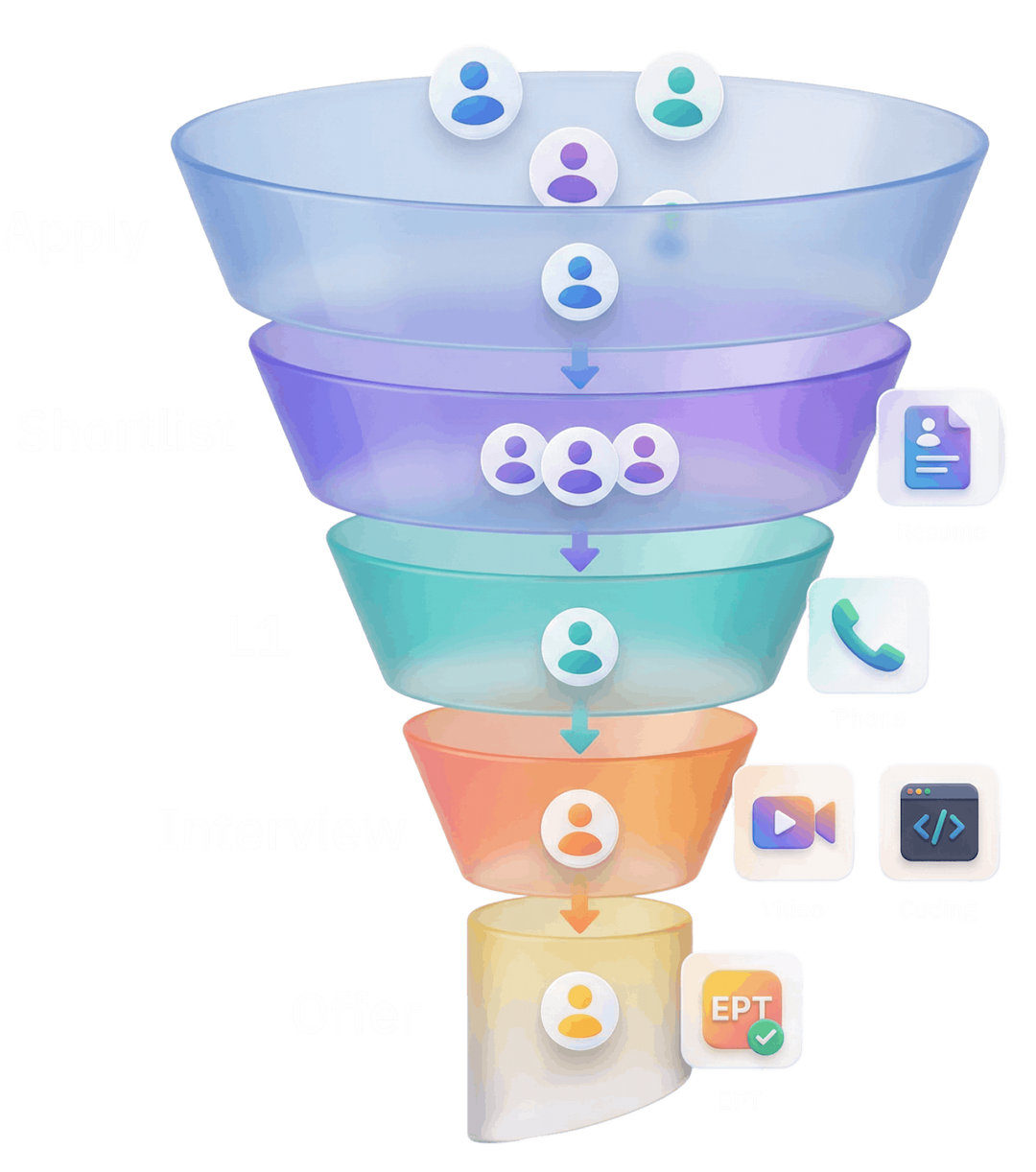
This article refers to a planning framework showing where AI can reduce manual effort across the funnel.
The Blueprint
A hiring model should be something you can open on a Monday morning and actually execute.
Here is what this one contains:
- A funnel map built for high-volume hiring.
- A deployment plan broken into weekly phases.
- A KPI scoreboard with ten metrics and a risk signal for each.
- An ROI module you can adjust to your own numbers (with a disclaimer, because we are not pretending these are guarantees).
Current State
Capgemini's 2024 integrated annual report recorded a headcount of approximately 340,400 as of December 31, 2023 (per its 2024 Integrated Annual Report). Revenue for the year came in at €22.1 billion, a slight dip from €22.5 billion in 2023, driven partly by softened discretionary spending among clients in North America and Europe.
On the hiring side, Capgemini's India operations have historically processed 40,000–60,000 new hires annually in high-volume cycles, with global gross hiring in 2024 estimated in a similar range given steady-state headcount and an industry-typical attrition rate of 15–20%. India operations - the largest talent base - drove the bulk of fresher onboarding.
Media reports from Economic Times and Mint indicate that Capgemini India's annual graduate intake has hovered between 25,000 and 30,000 in recent cycles, and the company signaled sustained momentum for 2025.
Its strategic focus on Intelligent Industry, cloud migration, and generative AI means hiring is tilting toward data engineers, cloud architects, and AI/ML specialists. That shift puts additional pressure on technical screening; the panels evaluating these candidates are expensive, scarce, and often double-booked and creates a lot of burnout stress.
~340400
40k–60k
~25k–30k
Pain Points of the Capgemini Recruitment Process
When your applicant pool crosses 300,000 per year in a single geography, the cracks in manual screening stop being minor. They become structural.
Capgemini's India hiring operation alone likely processes north of 280,000 applications for its fresher drives. Each one needs a resume review, a phone screen, a technical check, and a communication assessment. Multiply that volume by the average time per step, and you start seeing where the math breaks down.
Monotonous L1 calls
Engineering panels wasted early
Drop-off from silence
Hyring AI Agents
Each of Hyring’s products map to a specific stage in the Capgemini recruitment process where manual effort is highest and the task is most repeatable. The logic is straightforward: automate what follows a pattern, and route the judgment calls to humans who can make them well.
The AI Resume Screener
Instantly parse and rank resumes based on job-fit signals and technical requirements.
- Rapid high-volume parsing
- Objective skill ranking
- Bias-reduced shortlisting
The AI Phone Screener
Automated L1 verification calls to ensure basic qualifications and interest levels.
- 24/7 automated screening
- Consistent evaluation metrics
- Instant shortlist generation
The AI Coding Interviewer
Technical assessment with live coding environments and real-time logic evaluation.
- Real-time code analysis
- Plagiarism detection
- Automated logical scoring
English Proficiency Test
Standardized evaluation of communication skills, fluency, and professional vocabulary.
- Automated fluency scoring
- Grammar and clarity analysis
- CEFR aligned reporting
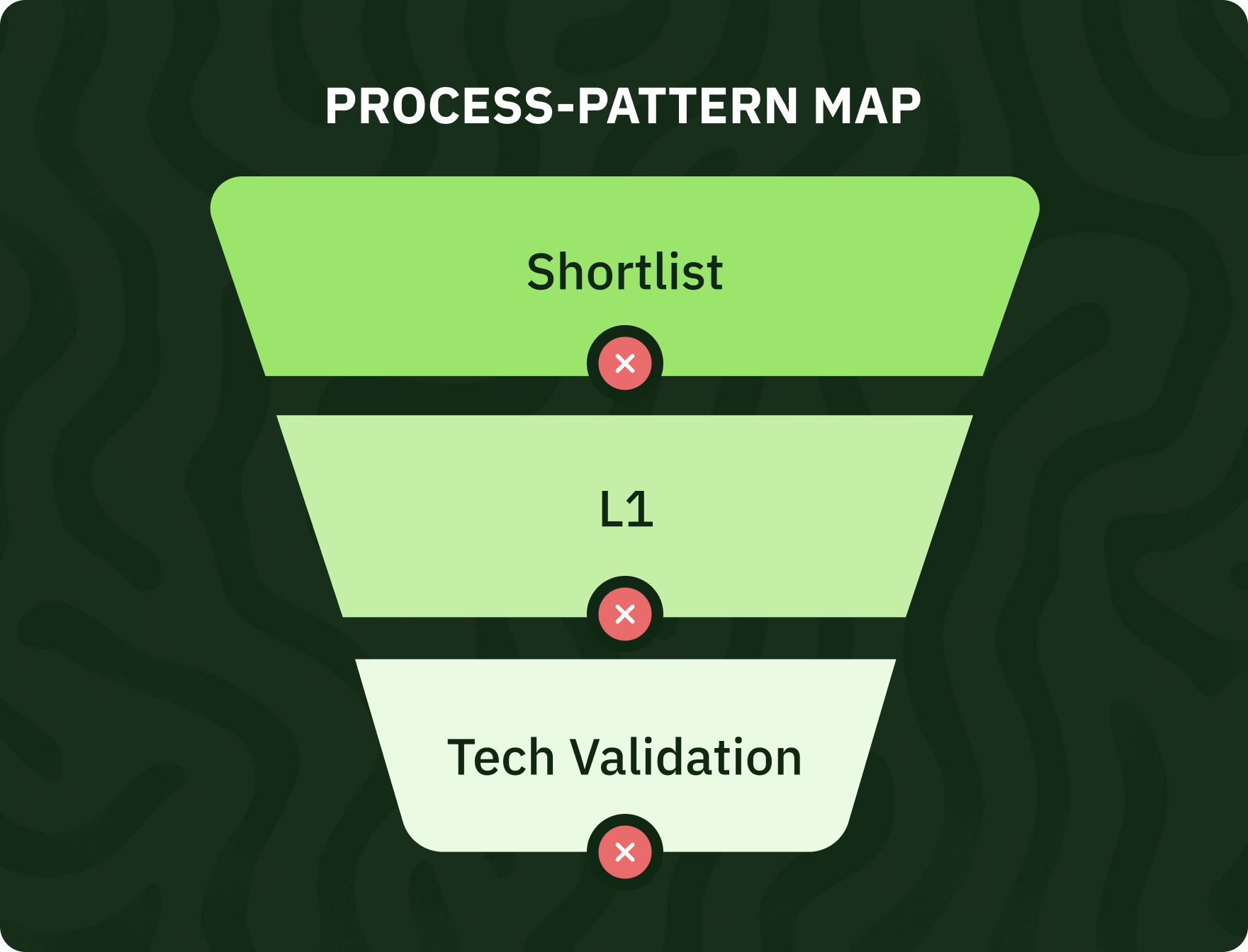
Funnel-to-agent
| HIRING STAGE | HYRING PRODUCT | WHAT IT DOES | OUTPUT (WHAT THE TEAM SEES) |
|---|---|---|---|
| SHORTLIST | AI Resume Screener | Shortlists candidates using resume-based role-fit indicators. | Ranked shortlist + job fit signals. |
| L1 SCREENING | AI phone screener | Runs first-round phone screens and supports shortlisting. | Call summary + score + shortlist. |
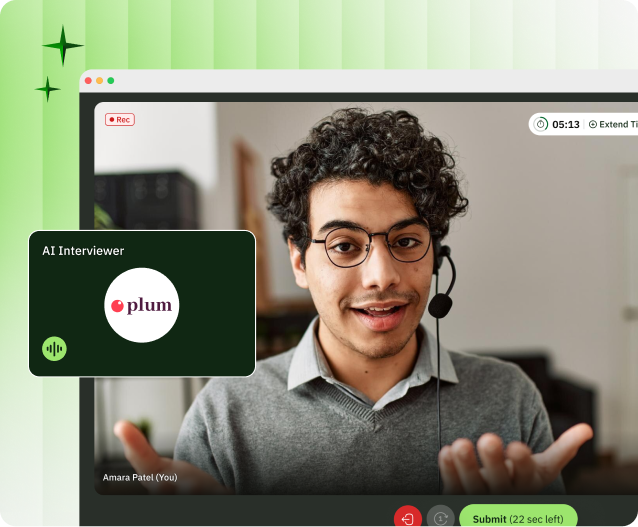
| STRUCTURED INTERVIEW | AI video interviewer | Runs structured video interviews and generates candidate reports for review. | Interview process automation + structured scoring. |
| TECH VALIDATION | AI coding interviewer | Conducts coding interviews for engineering roles. | Coding evaluation report. |
| COMMUNICATION | English proficiency test | Adds an English assessment step where the roles require it. | Level + skill breakdown. |
HYRING PRODUCT
WHAT IT DOES
Shortlists candidates using resume-based role-fit indicators.
OUTPUT (WHAT THE TEAM SEES)
Ranked shortlist + job fit signals.
HYRING PRODUCT
AI phone screener
WHAT IT DOES
Runs first-round phone screens and supports shortlisting.
OUTPUT (WHAT THE TEAM SEES)
Call summary + score + shortlist.
HYRING PRODUCT
AI video interviewer
WHAT IT DOES
Runs structured video interviews and generates candidate reports for review.
OUTPUT (WHAT THE TEAM SEES)
Interview process automation + structured scoring.
HYRING PRODUCT
AI coding interviewer
WHAT IT DOES
Conducts coding interviews for engineering roles.
OUTPUT (WHAT THE TEAM SEES)
Coding evaluation report.
HYRING PRODUCT
English proficiency test
WHAT IT DOES
Adds an English assessment step where the roles require it.
OUTPUT (WHAT THE TEAM SEES)
Level + skill breakdown.
KPI Scoreboard — Capgemini Hiring Model
Time to Screen
Definition: Calendar days between application receipt and L1 decision.
Risk indicator: Compressing this metric too aggressively without adjusting rubrics often inflates rejection rates downstream.
Screening Count
Definition: Number of completed initial screens per recruiter per week.
Risk indicator: Throughput gains that coincide with lower pass-through rates may signal that the top of your funnel is too broad for the role requirements.
Interview Completion Rate
Definition: Percentage of candidates who receive an AI interview invite and actually finish it.
Risk indicator: A completion rate below 60% almost always points to a UX problem. This involves confusing invite emails, broken links, or unclear time expectations.
Early Stage Drop-offs
Definition: The specific funnel step where candidates exit before completing the process.
Risk indicator: Concentration of exits at the assessment scheduling step usually means candidates are being asked to block time they cannot commit to. Asynchronous options fix this.
Panel Hours per Hire
Definition: Total hours human boards spend interviewing per confirmed hire.
Risk indicator: A steep drop in panel hours paired with declining offer-acceptance rates suggests the AI layer is filtering too tightly and removing borderline-good candidates.
Pass-through Rate
Definition: Percentage of candidates moving from one stage to the next.
Risk indicator: Variance across sourcing channels matters more than the aggregate number. A 40% pass-through from campus drives and 12% from job boards tells you something about sourcing quality, not screening quality.
Shortlist-to-Offer Ratio
Definition: How many shortlisted candidates it takes, on average, to produce one accepted offer.
Risk indicator: Ratios tightening too fast can mask false precision. If you are only shortlisting candidates who exactly match the rubric, you may be optimizing for pattern-matching instead of potential.
Integrity Flag Rate
Definition: Share of AI-conducted interviews that trigger fraud or malpractice alerts.
Risk indicator: A campus-specific spike in integrity flags demands manual audit before any action. Flagging an entire batch without investigation is how you lose a university relationship.
Time to First Touch
Definition: Hours between a candidate applying and receiving their first meaningful communication.
Risk indicator: An instant auto-acknowledgment email does not count as a first touch. What matters is the gap before the candidate receives an actual assessment invite or screening call.
SLA adherence
Definition: Percentage of candidates receiving status updates within X days.
Risk indicator: Rising SLA adherence paired with declining offer acceptance may signal the updates are too generic. Candidates want progress information, not template confirmations.
Model ROI for High-Volume Scenario
Every Capgemini hiring process plan needs a financial layer. Without one, you are measuring speed but not cost. Below is an illustrative ROI model scaled for a 28,000 fresher intake, which reflects Capgemini India's approximate annual volume.
Annual Savings Potential
$4.2M+
in operational and hiring costs.
Reduction in Time-to-Hire
72%
faster talent acquisition through compressed early-stage workflows.
Faster Interview Process
60%
acceleration in scheduling and evaluation turnaround.
5-Year ROI Projection
~445%
with a payback period under 6 months.(Assumes total platform investment of ~$940K over 5 years; annual savings ~$4.2M.)
Note: ROI figures below are an illustrative model of potential savings in this specific scenario. Actual results vary by internal workflow costs.
Hours Saved Annually
Consider what 280,000 applications mean in human hours. If each L1 phone screen runs 25 minutes (the lower end of industry average for IT services), that is 116,000 hours of recruiter time dedicated to a single step. Add resume review time, scheduling overhead, and follow-up calls, and the total climbs past 180,000 hours.
AI agents absorb the standardized portion of this workload undeniably. Recruiters reclaim time for offer negotiations, candidate relationship management, and pipeline strategy - work that actually requires human judgment.
Hours Saved Annually
Source: Hyring Hiring Model
Current State Costing vs. Target State with AI
At Capgemini's scale, the Capgemini interview process runs into a math problem. 280,000 applications, 28,000 hires, and a completion rate below 35% in the current manual workflow. The cost is not hidden but it shows up in recruiter overtime, panel burnout, and offer declines from candidates who accepted a faster competitor's offer.
| METRIC | CURRENT MANUAL PROCESS | TARGET WITH HYRING AI AGENTS |
|---|---|---|
| L1 Screening Cost | ~$3.2M (Recruiter salaries, internal hours, scheduling tools) | ~$250K (Cost drops to ~$1 per AI interview on average) |
| Engineering Panel Load | Heavy: senior engineers spend 6–10 hours/week on early screens | Minimal: panels receive only AI-shortlisted, scored candidates |
| Interview Scalability | Capped by recruiter availability and calendar slots | No concurrency limit: thousands of interviews run in parallel |
| Fake Candidate Detection | Manual ID checks, limited behavioral monitoring | AI proctoring with face, voice, tab, and screen-share detection |
| Completion Rate | ~33% (candidates abandon due to delays and scheduling friction) | >82% (24/7 availability, self-scheduled) |
Where the $4.2M+ Savings Come From
The biggest cost recovery does not come from HR. It comes from engineering.
- L1 screening elimination: AI Phone and AI Video agents handle top-of-funnel volume. At 280,000 candidates and 25 minutes per manual screen, that is 116,000 hours returned to the business. Priced at a blended recruiter cost of $18/hour (India-weighted), that alone is $2.1M.
- Panel hours recovered: Without AI pre-screening, senior engineers conduct 4 early-round interviews for every 1 candidate they advance. With AI-scored shortlists, that ratio compresses to roughly 2:1. The saved hours go back to billable client work - a recovery that finance teams notice faster than HR savings.
- Staffing agency fees reduced: Capgemini uses external recruitment partners for volume sourcing, particularly during campus season. Standardizing top-of-funnel screening internally reduces reliance on third-party agencies and the per-candidate fees they charge.
Where the Savings Come From
Source: Hyring Hiring Model
Cumulative Savings vs Cost
Platform investment pays for itself before the second hiring cycle begins. In this 28,000-hire scenario, monthly savings begin outpacing the total investment around month six. By month twelve, cumulative savings are roughly 2.6x the initial platform cost.
The curve steepens during campus hiring season (typically Q3 and Q4 in India), when application volumes peak and manual screening bottlenecks are most expensive.
Savings vs Investment (12-month model)
Month
Source: Hyring Hiring Model
Capgemini Hiring Process Plan
Rolling out AI screening across 280,000 applications on day one is how you break a hiring cycle. Phased deployment protects your existing workflows and gives you calibration data before you scale.
Week 2
Week 3
Week 4
Frequently Asked Questions
How does this model handle the sheer volume of a Capgemini campus drive?
Campus drives at Capgemini can generate 15,000–20,000 applications from a single season. The AI agents process these concurrently - so there is no queue.
Bulk invites go out, candidates self-schedule or take assessments immediately, and recruiters receive scored shortlists within hours instead of weeks. The constraint shifts from "how many recruiters do we have available" to "how fast can we send invites."
What exactly does a recruiter see after the AI phone screen runs?
A single-page report: call recording, transcript, a scored rubric mapped to the job requirements you defined, and a pass/recommended/reject classification. The recruiter reviews the report and decides whether to advance the candidate. No phone tag, no voicemails, no calendar rescheduling.
How reliable is the cheating detection during remote interviews?
The AI video interviewer monitors six fraud signals simultaneously. These are tab switching, multiple faces in frame, off-screen audio, eye-gaze anomalies, lip-sync mismatches, and clipboard activity.
Each flag is timestamped in the candidate report so the human recruiter can jump to the exact moment and make their own call. The system flags behavior only and it does not disqualify candidates automatically.
Capgemini hires across dozens of countries. Does this work outside India?
The platform supports 10+ interview languages and runs 24/7, so a candidate in Paris and a candidate in Pathankot can complete the same assessment within the same hiring window. Time zone differences stop being a scheduling obstacle when the interview does not require a live human on the other end.
Can the coding assessments match Capgemini's technology stack?
The AI Coding Interviewer covers multiple languages and difficulty tiers. You configure the environment to reflect the actual work- Java for enterprise middleware roles, Python for data engineering, ABAP for SAP tracks.
The assessment mirrors job reality instead of testing abstract algorithm puzzles that have no connection to what the person will do on day one.
Where do human panels enter the process?
After AI agents have filtered, scored, and ranked. By the time a candidate reaches a senior engineer or delivery manager, that person has already passed a resume screen, a phone assessment, a video interview, and (for tech roles) a coding evaluation.
The interview panel is evaluating depth and culture fit - not checking whether someone can write a for-loop.