Cognizant Hiring Process: Where Hyring's AI Agents Fit
Cognizant reported a total headcount of 351,600 as of December 31, 2025. Media coverage said Cognizant aims to hire about 25,000 fresh graduates in 2026, up from 2025.
This Cognizant hiring process is an independent workflow that shows where Hyring's AI agents can take the load off recruiters and panels, what outputs they produce, and which KPIs keep the process beneficial.

This article refers to a planning framework showing where AI can reduce manual effort across the funnel.
The Blueprint
A hiring model isn't an empty promise but a clean plan you can run, measure, and tune.
- A funnel map for a high-volume hiring workflow
- A deployment plan.
- A KPI scoreboard.
- An ROI module with adjustable inputs and a neutral disclaimer.
Current State
Cognizant's Q4 and full-year 2025 results release reported a total headcount of 351,600 as of December 31, 2025. Their Q4 2025 earnings call said Cognizant plans to hire about 25,000 freshers in 2026 (about a 20% increase over the 2025 intake of close to 20,000).
0
~20k
~25k
Pain Points of the Cognizant Recruitment Process
In large IT services hiring, time leaks aren't subtle. They are found in calendars, inboxes, and rosters.
Monotonous L1 calls
Engineering panels wasted early
Drop-off from silence
Hyring AI Agents
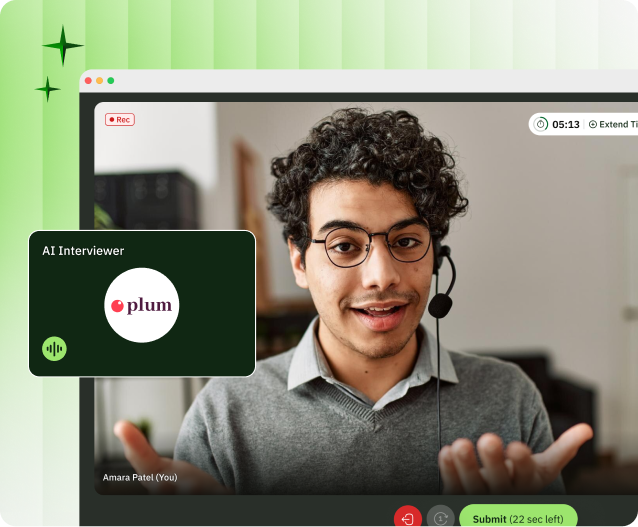
Hyring's AI agents are versatile and have a range of targeted uses. It's the same pattern for any enterprise that is to compress the blurred steps, and for final decisions, a human-in-the-loop is essential.
The AI Resume Screener
Instantly parse and rank resumes based on job-fit signals and technical requirements.
- Rapid high-volume parsing
- Objective skill ranking
- Bias-reduced shortlisting
The AI Phone Screener
Automated L1 verification calls to ensure basic qualifications and interest levels.
- 24/7 automated screening
- Consistent evaluation metrics
- Instant shortlist generation
The AI Coding Interviewer
Technical assessment with live coding environments and real-time logic evaluation.
- Real-time code analysis
- Plagiarism detection
- Automated logical scoring
English Proficiency Test
Standardized evaluation of communication skills, fluency, and professional vocabulary.
- Automated fluency scoring
- Grammar and clarity analysis
- CEFR aligned reporting
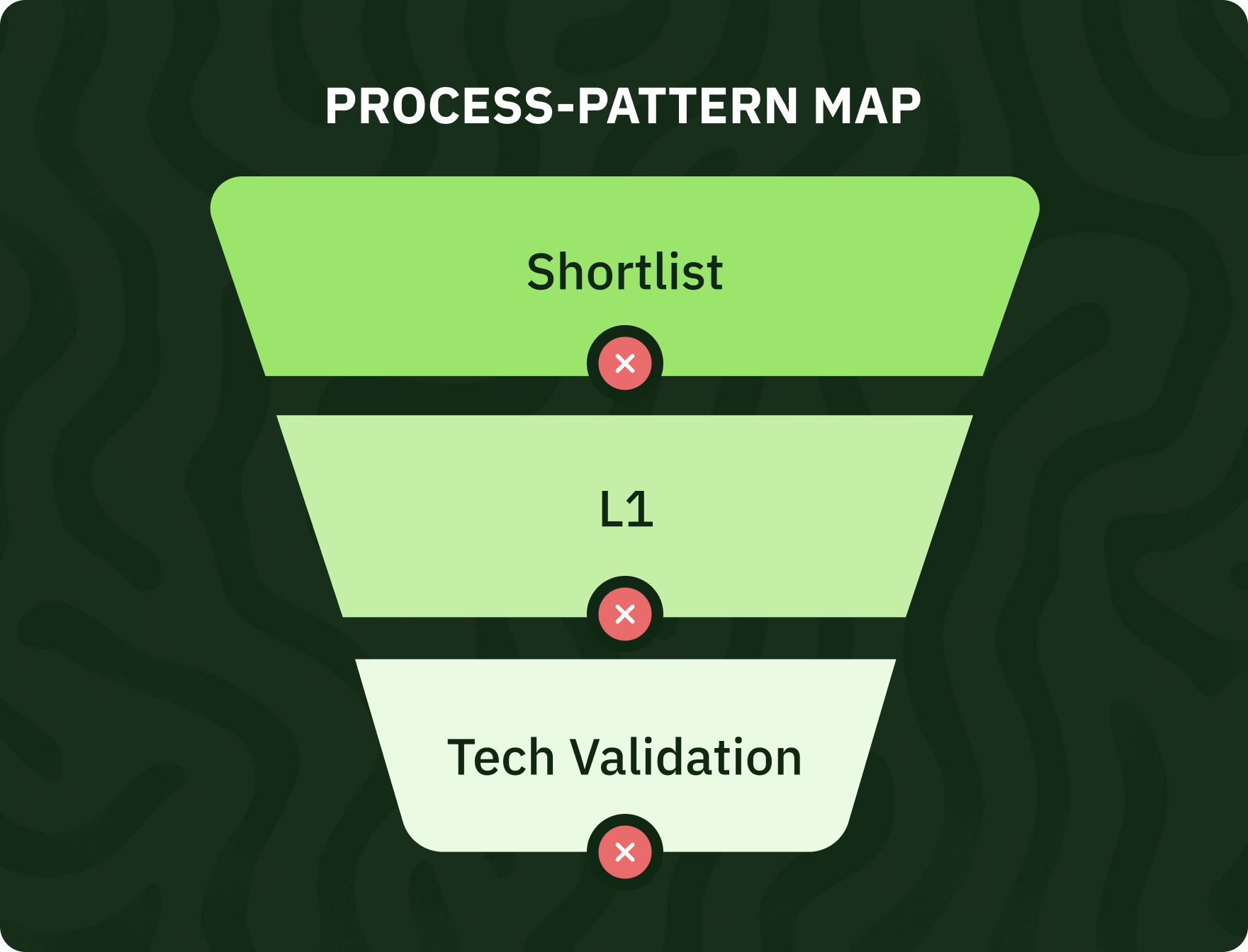
Funnel-to-agent
| HIRING STAGE | HYRING PRODUCT | WHAT IT DOES | OUTPUT (WHAT THE TEAM SEES) |
|---|---|---|---|
| SHORTLIST | AI resume screener | Shortlists candidates using resume-based role-fit signals. | Ranked shortlist + job fit signals. |
| L1 SCREENING | AI phone screener | Runs first-round phone screens and supports shortlisting. | Call summary + score + shortlist. |
| STRUCTURED INTERVIEW | AI video interviewer | Runs structured video interviews and generates candidate reports for review. | Interview process automation + structured scoring. |
| TECH VALIDATION | AI coding interviewer | Conducts coding interviews for engineering roles. | Coding evaluation report. |
| COMMUNICATION | English proficiency test | Adds an English assessment step where the roles require it. | Level + skill breakdown. |
HYRING PRODUCT
AI resume screener
WHAT IT DOES
Shortlists candidates using resume-based role-fit signals.
OUTPUT (WHAT THE TEAM SEES)
Ranked shortlist + job fit signals.
HYRING PRODUCT
AI phone screener
WHAT IT DOES
Runs first-round phone screens and supports shortlisting.
OUTPUT (WHAT THE TEAM SEES)
Call summary + score + shortlist.
HYRING PRODUCT
AI video interviewer
WHAT IT DOES
Runs structured video interviews and generates candidate reports for review.
OUTPUT (WHAT THE TEAM SEES)
Interview process automation + structured scoring.
HYRING PRODUCT
AI coding interviewer
WHAT IT DOES
Conducts coding interviews for engineering roles.
OUTPUT (WHAT THE TEAM SEES)
Coding evaluation report.
HYRING PRODUCT
English proficiency test
WHAT IT DOES
Adds an English assessment step where the roles require it.
OUTPUT (WHAT THE TEAM SEES)
Level + skill breakdown.
KPI Scoreboard — Cognizant Hiring Model
Time to Screen
Definition: The total time from an application being received to an L1 decision being made.
Risk indicator: Faster times are good, but you must ensure later-stage panel rejections don't spike as a result of poorer early filtering.
Screening Count
Definition: The volume of initial screens completed per recruiter, per week (from start to hire).
Risk indicator: If throughput rises but fewer candidates pass to the next round, your initial net might be cast too wide.
Interview Completion Rate
Definition: The percentage of invited candidates who actually start and complete the AI interview.
Risk indicator: Sudden drops usually indicate confusing instructions or technical friction in the candidate invite emails.
Early Stage Drop-offs
Definition: Tracking exactly which step of the hiring funnel causes candidates to exit the process.
Risk indicator: Unusually high drop-off during the scheduling or assessment phase points to a poor candidate experience.
Panel Hours per Hire
Definition: The total hours your human engineering/business boards spend interviewing per finalized hire.
Risk indicator: If panel hours drop significantly but your offer-acceptance rate also falls, your AI screening criteria may be too harsh.
Pass-through Rate
Definition: The percentage of candidates successfully advancing from one specific stage to the next.
Risk indicator: Look out for larger inconsistencies in pass-through rates across different university campuses or sourcing avenues.
Shortlist-to-Offer Ratio
Definition: The average number of shortlisted candidates required to generate one accepted job offer.
Risk indicator: An improving ratio is the goal, but an unnaturally perfect ratio could mean you are screening out viable talent too early.
Integrity Flag Rate
Definition: The percentage of AI video or coding interviews that trigger built-in cheating alerts.
Risk indicator: Sudden, concentrated spikes in flags from a specific region or campus require immediate manual review and realignment.
Time to First Touch
Definition: The delay between a candidate applying and receiving their first communication or assessment invite.
Risk indicator: An automated, instant "first touch" is useless if the subsequent follow-up steps remain slow and manual.
SLA adherence
Definition: Percentage of candidates receiving status updates within X days.
Risk indicator: Rising SLA adherence paired with declining offer acceptance may signal the updates are too generic. Candidates want progress information, not template confirmations.
Model ROI for High-Volume Scenario
A practical Cognizant hiring process needs to show financial mechanics and reconcile with the efficiency factor. Below you can find an illustrative ROI breakdown mirroring typical enterprise outcomes, scaled for a 25,000 fresher intake.
Annual Savings Potential
$3.5M+
in operational and hiring costs.
Reduction in Time-to-Hire
74%
faster talent acquisition through optimized bulk workflows.
Faster Interview Process
62%
acceleration in scheduling and candidate evaluation.
5-Year ROI Projection
~419%
with a 5-month payback period.
Note: ROI figures below are an illustrative model of potential savings in this specific scenario. Actual results vary by internal workflow costs.
Hours Saved Annually
Moving initial screening and early technical checks to an automated system drastically cuts the hours spent on early triage.
Hours by Stage (Manual vs. AI-Assisted)
Source: Hyring hiring model
Current State Costing vs. Target State with AI
To hire 25,000 freshers, an enterprise typically processes upwards of 250,000 applications. In the current state of the Cognizant interview process, manual L1 screening and early technical panels consume massive amounts of billable business hours.
| Metric | Current Manual Process | Target with Hyring AI Agents |
|---|---|---|
| L1 Screening Cost | ~$2.5M (Recruiter & internal hours) | ~$250K (Cost drops to ~$1 per AI interview on average) |
| Engineering Panel Load | High (Engineers conduct early tech screens) | Low (Panels only see AI-shortlisted, high-intent profiles) |
| Interview Scalability | Limited by human availability | Unlimited concurrent interviews (Bulk throughput) |
| Fake Candidate Detection | Manual verification | Advanced AI proctoring (Face, voice, & screen detection) |
| Completion Rate | ~34% (High drop-off due to slow process) | >80% (Instant, 24/7 self-scheduling) |
Where the $3.5M+ Savings Come From
Financial impact extends beyond just HR budgets - the largest cost recovery happens within engineering teams.
- L1 Interview Elimination: AI Video and AI Phone screeners handle the top-of-funnel volume in the Cognizant interview process. If 250,000 candidates require a 30-minute screen, AI recovers 125,000 operational hours in total. It is that powerful.
- Recovered Business Panel Hours: By the time candidates reach L2, the pass-through rate improves from 4:1 to 2:1. Engineers no longer waste billable hours interviewing unqualified candidates.
- Reduced Agency Spend: Eliminating third-party volume-sourcing fees by standardizing the top-of-funnel on an internal AI platform.
Annual Hiring Cost Savings Breakdown
Source: Hyring Hiring Model
Cumulative Savings vs Cost
In a standard 12-month timeline, software investment is offset by the rapid reduction in operational hours. Break-even in this 25k-hire model occurs around month seven, tentatively.
During every stage of the Cognizant Hiring process, there is a cumulative accretion of savings, and hence, Hyring's product line can tentatively benefit the company in the hundreds and thousands of dollars.
Cumulative Savings vs Cost
Month
Source: Hyring Hiring Model
Cognizant Hiring Process Plan
Deploying enterprise software across thousands of applications fails if attempted all at once. A proposed phased implementation protects existing workflows.
Week 2
Week 3
Week 4
Frequently Asked Questions
How does this hiring model handle large volumes of fresher candidates?
It shifts the initial load from human recruiters to concurrent AI recruiting software. Instead of manually scheduling 20,000 screening calls, teams send bulk invites. The AI phone screener and video agents conduct thousands of interviews simultaneously, turning weeks of triage into days.
What does the first-round automated agent aim to deliver for the Cognizant Hiring Process?
It provides recruiters with a structured summary, a score, and a recommended shortlist. You get the data needed to advance or reject a candidate without ever having to dial a phone or leave voicemails.
How does the system prevent interview cheating?
The AI video interviewer includes built-in proctoring and integrity tracking. It flags suspicious behavior like tab-switching, off-screen voices, or copy-pasting, giving recruitment teams a clear integrity signal before moving someone to a final round.
Do automated interviews hurt the candidate experience?
No, they typically improve it by eliminating scheduling friction. Candidates can take their initial assessments 24/7 from any time zone, and they receive faster status updates because the system processes results instantly.
Can we customize the coding validation for different roles?
Yes. The AI coding interviewer supports multiple programming languages and difficulty levels. You can align the Cognizant interview process test environment specifically to what a full-stack developer, data engineer, or cloud architect will actually do on the job.
How do human technical panels fit into this workflow?
The technical committees step in only at the final stages. AI agents filter out candidates lacking basic technical or communication skills, and engineering teams ultimately spend their time interviewing only pre-validated, high-quality profiles.