The LTIMindtree Hiring Process: An AI Blueprint for Hiring
After the merger of L&T Infotech and Mindtree in 2022, the hiring process followed by the joint venture LTIMindtree, is for an organisation that has nearly doubled its size to 88,000 employees. The company has 87,958 professionals on its rosters, and was reported to have recruited 5,150 new employees in the first three quarters of FY26. Fresher requirements for the same financial year is for approximately 5,000 campus hires, confirmed to TOI, by the CEO Venu Lambu.
This document provides a blueprint for a hypothetical use case scenario where Hyring's AI-native product suite for recruitment is mapped on to the hiring process of LTIMindtree, thereby giving a sense of what KPIs can make the model honest. It is only a planning framework for where AI can substitute some of the grunt work.

This article is a planning framework showing where AI can reduce manual effort across the funnel.
The Roadmap
A company formed out of the merger of two mid-large IT companies has inherent inefficiencies, like the presence of duplicate processes. The presence of separate legacy ATS tools, recruiter teams, and campus teams, which are still operational three years after the merger, add to the inefficiency of the hiring process.
The hiring process of LTIMindtree is the most affected by the inefficiency of the hiring process, as every inefficiency at the beginning of the hiring process results in a corresponding inefficiency at the end of the hiring process.
The blueprint provided below is for the hiring process of LTIMindtree, which receives an estimated 100,000+ applications annually, including campus and lateral hires. The blueprint comprises of four parts:
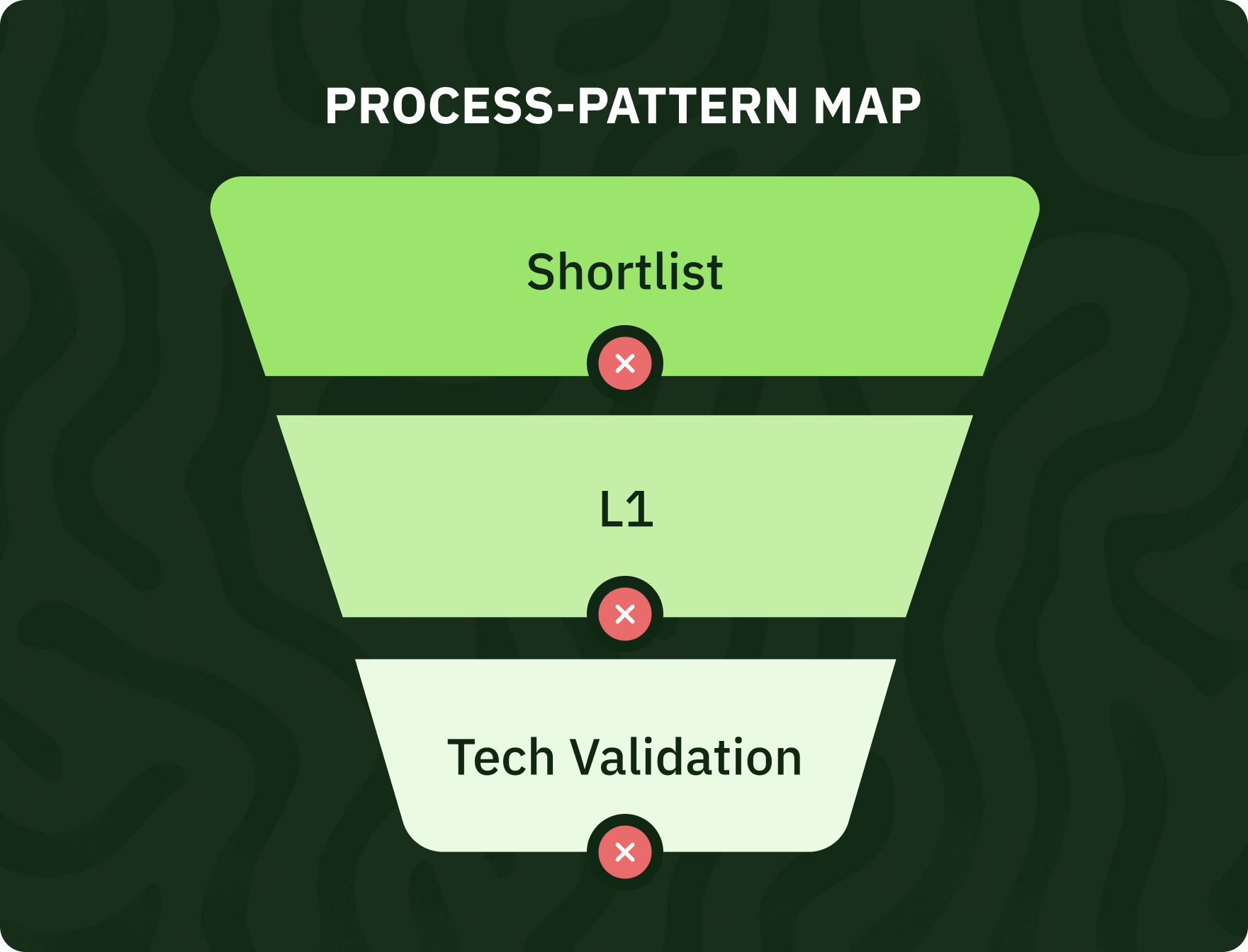
The funnel map outlines the hiring process of candidates from the application stage to the offer stage within the combined hiring process of LTIMindtree. The phased deployment details the hiring process with weekly milestones for specific role families.
The KPI scoreboard comprises ten parameters, including risks, specific to the competitive scenario of LTIMindtree.
Campus drives happen in various engineering colleges, while lateral applications continue to flow in for cloud, data, and AI/ML positions. Timelines are short, and these drives clash with other drives by TCS, Infosys, Wipro, HCL Tech, and Tech Mahindra. The bottleneck occurs in three places - resume screening after online tests, first-round phone/video interviews, and panel interviews for lateral hiring candidates who need timely hiring.
Current State
LTIMindtree closed Q3 FY26 (December 31, 2025) with 87,958 employees. Trailing twelve-month attrition: 13.8%, a 40-basis-point decline from the prior quarter, but still generating steady replacement demand alongside growth hiring.
The headcount trajectory tells a post-merger correction story. At the November 2022 merger, the combined entity had roughly 90,000 people. Bench rationalisation and a client spending slowdown post the pandemic pushed that to 82,471 by December 2024.
Recovery started in FY26: 5,150 new hires in nine months, a fresher target of ~5,000 for the full year, and utilisation normalising at 86.9% as new joiners ramp onto projects.
FY24 revenue stood at $4,287 million in USD terms. The company competes for mid-to-large deals against Mphasis, Coforge, and Persistent Systems, while facing lateral poaching from TCS and Infosys.
That competitive squeeze means the LTIMindtree hiring process cannot afford ten-day scheduling gaps. A good lateral candidate with two offers will not wait.
0
~5,000
100,000+
Headcount Trajectory
Fresher Intake Trajectory
Problems in the LTIMindtree hiring process
When your company adds 5,150 people in nine months and still reports utilisation of only 86.9%, the recruiting engine is trundling along but not running clean. Somewhere between application and offer letter, time is leaking.
First-round screening hits a wall during campus sprints
Once the online screening is complete, the shortlisted candidates are invited for phone or video screening, which lasts for 15-20 minutes. Around 25,000 candidates make it to this stage every year. This amounts to 6,250 to 8,300 person-hours of the same conversations. The interview process for LTIMindtree relies on the availability of recruiters during the exact time slots when TCS, Infosys, and Wipro are tapping the same pool of candidates.
Engineering leads lose billable hours to panel duty
The time spent on diverting to campus panels for three hours is the time not billed to the client. With ~8,000 candidates attending the technical interviews in the LTIMindtree recruitment process every year, at 35 minutes and 1.2 panelists average, this equates to ~5,600 person hours. This never appears as a recruitment cost. It appears as a reduction in the project margin that the delivery manager spots two months later.
Candidate drop-off spikes past 48 hours of silence
Campus hires juggle two to four offers by final semester. A candidate who finishes the assessment on Monday and hears nothing by Thursday is already progressing through a competitor's funnel. The LTIMindtree hiring process loses candidates to silence, not rejection.
Remote proctoring depends on interviewer stamina
Video-based evaluations are increasingly common. Spotting tab switches, secondary speakers, or identity swaps depends entirely on the interviewer's focus. By the fifth consecutive session, that focus is gone. Scale amplifies the blind spot.
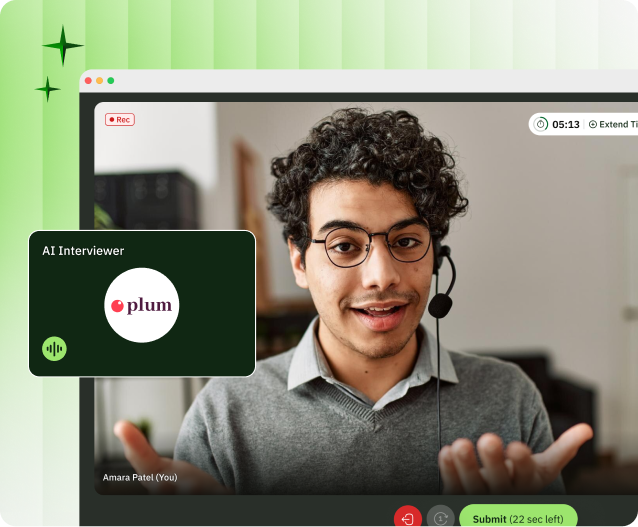
Hyring AI Agents
The merger handled LTIMindtree application volume that its pre-merger recruiter headcount was never designed to handle. Hyring's five agents plug into the stages where work follows a fixed rubric and produces a scored output. A ranked assessment, a standardised phone screen, a coding challenge with a correct answer: agent territory. Subjective calls (culture fit, offer negotiation) stay with humans. Every offer in the LTIMindtree interview process requires a person signing off.
The AI Resume Screener
Instantly parse and rank resumes based on job-fit signals and technical requirements.
- Rapid high-volume parsing
- Objective skill ranking
- Bias-reduced shortlisting
The AI Phone Screener
Automated L1 verification calls to ensure basic qualifications and interest levels.
- 24/7 automated screening
- Consistent evaluation metrics
- Instant shortlist generation
The AI Coding Interviewer
Technical assessment with live coding environments and real-time logic evaluation.
- Real-time code analysis
- Plagiarism detection
- Automated logical scoring
English Proficiency Test
Standardized evaluation of communication skills, fluency, and professional vocabulary.
- Automated fluency scoring
- Grammar and clarity analysis
- CEFR aligned reporting
Funnel-to-agent
| HIRING STAGE | HYRING PRODUCT | WHAT IT DOES | OUTPUT (WHAT THE TEAM SEES) |
|---|---|---|---|
| SHORTLIST | AI Resume Screener | Parses post-assessment candidate profiles against role-fit criteria defined by LTIMindtree recruiters. | Ranked list with match-score breakdown. |
| L1 SCREENING | AI Phone Screener | Conducts voice-based first-round screens using the standard question bank. | Scored transcript with advance/hold flag. |
| STRUCTURED INTERVIEW | AI Video Interviewer | Delivers video-based structured interviews with automated behavioural scoring. | Evaluation report with competency ratings. |
| TECH VALIDATION | AI Coding Interviewer | Administers coding challenges calibrated to engineering role levels. | Code quality report with test-case pass rates. |
| COMMUNICATION | English Proficiency Test | Assesses spoken English readiness for client-facing assignments. | Proficiency level with dimensional scores. |
HYRING PRODUCT
AI Resume Screener
WHAT IT DOES
Parses post-assessment candidate profiles against role-fit criteria defined by LTIMindtree recruiters.
OUTPUT (WHAT THE TEAM SEES)
Ranked list with match-score breakdown.
HYRING PRODUCT
AI Phone Screener
WHAT IT DOES
Conducts voice-based first-round screens using the standard question bank.
OUTPUT (WHAT THE TEAM SEES)
Scored transcript with advance/hold flag.
HYRING PRODUCT
AI Video Interviewer
WHAT IT DOES
Delivers video-based structured interviews with automated behavioural scoring.
OUTPUT (WHAT THE TEAM SEES)
Evaluation report with competency ratings.
HYRING PRODUCT
AI Coding Interviewer
WHAT IT DOES
Administers coding challenges calibrated to engineering role levels.
OUTPUT (WHAT THE TEAM SEES)
Code quality report with test-case pass rates.
HYRING PRODUCT
English Proficiency Test
WHAT IT DOES
Assesses spoken English readiness for client-facing assignments.
OUTPUT (WHAT THE TEAM SEES)
Proficiency level with dimensional scores.
KPI Scoreboard — LTIMindtree Hiring Model
Time to Screen
Definition: Calendar days from application to first screening outcome.
Risk indicator: Sub-36-hour screening is good only if technical panel rejection rates hold steady. If they spike, speed is outrunning accuracy.
Screening Throughput
Definition: Completed first-round screens per recruiter per working week.
Risk indicator: Rising throughput with falling next-stage conversion means screening criteria are too loose. LTIMindtree's engineers cannot absorb low-fit candidate overflow.
Interview Completion Rate
Definition: Share of invited candidates who finish all assigned assessments.
Risk indicator: Below 55% often traces to assessment length. Campus freshers bail past 40 minutes. Lateral candidates bail after one rescheduling attempt.
Early Stage Drop-offs
Definition: The exact funnel step where candidates stop responding.
Risk indicator: Drop-off at video stage means UX or duration is the issue. Drop-off at scheduling means the booking tool is the problem. Different root causes, different fixes.
Panel Hours per Hire
Definition: Total interviewer hours consumed per finalised hire.
Risk indicator: Cross-check against 90-day retention. If panel hours fall and early attrition rises, the AI filter may be pruning soft-skill signals humans would have caught.
Pass-through Rate
Definition: Percentage of candidates advancing from one stage to the next.
Risk indicator: A 15-point variance between two campuses hiring for the same role means the rubric needs campus-level tuning, not a blanket threshold.
Shortlist-to-Offer Ratio
Definition: Shortlisted candidates needed to produce one accepted offer.
Risk indicator: Moving from 7:1 to 4:1 is progress. Dropping below 3:1 signals over-filtering. Compare against historical acceptance by role family before adjusting.
Integrity Flag Rate
Definition: Share of AI-proctored sessions triggering a suspicious-activity alert.
Risk indicator: Steady 4-6% is normal. A spike from a specific college warrants manual review of that cohort before drawing conclusions.
Time to First Touch
Definition: Hours between assessment completion and first outreach.
Risk indicator: Fast contact followed by a five-day gap before step two creates worse sentiment than a consistently moderate pace. Pacing beats raw speed.
SLA Adherence
Definition: Percentage of candidates receiving status updates within the promised window.
Risk indicator: Below 80%, offer acceptance drops the same week. In the LTIMindtree recruitment process, TCS and Infosys are one unanswered email away.
Model ROI for High-Volume Scenario
Every number here is illustrative. The math uses publicly reported LTIMindtree volumes and industry cost assumptions. Internal structures vary. Starting framework, not a guarantee. Note: ROI figures are an illustrative model. Actual results vary by workflow costs, recruiter compensation, tech stack, and process maturity.
Estimated Annual Savings
$1.1M
in operational and hiring costs across the LTIMindtree hiring process.
Time-to-Hire Reduction
55%
faster from application to accepted offer.
5-Year ROI Projection
~340%
with a four-month payback.
Note: ROI figures below are an illustrative model of potential savings in this specific scenario. Actual results vary by internal workflow costs.
Hours Recovered Annually in the LTIMindtree Hiring Process
Resume screening: 100,000 applications at 8 min each = 13,333 hrs manually. AI reduces to ~1,333 hrs. L1 screens: 25,000 candidates at 18 min = 7,500 hrs. AI reduces to ~750 hrs. Technical panels: 8,000 candidates at 35 min, 1.2 panelists = 5,600 hrs. AI cuts 55%, saving ~3,080 hrs. Total recovered: ~21,830 hours.
Hours by Stage (Manual vs. AI-Assisted)
Source: Hyring hiring model | Illustrative, based on estimated 100K annual application volume.
Cost Comparison
To process 100,000 applications for 5,000 India positions, the manual model costs roughly $551K across resume screening, L1 calls, engineering panel time, and coordination. The AI-assisted model brings that to approximately $164K — a reduction of around $387K on direct process costs alone, before factoring in attrition-linked replacement cycles.
| Metric | Manual Process | With Hyring AI |
|---|---|---|
| Resume screening cost | ~$187K (13,333 hrs x $14/hr) | ~$19K (1,333 review hrs x $14/hr) |
| L1 screening cost | ~$105K (7,500 hrs x $14/hr) | ~$32K ($1/screen + review hrs) |
| Engineering panel diversion | ~$196K (5,600 hrs x $35/hr) | ~$88K (2,520 hrs x $35/hr) |
| Scheduling overhead | ~$63K (~4,500 coordinator hrs x $14/hr) | ~$25K (60% automated) |
Where the $1.1M Comes From
At LTIMindtree, the biggest hidden cost is not in the recruitment budget. It is in engineering delivery margins eroded by panel duty, and in the replacement cost of candidates lost to slow processes in an environment which experiences 13.8% attrition.
Resume screening automation recovers ~$168K. L1 handled by AI agents saves ~$73K. Engineering hours returned to billable work: ~$108K. Coordination overhead reduced: ~$42K. Integrity costs cut: ~$35K. Direct total: ~$426K. Secondary effects (multi-cycle compounding, lateral overlap, faster fills): ~$200K, capped below 50% of direct savings. Total: ~$1.1M conservatively.
Annual Hiring Cost Savings Breakdown
Source: Hyring hiring model | All figures are illustrative. Update inputs to match internal cost structures.
Cumulative Savings vs. Cost
Break-even lands in month four. The LTIMindtree hiring process handles campus and lateral pipelines simultaneously; one platform investment, two savings streams. Adding lateral volume compresses payback further because marginal AI screen cost is near zero.
Cumulative Savings vs Investment (12-Month Model)
Month
Source: Hyring hiring model | Illustrative.
LTIMindtree Hiring Process Implementation
Five AI agents across 100,000 applications on day one is a recipe for recruiter revolt. The rollout below starts narrow, proves value in one role family, then expands. Each week has a hard exit criterion: move forward only when the previous stage is stable.
Week 2: Shadow mode: AI alongside manual screening
Week 3: Add coding and language assessments
Week 4: Review, recalibrate, expand
Frequently Asked Questions
How does the LTIMindtree hiring model handle campus and lateral volume simultaneously?
Campus and lateral candidates enter the same screening layer but follow separate rubrics. A Graduate Engineer Trainee and a Senior Cloud Architect see different questions, weights, and thresholds. Routing is automatic based on role metadata, so one deployment covers both pipelines.
What does the first-round AI agent produce for the LTIMindtree recruitment process?
A structured evaluation with competency scores, a condensed response transcript, areas flagged for deeper follow-up, and a progress or pause recommendation. Recruiter review drops to about two minutes per candidate instead of a 20-minute live call.
How does the system detect cheating in remote assessments?
The video interviewing platform tracks browser focus changes, extra faces in frame, voice-to-lip inconsistencies, unusual eye movement, and paste activity in text fields. These feed a single confidence score. No individual signal triggers automatic rejection; the hiring team sees which flags fired and decides how to proceed.
Do automated interviews hurt the candidate experience?
Candidates pick their assessment window within a set deadline. No calendar coordination, no phone tag. Scoring happens within minutes, so status updates arrive faster. Comparable deployments report satisfaction holding steady or improving compared to manual-only processes.
Can coding assessments be customised per LTIMindtree role?
Yes. Configurable environments and difficulty tiers per role level. A backend developer and a data engineering candidate receive different problems, rubrics, and passing criteria without separate platform instances.
Where do human panels fit in the LTIMindtree interview process?
At the final stage. By then, candidates have cleared resume, phone/video, coding, and language checks. Panel time goes to analytical reasoning and team compatibility rather than re-verifying whether the person can actually write code.