Oracle Hiring Process - Can Hyring AI Agents Be The Miracle?
The hiring funnel at Oracle is a process that consumes about 375,000 applications annually from campus hires, lateral hiring, cloud-specific hiring, and hiring operations that take place across more than 40 countries. Oracle ended FY 2025 financial year with 162,000 employees and $57.4 billion in revenue while at the same time, it's restructuring its India operations and ramping up hiring for AI and OCI.
The scenario is a hiring funnel that has two different hiring motions happening at the same time. This blueprint maps where Hyring's AI agents can absorb manual screening, phone evaluation, video interviews, coding assessments, and language checks across that funnel. It covers the math, the metrics, and the rollout sequence.

This article is a planning framework showing where AI can reduce manual effort across the funnel.
The Map
Oracle is an odd company to plan a hiring overhaul for. Revenue grew 8% in FY2025. Cloud infrastructure jumped 52% in Q4 alone. And in the same quarter, the company cut over 3,000 jobs in India across Bengaluru, Hyderabad, Chennai, and Pune (Goodreturns, Aug 2025). Growth and reduction happening simultaneously, in the same offices, sometimes on the same floors!
This tension makes Oracle's recruitment process worthy of an in-depth examination. What follows is structured around four pieces.
First, a decomposition of the pipeline built around Oracle's split between hiring in India and lateral hiring in the cloud globally. Second, a deployment sequence with weekly checkpoints built around a company with two parallel hiring processes.
Third, a scoreboard with ten metrics and a risk flag for each. Finally, an ROI module that explains how to save money with a disclaimer on all assumptions made.
The tension is on the application review process. This is where Oracle's hiring process starts. Application review, first-round screening calls, initial tech filters - these are structured around a set of structured rubrics with binary or scored outputs. Such repetitive processes don't scale up with human involvement alone. They scale well with automation.
Current State
Oracle closed FY2025 (ending May 31, 2025) with approximately 162,000 full-time employees, per its 10-K filing with the SEC. That is up roughly 3,000 from the 159,000 reported a year earlier, a 1.9% increase in headcount even as restructuring made headlines.
The revenue picture contextualises the hiring trajectory. FY2025 total revenue hit $57.4 billion (up 8%). Cloud revenue for Q4 reached $6.7 billion (up 27%), and remaining performance obligations surged 41% to $138 billion. Oracle Cloud Infrastructure is the growth engine, and it needs engineers. Fast.
In India, Oracle employed close to 28,824 people as of 2024. India is Oracle's largest workforce outside the United States, housing OCI engineering, support, sales, and consulting teams.
Campus hiring runs through a 3 to 4 stage pipeline - online assessment (aptitude, coding, SQL, OOPs), one or two technical interviews, and an HR round. Glassdoor data from 11,269 interview reviews puts the average Oracle interview process duration at 15 to 41 days depending on role and location.
That range is the problem. A 26-day variance between best and worst case is a full month of candidate limbo.
~162,000
$57.4B
~375,000
Headcount
Revenue Trajectory
Problems in the Oracle hiring process
When a company cuts 2,800 jobs in India and simultaneously opens hundreds of AI and cloud roles, recruiter bandwidth gets pulled in two different directions.
Exit processing and onboarding compete for the same HR team's attention.
Campus assessment windows in India collide with Salesforce and Microsoft drives
Oracle's campus hiring in India runs a compressed window. Online assessments (aptitude plus coding) need to happen inside a 2 to 3 week slot that overlaps directly with Salesforce, SAP, Microsoft, and ServiceNow campus drives.
At 8 to 10 minutes per resume review and 100,000+ campus applications, that screening step alone consumes an estimated 13,000 to 16,000 person-hours. Candidates with multiple offers go cold in days, not weeks.
Cloud engineering panels are pulled from $138 billion in committed delivery work
Oracle's remaining performance obligations hit $138 billion in FY2025. Every Oracle Cloud Infrastructure (OCI) engineer sitting on a campus interview panel for 40 minutes is 40 minutes of cloud delivery time wasted.
If 8,000 candidates reach the technical panel stage and each panel runs 40 minutes with 1.5 interviewers on average, that is 8,000 engineering hours pulled from delivery. Nobody tracks this as a recruitment cost. It shows up as a project margin dip three months later.
Remote interview integrity has no standardised monitoring across 40+ countries
Oracle hires across over 40 countries. Remote interviews are standard for most roles outside campus. Without a unified proctoring layer, each region runs its own version of integrity checks. Some rely on interviewer observation. Some use third-party tools. Some do nothing. That inconsistency means fraud detection is only as good as the weakest regional process.
First-touch lag averages 15+ days for lateral candidates per Glassdoor data
Glassdoor reviewers consistently flag slow initial response times in the Oracle hiring process. When the first human contact happens on day 15, AWS and Google Cloud have already completed their first interview round with the same candidate. Speed to first touch is a retention metric disguised as a scheduling metric.
Hyring AI Agents
Oracle's funnel breaks into two distinct hiring motions or cycles - high-volume campus drives (India-heavy, rubric-scored, compressed timelines) and global lateral hiring for cloud and AI roles (specialised, multi-timezone, calendar-dependent).
Hyring's five agents fit the stages where both motions share the same bottleneck: structured, repeatable evaluation work.
Think of it as a division of labour. Any stage that runs off a scoring rubric and produces a pass/fail or ranked output is a candidate for automation. Stages that require reading a room, negotiating compensation, or assessing long-term team fit stay with humans. The final hiring decision is always made by a person on the Oracle team.
The AI Resume Screener
Instantly parse and rank resumes based on job-fit signals and technical requirements.
- Rapid high-volume parsing
- Objective skill ranking
- Bias-reduced shortlisting
The AI Phone Screener
Automated L1 verification calls to ensure basic qualifications and interest levels.
- 24/7 automated screening
- Consistent evaluation metrics
- Instant shortlist generation
The AI Coding Interviewer
Technical assessment with live coding environments and real-time logic evaluation.
- Real-time code analysis
- Plagiarism detection
- Automated logical scoring
English Proficiency Test
Standardized evaluation of communication skills, fluency, and professional vocabulary.
- Automated fluency scoring
- Grammar and clarity analysis
- CEFR aligned reporting
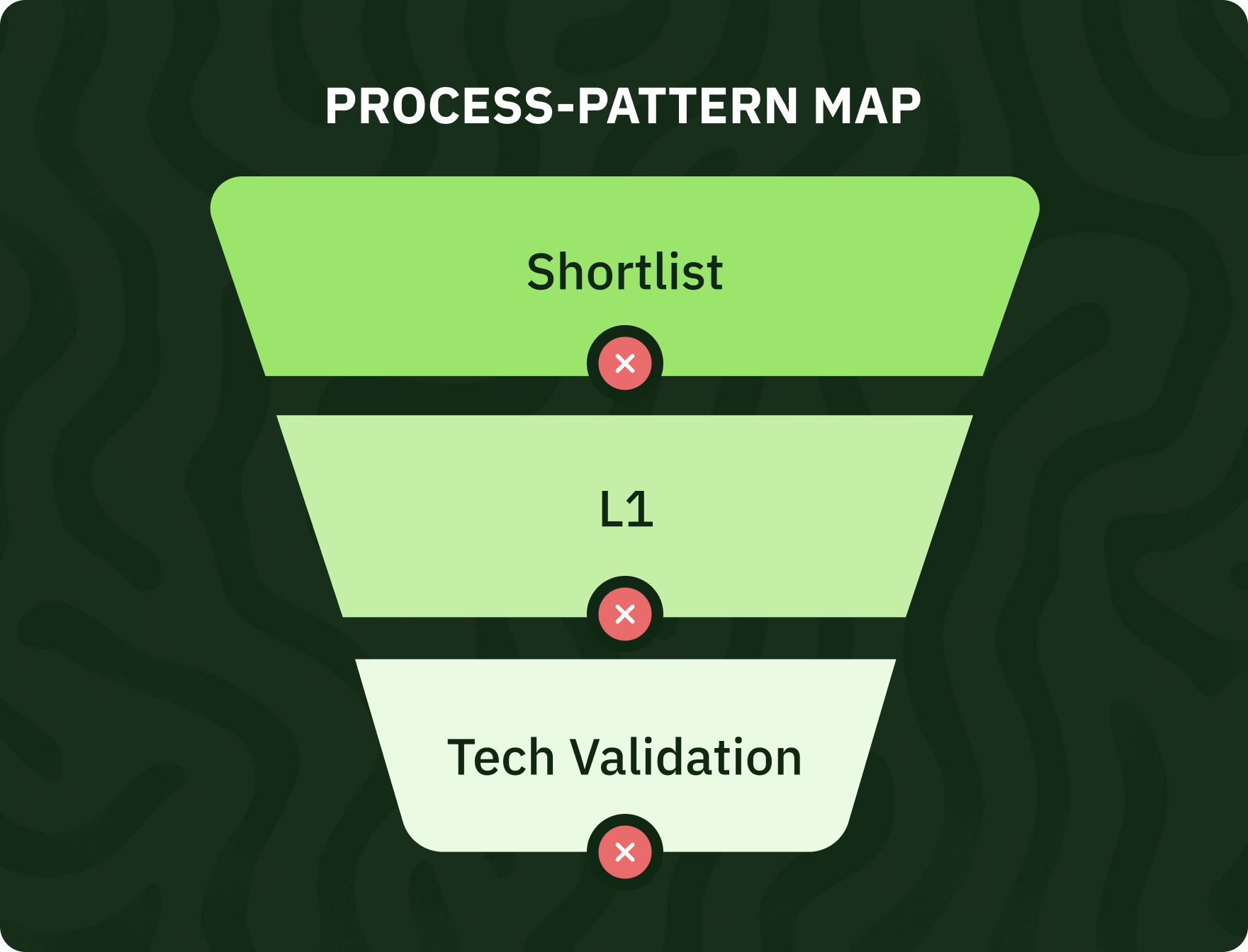
Funnel-to-agent
| HIRING STAGE | HYRING PRODUCT | WHAT IT DOES | OUTPUT (WHAT THE TEAM SEES) |
|---|---|---|---|
| SHORTLIST | AI Resume Screener | Parses campus and lateral resumes against Oracle-specific role criteria (OCI, ERP, database, cloud) and scores for fit. | Ranked candidate list with role-match confidence scores. |
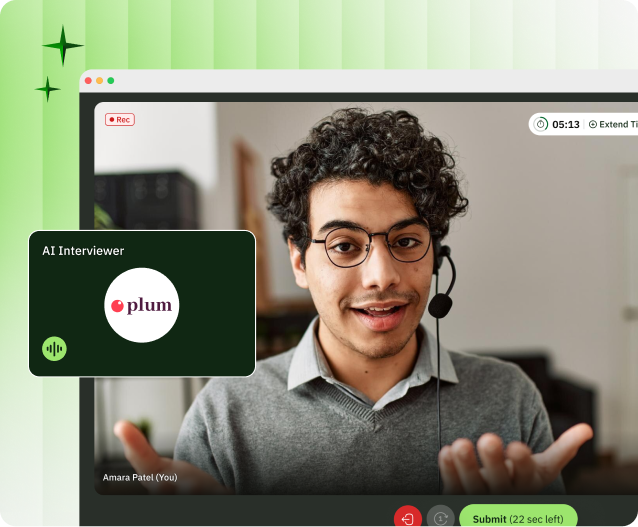
| L1 SCREENING | AI Phone Screener | Conducts first-round voice screens across timezones without calendar holds, probing availability, interest, and baseline competency. | Transcript, competency score, and advance/hold flag. |
| STRUCTURED INTERVIEW | AI Video Interviewer | Runs asynchronous and conversational video interviews with behavioural and situational questions calibrated to Oracle role profiles. | Video recording, structured scoring grid, and integrity flags. |
| TECH VALIDATION | AI Coding Interviewer | Administers live coding sessions in Java, Python, SQL, C++, and cloud-native environments per Oracle's engineering stack. | Code quality report with correctness, efficiency, and style scores. |
| COMMUNICATION | English Proficiency Test | Benchmarks spoken English for client-facing and cross-regional Oracle roles. | CEFR-aligned level with skill-area breakdown. |
HYRING PRODUCT
AI Resume Screener
WHAT IT DOES
Parses campus and lateral resumes against Oracle-specific role criteria (OCI, ERP, database, cloud) and scores for fit.
OUTPUT (WHAT THE TEAM SEES)
Ranked candidate list with role-match confidence scores.
HYRING PRODUCT
AI Phone Screener
WHAT IT DOES
Conducts first-round voice screens across timezones without calendar holds, probing availability, interest, and baseline competency.
OUTPUT (WHAT THE TEAM SEES)
Transcript, competency score, and advance/hold flag.
HYRING PRODUCT
AI Video Interviewer
WHAT IT DOES
Runs asynchronous and conversational video interviews with behavioural and situational questions calibrated to Oracle role profiles.
OUTPUT (WHAT THE TEAM SEES)
Video recording, structured scoring grid, and integrity flags.
HYRING PRODUCT
AI Coding Interviewer
WHAT IT DOES
Administers live coding sessions in Java, Python, SQL, C++, and cloud-native environments per Oracle's engineering stack.
OUTPUT (WHAT THE TEAM SEES)
Code quality report with correctness, efficiency, and style scores.
HYRING PRODUCT
English Proficiency Test
WHAT IT DOES
Benchmarks spoken English for client-facing and cross-regional Oracle roles.
OUTPUT (WHAT THE TEAM SEES)
CEFR-aligned level with skill-area breakdown.
KPI Scoreboard — Oracle Hiring Model
Time to Screen
Definition: Calendar days between application submission and first screening decision for an Oracle candidate.
Risk indicator: Oracle competes directly with AWS and Google Cloud for the same OCI talent. If screening takes longer than 5 business days, those candidates are already in second-round interviews elsewhere.
Screening Throughput
Definition: Number of completed first-pass reviews per recruiter per week.
Risk indicator: If throughput spikes after deploying AI screening but the percentage advancing to L1 stays flat, the scoring thresholds need recalibration. Volume without quality is simply just noise.
Interview Completion Rate
Definition: Share of candidates who receive an interview link and submit a completed assessment.
Risk indicator: Oracle's campus assessments run 60 to 90 minutes. If completion drops below 65%, check whether the test length matches the seniority of the role or whether there are technical issues. Freshers abandon long assessments faster than experienced hires.
Early Stage Drop-offs
Definition: The funnel step where candidates stop responding or withdraw.
Risk indicator: If the biggest drop is between shortlist notification and assessment start (not during the assessment itself), the gap is likely a communication delay. Candidates ghost companies that go quiet for a week.
Panel Hours per Hire
Definition: Combined interviewer hours consumed to produce one accepted offer at Oracle.
Risk indicator: Cross-reference with OCI delivery utilisation. If panel hours decrease but cloud project SLA misses increase in the same quarter, the trade-off worked. If both decrease, the AI filter is doing its job.
Pass-through Rate
Definition: Percentage of candidates who clear each stage and advance to the next.
Risk indicator: Compare pass-through rates between Oracle's India campus pipeline and its US lateral pipeline. A 25%+ gap on the same role profile means the rubric needs regional adjustment, not a single global threshold.
Shortlist-to-Offer Ratio
Definition: How many shortlisted candidates Oracle needs to process to yield one accepted offer.
Risk indicator: At Oracle's scale, moving from 10:1 to 5:1 is meaningful. Dropping below 3:1 is a warning sign that the top of the funnel is too narrow and the filters very strong such that viable candidates are being filtered out prematurely.
Integrity Flag Rate
Definition: Percentage of AI-conducted interviews that trigger identity or honesty alerts.
Risk indicator: Campus drives in specific Indian cities may show higher flag rates due to coaching centres that prep candidates with identical scripted answers. A cluster of flags from one college is a data point, not an automatic disqualification.
Time to First Touch
Definition: Hours between a candidate completing their application and receiving their first communication from Oracle.
Risk indicator: Glassdoor complaints about Oracle's slow response are public and searchable. Every day of silence after application is a day a competitor can make first contact. Bring this under 48 hours for priority roles.
SLA Adherence
Definition: Percentage of candidates who receive status updates within the committed timeframe.
Risk indicator: When SLA adherence drops below 80%, Glassdoor review sentiment shifts within the same quarter. Candidates write about the Oracle interview process publicly. That affects the employer brand for the next hiring cycle.
Model ROI for High-Volume Scenario
The math in this illustrative projection is based on publicly available information on Oracle's number of employees, revenue figures, and hiring volumes. Oracle's cost structure internally will be different from these projections. This is meant to be a starting point only.
Annual Savings Potential
$4.2M+
in operational and hiring costs.
Reduction in Time-to-Hire
55%
faster from application to accepted offer.
Faster Interview Process
50%
acceleration in scheduling and evaluation throughput.
5-Year ROI Projection
~350%
with a 5-month payback period.
Note: ROI figures below are an illustrative model of potential savings in this specific scenario. Actual results vary by internal workflow costs.
Hours Saved Annually
The manual effort concentrates in application screening, L1 phone and video evaluation, and early technical panels. These three stages account for over 80% of recruiter and interviewer time in the Oracle hiring model.
- Resume and application screening:: 375,000 applications at 8 minutes average review time totals 50,000 person-hours. AI resume screening reduces this to approximately 5,000 person-hours of recruiter review on AI-generated shortlists.
- L1 phone and video screening:: 60,000 candidates reaching L1 at 18 minutes per candidate totals 18,000 person-hours. AI phone and video agents conducting these screens leave approximately 2,200 person-hours of recruiter review.
- Early technical panels:: 15,000 candidates reaching technical evaluation at 40 minutes per candidate with 1.5 panelists average totals 15,000 person-hours. AI coding and video screening reduces the number reaching human panels by 50%, recovering approximately 7,500 person-hours.
Total estimated hours recovered annually: ~56,000.
Hours by Stage (Manual vs. AI-Assisted)
Source: Hyring hiring model | Illustrative, based on 375K application volume
Manual Cost vs. Target State with AI
Oracle's 15:1 application-to-hire ratio means every percentage point of efficiency at the top of the funnel removes cost from every stage below.
| Metric | Current manual process | Target with Hyring AI agents |
|---|---|---|
| L1 screening cost | ~$2.6M (blended recruiter hours at $22/hr loaded, scheduling overhead, telephony) | ~$310K (at ~$1 per AI-conducted screen, plus ~$70K in recruiter review hours) |
| Engineering panel load | Heavy: OCI and database engineers pulled from delivery for campus and lateral interview sprints, averaging 3-4 interviews per day during peak windows | Reduced: panels receive only candidates who cleared AI resume, phone, and coding gates. Interview load drops to 1-2 per day with higher signal-to-noise |
| Interview scalability | Constrained by interviewer availability across 40+ countries, timezone coordination, and campus drive compression | Concurrent and asynchronous: candidates complete AI assessments on their own time within a defined window |
| Candidate verification | Interviewer-dependent observation during live video, inconsistent across regions and fatigue levels | Automated proctoring monitors face presence, voice matching, screen activity, gaze direction, and clipboard behaviour in parallel |
| Funnel completion rate | ~22% of shortlisted candidates reach offer stage (estimated from tech industry benchmarks for enterprise software) | >60% projected, driven by reduced wait times, self-scheduling, and faster status communication |
Where the $4.2M+ Savings Come From
The biggest cost recovery at Oracle is not in recruiter salaries. It is in cloud engineering hours pulled from $138 billion of committed delivery work, and in the candidate acquisition overhead that compounds when 375,000 applications move slowly through a constrained pipe.
- L1 volume handled by AI agents.: At 375,000 applications and an 18-minute average screen for those reaching L1, the manual screening stage costs roughly $2.6M in loaded recruiter time. AI phone and video agents completing 90% of those screens at ~$1 each bring the cost to approximately $310K. Net recovery: ~$2.3M.
- Engineering hours returned to cloud delivery.: OCI engineers are billed internally at $45 to $65/hr depending on practice and geography. Recovering 7,500 panel hours at a midpoint of $55/hr restores approximately $412K of delivery capacity.
- Scheduling and coordination overhead eliminated.: Multi-timezone coordination across 40+ countries for lateral hiring, campus slot management in India, rescheduling loops, and no-show follow-ups consume an estimated 10,000 to 12,000… coordinator hours per year at Oracle's scale. Self-scheduling through AI assessment links eliminates roughly 60% of this. Estimated recovery: ~$220K.
- Integrity investigation costs reduced.: Late-stage disqualifications for fraud waste every hour invested in prior evaluation stages. Catching integrity issues at the first automated screen saves an estimated $140K in wasted downstream evaluation time annually.
Total estimated annual savings: ~$4.2M (conservative, includes secondary effects across lateral and campus hiring cycles).
Where the Savings Come From
Source: Hyring hiring model | All figures are illustrative. Update inputs to match your internal cost structures.
Cumulative Savings vs Cost
Break-even lands around month five in this model. That timeline compresses further if Oracle's lateral hiring volume (which runs year-round, unlike campus drives) is added to the same deployment. The marginal cost per additional AI-conducted interview is close to zero once the platform is configured.
Cumulative Savings vs Investment (12-month model)
Month
Source: Hyring hiring model | Illustrative. Adjust inputs to match your volumes and cost structure.
Oracle Hiring Process Implementation
Oracle runs two hiring motions (campus in India, lateral globally), and both use different systems, calendars, and evaluation rubrics. Trying to automate both on day one creates configuration chaos. Start narrow. Prove the model on one track. Then expand.
Week 2: Run AI agents alongside manual screens and compare
Activate the AI Phone Screener and AI Video Interviewer for the two pilot roles only. Run them in parallel with Oracle's existing manual process for the first 72 hours.
Compare score distributions, time-to-decision, and completion rates daily.
Flag any cases where AI recommendations and human decisions diverge. Use those divergence points to adjust the rubric before expanding.
Week 3: Add coding and language assessments to the pilot
Layer in the AI Coding Interviewer for the engineering track and the English proficiency assessment test for the India campus role where client-facing rotation happens within the first year.
Monitor integrity flag rates. Compare them against whatever baseline Oracle currently tracks for its manual proctoring (even if that baseline is "we eyeball it on video calls"). Note any clusters of flags from specific colleges or regions as calibration inputs, not rejection triggers.
Week 4: Review, recalibrate, and decide on expansion
Did pass-through rates hold without panel satisfaction declining? Did candidate completion rates stay above 65%? Did time-to-offer compress by at least 3 business days? Adjust question banks, scoring weights, and flag thresholds based on the data. Expand to the next batch of requisitions only after two consecutive weekly reviews show stable SLAs across both the campus and lateral tracks.
Frequently Asked Questions
How does this Oracle hiring model handle 375,000 applications per year?
Every candidate in a batch receives their assessment link simultaneously. Hyring's AI agents run thousands of phone and video sessions concurrently, so a 60,000-candidate L1 pool clears in days rather than the weeks a manual team would require.
What does the first-round automated screen produce for Oracle recruiters?
A competency score breakdown, a summary of candidate responses, areas flagged for deeper probing, and an advance or hold recommendation. Recruiters review the output in about 90 seconds per candidate instead of spending 18 minutes or so, or more, on a live call.
How does the system detect cheating in remote assessments?
The video interview software tracks six signals simultaneously: tab switches, secondary faces, voice mismatches, gaze anomalies, lip-sync gaps, and clipboard pastes. A composite integrity score is generated. No single flag triggers automatic rejection.
Do automated interviews hurt candidate experience?
Candidates choose their own assessment window, skip scheduling back-and-forth, and receive status updates faster because scoring is immediate. Platform data from similar deployments shows candidate satisfaction holds steady or improves.
Can coding assessments be configured for different Oracle role families?
Yes. The coding interview tool supports Java, Python, C++, JavaScript, SQL, and cloud-native environments with configurable difficulty per role.
An OCI backend engineer and an ERP database developer see entirely different assessments on the same platform.
Where do human panels fit in the Oracle interview process?
Panels engage only at the final stage, after AI screening, phone/video evaluation, coding, and language checks are complete. Engineers use that time for problem-solving depth and culture-fit evaluation rather than re-verifying basic qualifications.