Tech Mahindra Hiring Process - Rise With Hyring AI Agents
The Tech Mahindra hiring process targets roughly 6,000 freshers per year alongside 10,000+ lateral replacements driven by 11.8% attrition on a workforce of 148,731 (Q4 FY25). That means approximately 125,000 applications hit the funnel annually. CEO Mohit Joshi's three-year turnaround plan (FY25 through FY27) depends on filling project rosters faster than competitors poach the same candidates.
This blueprint maps where Hyring's AI agents can take over the repetitive, rubric-scored stages of that funnel, what KPIs track whether it works, and what the cost math looks like if it does.

This article is a planning framework showing where AI can reduce manual effort across the funnel.
The Overall Blueprint
Half the battle in a turnaround is speed of execution on new deals. Tech Mahindra won $199 million in net new deals in Q3 FY25 alone, per its quarterly earnings release. Those deals need staffed teams. Every week a requisition sits open is a week of unbilled capacity, and unbilled capacity during a turnaround phase is the kind of number that shows up in analyst calls.
The following is an operating plan divided into four parts based on the Tech Mahindra recruitment process.
- A funnel map based on 125,000 annual applications for the operating plan, including campus drives, the 'Just Hiring Challenge' for off-campus recruitment, and lateral recruitment.
- A deployment plan with checkpoints based on Tech Mahindra's recruitment process (aptitude test, coding via HackerRank, conversational interviews, and HR rounds).
- A KPI scoreboard with ten metrics written for a company in turnaround, where the cost of feedback loops is virtually zero.
- A ROI module based on public financial data, where all assumptions are labeled.
Most of the time is spent before a human recruiter even lays eyes on a candidate. The assessment stage (aptitude test, English test, coding test) and the L1 conversational interviews have the largest candidate pool to filter with the least variation in assessment criteria. This is where the cost of automation is repaid the fastest.
Current State
Tech Mahindra closed Q4 FY25 (March 31, 2025) with 148,731 employees, a decrease of 1,757 from Q3. Last twelve-month IT attrition rose slightly to 11.8%, per the FY25 integrated annual report.
Revenue for Q4 stood at $1,549 million with a net profit of Rs 1,167 crore, up 76.5% year-on-year. The turnaround is working on the revenue line. The headcount line tells a different story.
Fresher intake for FY25 was targeted at approximately 6,000 across campus drives and off-campus programs, roughly 1,500 per quarter. Compare that to TCS at 40,000+ or Infosys at 15,000+. Tech Mahindra's pipeline is smaller in absolute volume, but the application-to-hire ratio stays just as brutal.
An estimated 60,000 campus applications compete for those 6,000 spots. Lateral hiring, driven by 11.8% attrition on 148,731 employees, adds another 10,000+ hires annually from a pool of roughly 65,000 applicants (if replacement is also key).
Chennai is one of the largest delivery centres in the network. Telecom (Tech Mahindra's legacy vertical and still its biggest) runs heavy operations out of the city. When campus drives hit Tamil Nadu engineering colleges, the volume concentrates in a 3-week window. Recruiters in the Chennai hub process thousands of applications from Anna University, SRM, VIT, and affiliated colleges in that compressed timeline.
~148,731
~6,000
~125,000
Headcount (Mar 31, 2025)
Quarterly Headcount Trend FY25
Problems in the Tech Mahindra hiring process
When 1,000+ engineering graduates from the 2025 batch are still waiting on onboarding letters months after clearing every round, something upstream in the pipeline has stalled.
News18 reported this delay in March 2026, and the issue goes beyond offer management. It traces back to how much manual capacity each stage of the Tech Mahindra interview process consumes.
Conversational screens cost 5,000+ recruiter hours per cycle and follow the same script every time
About 25,000 candidates advance to the conversational or psychometric part. Each call lasts between 15-20 minutes. This means that there are between 6,250 and 8,300 hours of recruiters dialing away, asking the same questions, evaluating on the same rubric, typing the same fields. The questions never change from one candidate to another. The rubric never changes. Only the voice on the other end of the line does.
Billable engineers pulled into interview panels during turnaround ramp-ups
Mohit Joshi's turnaround depends on billing more hours per engineer, not fewer.
But every campus sprint and hiring push results in more mid-level developers being filtered through panel interviews. Assuming 10,000 candidates pass the technical interviews every year, with 35-minute interviews and 1.5 panelists average, that's 8,750 person-hours of engineer time. That's $306K of loaded cost, sitting outside client project budgets.
Offer-to-join dropout when round spacing crosses 5 business days
A graduate from the 2025 batch, with offers from HCLTech and Wipro, will not wait 10 days for the gap between the end of the conversational round and the invitation for the technical interview.
The dropout is silent, as the candidates do not respond. For a company as large as Tech Mahindra, with a 15% dropout rate for the 16,500 combined hires, it translates to 2,475 cycles of re-sourcing every year, which is cumbersome.
Remote proctoring relies on human attention spans that degrade by hour four
Video-based assessments are growing across the Tech Mahindra hiring process. Catching tab switches, secondary voices, and face mismatches in a live session depends on the interviewer's focus. By the fourth or fifth video of the day, that focus is unreliable. Gut feelings are not a proctoring system.
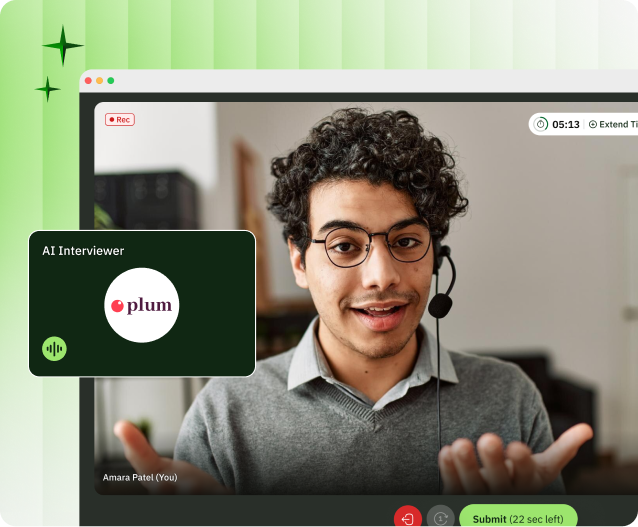
Hyring AI Agents
Each step in that process for which a recruiter is following some kind of rubric to arrive at a scored outcome is an opportunity for an AI agent to perform the same process in parallel across hundreds of candidates with no time dependence or fatigue effect.
Where the process is one of reading a room, making cultural fit decisions, or judgment calls not well-represented by a scoring system, a human does that step. No AI agent is making an offer or rejecting a candidate at the final step; those decisions are for the hiring panel.
The AI Resume Screener
Instantly parse and rank resumes based on job-fit signals and technical requirements.
- Rapid high-volume parsing
- Objective skill ranking
- Bias-reduced shortlisting
The AI Phone Screener
Automated L1 verification calls to ensure basic qualifications and interest levels.
- 24/7 automated screening
- Consistent evaluation metrics
- Instant shortlist generation
The AI Coding Interviewer
Technical assessment with live coding environments and real-time logic evaluation.
- Real-time code analysis
- Plagiarism detection
- Automated logical scoring
English Proficiency Test
Standardized evaluation of communication skills, fluency, and professional vocabulary.
- Automated fluency scoring
- Grammar and clarity analysis
- CEFR aligned reporting
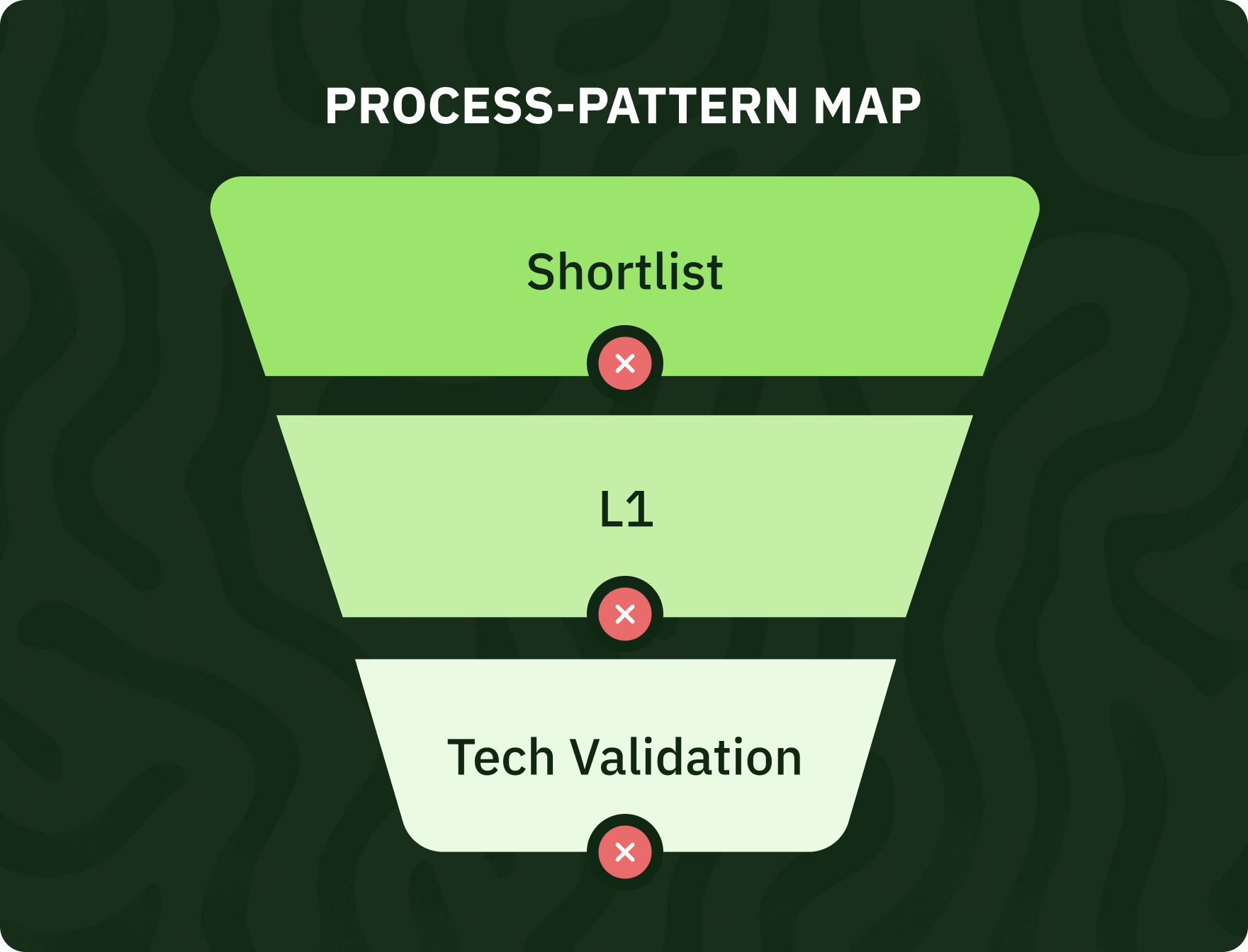
Funnel-to-agent
| HIRING STAGE | HYRING PRODUCT | WHAT IT DOES | OUTPUT (WHAT THE TEAM SEES) |
|---|---|---|---|
| Shortlist | AI Resume Screener | Parses resumes against Tech Mahindra role profiles (Ninja-equivalent, Digital, lateral) and scores on weighted criteria. | Ranked candidate list with role-fit scores per requisition. |
| L1 screening | AI Phone Screener | Conducts conversational screens at scale; asks the same rubric questions a recruiter would, scores responses in real time. | Candidate score card, call transcript, advance or hold flag. |
| Structured interview | AI Video Interviewer | Records and evaluates video responses against competency rubrics; monitors integrity signals throughout. | Competency breakdown, integrity score, panel-readiness indicator. |
| Tech validation | AI Coding Interviewer | Administers coding problems in Java, Python, SQL, C++ mapped to Tech Mahindra engineering bands. | Code quality report, test-case pass rates, problem-solving rating. |
| Communication | English Proficiency Test | Benchmarks spoken English against CEFR levels for client-facing and delivery roles. | Proficiency level with sub-skill breakdown. |
HYRING PRODUCT
AI Resume Screener
WHAT IT DOES
Parses resumes against Tech Mahindra role profiles (Ninja-equivalent, Digital, lateral) and scores on weighted criteria.
OUTPUT (WHAT THE TEAM SEES)
Ranked candidate list with role-fit scores per requisition.
HYRING PRODUCT
AI Phone Screener
WHAT IT DOES
Conducts conversational screens at scale; asks the same rubric questions a recruiter would, scores responses in real time.
OUTPUT (WHAT THE TEAM SEES)
Candidate score card, call transcript, advance or hold flag.
HYRING PRODUCT
AI Video Interviewer
WHAT IT DOES
Records and evaluates video responses against competency rubrics; monitors integrity signals throughout.
OUTPUT (WHAT THE TEAM SEES)
Competency breakdown, integrity score, panel-readiness indicator.
HYRING PRODUCT
AI Coding Interviewer
WHAT IT DOES
Administers coding problems in Java, Python, SQL, C++ mapped to Tech Mahindra engineering bands.
OUTPUT (WHAT THE TEAM SEES)
Code quality report, test-case pass rates, problem-solving rating.
HYRING PRODUCT
English Proficiency Test
WHAT IT DOES
Benchmarks spoken English against CEFR levels for client-facing and delivery roles.
OUTPUT (WHAT THE TEAM SEES)
Proficiency level with sub-skill breakdown.
KPI Scoreboard — Tech Mahindra Hiring Model
Time to Screen
Definition: Hours between a completed application (or assessment result) and the first screening decision.
Risk indicator: If Chennai campus drives consistently screen faster than Hyderabad or Pune for the same roles, the gap is a process problem, not a talent supply problem. Investigate before standardising.
Screening Throughput
Definition: Number of candidates cleared through initial screening per recruiter per week.
Risk indicator: Throughput doubling while the advance rate into technical rounds stays flat means the screening bar dropped. Quantity without quality wastes panel time downstream.
Interview Completion Rate
Definition: Percentage of candidates who receive an assessment or interview link and actually finish it.
Risk indicator: Completion under 55% in the conversational round usually means the scheduling window is too narrow or the instructions arrived in a spam folder. Check the delivery channel before blaming candidate interest.
Early Stage Drop-offs
Definition: The funnel step where candidates exit without completing the process.
Risk indicator: If the coding assessment on HackerRank has a 40% abandonment rate but the aptitude test does not, the problem is likely test length or perceived difficulty. Freshers quit faster when they feel outmatched early.
Panel Hours per Hire
Definition: Total engineering and HR interviewer hours consumed to produce one accepted offer.
Risk indicator: If this drops while 90-day attrition rises, the shortened interview may be skipping soft-skill evaluation. Correlation is not proof, but it warrants a rubric review.
Pass-through Rate
Definition: Proportion of candidates advancing from one funnel stage to the next.
Risk indicator: A 25-point gap between pass-through rates at two campuses recruiting for the same role means the rubric needs location-level tuning, not a blanket national threshold.
Shortlist-to-Offer Ratio
Definition: How many shortlisted candidates it takes to generate one accepted offer.
Risk indicator: Improving from 7:1 to 4:1 is efficient. Improving from 7:1 to 2:1 probably means good candidates are being filtered out. Check the profile of rejected candidates against the ones who accepted.
Integrity Flag Rate
Definition: Percentage of AI-proctored interviews that trigger suspicious activity alerts.
Risk indicator: A sudden 12% flag rate from a single college batch does not mean that college is cheating more - it might mean their lab setup triggers false positives on screen-sharing detection. Validate carefully before (re)acting.
Time to First Touch
Definition: Gap between a candidate completing their assessment and receiving any communication from the hiring team.
Risk indicator: Sending an automated receipt on day one and then going silent for nine days is worse than a consistent three-day response pace. Gaps in communication, not gaps in speed, drive dropout.
SLA Adherence
Definition: Percentage of candidates who receive a status update within the committed timeframe.
Risk indicator: When this drops below 80% during a campus sprint, offer acceptance falls in the same cohort within two weeks. Candidates interpret silence as rejection and move on.
Model ROI for a Mid-Scale Turnaround
Every number below is an illustrative projection. The math uses publicly reported Tech Mahindra hiring volumes and industry benchmarks for recruiter costs. Internal cost structures vary. Treat this as a planning input, not a guarantee.
Annual savings potential
$750K
approximately $750K across operational, panel, and re-acquisition costs.
Time-to-hire reduction
55%
55% faster from assessment completion to accepted offer.
Interview throughput
45%
45% acceleration in scheduling and evaluation cycles.
5-year ROI projection
380%
approximately 380% with break-even at month five.
Note: ROI figures below are an illustrative model of potential savings in this specific scenario. Actual results vary by internal workflow costs.
Recovered hours across the three heaviest stages
Resume and assessment scoring consume the widest block. At 125,000 applications and 8 minutes per candidate, that is 16,667 person-hours. AI resume screening compresses this to roughly 1,700 hours of recruiter review on AI-generated shortlists. Net recovery: ~15,000 hours.
Conversational and L1 video screens come next. Approximately 30,000 candidates reach this stage. At 20 minutes per screen, that is 10,000 person-hours manually. AI phone and video agents completing 90% of these screens leave approximately 2,500 hours of recruiter review. Net recovery: ~7,500 hours.
Technical panels account for the most expensive hours. With 10,000 candidates reaching technical rounds, 35 minutes per session, and 1.5 panelists average, the manual cost is 8,750 hours. AI coding and video pre-screening cuts the number reaching human panels by 50%. Net recovery: ~4,400 hours.
Total estimated hours recovered annually: ~27,000.
Hours by Stage (Manual vs. AI-Assisted)
Source: Hyring hiring model | Illustrative, based on 125K application volume estimate
Current cost vs. target state with AI
The assessment stage (aptitude test, English test, coding test) and the L1 conversational interviews have the largest candidate pool to filter with the least variation in assessment criteria. This is where the cost of automation is repaid the fastest.
| Metric | Current manual process | Target with Hyring AI agents |
|---|---|---|
| L1 screening cost | ~$373K (16,667 resume hrs + 10,000 L1 hrs at $14/hr loaded) | ~$210K (AI at ~$1 per screen + reduced reviewer hours) |
| Engineering panel load | 8,750 hrs annually; engineers average 4 interviews/day during campus sprints | Panels receive only AI-cleared candidates; interview load drops to 2 per day with higher signal quality |
| Interview scalability | Limited by recruiter and panel calendars; campus cycles create 3-week bottlenecks | Concurrent and asynchronous: candidates finish AI screens on their own schedule within a set window |
| Candidate verification | Interviewer observation during live video, inconsistent after 4+ sessions | Automated monitoring of face presence, voice match, gaze direction, screen activity, clipboard behaviour in parallel |
| Funnel completion rate | ~13% of total applicants reach accepted offer (industry estimate for IT services at this scale) | ~22% projected, driven by reduced wait times, self-scheduling, and faster status updates |
Where the $750K recovery sits
For a company in turnaround, the real cost of slow hiring is not in the TA budget. It is in delayed project staffing on new deal wins. Tech Mahindra's $199 million in Q3 FY25 net new deals need engineers on seats. Every open requisition that lingers for an extra three weeks is three weeks of revenue leakage on those contracts.
- L1 volume handled by Agentic AI: Manual screening across 125,000 applications and 30,000 conversational screens costs roughly $373K in loaded recruiter time. AI agents conducting 90% of screens at ~$1 each, combined with reduced review hours, bring the figure to approximately $210K. Net recovery: ~$163K.
- Engineering hours returned to client projects: 4,400 panel hours recovered at $35/hr loaded cost is approximately $154K of delivery capacity redirected to billable work.
- Scheduling and coordination overhead reduced: Campus drive coordination, slot management, candidate rescheduling, and no-show follow-ups consume an estimated 4,000 coordinator hours per year at this scale. Self-scheduling through AI assessment links eliminates roughly 60%. Estimated recovery: ~$29K.
- Integrity-related re-evaluation costs mitigated: Catching fraud signals at the AI screen stage rather than two rounds later saves an estimated $20K in wasted downstream evaluation time annually.
- Re-sourcing cycles from offer dropout avoided: Faster round spacing cuts the current ~15% offer-lapse rate. Estimated re-acquisition cost savings: ~$60K.
Total estimated direct savings: ~$426K. Including secondary effects (faster deal staffing, reduced cost-per-hire across multiple campus cycles, improved offer acceptance): ~$750K conservatively.
Where the savings come from
Source: Hyring hiring model | All figures are illustrative. Update inputs to match your internal cost structures.
Cumulative savings vs. platform cost over 12 months
Savings ramp as the deployment expands from pilot to full rollout. Break-even hits around month five. Adding lateral hiring requisitions to the same deployment accelerates the curve because the marginal cost per additional AI screen is near zero.
Cumulative Savings vs Investment (12-Month Model)
Month
Source: Hyring hiring model | Illustrative. Adjust inputs to match your volumes and cost structure.
Deployment Plan for the Tech Mahindra Hiring Process
The fastest way to kill internal trust in a new hiring tool is to launch it across every open requisition at once. Control the variables first. Narrow pilot, daily measurement, and expansion gated by two consecutive clean review cycles.
Week 2: Run AI agents in parallel with the existing manual process
Deploy the AI Phone Screener and AI Video Interviewer on the pilot roles only. Keep the manual process running in parallel for the first 72 hours. Compare score distributions, completion rates, and time-to-decision side by side.
Daily tracking is essential. If the AI is flagging 30% of candidates as below threshold and your manual process passes 80% of the same group, the rubric needs calibration before you increase your screening volume.
Week 3: Add coding and English assessments to the pilot track
Layer in the AI Coding Interviewer for the engineering lateral role. Include the English Proficiency Test for the campus role where first-year client rotation is expected. Monitor integrity flag rates and compare them to whatever manual fraud signals (if any) existed before. A spike in flags from a specific college batch is a data point, not a verdict. Investigate before drawing conclusions.
Week 4: Review, calibrate, and decide whether to expand
Core questions - Did the pass-through rate hold steady or improve? Did panel satisfaction with candidate quality stay the same? Did candidate completion rates on AI screens match or beat manual scheduling?
Adjust question banks, scoring weights, and flag sensitivity thresholds based on the data. Expand to the next batch of requisitions only after two consecutive review cycles show stable SLAs. Do not rush it.
Frequently Asked Questions
How does this model handle Tech Mahindra's campus and lateral hiring volume simultaneously?
Campus and lateral applications enter different rubric tracks within the same platform. AI agents process both in parallel because there is no shared calendar or interviewer bottleneck.
What does the automated first-round agent produce for the Tech Mahindra hiring process?
A scored report per candidate: competency ratings, a summary of responses, topics that need deeper probing in later rounds, and a clear advance or hold recommendation. Recruiters spend about 90 seconds reviewing it instead of taking a 20-minute call.
How does the system detect cheating in remote assessments?
Six signals tracked simultaneously during video sessions: tab switching, secondary faces in frame, voice pattern mismatches, gaze direction anomalies, lip-sync discrepancies, and clipboard activity. A composite integrity score results. No single flag triggers automatic rejection.
Does automation make the candidate experience worse?
Candidates choose their own assessment window. No back-and-forth emails to lock a slot. Scores process immediately after completion, so status updates arrive faster. Feedback from similar deployments shows candidate satisfaction typically holds steady or goes up.
Can the coding tests match Tech Mahindra's specific role bands?
Yes. Python, C++, SQL, JavaScript, and other environments are supported with configurable difficulty. An Associate Software Engineer from a campus drive and a Senior Cloud Architect in the telecom vertical see completely different problem sets on the same platform.
Where do human panels come in?
At the final stage only -by that point, the candidate has cleared resume screening, conversational evaluation, coding, and language checks. Panelists spend their time on problem-solving depth and team fit rather than re-validating basics.