
You found the perfect candidate. Great skills, great energy and everyone on the team was excited. Then the process dragged. Approvals took too long. Scheduling fell apart. By the time you sent the offer, they had already accepted somewhere else.
It is not a talent problem. It is a process problem. It is the exact kind of problem AI was built to solve. It removes the friction that gets in the way of good hiring. The busywork, the bottlenecks and the manual steps that eat up time without adding value.
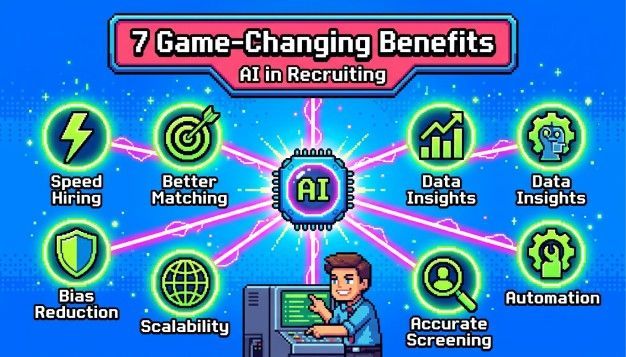
Here are seven benefits that show what that looks like in practice.
1. You Hire Faster. Without Cutting Corners.
Time kills deals. It kills hires too. The longer your process takes, the more candidates you lose. Robert Half found that 62% of professionals lose interest if they don't hear back within 10 business days. That is your window before the best people start looking elsewhere.
AI shrinks the timeline at every stage. Screening that used to eat up days happens in minutes with an AI resume screener. Interview scheduling runs on autopilot. Follow-ups go out without someone pressing send.
You are not rushing. You are just removing the dead time that slows everything down. Your team moves faster. Candidates stay engaged. Offers go out while they are still excited.
2. You Find People You Would Have Missed.
Most hiring teams only see whoever applies. That is a fraction of the talent out there.
LinkedIn data shows that 70% of the global workforce is passive talent. They are not scrolling job boards. But they might be exactly right for your role. You just have no way of reaching them through a traditional post.
AI sourcing tools change that. They scan profiles, networks, and databases to surface people who match your criteria. People you would never have found otherwise. Your candidate pool gets wider, and the quality goes up.
3. Your Hiring Decisions Get Backed by Data, Not Gut Feel.
Recruiters make hundreds of micro-decisions during a single hiring cycle. Which resume should I read first? Who gets a callback? Who moves to the next round? Most of these decisions happen fast. And most of them are shaped by instinct.
Instinct is not bad. But it is inconsistent. Two recruiters can look at the same resume and reach different conclusions depending on workload, mood, or time of day.
AI brings structure to that process. It scores candidates against the same criteria every time. Skills, experience, qualifications and no variation based on who is reviewing or when.
That does not mean removing human judgment. It means giving it a stronger foundation. When your gut says yes, the data either backs it up or gives you a reason to look closer. The result is decisions you can explain, defend, and repeat.
4. Candidates Actually Enjoy Applying.
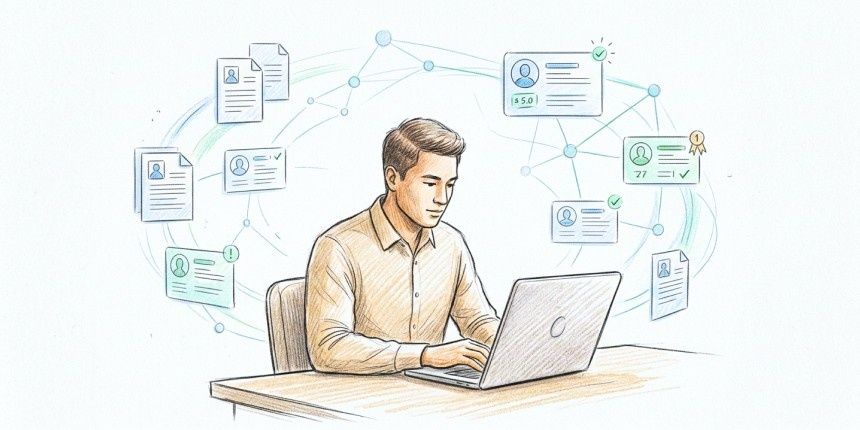
This one gets overlooked. Your hiring process is the first impression candidates have of your company. For most companies, that impression is not great. Months of silence from the recruiter, not a process. That is a candidate black hole.
AI changes the experience completely. Instant confirmations, automatic status updates and no more wondering where things stand.
5. Small Teams Punch Way Above Their Weight.
You do not need a 20-person talent acquisition team to hire well. You need the right tools.
AI handles the grunt work. Screening. Outreach. Scheduling. Status updates. All the repetitive tasks that eat into your team's day.
LinkedIn found that 64% of recruiters say AI helps them remove bottlenecks in their workflow. For lean teams, that is not a marginal improvement. It is the difference between keeping up and falling behind.
It is more accessible than ever. You do not need an enterprise budget. Most platforms scale with your needs. A two-person recruiting team with the right AI setup can move just as fast as a department ten times its size.
6. You Hire Globally Without the Headaches.
Remote work is here to stay. Gartner reports that 58% of organizations now employ borderless technology talent, with people working from a different country than the employer. That opens up a massive talent pool.
But hiring across time zones and borders brings real friction. Scheduling across continents, sourcing in unfamiliar markets and keeping communication consistent when everyone is scattered.
AI handles the logistics. Scheduling tools detect time zones automatically. Sourcing algorithms search specific geographies. Automated messaging keeps every candidate in the loop, no matter where they are.
You get the benefit of a global talent pool. Without the chaos of managing it manually.
7. You Scale Hiring Without Scaling Your Team.
Growth is great. Until your hiring team becomes the bottleneck.
When requisitions jump, everything multiplies. More resumes, more interviews and more coordination. Without support, quality drops. Candidates fall through the cracks. Your team burns out.
AI gives you breathing room. That is not about doing more with less. It is about doing more without breaking.
Your team stays lean. Your standards stay high. And your hiring keeps pace with your growth.
How Hyring Delivers on These Benefits
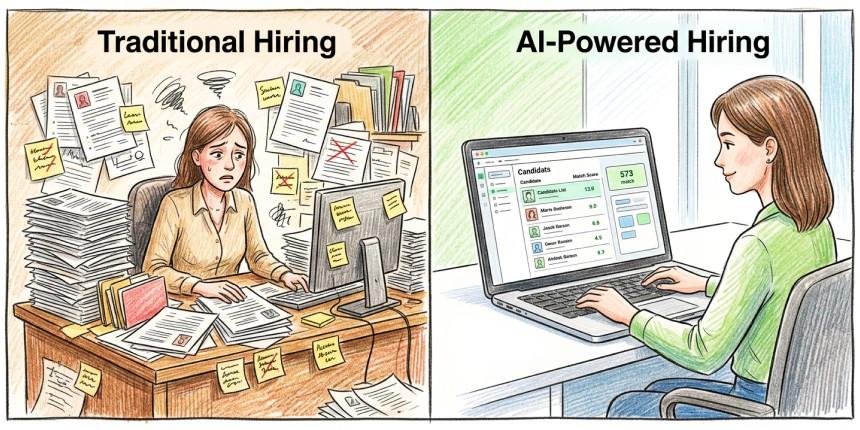
Every benefit above comes down to one thing. Hiring teams need tools that work without adding complexity.
That is what Hyring does. No bloated dashboards. No steep learning curve. Just a clean, intuitive platform that fits into your existing workflow and makes it better.
Matching is built on skills and relevance. Not legacy patterns. Communication tools keep candidates engaged at every stage, and your team can get started in days, not weeks.
Whether you are a startup hiring your first ten people or a scaling company opening roles across markets, Hyring adapts to you. It does not force a new process. It sharpens the one you have.
For teams that want AI that is fast, fair, and human-first, Hyring is a great place to start.
Wrapping It Up
AI in recruiting is not a future trend. It is already here, and teams using it are pulling ahead.
The real benefit is not automation for its own sake. It is better candidates, fairer decisions, faster outcomes and a hiring experience that reflects well on your company.
Start with the benefits that matter most to your team. Then find the tool that delivers without overcomplicating things.
Great hires are still made by people. AI just clears the path so they can do it well.
Frequently Asked Questions
1. Is AI recruiting only useful for big companies?
Not at all. Smaller teams often see even more impact because every hour saved matters more. You do not need high volume to benefit. Even a team of two can automate screening, scheduling, and follow-ups. That frees up hours every week to focus on the work that actually needs a human touch.
2. Can AI evaluate soft skills?
AI is best at structured criteria like skills and experience. The real evaluation still happens in interviews where human judgment matters most. Think of AI as the tool that gets the right people in front of you faster. From there, your instinct and conversation skills take over.
3. What if AI filters out a good candidate?
It can happen. That is why AI should be a first filter, not the final one. Keep a human checkpoint in your process and review your criteria regularly. The best approach is to treat AI as a partner, not a gatekeeper. It narrows the field. You make the final call.
4. Do we need technical skills to use AI hiring tools?
Not with the right platform. Good tools are built for recruiters, not engineers. If setup takes weeks, it is the wrong tool. Most modern AI recruitment platforms are designed so that your team can onboard in days and start seeing results almost immediately. No coding. No IT support needed.
5. How do we keep candidate data safe?
Look for platforms that comply with GDPR or equivalent standards. Transparency about data collection and usage is non-negotiable. Candidates should always know when AI is involved. Before choosing a tool, ask how data is stored, who has access, and how long it is retained. If the vendor cannot answer those questions clearly, move on.