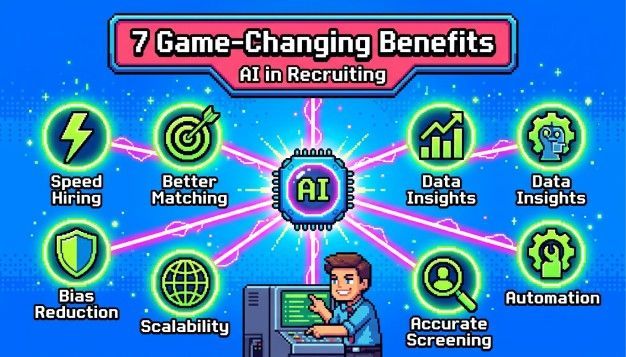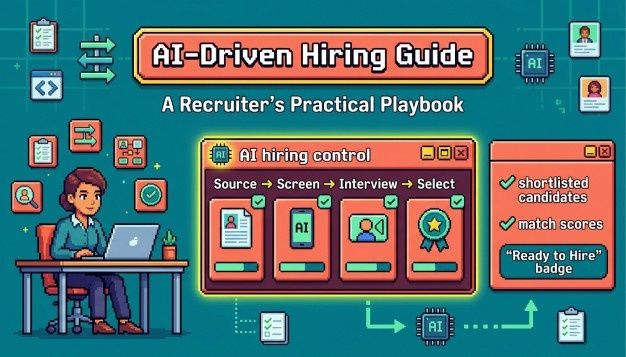

Hiring has never moved this fast. Job markets shift overnight. Candidate expectations keep climbing. Are the teams responsible for filling roles? Stretched thinner than ever.
In the middle of all this, AI recruitment has entered the conversation. Not as a trend, but as a practical shift in how companies find, evaluate, and hire talent.
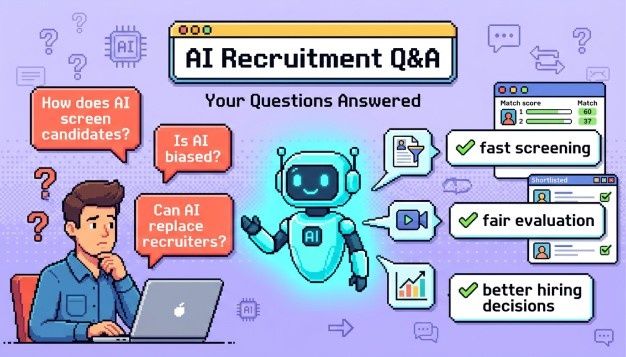
Still, the concept raises a lot of questions. What does it actually involve? Can it be trusted? Is it fair? Does it deliver real results, or is it just another buzzword?
This post breaks it all down. No jargon, no hype. Just clear answers to the questions people are actually asking.
What Exactly Is AI Recruitment?
AI recruitment is the use of artificial intelligence in hiring. It shows up in different forms. Algorithms that match candidates to roles. Tools that evaluate written responses. Predictive models that estimate how well someone might perform.
It is not one single tool. It is a category of technology. It supports sourcing, evaluating, communicating, and decision-making.
The goal is not to automate hiring entirely. It is to make the hiring process sharper, faster, and more informed.
A recruiter still decides who gets the offer. AI just makes sure the right people are in the room when that decision happens.

The Questions Everyone Is Asking
Does AI recruitment only benefit large companies?
This is one of the most common misconceptions. Yes, large organisations adopted it first. But the technology is now far more accessible.
Small and mid-sized businesses often benefit even more. They usually have fewer people handling recruitment. When a three-person HR team can automate outreach or let an algorithm handle initial matching. This frees up hours that would otherwise be assigned as manual work.
Affordability has changed, too. Many platforms now offer scalable pricing. Smaller teams can adopt AI features without enterprise-level budgets.
Can AI really understand what makes a good candidate?
It identifies the skills and potential a candidate possesses exceptionally well. When recruiters provide AI with specifics about the talents and areas of expertise needed for a given position, AI will investigate those areas and screen applicants.
Where it falls short is nuance, personality, and ambition. AI cannot read those things.
That is why it works best as a filter. It narrows the field. Recruiters close the deal and hire candidates.
Is there a risk of bias in AI hiring tools?
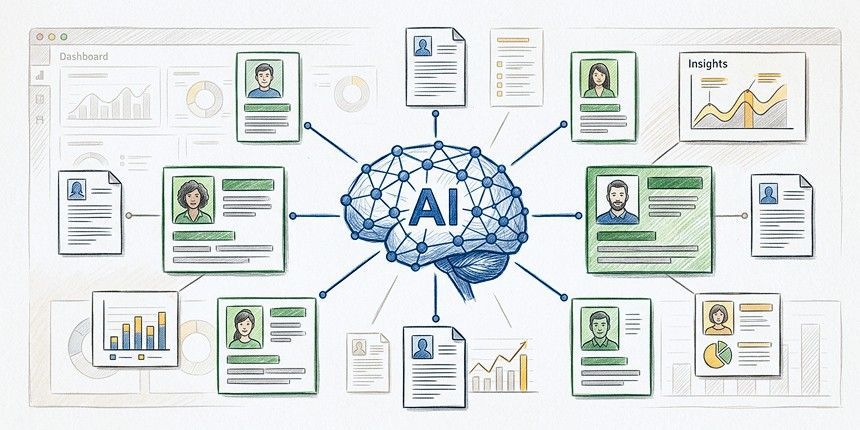
AI hiring tools can be a powerful way to reduce bias in the hiring process. Human reviewers, no matter how well-intentioned, carry unconscious favouritism toward certain universities, demographics, communication styles, or career paths. These biases are subtle, inconsistent, and difficult to audit.
AI offers something different: consistency. A well-designed system evaluates every candidate against the same criteria, every time. It doesn't get tired at the end of a long day of reviewing applications. It doesn't favour a name that sounds familiar or a school that it personally attended.
A well-monitored AI system can actually be more consistent than a human reviewer. Unconscious favouritism is more common than most people realise.
What about data privacy?
Data privacy is built into the foundation of reputable AI hiring platforms. These systems are designed from the ground up to comply with regulations like GDPR and other global data protection standards. Not as an afterthought. As a core requirement.
In practice, candidate data is encrypted, securely stored, and only used for its intended purpose. Resumes, assessment responses, and interview data are handled with strict access controls. Most platforms offer clear data retention policies so nothing lingers longer than it needs to.
Transparency is standard and not optional. Leading platforms inform candidates upfront when AI is part of the process. They explain what data is being collected and how it contributes to the evaluation.
The reality is that AI platforms often handle personal data more carefully than traditional hiring processes. Resumes can sit in inboxes. They get forwarded informally. They get stored without any clear policy. With AI platforms, there is a structured and auditable framework governing every step.
So, for candidates considering an AI-driven interview, data privacy is not something to worry about. It is something these platforms have already prioritised and solved for.
Will candidates feel like they are just talking to a machine?
When done right, AI improves the experience. Updates are automatic, and scheduling is seamless. Processing is faster, and people are not left waiting for weeks.
The trick is balance. Let AI handle logistics. But keep human touchpoints where they matter most. Interviews. Offer conversations. Onboarding. Those should always feel personal.
There are even conversational AI video interview sessions, like the one offered by Hyring, which do not make the conversation seem robotic at all. It sounds more like a conversation, rather than a robotic conversation, replying to preset questions without any flow.
How do you measure whether AI recruitment is actually working?
By outcomes. Time-to-fill. Quality of shortlisted candidates. Drop-off rates and hiring manager satisfaction. Some teams also track diversity metrics. That helps ensure AI is making hiring more inclusive, not less.
AI generates data naturally. Every interaction feeds back in. Every match, every outcome is logged along with the data of the candidates. Over time, that creates a loop. One that helps teams keep improving.
Where Hyring Fits Into the Picture
All these questions point to one thing. People want AI recruitment that works. That is fair, transparent, and easy to use.
That is what Hyring is built for.
Hyring brings AI into hiring through a simple, human-centred experience. It has no complex dashboards or no endless configuration. Just a focus on what matters. Connecting companies with the right candidates, quickly and reliably.
The platform tackles many of these concerns by design. Matching is based on relevant criteria, not legacy bias. Communication tools keep candidates engaged. Because simplicity is built into the core of the platform, teams can get started fast, without weeks of setup.
For companies that want AI recruitment without losing the personal side of hiring, Hyring is a strong starting point. It does not replace your process. It makes it work better.
Wrapping It Up
AI recruitment is not a future possibility. It is here now. The technology keeps evolving. But the questions people ask stay grounded in human concerns: fairness, trust, privacy, and effectiveness.
The companies that benefit most are the ones asking these questions early and choosing tools that answer them honestly.
Still on the fence? Start with curiosity. Explore what is out there. Ask the hard questions. Look for solutions that treat candidates like people, and not like data points.
Frequently Asked Questions
1. How is AI recruitment different from traditional applicant tracking systems?
Tracking systems store and organize the applications received. Artificial intelligence recruitment is different from the above as it not only analyzes the information received from the candidates but also learns the direction from the input provided.
2. Can AI recruitment tools work alongside our existing HR software?
The majority of contemporary platforms are also able to integrate with well-known human resources systems, job boards, and communication tools. However, it is recommended that you should check for compatibility with your existing systems before making your choice. The flow of work is more important than functionality.
3. How long does it take to see results from AI recruitment?
Most teams experience improvements within a few hiring cycles. Screening time decreases, while response rates increase. In-depth metrics, such as quality of hire and retention, typically appear in three to six months. The system becomes more intelligent as more information flows through it.
4. Is AI recruitment suitable for all types of roles?
It is effective in many roles, especially in high-volume roles. For specialized or high-level roles, AI is most effective in the sourcing and outreach process, whereas human judgment is used in evaluation and final selection.
5. What should we look for when choosing an AI recruitment platform?
Transparency, simplicity, fairness, and look for sites that explain how their algorithms work. They should offer bias monitoring. Integration with your tools and protection of candidate data: A good platform makes your process easier. A good platform does not make your process harder.