
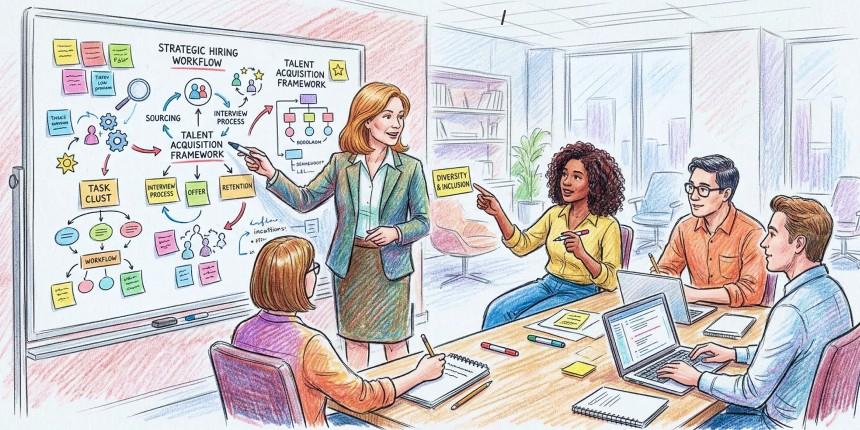
I've sat in a lot of rooms with senior HR leaders. People managing talent for companies with 50,000-plus employees. Real heavyweights.
And after all those conversations, I've noticed something. The ones who are genuinely thriving? They don't really see themselves as HR executives anymore. They think like product managers.
I know that sounds like something you'd hear at a tech conference. But hear me out, because this is probably the most practical thing I can say to anyone in HR leadership right now.
The Vendor Trap Nobody Talks About
Here's a scenario I'm guessing will feel familiar.
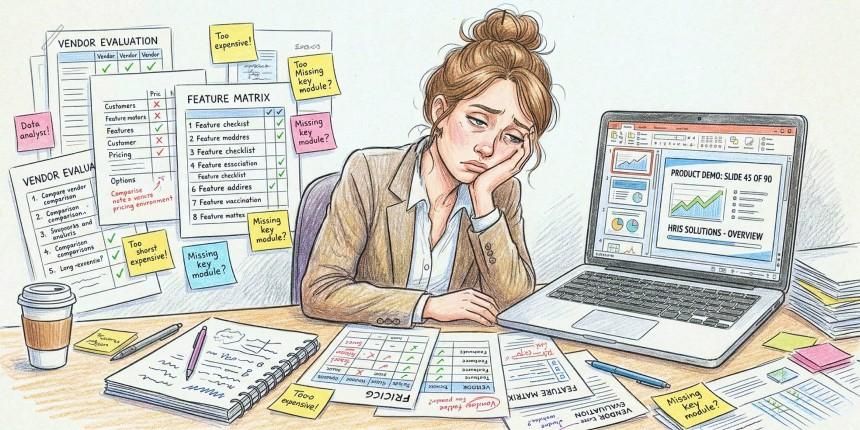
Your team spots a problem. Let's say candidates are dropping off during interview scheduling because the process is just a mess of back-and-forth emails. The fix seems obvious. A simpler flow, fewer steps, less friction.
So what actually happens next? You write up a requirements doc. You start looking at vendors. You sit through demo after demo, and honestly, they all start to look the same after the third one. Then comes procurement, legal, IT security reviews... and six months later you've got a tool that solves maybe 70% of your original problem, costs way more than you planned, and half your team refuses to use it because it doesn't fit how they actually work.
Sound about right?
According to Gartner's HR Technology research, 47% of HR leaders say their tech stack doesn't meet their evolving business needs. Nearly half. And the average enterprise HR department is juggling 10 to 15 different hiring tools at once, many of which overlap or just sit unused after the first few months.
That's the vendor trap. And it's killing HR innovation at a lot of companies.
So What Does 'Thinking Like a Product Manager' Actually Mean?
A product manager doesn't sit around waiting for someone else to solve their problem. They dig into the issue, sketch out a solution, build a rough version of it, put it in front of real users, and then keep tweaking it based on what they hear. They care about outcomes, not just deliverables.
Here's the thing: HR leaders can now do exactly that. AI tools have made it genuinely possible to go from 'I have an idea' to 'I have something working' in a single afternoon. You don't need to know how to code. You don't need an engineer on your team. You just need to be clear about what problem you're solving and be willing to try a few different approaches.
Let me give you a real example.

At Hyring, we needed a way to see how candidates were actually performing at different stages of our AI video interview process. Not just pass or fail, but real patterns around communication, technical depth, and culture fit. No tool on the market did exactly what we needed.
So we built one. We described what we wanted from an AI tool, explained the data structure, what the dashboard should show, and how the filters should work. Within an hour, we had something we could actually test. By the next day, our recruiting team was using it for real. That's the kind of speed that product thinking makes possible, and it's available to any HR leader right now, not just the ones with big tech budgets.
The Skills That Are Actually Going to Matter
The World Economic Forum's Future of Jobs Report 2025 calls AI and data literacy the fastest-growing skill demand in the world right now. But most people hear that and immediately think it means learning to code. It doesn't.
What it actually means is learning to think in systems. In workflows. In outcomes. Asking 'where does this process break down and why?' instead of 'which vendor should we call?'
The CHROs who will stand out in 2026 will be the ones who can spot a workflow bottleneck and describe it as a product problem. Instead of saying 'our onboarding takes forever,' they'll say 'we have six manual handoffs in our onboarding flow and four of them can be automated.' That's a completely different kind of thinking, and it leads to completely different results.
They'll also prototype before they purchase. Before spending $200K a year on a new resume screening tool, they'll spend a Tuesday afternoon testing whether the approach even works for their specific hiring patterns. And they'll own the feedback loop, putting tools in front of hiring managers and iterating week by week, instead of waiting on a vendor's quarterly release.
What HR Leaders Are Already Building
This isn't hypothetical. I'm seeing HR leaders at Fortune 500 companies quietly building things that would have needed a full dev team just a couple of years ago.
Custom compensation analyzers that factor in their exact market, their specific industry data, and internal pay equity, instead of relying on generic salary surveys that were never built with their company in mind.
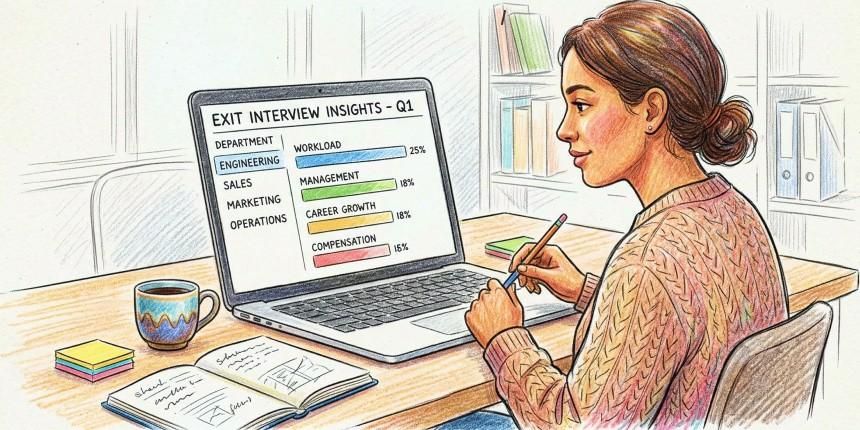
Exit interview synthesizers that automatically pull patterns from hundreds of responses and flag which departments are at the highest retention risk and why.
Interview calibration tools that help different hiring managers score candidates more consistently, cutting down on the kind of bias that creeps in when there's no shared standard.
Policy communicators who take a thick legal document and turn it into plain-language emails tailored to different employee groups.
All of it was built by HR people, not engineers. All of it done in days, not months.
Why This Matters for Your Career
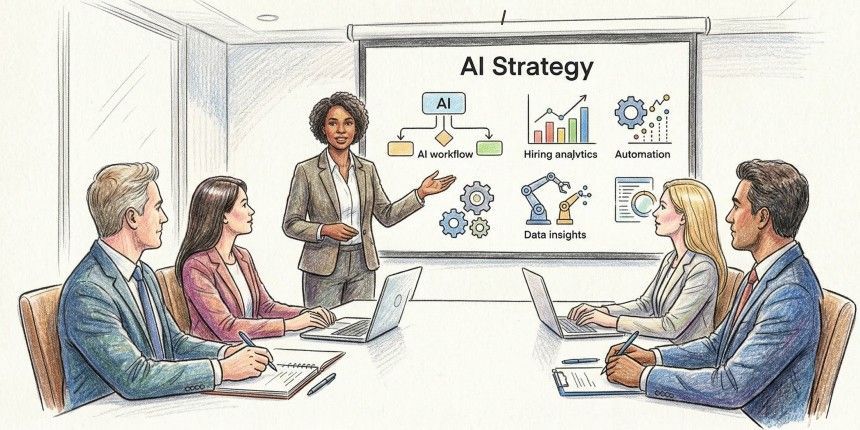
I'll be straight with you here. Saying 'I'm not a tech person' in 2026 is going to carry the same weight as the executive who said 'I don't really do email' back in 1998. You don't need to be technical. But you do need to be capable, and what capable looks like has changed.
LinkedIn's Global Talent Trends research shows HR roles mentioning AI skills have been growing sharply year over year. Boards are asking CHROs about their AI strategy just as often as they're asking about retention and DEI numbers. The leaders who can say 'here's a tool I helped build and here's what it did for our team' are having a very different conversation at the executive level than those who can only talk about which vendors they've evaluated.
From building five AI-powered recruitment tools at Hyring, covering everything from automated video to AI coding interviews to English proficiency testing, I can tell you the gap between being AI-curious and AI-capable is way smaller than it looks. It's one afternoon. One problem you care about. One honest attempt to build something useful.
Where Do You Start?
Pick one problem. Something you deal with every week, something where you already know the data involved and what a good answer would look like. Don't try to build the full vision on day one. Build the smallest version that would actually help someone. Put it in front of two or three people. See what they use and what they skip. Then make it a little better.
That's it. That's the whole playbook.
The best CHRO of 2026 won't be the one who signed the most software contracts. They'll be the ones who figured out that the most powerful HR technology platform available right now is basically a conversation, and they started that conversation before everyone else did.
Frequently Asked Questions
1. Do I need a technical background to start building HR tools with AI?
Not at all. This isn't about writing code. If you can describe a problem clearly and explain what a useful answer looks like, you have everything you need. Most HR leaders who've tried this are surprised by how quickly they get something working.
2. What's the real difference between buying software and building with AI?
When you buy software, you're squeezing your problem into someone else's solution. When you build, you're designing something that fits exactly how your team works. Vendor tools are built for the average company. Yours isn't average. Building also cuts a six-month procurement process down to a few days.
3. How long does it actually take to build something useful?
For a focused problem, a working prototype can take as little as an hour. Something polished enough for your team to actually use usually takes a day or two of back-and-forth. That's not an exaggeration. Compare that to six months of vendor evaluation, and the math is pretty clear.
4. What kinds of HR problems work best for this approach?
Start with anything repetitive, data-driven, and currently handled manually or by a generic tool. Exit interview analysis, candidate scoring, compensation benchmarking, and onboarding workflows are all good places to begin. If your team does something by hand that follows a consistent pattern, that's your starting point.
5. Will this still matter as AI keeps changing?
Yes, and honestly, the case gets stronger over time. The skill you're building isn't tied to one specific tool. It's the ability to see a problem clearly, scope a solution, and move fast. That compounds. The CHROs who develop that habit now will adapt more quickly, no matter where the technology goes next.