
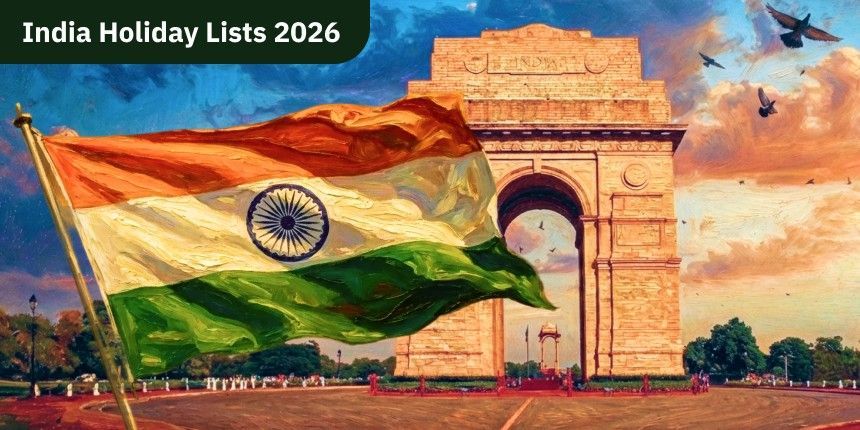
India Holiday Lists 2026: Public, Festival & Regional Holidays
Planning a 2026 calendar in India is not a neat spreadsheet exercise. For HR leaders, school administrators, and business owners, it feels more like reconciling three systems at once: federal rules, state politics, and religious calendars.
Three national holidays are fixed. Everything beyond that fragments into state lists, festival observance, and optional restricted holidays that differ from one organization to the next.
National Holidays
These three dates are mandatory for every institution in India, public or private. No flexibility here.
| Date | Day | Holiday |
|---|---|---|
| Jan 26 | Monday | Republic Day |
| Aug 15 | Saturday | Independence Day |
| Oct 02 | Friday | Mahatma Gandhi Jayanti |
The Tradeoff
These holidays are simple to track but not always simple to absorb.
For businesses that run 24/7 support, factories, or hospitals, these days usually mean overtime pay plus compensatory off-days. You cannot shift them to a convenient Friday. You either shut down key functions or pay premium rates and then adjust rosters to restore weekly rest.
That cost shows up in the labor budget immediately.
Religious and Cultural Public Holidays
India is always celebrating. In this case, art imitates life, and vice-versa, which is portrayed through the festive celebrations. Hindu festivals occupy a larger share of this list due to the population, but in the formal calendars, Islamic, Christian, Sikh, Jain, and Buddhist festivals are observed. Most of these are not fixed on Gregorian dates. It is because they follow the lunar cycle, lunisolar cycle, hence they move along the year.
Major Religious Holidays 2026
| Date | Day | Holiday | Significance |
|---|---|---|---|
| Feb 15 | Sunday | Maha Shivratri | Dedicated to Lord Shiva |
| Mar 04 | Wednesday | Holi | Festival of colours |
| Mar 21 | Saturday | Id-ul-Fir | End of Ramadan |
| Mar 26 | Thursday | Ram Navami | Birth of Lord Rama |
| Apr 03 | Friday | Mahavir Jayanti | Jain founder’s birth anniversary |
| Apr 03 | Friday | Good Friday | Crucifixion of Jesus Christ |
| May 01 | Friday | Buddha Purnima | Birth of Gautama Buddha |
| May 27 | Wednesday | Id-ul-Zuha (Bakrid) | Islamic sacrifice festival |
| Jun 26 | Friday | Muharram | Islamic New Year |
| Aug 26 | Wednesday | Milad-un-Nabi | Prophet Muhammad’s birthday |
| Sep 04 | Friday | Janmashtami | Birth of Lord Krishna |
| Oct 20 | Tuesday | Dussehra (Vijaya Dasami) | Rama’s victory over Ravana |
| Nov 08 | Sunday | Diwali | Festival of lights |
| Nov 30 | Monday | Guru Nanak Jayanti | Sikh founder’s birthday |
| Dec 25 | Friday | Christmas Day | Birth of Jesus Christ |
Some people may observe that this long festival list drags productivity down. On paper, it looks like too much red ink on the calendar.
In practice, trying to ignore the big festivals is a pucca losing strategy.
Skip Holi in North India, and you will still see half the office missing. Treat Diwali as an ordinary workday, and expect last-minute sick leaves, disengagement, and quiet resentment. Our learning from that pattern is that it is often cheaper to plan around these days than to police them. Policing celebrations is a futile and unnecessary exercise that extends corporate overreach.
There is also a systems angle here. When hiring or interview scheduling is automated off a single global calendar, candidates can get slotted on their key religious days without anyone noticing. That feels tone-deaf to the candidate frankly and can come across as insensitive.
The quick engineering fix is a single canonical calendar. The long-term fix is localized calendars that respect these dates and still keep the platform maintainable.
State-Specific Regional Holidays
This is where things get properly granular. A central holiday policy that is copied blindly across states will collide with reality.
What shuts down Mumbai may not even register in Chennai or Kolkata.
| Date | Day | Holiday | Primary Regions |
|---|---|---|---|
| Jan 14 | Wednesday | Pongal / Makar Sankranti | Tamil Nadu, multiple states |
| Jan 15 | Thursday | Magh Bihu | Assam |
| Feb 18 | Wednesday | Losar | Ladakh, Sikkim |
| Mar 21 | Saturday | Ugadi / Gudi Padwa | Andhra Pradesh, Maharashtra |
| Apr 09 | Thursday | Gangaur | Rajasthan, Madhya Pradesh |
| Apr 14 | Tuesday | Vaisakhi / Vishu | Punjab, Kerala |
| Jul 16 | Thursday | Rath Yatra | Odisha |
| Aug 26 | Wednesday | Onam | Kerala |
| Sep 04 | Friday | Ganesh Chaturthi | Maharashtra |
| Oct 18 | Sunday | Durga Puja (Saptami) | West Bengal |
| Nov 07 | Saturday | Chhath Puja | Bihar, Jharkhand |
| Dec 01 | Tuesday | Hornbill Festival | Nagaland |
Take a company with offices in Mumbai and Kolkata.
In September, Mumbai their offices slow or shut down for Ganesh Chaturthi. Employee Teams schedule fewer launches, client meetings, and critical milestones that week. Kolkata, meanwhile, runs at full speed as usual.
Only four weeks on, this reverses, where Durga Puja in West Bengal essentially becomes a shut-down period lasting multiple days for offices, schools, and other shopping centers. Mumbai will be business as usual, while Kolkata will be offline.
Cross-location projects that pretend these are just local issues end up blundering work. Smarter teams bake these regional off-days into their delivery plans instead of hoping for a productivity miracle.
Restricted Holidays (Optional)
Restricted Holidays, or RH, exist as a via media solution. They let organizations acknowledge a wide range of festivals and observances without shutting the entire office down every time.
Employees usually pick 2 or 3 days from a longer list. HR publishes the entire list while employees choose what matches their faith or family tradition.
Restricted Holidays, or RH, exist as a via media solution. They let organizations acknowledge a wide range of festivals and observances without shutting the entire office down every time.
Employees usually pick 2 or 3 days from a longer list. HR publishes the entire list while employees choose what matches their faith or family tradition.
| Date | Day | Holiday |
|---|---|---|
| Jan 01 | Thursday | New Year’s Day |
| Jan 13 | Tuesday | Lohri |
| Jan 23 | Friday | Basant Panchami |
| Apr 05 | Sunday | Easter Sunday |
| Aug 28 | Friday | Raksha Bandhan |
| Apr 03 | Friday | Good Friday |
| Oct 29 | Thursday | Karwa Chauth |
| Nov 09 | Monday | Govardhan Puja |
| Nov 10 | Tuesday | Bhai Dooj |
| Dec 24 | Thursday | Christmas Eve |
The RH model comes with a clear tradeoff.
Managers cannot glance at a single master list and know who is in the office. They must check individual leave records and team rosters. On a high-traffic customer support day, that extra uncertainty feels painful.
But if every festival in the RH pool were converted into a full public holiday, working days would shrink sharply. Payroll costs per productive day would go up, and project timelines would stretch.
There is also a compliance tug-of-war. Some HR leaders push for a unified list across all locations to simplify audits. On paper, that sounds efficient. In reality, you end up giving unnecessary off-days in some states and still risk non-compliance in others.
At the end of the day, one national list looks neat in a slide deck and messy in actual operations.
How Holiday Observance Actually Works
The physical calendar hanging in the office does not offer the complete picture. There is no single authority that publishes the entire holiday schedule for the entire country or for specific groups. There are rather several levels that function simultaneously.
States release their own official notifications for government offices and schools. Union Territories follow their own processes. Banks work off the Reserve Bank of India’s instructions, which may or may not line up with state notifications.
This leads to a common confusion.
Many employees assume that a bank holiday means a general public holiday. They see shutters down at the local branch and expect their company to be closed too. That assumption is misplaced. Banks may close for internal audit, settlement, or other RBI-driven reasons that do not apply to private companies at all.
Private employers, beyond the three national holidays, have room to curate.
A Bengaluru tech firm might quietly skip a smaller religious holiday and instead add a mental health or wellness day where the whole organisation gets a break. A factory in Gujarat might compress a few less-critical holidays and offer a longer Diwali stretch because a large share of its workforce travels back to hometowns.
One point that is often missed is that the different state laws, like Shops and Establishments Acts, still frame what is acceptable. Companies can be flexible, but not casual. If someone is under the impression that “we can choose anything,” they need to be reminded that state-specific rules are part of the picture.
FAQs
1. Why do the same festivals appear differently across states?
A festival may be culturally relevant in one state and relatively unimportant in another, even if the name is the same.
2. Why are regional and tribal festivals given public holiday status?
Whether regional or tribal, if the festival is large enough to disrupt or change daily schedules and movement patterns, then it is given due importance.
3. What are bank holidays?
Banks always follow Reserve Bank of India notifications, not state government calendars. This is why closures aren't always the same with state lists, but they do align for the most part.
4. Do private companies have to follow state holiday lists?
Private employers decide their own holiday policies, whilst many align with major festivals and national days for practical reasons.
5. What are the National Holidays of India?
National holidays are holidays observed throughout the nation. These holidays include Republic Day, Independence Day, and GandhiJayanti and are compulsory.
6. What are gazetted holidays?
Gazetted Holidays are holidays that are declared holidays through notification in the Gazette of Government of India. They are also known to be observed by offices, banks, and institutions.
7. What are the restricted holidays in India?
They are those holidays that can be opted by the employees based on the employee's individual preferences.
They can be either cultural or religious and these holidays will be deemed non-working days depending on company policy.
8. Are restricted holidays paid?
Restricted holidays are considered paid, provided they are approved by the boss, but such holidays depend on the organization’s leave policy.
9. What is the difference between a public holiday and a national holiday?
A national holiday is observed across all of India, while a public holiday may be observed nationwide or only in certain states.
All national holidays are public holidays, but the converse is not true- not all public holidays are national holidays.
10. Do all states in India follow the same holiday list?
Each state in India has its own holiday list that includes regional festivals and local observances declared by the state government, so no. Click the links for individual states on this page to know more about them.
11. Are state government holidays applicable to private companies?
Private companies may choose to follow state government holiday lists, but it is not mandatory unless specified by labour regulations or mandated by local government laws.
12. Are bank holidays the same across India?
Bank holidays differ from state to state and are regulated by the Reserve Bank of India (RBI).
13. Are schools and colleges closed on all public holidays?
Most schools and colleges remain closed on national and gazetted holidays, but closures may vary for restricted and regional holidays from region to region.
14. Where can I find the official holiday list in India?
Official holiday lists are published by the central and state governments through official notifications and gazette publications. You can read our state pages for the up-to-date information by clicking on the respective state.
15. Are weekend holidays adjusted if they fall on Saturday or Sunday?
In most cases, holidays falling on weekends are not adjusted unless specified by the employer or government authority.
