
Brief Overview
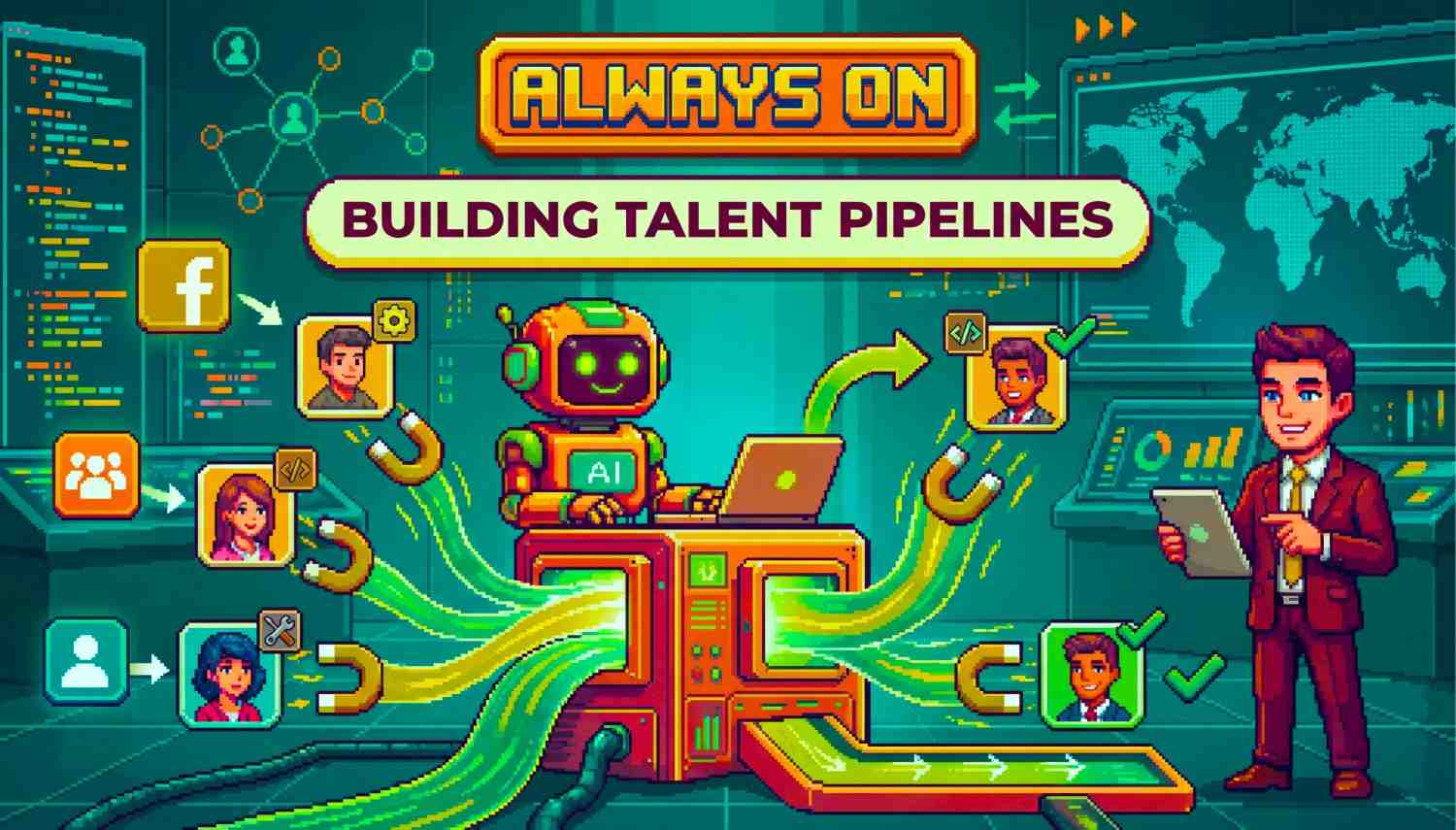
It is now becoming clearer that HR professionals can build a continuous talent pipeline by moving away from plain, reactive hiring to proactive recruitment strategies. They don’t have to wait for applicants anymore.
It is a well-known secret that 70 per cent of the global workforce is only available on passive talent sourcing pipelines, and hiring them involves strategic workforce planning and also cultivating a stronger employer brand while you are at it.
It is imperative to use Agentic AI in Talent acquisition, specifically in automated AI interviews and high-speed resume screening. AI Interviewers help companies conduct crucial pre-qualification rounds of candidates at scale, reducing the average time-to-hire.
This ensures a ready supply of high-quality, pre-filtered talent for further screenings by HR, from where they can determine who would be the best fit, not only for the role, but also for the company itself.
Strategic Workforce Planning: Defining Future Talent Needs
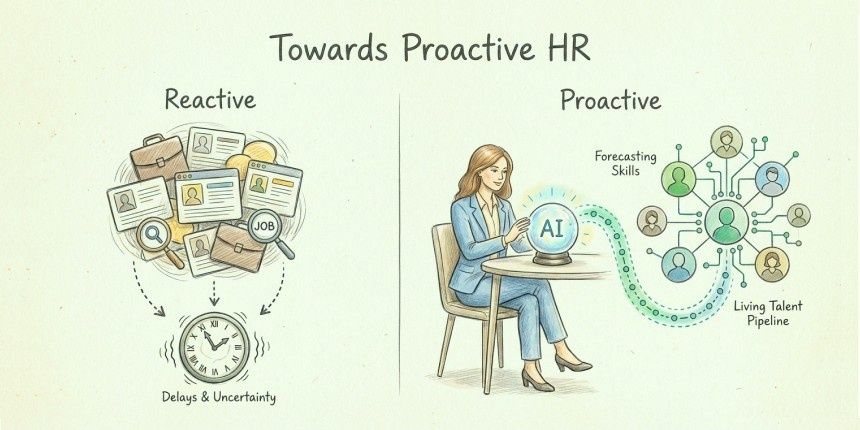
For decades, the standard hiring process has been reactive, and that’s the truth. Consider that a role opens in the market, a job is posted, and HR waits. Sounds ungainly, doesn’t it? In a fast-changing labor market, waiting is no longer a viable proactive recruitment strategy.
The modern HR must metamorphose into building a high-caliber talent pipeline long before the need arises. This would be considered a seismic shift from posting and praying (the oft-mentioned spray and pray method) to strategic building, which is the cornerstone of future organizational success.
It's about future-proofing your workforce by creating an active, engaged pool of qualified individuals, ensuring your company is always ready to scale, pivot, and innovate, no matter what the circumstances are.
Building a sustainable talent pipeline means “in with the new, out with the old”. It is to stop thinking about today's open roles and start thinking about tomorrow’s growth factors for the company that the hires will invariably be contributing to through their own human capital. This requires adopting a robust and prudent workforce planning that is judicious in its approach without looking brash or gauche.
HR must partner with CXOs to forecast the skills, roles, and expertise the company will require at least three to five years down the line. This is especially considering technological shifts or market expansions that young start-ups of the many Silicon Valleys of the world, as well as innovators, are looking at.
Instead of just replacing a departing employee, you are identifying the skills required for the future. Such as a shift toward AI development or global market compliance, is where HR moves from solely a support function to a genuine business multiplier and integrator.
The 70 per cent: Passive Talent Sourcing
Did you know that 70 per cent of the global workforce is made up of passive talent? These are individuals who are dormant, inactive, and aren’t looking for a switch per se, but are open to the right opportunity, if and when it presents itself.
This is a massive, severely under recognised pool of talent, where the best and most stable hires often can be found. Even the elusive red diamonds- a set of highly skilled talent that match mutual expectations and can contribute massively to the company’s growth- can be accessed.
It's the relationships that are fostered much earlier than when the high-value candidate actually thinks of switching that passive talent sourcing is all about. Recruiters focus on genuine networking, along with exchanging industry insights, and position their companies as the right environment to shape thought leadership, rather than just a place to work.
The New Relationship: Cultivating Your Employer Brand
Reputation is the key to relationships in this sphere. A strong employer brand is absolutely necessary for top-tier passive candidate sourcing. A whopping 84 per cent of job applicants, according to a recent study, say a company’s brand reputation is a non-negotiable important factor that they consider while searching for a new job. It is but natural to conclude that the first impression that is made by that brand is incontrovertibly a positive candidate experience.
Recruitment marketing should be effectively used to share authentic brand stories of development opportunities and authenticity. This gives a boost to brand image, and the company’s cultural values are laid out, crystal clear.
This is synonymous with what candidates feel about their brand ideology as well. Companies that have strong mobility programs, like Ernst and Young, are 1.7x more likely to grow and improve operations as employees see the road ahead clearly.
Automating Engagement: AI in Talent Acquisition
Building a robust talent pipeline of hidden passive candidates is a task. The high-volume effort demands modern tools that were unthinkable a decade ago. The only efficient way to manage, find and nurture such non-applicants effectively is by using AI in talent acquisition.
The self-learning tech is smart when it comes to streamlining assessment; Instead of the recruiter manually and tiringly engaging all prospects, AI can qualify and keep the talent pipeline incubated.
Tools like Hyring’s offer multiple options to do so - from resume scanning and phone screening to AI interviewing - these conduct unbiased appraisals and provide instant insights into the entire pipeline in a matter of minutes.
Make no mistake, the insights are quite analytical, insightful and a useful pre-assessment to the skills and fit of potential hires. This background process allows HR to move quickly if and when a role does open, engaging in those invaluable red diamonds.
They have already been filtered from a sea of semi-precious stones, ready to contribute when they do eventually acquiesce to a mutually favourable agreement.
Also Read: How Bad Hires Are Reduced by AI in Recruiting Before They Even Happen
Pre-Qualifying Candidates with AI Interviewers
Time is money. This is the age-old adage that we are used to reading every time we read about business or something that is horologically important. In recruiting, that also translates into money being time as well - wasting human time is a thing of the past. High-quality assessments are required to move potential hires from being just passive prospects to qualified leads.
An AI Interviewer is an ideal solution for this. The ability to interview hundreds of candidates simultaneously, 24/7, is a blessing in disguise for HR teams. In the case of, say, a technology-focused talent pipeline, it can run early-round technical screens with automated scoring and checks for fraudulence and plagiarism.
This saves time for the actual later interactions that are human and that matter. In banking and finance, it's the AI Recruiter that can ensure candidates are pre-screened for audit-ready compliance, mapping every response to industry regulations like AML and Basel, even.
The versatility of such Agentic AI is unparalleled, and at Hyring, we always ensure you get the best tool for your recruitment requirements.
The Payoffs
Obviously, there are quantifiable business benefits to building a high-quality talent pipeline. Proactive recruitment has been shown to be more effective in significantly reducing hiring cycles. Research indicates that organizations with strong pipelines experience a 15 - 20 per cent reduction, which is appreciable.
A robust pipeline was also seen to cut the 36-day time-to-fill average, minimising productivity losses and increasing financial savings by up to 40 per cent per hire. You can read about it here. The strategic decision to build a high-quality talent pipeline has quantifiable business benefits.
Proactive recruitment is shown to significantly cut down on hiring cycle time. The financial savings are equally compelling, with organizations that have established talent pipelines saving up to 40 per cent on hiring costs, according to a Deloitte research as quoted in the ProSource article previously.
Conclusion: Securing Your Competitive Advantage
Proactive hiring leads to higher-quality recruits, simple. When you are not scrambling to fill a sudden vacancy, and instead, you have the luxury of choosing the best fit from a pre-assessed group, it reduces hiring anxiety and makes HR work more efficient.
A study by HR Dive found that 73 per cent of executives believe proactive talent assessments lead to an uptick in the quality of hires. This strategic advantage is what truly sets market leaders like Hyring apart from the rest of the crop.
HR is no longer just meant for admin support but is a team for more strategic resource management. By consistently cultivating a superior talent pipeline, workforce planning is now more about strategy than repetitiveness. This ensures business continuity and growth. Stop waiting for applicants to walk in through the door. Use AI to leverage leads and build relationships with those who could be the thought leaders of your company tomorrow. Get the sustained competitive advantage that will set your company apart today.
Ready to transform your hiring from reactive to predictive? Discover how Hyring’s AI Interviewer can pre-qualify your entire passive talent pool at scale.
FAQs
1. What is the difference between an applicant tracking system (ATS) and a talent pipeline?
ATS is a tool that manages active applicants for current job openings. A talent pipeline is a concept that refers to a constantly nurtured pool of passive or potential candidates who have been identified and pre-qualified for roles by AI, that may not yet be open in the company. The ATS manages applications, and the talent pipeline manages relationships and future possibilities. Current vs Future.
2. How can I measure the success of my proactive talent pipeline efforts?
It is typically measured by metrics like time-to-hire (which should decrease), quality of hires (which should increase, often assessed by the performance of those newly hired and retention), and recruitment marketing costs (which should ideally decrease due to less reliance on traditional job postings).
3. Is it difficult to keep passive candidates engaged over time?
It can be, as there are a lot of variables that exist before a potential hire becomes an actual hire. But it becomes simpler with automation. Regular, personalized, non-traditional content - like company news or industry reports - can be delivered using automated marketing tools (like email clients). Tools like Hyring can maintain engagement by giving passive candidates an opportunity to attend an optional, no-pressure AI-driven interview to keep their profile up-to-date.
4. How does AI in talent acquisition avoid the bias problem in pipeline building?
AI Interviewers that are particularly designed for dual-way conversational screening can enhance equity. Each candidate is asked the exact same set of structured questions. Evaluating them then becomes easy, as it is based on customizable, data-driven competency frameworks. AI removes subjective human bias that often creeps into initial phone screens and resume screening.
5. What is strategic workforce planning in the context of building a talent pipeline?
The process of predicting the organization's future talent needs based on business strategy. First, you define the plan to acquire, develop, or build those capabilities.
In the context of a talent pipeline, it serves as a blueprint, telling HR exactly which skills to proactively source and nurture and where exactly to look when they need to.