The Foxconn Hiring Model: Where Hyring Can Help in Hiring
The Foxconn hiring process runs one of the largest manufacturing workforce pipelines in India. The Sriperumbudur plant near Chennai employed over 40,000 workers as of late 2024, per media reports, and seasonal ramp-ups ahead of iPhone production cycles pull in 10,000 to 15,000 additional hires within four-to-six-week windows.
This blueprint maps where Hyring's AI agents can absorb manual screening workload across that recruitment funnel, what outputs they generate for hiring teams, and which KPIs keep the model accountable week over week.

This article refers to a planning framework showing where AI can reduce manual effort across the funnel. It does not imply an existing client relationship between Hyring and Foxconn.
The Blueprint
A hiring model built for manufacturing scale either moves fast enough to fill a production line on time, or it misses the launch window. There is no in-between when your client is Apple and the deadline is a global product release.
This blueprint was built around the Foxconn recruitment process operating at five-figure application volumes per hiring cycle. Four components hold it together:
- A funnel map designed for seasonal, high-volume manufacturing hiring.
- A phased deployment plan.
- A KPI scoreboard with risk flags on each metric.
- An ROI module with adjustable inputs and a clear disclaimer on projections.
Foxconn's Chennai facility at Sriperumbudur assembles iPhones for global and domestic markets. Hiring drives coincide with Apple's product calendar. Workers pass through document verification, basic aptitude checks, line-readiness assessments, and HR conversations, often compressed into days rather than weeks.
Most of the operational drag sits in the first two stages - screening applications and conducting initial phone or in-person assessments. Automation carries the most weight here because these stages run on repeatable criteria, not subjective evaluation.
Current State
Hon Hai Precision Industry (Foxconn's parent company) reported consolidated revenue of TWD 6.16 trillion for FY2023, per its annual report. The global headcount sits above one million workers across facilities in China, India, Vietnam, Brazil, and Mexico.
In India specifically, Foxconn's Sriperumbudur plant near Chennai grew from roughly 17,000 workers in 2022 to over 40,000 by late 2024, according to reports from Reuters and the Economic Times. The company's India revenue crossed $10 billion in FY2024 (per the Economic Times, citing regulatory filings), a figure that doubled within two years as Apple shifted a larger share of iPhone production to India.
Seasonal hiring tells the real story. Ahead of each major iPhone launch (typically September through November), Foxconn India onboards between 10,000 and 15,000 temporary and contract workers in compressed windows of four to six weeks.
Based on media reports from 2023 and 2024, individual drives have processed 25,000 to 40,000 walk-in applications in a single week at the Sriperumbudur campus gates.
Monthly attrition on assembly lines runs at 15% to 25% for line operators, meaning the hiring machine never stops even outside peak season.
40k+
10k-15k
15%-25%
Chennai Plant Workforce Growth
Seasonal vs Steady-State Hiring
Operational Friction in the Foxconn Hiring Process
When 25,000 people show up at a factory gate in Sriperumbudur over five days, every hour of delay in screening compounds. A queue that takes three days to clear will lose candidates to Pegatron's facility twenty kilometres away or to Tata Electronics in Hosur, both of which are hiring from the same labour pool for the same Apple supply chain.
L1 screening is repetitive but unavoidable at this scale
First-round screening for line operators follows the usual set criteria - age eligibility, eyesight adequacy, previous manufacturing experience, shift-willingness confirmation, and basic communication checks.
Each conversation runs 10 to 15 minutes. For a drive processing 20,000 candidates through L1, that adds up to roughly 4,200 person-hours at the midpoint (12.5 minutes each).
The questions do not change between candidates. The evaluation rubric is binary for most criteria. Yet every one of those 20,000 conversations currently requires a human recruiter's time.
Technical and quality roles face a different bottleneck
Foxconn also hires engineers, quality inspectors, and maintenance technicians, roles where the Foxconn interview process involves coding tasks, equipment diagnostics, or English communication assessments for export documentation teams. These roles account for roughly 8% to 12% of total hiring volume (estimated from job postings on Naukri and the Foxconn careers page), but they consume a disproportionate share of panel time because each interview runs 30 to 45 minutes with a technical evaluator.
A senior quality engineer pulled into three interview panels per day during a hiring sprint loses those hours from the production floor, where their absence has a direct cost.
Candidate drop-off spikes between stages
The gap between L1 clearance and the next step (typically a medical check or skills test) is where manufacturing candidates vanish. Foxconn competes for the same semi-skilled labour pool as Pegatron (Chennai), Tata Electronics (Hosur), Samsung (Noida and Sri City), and Flex Ltd.
A candidate cleared on Monday who does not receive a slot by Wednesday has likely accepted a competing offer. Based on industry estimates for high-volume manufacturing hiring in Tamil Nadu, stage-to-stage drop-off rates run between 20% and 35%.
Remote and hybrid screening creates integrity gaps
Since 2023, Foxconn India has experimented with video-based pre-screening for certain roles, particularly for lateral technical hires and candidates in locations outside Tamil Nadu.
Detecting proxy test-takers or coached responses during video calls depends on interviewer alertness. After the eighth or tenth video call of a shift, that alertness drops. Scaled remote hiring without automated proctoring leaves a gap that grows proportionally with volume.
Hyring AI Agents
Hyring's agents sit at the stages where manual repetition consumes time without requiring human judgment. If a task runs on a repeatable rubric with a scored or binary output, the agent handles it. Everything else stays with a person. Human sign-off at the final decision stage is non-negotiable.
The AI Resume Screener
Instantly parse and rank resumes based on job-fit signals and technical requirements.
- Rapid high-volume parsing
- Objective skill ranking
- Bias-reduced shortlisting
The AI Phone Screener
Automated L1 verification calls to ensure basic qualifications and interest levels.
- 24/7 automated screening
- Consistent evaluation metrics
- Instant shortlist generation
The AI Coding Interviewer
Technical assessment with live coding environments and real-time logic evaluation.
- Real-time code analysis
- Plagiarism detection
- Automated logical scoring
English Proficiency Test
Standardized evaluation of communication skills, fluency, and professional vocabulary.
- Automated fluency scoring
- Grammar and clarity analysis
- CEFR aligned reporting
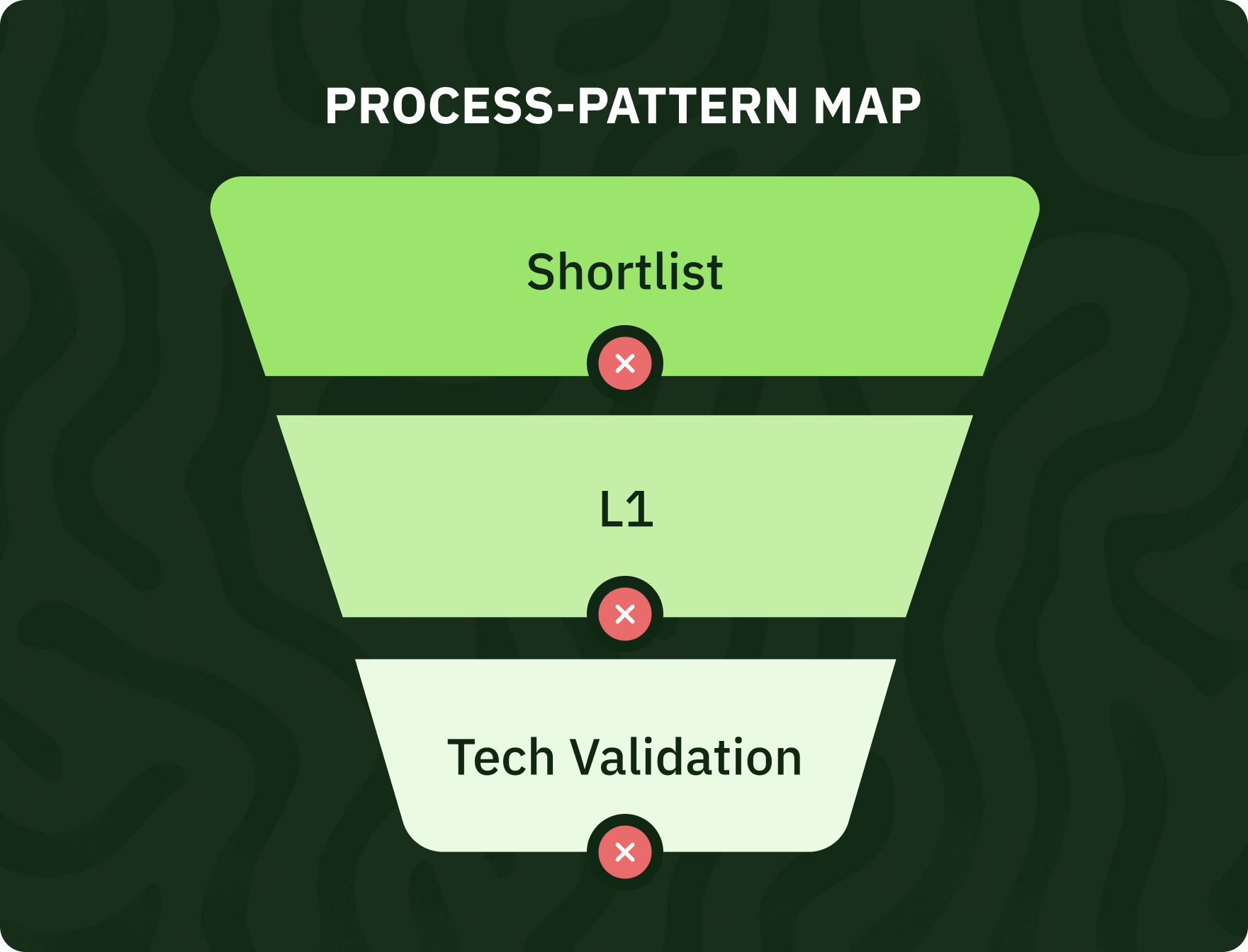
Funnel-to-agent
| HIRING STAGE | HYRING PRODUCT | WHAT IT DOES | OUTPUT (WHAT THE TEAM SEES) |
|---|---|---|---|
| SHORTLIST | AI Resume Screener | Screens uploaded documents and resumes against role-fit criteria. | Ranked shortlist + job fit signals. |
| L1 SCREENING | AI Phone Screener | Runs first-round phone screens with fixed eligibility questions. | Call summary + score + shortlist. |
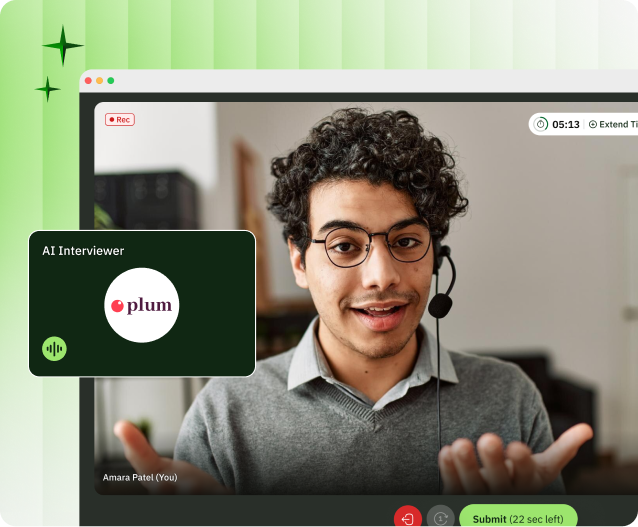
| STRUCTURED INTERVIEW | AI Video Interviewer | Conducts structured video interviews for quality/supervisory roles. | Interview report + structured scoring. |
| TECH VALIDATION | AI Coding Interviewer | Runs coding and diagnostic assessments for engineering roles. | Coding evaluation report. |
| COMMUNICATION | English Proficiency Test | Assesses English skills for export documentation and client-facing roles. | CEFR level + skill breakdown. |
HYRING PRODUCT
AI Resume Screener
WHAT IT DOES
Screens uploaded documents and resumes against role-fit criteria.
OUTPUT (WHAT THE TEAM SEES)
Ranked shortlist + job fit signals.
HYRING PRODUCT
AI Phone Screener
WHAT IT DOES
Runs first-round phone screens with fixed eligibility questions.
OUTPUT (WHAT THE TEAM SEES)
Call summary + score + shortlist.
HYRING PRODUCT
AI Video Interviewer
WHAT IT DOES
Conducts structured video interviews for quality/supervisory roles.
OUTPUT (WHAT THE TEAM SEES)
Interview report + structured scoring.
HYRING PRODUCT
AI Coding Interviewer
WHAT IT DOES
Runs coding and diagnostic assessments for engineering roles.
OUTPUT (WHAT THE TEAM SEES)
Coding evaluation report.
HYRING PRODUCT
English Proficiency Test
WHAT IT DOES
Assesses English skills for export documentation and client-facing roles.
OUTPUT (WHAT THE TEAM SEES)
CEFR level + skill breakdown.
KPI Scoreboard — Foxconn Hiring Model
Time to Screen
Definition: Elapsed hours from application to L1 decision.
Risk indicator: Getting this under 24 hours matters for manufacturing walk-ins. But if panel rejection rates climb afterward, the speed gain came at the cost of filter accuracy.
Screening Throughput
Definition: Volume of initial screens completed per recruiter per shift.
Risk indicator: Throughput rising while next-stage pass rates fall means eligibility criteria are too loose. Tighten the rubric before scaling further.
Interview Completion Rate
Definition: Percentage of candidates invited who finish the full assessment.
Risk indicator: Below 55% completion in a manufacturing context usually signals one of two things: the assessment takes longer than candidates expect, or the scheduling gap gives them time to accept another offer.
Early Stage Drop-offs
Definition: The specific funnel step where candidates stop participating.
Risk indicator: Heavy drop-off between L1 and medical/skills testing (rather than at L1 itself) points to a scheduling lag, not a screening problem. Manufacturing candidates move fast.
Panel Hours per Hire
Definition: Total human interviewer hours consumed per finalised hire.
Risk indicator: Track this alongside 30-day retention. If panel hours drop and early attrition rises, the AI filter may be screening out candidates who would have stayed longer on the line.
Pass-through Rate
Definition: Percentage advancing from one stage to the next.
Risk indicator: A 25-point variance between two drive locations hiring for the same role means the rubric needs location-level calibration, not a single blanket threshold.
Shortlist-to-Offer Ratio
Definition: How many screened candidates produce one accepted offer?
Risk indicator: Moving from 6:1 to 3:1 is progress. Moving from 6:1 to 1.5:1 suggests viable candidates are being pruned too aggressively.
Integrity Flag Rate
Definition: Percentage of AI assessments triggering fraud or anomaly alerts.
Risk indicator: A baseline of 2–4% is expected. A sudden spike above 8% from a specific recruitment agency or location warrants manual review before drawing conclusions about candidate quality.
Time to First Touch
Definition: Lag between application and first outreach.
Risk indicator: For walk-in drives, the "first touch" is immediate. For online applicants, the real risk is whether touch two (assessment invite) arrives the same day. A fast acknowledgment followed by two days of silence loses manufacturing candidates to the factory next door.
SLA Adherence
Definition: Percentage of candidates processed within agreed timelines per stage.
Risk indicator: Missing SLAs in the first week of a seasonal ramp means the configuration was not tested at volume. Fix thresholds before the next cycle, not during it.
Model ROI for High-Volume Scenario
Every number in this section is an illustrative projection. The math is steeped in publicly reported Foxconn hiring process volumes and reasonable cost assumptions for manufacturing recruitment in India. Internal cost structures will vary. Treat this as a starting framework, not a given.
Annual Savings Potential
~$1.1M
in operational and hiring costs.
Reduction in Time-to-Hire
58%
faster from application to accepted offer.
Screening Velocity
3x
throughput during peak seasonal drives.
5-Year ROI Projection
~280%
with a 5-month payback period.
Note: ROI figures below are an illustrative model of potential savings in this specific scenario. Actual results vary by internal workflow costs.
Hours Saved Annually
Three stages carry the bulk of manual effort in the Foxconn recruitment process - document/resume screening, L1 phone or in-person screens, and technical panels for engineering and quality roles.
- Document and resume screening:: 55,000 candidates screened annually (estimated across all cycles), 8 minutes average per candidate, total: 7,330 person-hours. With AI resume screening handling initial filtering, recruiter review time drops to roughly 1,200 person-hours (reviewing AI-generated shortlists).
- L1 eligibility screens:: 30,000 candidates proceeding to L1 (after shortlist), 12.5 minutes per candidate, total: 6,250 person-hours. AI phone screening completes calls and produces scored results, leaving approximately 700 person-hours for recruiter review.
- Technical panels:: 5,000 candidates for engineering, quality, and supervisory roles, 35 minutes per candidate, 1.2 panel members on average, total: 3,500 person-hours. AI coding and video screening reduces the candidate pool reaching human panels by roughly 50%, saving approximately 1,750 person-hours.
Total estimated hours recovered annually: ~14,400.
Hours by Stage (Manual vs. AI-Assisted)
Source: Hyring Hiring Model (Illustrative).
Current State Costing vs. Target State with AI
At a roughly 4:1 application-to-hire ratio for manufacturing roles (higher than IT services because fewer stages filter candidates out), gains at the top of the funnel reduce cost at every stage below.
| Metric | Current Manual Process | Target with Hyring AI Agents |
|---|---|---|
| L1 Screening Cost | ~$225K (recruiter hours at $6/hr loaded across 6,250 hrs, plus coordination overhead) | ~$35K (at ~$1 per AI-conducted screen plus ~$4K in recruiter review hours) |
| Technical Panel Load | Heavy: engineers conduct early screens across roles, averaging 5–6 interviews per day during peak sprints | Light: panels see only candidates who cleared AI resume, phone, and coding gates. Interview load drops to 2–3 per day with higher relevance. |
| Interview Scalability | Capped by recruiter availability, shift schedules, and physical assessment room capacity at Sriperumbudur | Concurrent and asynchronous: candidates complete AI assessments on their own schedule within a defined window. |
| Candidate Verification | Interviewer observation during live video is inconsistent across fatigue levels and shift durations | Automated proctoring monitors face presence, voice matching, screen activity, gaze direction, and clipboard behaviour simultaneously. |
| Funnel Completion Rate | ~35% estimated (candidates entering shortlist who reach offer stage, based on manufacturing hiring benchmarks) | >65% projected, driven by reduced wait times, same-day scheduling, and faster status updates. |
Where the ~$1.1M Savings Come From
The biggest recovery does not sit in the recruitment team's budget alone. It sits in production floor capacity and candidate acquisition overhead.
- L1 volume handled by AI agents.: At 30,000 L1 screens and 12.5 minutes each, the manual L1 stage costs roughly $225K in loaded recruiter time annually. AI phone agents conducting 90% of those screens at ~$1 each bring that to approximately $35K. Net recovery: ~$190K.
- Document screening automated.: Manual document screening across 55,000 candidates costs roughly $264K in recruiter hours ($6/hr x 7,330 hrs, plus coordination). AI resume screening reduces that to ~$55K (AI costs plus review time). Net recovery: ~$209K.
- Technical panel hours returned to the production floor.: Foxconn bills maintenance engineers and quality leads internally; their absence from the floor has a measurable production cost. Recovering 1,750 panel hours at an estimated $18/hr loaded midpoint returns ~$31.5K in direct labour value. The indirect production impact (fewer line stoppages waiting for quality sign-offs) is harder to quantify but compounds over time.
- Scheduling and coordination overhead reduced.: Walk-in drive coordination (queue management, candidate communication, rescheduling loops, no-show follow-ups) absorbs an estimated 3,000 to 4,000 coordinator hours per year at Foxconn India's scale. Self-scheduling through AI assessment links eliminates roughly 55% of that. Estimated recovery: ~$70K.
- Re-screening and integrity investigation costs avoided.: Late-stage disqualification after a proxy test-taker is discovered wastes all prior evaluation time. Automated proctoring catching integrity issues at the first AI screening stage avoids an estimated ~$40K in wasted downstream effort annually.
Total estimated annual savings: ~$540K direct + ~$560K in indirect production and coordination gains = ~$1.1M (rounded conservatively).
Annual Hiring Cost Savings Breakdown
Source: Hyring Hiring Model (Illustrative)
Cumulative Savings vs Cost
Platform investment is front-loaded. Savings accumulate with each hiring cycle, and seasonal ramps accelerate the payback because Foxconn's volume is concentrated rather than spread evenly. Break-even occurs around month five in this model. That timeline shortens if lateral technical hiring volumes run through the same Hyring deployment, since marginal cost per additional AI screen is near-zero once configured.
What makes the Foxconn hiring model especially suited to AI deployment: the first two funnel stages are high-volume, binary-criteria, and scored. They require consistency applied at speed across thousands of candidates per week. AI recruitment software handles that better than a team of recruiters working double shifts.
Cumulative Savings vs Investment (12-month model)
Month
Source: Hyring Hiring Model (Illustrative).
Foxconn Hiring Process Blueprint
Rolling this out across 40,000+ walk-in applications on day one would collapse the process. Staged deployment protects existing workflows, builds comparison data, and gives hiring teams time to trust the AI outputs before depending on them.
Week 2
Week 3
Week 4
Frequently Asked Questions
How does this hiring model handle Foxconn's seasonal ramp-ups?
All candidates in a batch receive assessment links simultaneously. Hyring's AI phone and video agents run thousands of sessions concurrently, so a 30,000-application seasonal drive clears L1 screening in days rather than the three to four weeks a manual team would need.
What does the first-round automated agent deliver for the Foxconn hiring process?
A report unique to every candidate with an eligibility score, a response summary, flagged areas worth further review, and an advance-or-hold recommendation. Recruiters scan the report in about 90 seconds instead of spending 12 minutes on a manual screening call.
How does the system prevent proxy test-takers in remote assessments?
Tab switches, secondary faces, voice mismatches, gaze anomalies, lip-sync gaps, and clipboard activity are tracked simultaneously. These feed a composite integrity score on the recruiter's report. No single flag triggers automatic rejection — the team sees which signals fired and makes the call.
Do automated interviews hurt candidate experience for factory workers?
Candidates pick their own assessment window, skip the queue, and get status updates faster because scoring happens immediately. For a workforce accustomed to waiting in physical lines for hours, the shift tends to improve experience rather than diminish it.
Can assessments be customized for different role types at the Chennai plant?
Yes. The AI Coding Interviewer supports multiple language environments and configurable difficulty levels. Line-operator assessments look completely different from maintenance-engineer evaluations without needing separate platform instances.
How do human panels fit into this workflow?
Panels step in at the end stage only. Candidates reaching a human interviewer have already cleared document screening, phone assessment, and where relevant, coding or video evaluation. Panel time goes toward judgment calls on fit and readiness, not re-checking eligibility.