Accenture Hiring Process: Using AI Agents to Standardize Recruitment
The Accenture hiring process runs at roughly 100,000 to 120,000 new hires every year, spread across 120+ countries, with lateral recruitment making up the bulk of that volume. Headcount sat at approximately 799,000 as of November 2024, per Accenture's Q1 FY25 earnings filing.
This blueprint maps where Hyring's AI agents absorb manual screening workload across that funnel, what outputs they produce for hiring teams, and which KPIs keep the model measurable.

This article refers to a planning framework showing where AI can reduce manual effort across the funnel. Hyring is not claiming an existing client relationship with Accenture.
The Draft
A hiring operation running across dozens of countries and hundreds of practice areas cannot be optimised in the abstract. The problems are specific. The fixes need to be equally specific. This blueprint was built for the Accenture recruitment process at six-figure annual hiring volumes. Four components:
- A funnel map designed for lateral-heavy, multi-geography workflows.
- A phased deployment plan.
- A KPI scoreboard with risk indicators per metric.
- An ROI module with adjustable inputs and a neutral disclaimer on projections.
Accenture's hiring mix is unusual. Campus intake is a real part of the pipeline (India alone accounts for large graduate batches), but most hiring globally targets people with two to fifteen years of experience. A senior cloud architect in Frankfurt and a junior analyst in Manila go through very different evaluation paths, yet both land on the same recruiter team's workload.
The friction concentrates at screening and first-round evaluation, where volume overwhelms capacity regardless of candidate seniority. That is where automation carries weight without replacing evaluative judgment.
Current State
Accenture closed Q1 FY25 (quarter ending November 30, 2024) with approximately 799,000 employees, per its quarterly earnings release. Revenue for FY24 came in at $64.9 billion. Voluntary attrition had settled near 12% by late FY24, a significant decline from peaks closer to 20% during the post-pandemic talent wars of FY22, but 12% of 799,000 still generates roughly 96,000 replacement hires annually before any growth is factored in.
On the growth side, Accenture publicly reported hiring approximately 122,000 people in FY23. Management commentary through FY24 earnings calls pointed to sustained volumes in the 100,000 to 120,000 range, with hiring concentrated in technology, consulting, and managed services roles.
Here is what makes the Accenture interview process different from most large IT firms- the lateral-to-campus ratio. Infosys or TCS might fill 60-70% of openings through campus drives. Accenture fills the majority through lateral channels across geographies. Each lateral hire requires individual sourcing, screening, technical validation, and offer negotiation. There is no batch-processing shortcut for 80,000+ experienced candidates.
~799K
~122K
~12%
Headcount (Q1 FY25)
Hiring Volume Trajectory
Where The Accenture Recruitment Process Stalls
With 100,000+ hires per year in 49 out of the 50 largest economies, a slowdown in any one stage is not contained, it cascades. Two days lost in screening becomes a week lost in interviewing, which in turn becomes a candidate lost to Deloitte or Capgemini. The hiring model for Accenture is one of very thin time margins and very low tolerance for funnel friction.
First-round phone screens are a calendar-coordination tax multiplied by time zones
What lateral hires need is a scheduling experience, not a batch call style. A recruiter in Chennai handling an L1 screen for a data engineering candidate in Warsaw and another hiring manager in Chicago is spending 30 minutes on logistics for a 20-minute call.
Based on management comments and industry estimates, Accenture's L1 screening calls of all kinds likely exceed 300,000 calls per year across all geographies. At 20 minutes per call plus some coordination overhead, that's over 150,000 person-hours of phone screens alone.
Technical panels pull billable consultants off client work
Accenture bills senior consultants at rates that range from $150 to $400+ per hour depending on practice and geography (per publicly available rate card estimates from government contract filings and industry benchmarks).
When a principal architect spends four hours a day interviewing candidates during a hiring sprint, that cost does not surface in the recruitment budget. It shows up as unbilled delivery time on the project margin. A delivery lead rarely flags it until the project is already behind schedule.
Multi-language roles create late-stage communication failures
Accenture's projects involve staffing across language boundaries. A person hired in Bucharest can be assigned to a project managed from London in three months' time. The lack of spoken English proficiency will be revealed when the person is required to speak with the client, and the cost incurred in hiring and assigning the person to the project is already incurred.
Candidate drop-off accelerates when the process exceeds two weeks
For the experienced candidates, especially in the cloud, AI/ML, and cybersecurity spaces, there are multiple offers from the likes of Cognizant, IBM Consulting, PwC, and product companies such as Google and Microsoft.
According to Glassdoor reviews from the candidates, the interview process can take anywhere between three to six weeks for the experienced candidates in the market.
Each week of the extended process results in a percentage of the accepted offers being lost; industry research by Gartner and LinkedIn has consistently indicated that the drop-off is 10-15% per week after the second week.
Hyring AI Agents
Hyring's agents operate at stages where manual repetition consumes hours without requiring subjective human judgment. The rule is binary: if a task runs on a repeatable rubric with a scored output, the agent handles it. If the decision requires contextual judgment on culture fit, leadership potential, or client-readiness, a human handles it. Final hiring decisions always require human sign-off. That boundary is non-negotiable.
The AI Resume Screener
Instantly parse and rank resumes based on job-fit signals and technical requirements.
- Rapid high-volume parsing
- Objective skill ranking
- Bias-reduced shortlisting
The AI Phone Screener
Automated L1 verification calls to ensure basic qualifications and interest levels.
- 24/7 automated screening
- Consistent evaluation metrics
- Instant shortlist generation
The AI Coding Interviewer
Technical assessment with live coding environments and real-time logic evaluation.
- Real-time code analysis
- Plagiarism detection
- Automated logical scoring
English Proficiency Test
Standardized evaluation of communication skills, fluency, and professional vocabulary.
- Automated fluency scoring
- Grammar and clarity analysis
- CEFR aligned reporting
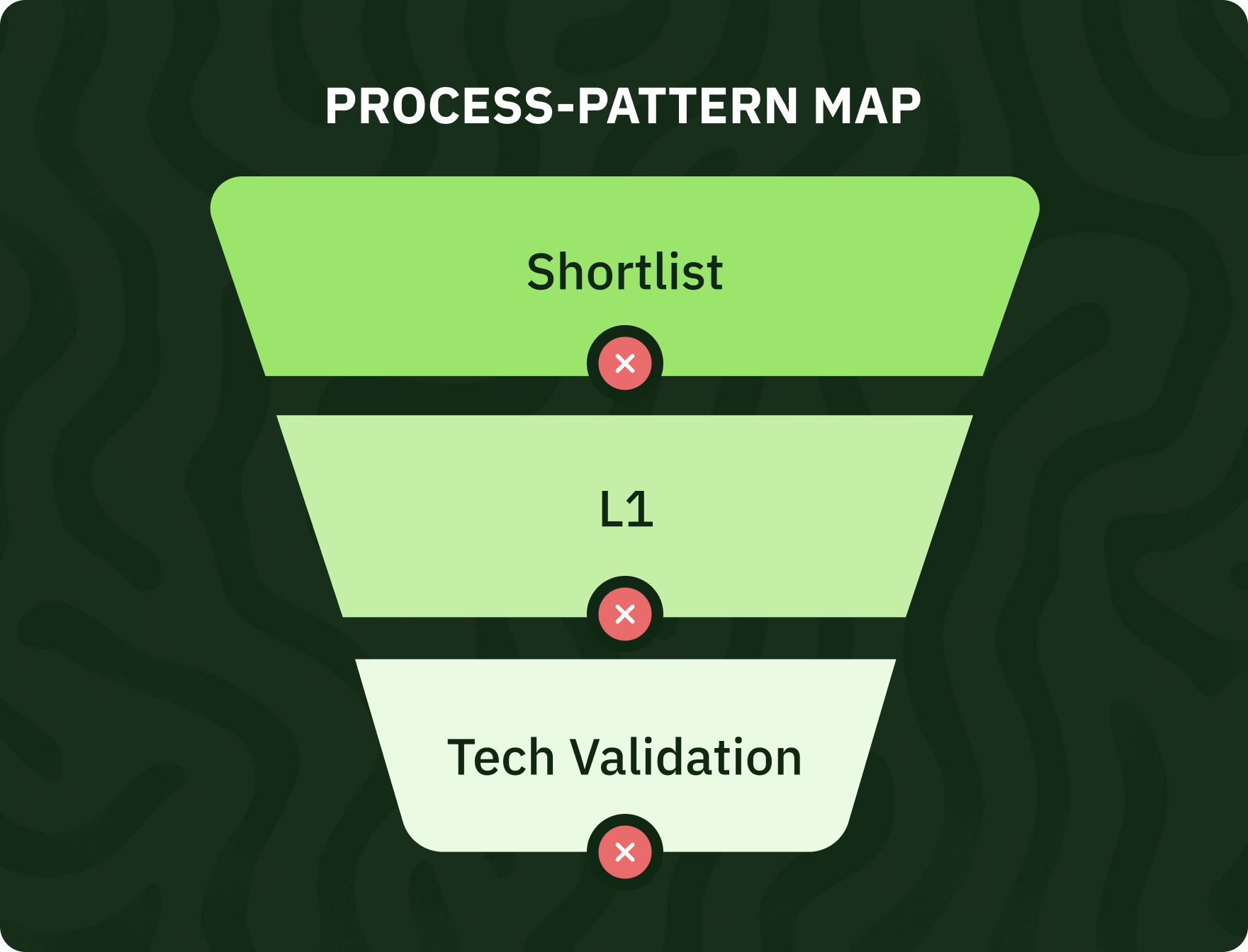
Funnel-to-agent
| HIRING STAGE | HYRING PRODUCT | WHAT IT DOES | OUTPUT (WHAT THE TEAM SEES) |
|---|---|---|---|
| SHORTLIST | AI Resume Screener | Matches resumes against role-specific skill matrices and experience bands. | Ranked shortlist + job fit signals. |
| L1 SCREENING | AI Phone Screener | Runs first-round screening calls without calendar dependency. | Call summary + score + shortlist recommendation. |
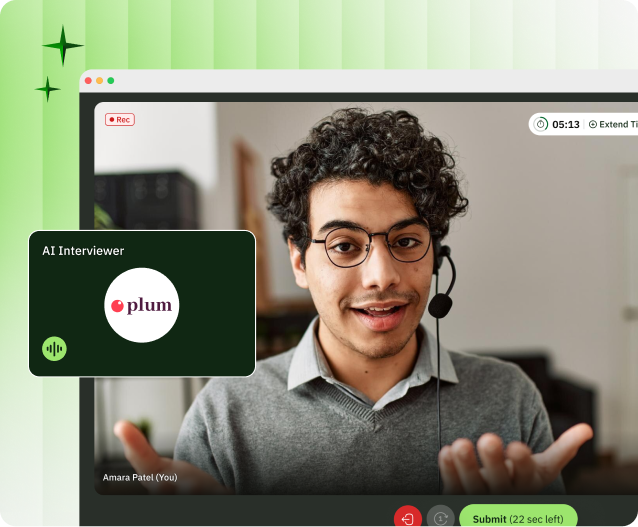
| STRUCTURED INTERVIEW | AI Video Interviewer | Conducts structured video interviews, generates candidate reports. | Interview recording + structured scoring + proctoring flags. |
| TECH VALIDATION | AI Coding Interviewer | Administers live and async coding assessments for engineering roles. | Coding evaluation report + plagiarism check. |
| COMMUNICATION | English Proficiency Test | Assesses spoken English for cross-border placement readiness. | CEFR level + skill breakdown. |
HYRING PRODUCT
AI Resume Screener
WHAT IT DOES
Matches resumes against role-specific skill matrices and experience bands.
OUTPUT (WHAT THE TEAM SEES)
Ranked shortlist + job fit signals.
HYRING PRODUCT
AI Phone Screener
WHAT IT DOES
Runs first-round screening calls without calendar dependency.
OUTPUT (WHAT THE TEAM SEES)
Call summary + score + shortlist recommendation.
HYRING PRODUCT
AI Video Interviewer
WHAT IT DOES
Conducts structured video interviews, generates candidate reports.
OUTPUT (WHAT THE TEAM SEES)
Interview recording + structured scoring + proctoring flags.
HYRING PRODUCT
AI Coding Interviewer
WHAT IT DOES
Administers live and async coding assessments for engineering roles.
OUTPUT (WHAT THE TEAM SEES)
Coding evaluation report + plagiarism check.
HYRING PRODUCT
English Proficiency Test
WHAT IT DOES
Assesses spoken English for cross-border placement readiness.
OUTPUT (WHAT THE TEAM SEES)
CEFR level + skill breakdown.
KPI Scoreboard — Accenture Hiring Model
Time to Screen
Definition: Elapsed time from application receipt to L1 decision.
Risk indicator: Getting this under 48 hours is a strong win, but watch the panel-stage rejection rate. If it spikes, the early filter may be trading speed for accuracy.
Screening Throughput
Definition: Volume of initial screens completed per recruiter per week.
Risk indicator: Throughput climbing while advance rates fall signals the intake net is too wide. Tighten criteria before scaling volume.
Interview Completion Rate
Definition: Percentage of candidates who receive an interview invite and finish the full assessment.
Risk indicator: Anything below 55-60% completion for lateral hires typically points to scheduling friction, unclear instructions, or assessment length exceeding 35 minutes.
Early-Stage Drop-offs
Definition: The funnel step where candidates stop participating.
Risk indicator: Heavy drop-off at the preliminary stage (rather than the assessment itself) usually means the booking flow has too many steps or response windows are too narrow for candidates in different time zones.
Panel Hours per Hire
Definition: Total human interviewer hours consumed per finalised hire.
Risk indicator: Track alongside 90-day retention. If panel hours decrease and retention also decreases, the AI filter may be screening out soft-skill signals that panels would have caught.
Pass-through Rate
Definition: Percentage of candidates advancing from one stage to the next.
Risk indicator: A 20-25-point variance in pass-through rates between two regions recruiting for the same role means the rubric needs regional calibration, not a single global threshold.
Shortlist-to-Offer Ratio
Definition: How many shortlisted candidates produce one accepted offer?
Risk indicator: Improving from 10:1 to 5:1 is strong. Improving from 10:1 to 2:1 suggests viable candidates are being pruned who would have performed well in the role.
Integrity Flag Rate
Definition: Percentage of AI interviews triggering fraud or cheating alerts.
Risk indicator: Baseline of 3-5% is normal. A sudden jump to 10%+ from a single geography or vendor channel should trigger manual review before drawing conclusions about candidate quality.
Time to First Touch
Definition: Lag between application submission and first outreach.
Risk indicator: A fast first touch followed by a week of silence before the assessment invite creates worse perception than a consistently moderate pace. Measure touches one, two, and three together.
SLA Adherence
Definition: Percentage of candidates processed within agreed timelines per stage.
Risk indicator: Rising volume with flat SLA adherence means the team is absorbing load through overtime. That is not scalable past one quarter.
Model ROI for High-Volume Scenario
All numbers in this section are example projections. The calculations are based on publicly announced Accenture hiring volumes; internal cost models vary by geography and practice area. This is intended as a starting point, not a promise.
Annual Savings Potential
$4.8M+
in operational and hiring costs.
Reduction in Time-to-Hire
58%
faster from application to accepted offer.
Faster Interview Process
48%
acceleration in scheduling and evaluation throughput.
5-Year ROI Projection
~380%
with a 5-month payback period.
Note: ROI figures below are an illustrative model of potential savings in this specific scenario. Actual results vary by internal workflow costs.
Hours Saved Annually
Three stages carry the heaviest manual burden in the Accenture recruitment process - resume screening, phone screening, and early coding/tech panels.
- Resume screening: 660,000 applications, 7 minutes average per resume (lateral resumes require more careful reading than campus resumes due to varied experience), totalling ~77,000 person-hours. AI-assisted screening reduces this to approximately 8,500 hours of recruiter time reviewing AI-generated shortlists.
- Phone screening: 220,000 candidates remaining after shortlisting, 20 minutes per call, totalling ~73,300 person-hours. AI phone screening handles 90% of call volume at scored output, leaving ~8,000 hours for recruiter review.
- Early coding panels: 90,000 candidates remaining after L1 stage, 40 minutes per candidate, 1.5 panel members on average, totalling ~90,000 person-hours. AI coding and video screening reduces the number reaching human panels by 50%, recovering approximately 45,000 person-hours.
Total estimated hours recovered annually: ~178,800.
Hours by Stage (Manual vs. AI-Assisted)
Source: Hyring Hiring Model (Illustrative)
Current State Costing vs. Target State with AI
At a 6:1 application-to-hire ratio, efficiency gains at the top of the funnel reduce cost at every stage below.
| Metric | Current Manual Process | Target with Hyring AI Agents |
|---|---|---|
| L1 Screening Cost | ~$2.7M (recruiter hours at $22/hr blended global, coordinator time, telephony) | ~$260K (at ~$1 per AI screen, plus ~$60K recruiter review hours) |
| Engineering/Consulting Panel Load | Heavy: consultants conduct early technical screens, averaging 4-5 interviews per day during sprints | Reduced: panels see only candidates who cleared AI resume, phone, and coding gates. Load drops to 2 candidates per day with higher relevance. |
| Interview Scalability | Capped by interviewer calendars, timezone coordination across 120+ countries, slot availability | Concurrent and asynchronous: candidates complete AI assessments on their own schedule within a defined window |
| Candidate Verification | Interviewer observation during live video, inconsistent across fatigue levels | Automated proctoring monitors face presence, voice matching, screen activity, gaze direction, clipboard behaviour simultaneously |
| Funnel Completion Rate | ~24% of shortlisted candidates reach offer stage (estimated from industry benchmarks for global professional services) | >65% projected, driven by reduced wait times, self-scheduling, faster status communication |
Where the $4.8M+ Savings Come From
The biggest cost recovery sits outside the recruitment budget. It sits in consulting delivery margins and candidate acquisition overhead.
- L1 volume handled by AI agents: At 660,000 applications and a 20-minute average screen, the manual L1 stage costs roughly $2.7M in loaded recruiter time. AI phone and video agents conducting 90% of screens at ~$1 each bring the figure to approximately $280K. Net recovery: ~$2.4M.
- Consulting and engineering hours returned to client delivery: Accenture's blended billing rate for mid-to-senior technical consultants ranges from $75 to $200/hr depending on geography (per government contract rate filings and industry estimates). Recovering 45,000 panel hours at a conservative $75/hr midpoint translates to ~$3.4M in delivery capacity. Discounting for utilisation rates and assuming only 30% of recovered hours convert to billable work: ~$1.0M.
- Scheduling and coordination overhead reduced: Multi-timezone coordination for lateral hiring (slot management, candidate communication, rescheduling loops, no-show follow-ups) absorbs an estimated 30,000+ coordinator hours per year at Accenture's scale. Self-scheduling through AI assessment links eliminates approximately 55% of that workload. Estimated recovery at $22/hr loaded: ~$365K.
- Re-screening and integrity investigation costs avoided: Late-stage disqualification for identity fraud or misrepresentation wastes all prior evaluation time. Automated proctoring catching integrity issues at the first AI interview avoids an estimated $180K in wasted downstream effort annually.
Total estimated annual savings: ~$4.8M (rounded conservatively; includes secondary effects across multiple hiring cycles).
Annual Hiring Cost Savings Breakdown
Source: Hyring Hiring Model (Illustrative)
Cumulative Savings vs Cost
Platform investment is front-heavy, and savings are accumulated with each hiring cycle. In this model, the break-even point is achieved in the fifth month. This is even shorter if Accenture adds campus hiring volumes to the same deployment curve, as the marginal cost of an additional AI-based interview is essentially zero at this point.
What in Accenture's hiring model makes it particularly amenable to the effects of AI deployment is the first three stages of the funnel are high-volume, rubric-based, and score-based for all geographies. Varying types of roles, same rules apply. It is the consistency and speed where software wins over human effort.
Cumulative Savings vs Investment (12-month model)
Month
Source: Hyring Hiring Model (Illustrative)
Accenture Hiring Process: The Motions
Deploying across 120+ countries on day one would be reckless. Spaced rollout protects existing workflows, generates comparison data, and gives hiring panels time to calibrate trust in AI outputs.
Week 2
Week 3
Week 4
Frequently Asked Questions
How does this hiring model handle Accenture's lateral-heavy recruitment mix?
The link for the assessment is sent individually to all the candidates, irrespective of their seniority level. The agents in the AI system offered by Hyring are able to change the complexity of the questions and the rubric based on the role profile provided by the recruiter.
What does the first-round automated agent deliver for the Accenture hiring process?
A report per candidate with competency scores, a response summary, areas marked as needing deeper inquiry, and an advance or hold recommendation. This can be reviewed in 90 seconds rather than spending 20 minutes on a telephone call.
How does the system prevent interview cheating?
Some of the signals tracked during the interview are tab switches, secondary faces, voice mismatches, gaze anomalies, lip-sync gaps, and clipboard pastes. These produce a composite integrity score on the recruiter's report. No single flag triggers automatic rejection.
Do automated interviews hurt the candidate experience?
Candidates choose their own assessment window, skip scheduling back-and-forth, and receive status updates faster because scoring is immediate. For experienced hires juggling multiple processes, that flexibility tends to improve perception.
Can the coding validation be customized per role?
Yes. Java, Python, C++, JavaScript, SQL, and other language environments are supported with configurable difficulty per role profile. A backend engineer and a data scientist see entirely different assessments on the same platform.
How do human panels fit into this workflow?
Panels are only involved at the last stage of the hiring process. By then, applicants have successfully gone through their AI resume screening, AI video interviewer or the phone screener, coding validation, and language assessment.
The interviewers are then free to focus on problem-solving depth and culture rather than re-verifying applicants' minimum qualifications.